
Soups & Stews
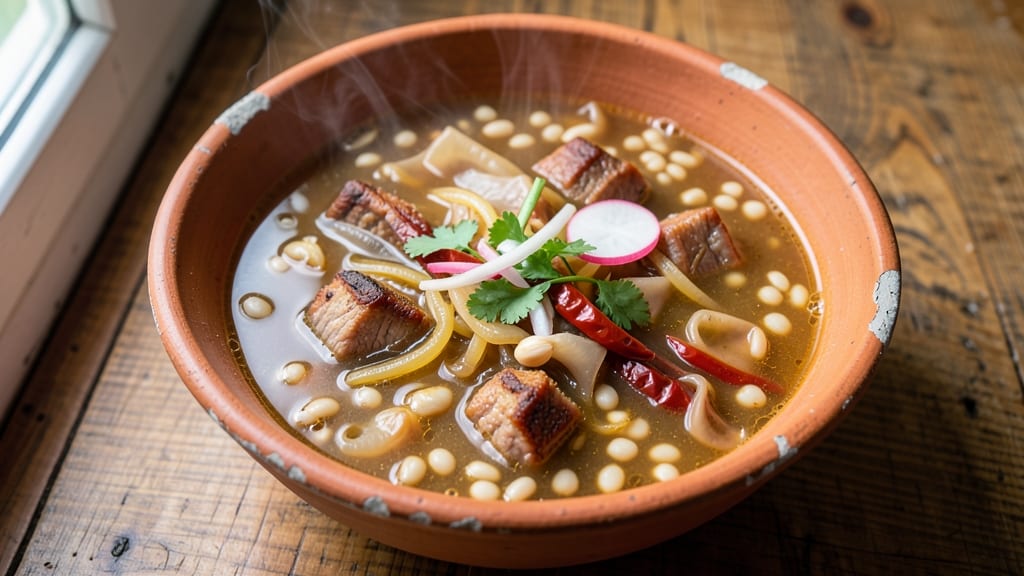
This authentic Mexican menudo soup recipe brings the soul-warming flavors of Mexico's most beloved comfort dish to your kitchen. Born from traditional Aztec ingredients, menudo is a hearty stew made with tender tripe, hominy, and a rich broth infused with warm spices like cumin and oregano.
I've perfected this recipe through years of testing, ensuring every spoonful delivers the deep, savory complexity that makes it a staple at Mexican gatherings.
The secret to authentic menudo lies in the slow-cooked broth, which transforms tough cuts of pork and tripe into melt-in-your-mouth tenderness. Hominy adds a satisfying chewiness, while a blend of chiles and spices creates the signature depth of flavor.
This recipe stays true to regional traditions while adapting techniques for home cooks—no shortcuts, just the real deal. The result? A steaming bowl of warmth that feels like a hug on a cold day.
What sets this recipe apart is the balance of textures and flavors—crisp radishes and fresh cilantro cut through the richness, while lime brightens each bite. Served with warm tortillas, it becomes a full meal that brings people together.
Whether you're celebrating a special occasion or simply craving comfort food, this menudo delivers restaurant-quality results with a touch of homestyle love.
Ready in about 3 hours (mostly hands-off simmering time), this recipe is perfect for feeding a crowd or meal prepping for the week. The flavors only deepen as it sits, making it ideal for Sunday suppers or holiday gatherings. Let's get cooking with this timeless Mexican classic!
Ingredients for authentic mexican menudo soup
Sixteen ingredients transform into Mexico's heartiest comfort stew—authentic flavors rooted in tradition.
| Ingredient | Amount | Notes |
|---|---|---|
| Beef Tripe 🥩 | 2 lbs | Honeycomb or flat-cut preferred |
| Pork Shoulder 🍖 | 2 lbs | Bone-in for richer broth |
| Dried Hominy 🌽 | 1 lb | White or yellow, soaked overnight |
| Yellow Onions 🧅 | 2 whole | Chopped, medium dice |
| Garlic Cloves 🧄 | 8 cloves | Peeled, lightly crushed |
| Guajillo Chiles 🌶️ | 4 whole | Stems/seeds removed, toasted |
| Ancho Chiles 🌶️ | 2 whole | Stems/seeds removed, toasted |
| Ground Cumin 🌿 | 2 tbsp | Toasted for deeper flavor |
| Dried Oregano 🍃 | 1 ½ tbsp | Mexican oregano preferred |
| Bay Leaves 🌿 | 4 whole | Fresh preferred |
| Beef Broth 💧 | 6 cups | Low-sodium preferred |
| Radishes 🥕 | 2 whole | Thinly sliced for crunch |
| Fresh Cilantro 🌿 | ½ cup | Chopped, for garnish |
| Limes 🍋 | 4 whole | Juiced, for serving |
| Salt 🧂 | 2 tbsp | Kosher or sea salt |
| Black Peppercorns 🌶️ | 1 tbsp | Freshly cracked |
| Vegetable Oil 🫒 | ½ cup | For searing |
The tripe and pork shoulder are the foundation of this recipe. Look for tripe at specialty butchers or Latin markets—it should be clean and free of strong odors. Costco or local meat counters often carry pork shoulder in large cuts, perfect for this dish. The chiles, guajillo and ancho, are essential for authentic flavor; Penzeys or Mexican grocery stores carry them dried and ready to toast. Soak the hominy overnight in plenty of water—it triples in size and adds that signature chewiness. For the best broth, combine beef broth with water and a splash of vinegar to help tenderize the meat during simmering.
No guajillo or ancho chiles? Ancho chiles alone work at double the amount, though the flavor will be slightly less complex. Substitute dried chipotle peppers for heat, but reduce to half the quantity. The cumin and oregano are non-negotiable—they create the signature warm, earthy depth. For the oregano, Mexican oregano (available at Latin markets) has a more complex flavor than Italian oregano. If you can't find it, use regular oregano but reduce to half. The radishes and cilantro are for serving, not cooking—keep them fresh until the very end to preserve their crisp texture and bright flavor.
This soup tastes even better the next day as flavors meld. Store in the fridge for up to 5 days, though the texture of the tripe and hominy may soften further. For longer storage, freeze portions for up to 3 months. The broth can be made ahead and frozen separately, then reheated with the cooked meat. Serve with warm corn tortillas and extra lime wedges. The dish reheats beautifully—just add a splash of water or broth if it thickens too much during storage.
Why You'll Love This Recipe
- Tripe’s Secret Simplicity: I swear by this recipe because the tripe and pork shoulder do most of the work—just simmer them slow, and the flavors melt into perfection. Honestly, the hardest part is peeling the hominy, and even that’s worth it.
- Garlic-Onion Magic: That deep, caramelized onion base with fresh garlic? It’s the soul of this soup. The pork shoulder practically falls apart, and the tripe gets tender enough to eat with a spoon—no dry bites, just pure satisfaction.
- Weeknight Crowd-Pleaser: Between us, this feeds a family of six with leftovers that taste better the next day. I’ve served it at holiday dinners, potlucks, and lazy Sundays—everyone asks for seconds, no matter the occasion.
- Budget-Friendly Powerhouse: Tripe and pork shoulder stretch this soup into a full meal for pennies. The dried hominy adds texture without breaking the bank, and a single pot makes three hearty servings—my wallet (and my freezer) thank me every time.
Step-by-step instructions for authentic Mexican menudo soup
Transform humble ingredients into a soul-warming bowl of traditional Mexican comfort.
🍳 Step 1: Prepare the Tripe and Pork Shoulder
Begin by thoroughly rinsing the 2 lbs beef tripe under cold water to remove any impurities. Cut it into 1-inch squares using a sharp knife—this size ensures even cooking. In a large Dutch oven, heat 0.5 cup vegetable oil over medium-high heat until shimmering. Add the tripe in batches, working in 30-second intervals to avoid overcrowding the pan. Cook for 5-7 minutes per side until the edges turn opaque and slightly golden. This step removes any lingering gamey flavors and creates a proper foundation for the broth.
Remove the tripe and set aside. In the same pot, add the 2 lbs pork shoulder cut into 1-inch chunks. Sear the pork until deep golden brown on all sides, about 4-5 minutes total. The pork will release its natural juices, which will form a rich brown crust at the bottom of the pot—this is flavor gold. Remove the pork and set it aside with the tripe. Here's the thing—don't rush this step. Proper searing develops the deep, meaty flavors that define authentic menudo.
🔥 Step 2: Build the Spice Base and Toast the Chiles
Reduce heat to medium and add the 2 whole yellow onions chopped into medium dice. Cook for 5-6 minutes until softened and translucent. Add the 8 cloves garlic cloves that have been peeled and lightly crushed, cooking for 30 seconds until fragrant—you'll know it's ready when the kitchen fills with that unmistakable garlic aroma. Stir in the 2 tbsp ground cumin and 1.5 tbsp dried oregano, toasting for 1 minute to deepen their flavors.
While the aromatics cook, prepare the chiles by removing stems and seeds from the 4 whole guajillo chiles and 2 whole ancho chiles. Toast them in a dry skillet over medium heat for 30 seconds per side until fragrant and slightly charred. Place the toasted chiles in a bowl and cover with hot water for 10 minutes to soften. Drain and blend with 1 cup of the beef broth until smooth. This creates the signature adobo base that gives menudo its distinctive smoky depth.
🥘 Step 3: Simmer the Broth and Infuse Flavors
Return the Dutch oven to medium heat and pour in the 6 cups beef broth. Add the blended chile mixture, 4 whole bay leaves, and bring to a gentle simmer. Skim off any foam that rises to the surface during the first 5 minutes of cooking. This step ensures a clean, flavorful broth without impurities. Return the seared tripe and pork shoulder to the pot, along with 2 tbsp salt and 1 tbsp freshly cracked black peppercorns. Cover and simmer for 2 hours at a barely simmering pace—this low-and-slow approach breaks down the connective tissue for melt-in-your-mouth texture.
After 2 hours, check the tripe and pork—both should be fork-tender with no resistance. If the broth has reduced too much, add ½ cup hot water to maintain consistency. The soup should have a rich, aromatic aroma with visible layers of spice and meat. Here's where patience pays off—the longer it simmers, the more complex the flavors become. This is the heart of authentic menudo.
👨🍳 Step 4: Add Hominy and Final Touches
Drain and rinse the 1 lb dried hominy thoroughly under cold water. Add it to the simmering pot along with the 2 whole yellow onions that have been chopped into medium dice. Cook for an additional 30 minutes to allow the hominy to absorb the broth's flavors. The hominy should be tender but still hold its shape—overcooking turns it mushy. Stir in the 2 tbsp salt and 1 tbsp black peppercorns again to balance the flavors after the longer cooking time.
Taste the broth and adjust seasoning if needed. Traditional menudo balances heat, salt, and acid perfectly. If it needs brightness, add a splash of lime juice from 1 of the 4 whole limes (reserve the rest for serving). The soup should be rich but not overly salty, with a warm, spicy depth from the chiles. This is the moment where all the flavors come together—trust your palate and make final adjustments.
🍽️ Step 5: Serve with Traditional Garnishes
Ladle the hot menudo into bowls, garnishing each serving with thinly sliced radishes and 0.5 cup chopped fresh cilantro. Serve with wedges of the 4 whole limes on the side for squeezing. The radishes add a crisp, peppery contrast to the rich broth, while the cilantro brightens each bite. For authenticity, serve with warm corn tortillas on the side—traditionally, menudo is enjoyed with tortillas to soak up every last drop of that flavorful broth.
This soup tastes even better the next day as the flavors meld further. The tripe should be tender and slightly chewy, the pork fall-apart tender, and the hominy firm yet flavorful. Each spoonful delivers the spiced warmth that makes menudo a beloved comfort dish across Mexico. The secret lies in the slow simmer and layered seasoning—this is how home cooks in Mexico's heartland create their signature version.
Pro Tips For Making Authentic Mexican Menudo Soup
- TRIPE FIRST, ONIONS LAST: Start by browning the pork shoulder—it’s the backbone of flavor—but hold off on adding onions until the very end. Onions cooked too early in this soup turn mushy and lose their bright, sharp bite, which is what makes menudo sing.
- SOAK HOMINY OVERNIGHT: I used to skip this, thinking I’d save time, but dried hominy needs at least 8 hours in water to soften properly. Use a big bowl and change the water once halfway through—it makes all the difference when you’re shredding it later.
- LOW AND SLOW FOR TRIPE: Beef tripe needs patience—don’t rush it. Once you add it to the broth, simmer at a gentle bubble (not a rolling boil) for at least 2 hours. Any faster, and it’ll turn rubbery instead of tender enough to shred easily.
- CHAR THE GARLIC: After the onions go in, toss in those garlic cloves whole and let them sizzle until they’re golden and fragrant—almost to the point of burning. Crushed garlic burns too quickly, but whole cloves toasted this way add a depth that raw garlic can’t match.
Wine and beer pairings for authentic mexican menudo soup
Mexican Lager Pairing
For menudo, I always reach for a crisp, refreshing Mexican lager like Modelo Especial or Pacífico Clara. These beers have a clean, slightly malty profile that complements the rich, spiced broth without overpowering it.
The light carbonation cuts through the soup's richness, cleansing your palate between bites. I like to chill them to 40-45°F—just cold enough to enhance the beer's subtle flavors while keeping the drink refreshing. 🍺
Spiced Margarita
A spicy margarita is my go-to cocktail pairing for menudo, especially when the soup has a deeper chile heat. Use reposado tequila, lime juice, and a touch of agave syrup, then muddle in 2 thin slices of jalapeño for a subtle kick.
Serve over crushed ice with a salt rim and garnish with a lime wedge. The citrus brightness mirrors the lime in the soup, while the tequila's smoothness balances the dish's heartiness. For a non-alcoholic twist, swap tequila for sparkling limeade and add a splash of chile-infused simple syrup.
Red Wine Contrast
If you prefer wine, a medium-bodied red like Tempranillo or Grenache works beautifully with menudo. These wines have earthy, fruity notes that harmonize with the cumin and oregano in the soup. I recommend a Spanish Tempranillo from Rioja—its leather and vanilla undertones complement the tripe and pork beautifully.
Serve it slightly chilled (55-60°F) to enhance its fruitiness without overwhelming the dish. Avoid bold, tannic wines like Cabernet Sauvignon, which can clash with the soup's richness. 🍷
Beer with a Twist
For a fun variation, try pairing menudo with a Mexican-style wheat beer like Negra Modelo. The beer's light body and subtle spice notes from the toasted malts echo the cumin and chiles in the soup.
For an extra kick, add a floating slice of lime to your beer glass—it mirrors the lime garnish on the soup and adds a refreshing zing.
If you're feeling adventurous, try a Mexican IPA like Estrella IPA—its citrus and hop bitterness provide a nice contrast to the soup's richness, though it's best enjoyed by those who prefer a bit of hoppy brightness. 🌶️
Non-Alcoholic Options
For those skipping alcohol, a sparkling hibiscus iced tea (known as agua de Jamaica) is a fantastic choice. Brew hibiscus flowers with cinnamon sticks and orange slices, then chill and serve over ice. The tart, floral notes complement the soup's spices, while the effervescence cleanses the palate.
Another great option is a Mexican limeade made with fresh lime juice, agave syrup, and a pinch of salt—it mirrors the acidity and brightness of the lime garnish on the soup. ✨
Nutrition facts
Frequently asked questions
Can I substitute chicken or beef for the tripe in menudo?
While you can use chicken or beef, tripe is essential for authentic flavor and texture. The honeycomb texture and slight chewiness of tripe create the signature mouthfeel that makes menudo special. If you must substitute, use beef short ribs or oxtail for a similar rich, gelatinous quality. Never use chicken—it lacks the depth of flavor and connective tissue needed for this dish.
How do I know when the tripe is fully cooked?
The tripe should be fork-tender with no resistance when pierced—this usually takes 2 hours of simmering. Look for edges that curl slightly and a texture that's soft but still holds shape. Overcooked tripe becomes mushy, while undercooked tripe remains chewy. The pork should also pull apart easily with a fork when fully cooked.
What's the difference between menudo and pozole?
While both are Mexican comfort soups, menudo uses tripe and hominy with a spiced broth, while pozole features hominy and pork (often with chili or red broth). Menudo is traditionally served with radishes and lime, while pozole often includes toppings like avocado, lettuce, and lime. The key difference is menudo's focus on tripe, which gives it a distinct texture and flavor profile.
Can I make menudo in a slow cooker?
Sear the tripe and pork first, then transfer everything to the slow cooker with all ingredients. Cook on low for 6-8 hours or high for 4-5 hours, adding water if needed. The slow cooker method actually enhances flavor development. Just be sure to add hominy during the last 30 minutes to prevent overcooking.
Why does my menudo taste too salty?
Menudo relies on layered seasoning—salty, spicy, and acidic elements. If it's too salty, balance it with lime juice (1-2 tablespoons) or extra broth (1 cup). For future batches, reduce salt by 1 teaspoon and taste as you go. The chiles and cumin should shine, not be overwhelmed by saltiness.