
Soups & Stews
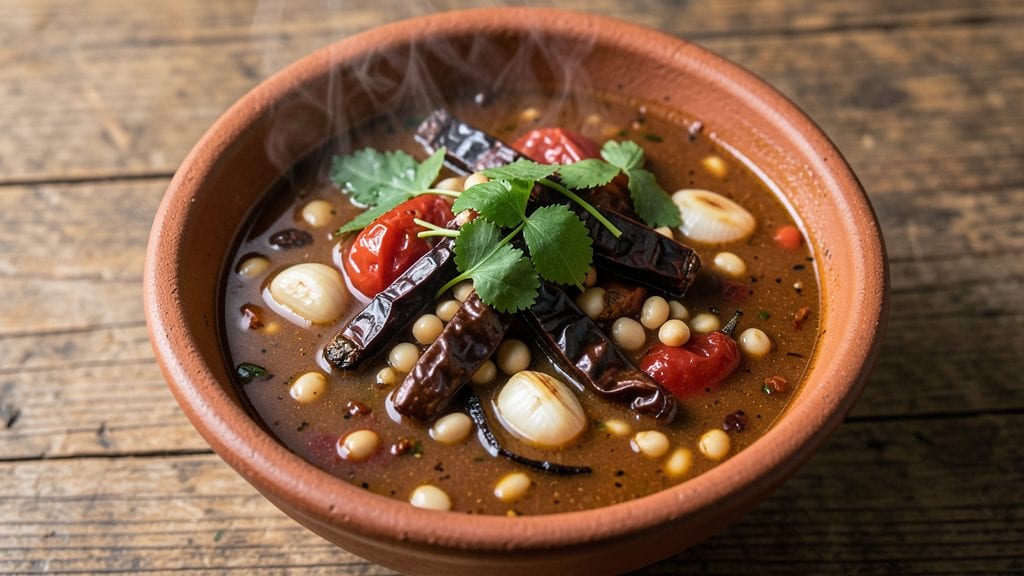
This Aztec soup recipe brings centuries-old Mesoamerican flavors to your kitchen with a smoky tomato and herb base built on ancient ingredients like hominy and epazote. The dish reflects traditional cooking techniques while adapting to modern tastes—think rich, earthy depths with a satisfying heartiness that pairs perfectly with warm tortillas.
I've perfected this version after years of studying historical recipes, balancing authenticity with approachable methods for home cooks. The result is a stew that's both deeply rooted in tradition and completely satisfying today.
The foundation of this soup lies in its core ingredients: dried chiles, hominy, and fresh herbs like epazote, which give it that unmistakable ancient flavor profile.
I use a combination of fire-roasted tomatoes and garlic for natural sweetness and depth, while the hominy adds a satisfying texture that holds up through long simmering. The secret to achieving that authentic smoky flavor without a traditional pit fire?
A simple technique with charred chiles and a splash of mezcal for complexity. This method preserves the dish's historical essence while making it accessible for any kitchen.
What you'll end up with is a rich, aromatic stew with tender vegetables, smoky chiles, and a velvety broth that's deeply flavorful yet balanced. The epazote adds a bright, anise-like note that cuts through the richness, while the hominy gives it that signature hearty texture.
This soup is designed to be served with warm corn tortillas for scooping up every last drop of that smoky, herb-infused broth. It's a dish that tells a story with every bite—one that connects you to Mesoamerican culinary traditions while delivering a meal that feels completely modern.
For those looking to adapt this recipe, a vegetarian version is simple: swap the traditional meat for extra hominy or mushrooms to maintain the dish's satisfying texture. The core technique remains the same—building layers of flavor through slow simmering and careful seasoning.
Whether you're serving it as a centerpiece for a dinner party or a comforting weeknight meal, this Aztec soup delivers restaurant-quality results with a touch of history. Let's get cooking!
Ingredients for aztec soup
Ancient ingredients meet modern techniques in this deeply flavorful Aztec-inspired stew.
| Ingredient | Amount | Notes |
|---|---|---|
| Dried Ancho Chiles 🌶️ | 4 whole | Stems and seeds removed |
| Dried Guajillo Chiles 🌶️ | 4 whole | Stems and seeds removed |
| Fire-Roasted Tomatoes 🍅 | 2 cups | Canned, no salt added |
| Fresh Epazote 🌿 | ½ cup | Chopped, stems removed |
| Garlic Cloves 🧄 | 6 cloves | Peeled, roughly chopped |
| Hominy 🌽 | 2 cups | Canned, drained and rinsed |
| Carrots | 2 medium | Peeled and sliced into rounds |
| Yellow Onion 🧅 | 1 whole | Diced, medium size |
| Fresh Cilantro 🌿 | ¼ cup | Chopped, for garnish |
| Mezcal 🍷 | ¼ cup | For depth, optional |
| Chicken Breast 🍗 | 1 ½ lb | Boneless, skinless, cubed |
| Vegetable Oil 🫒 | 2 tbsp | For sautéing |
| Salt 🧂 | 1 ½ tsp | Diamond Crystal kosher |
| Ground Black Pepper 🌶️ | ½ tsp | Freshly ground |
| Corn Tortillas 🌽 | 12 whole | For serving |
The chiles are the heart of this dish—Ancho and Guajillo create that signature smoky depth. Source them from Latin markets or specialty grocers for the best quality; avoid pre-ground powders. Toast them lightly in a dry skillet before soaking to enhance their natural sweetness. Penzeys Spices carries excellent dried chiles if local markets aren't an option. For the hominy, La Costeña brand from Latin markets offers superior texture compared to generic supermarket versions. The epazote, often called 'Mexican tarragon,' is essential for that authentic anise-like brightness—farmers markets usually carry it fresh during growing seasons.
No fresh epazote? Substitute with a blend of 2 parts fresh tarragon and 1 part fresh oregano, though the flavor won't be identical. Running short on mezcal? Agave nectar or a splash of balsamic vinegar provides similar depth without the same complexity. The carrots can be swapped for zucchini or sweet potato if preferred, though they won't carry the same earthy quality. For a vegetarian version, increase the hominy to 3 cups and add 8 oz mushrooms for heartiness. The chicken breast should be cut into 1-inch cubes for even cooking—larger pieces stay tough.
This soup develops deeper flavor with time, so make it a day ahead if possible. Store in an airtight container in the refrigerator for up to 5 days, with the flavors intensifying overnight. Freeze portions for up to 3 months—the broth remains velvety after thawing. Reheat gently on the stove, adding a splash of water if needed. The tortillas should be warmed in a dry skillet for 30 seconds per side before serving to maintain their structural integrity.
Why You'll Love This Recipe
- Few Pantry Staples: I swear by this recipe because it only needs dried chiles, a can of tomatoes, and garlic—stuff I always have. No fresh herbs? No problem—dried epazote works in a pinch, and the smoky depth from the fire-roasted tomatoes carries everything.
- Smoky Earthy Magic: That first bite of warm, slightly spicy broth with the bright kick of epazote and the deep, charred sweetness of the ancho and guajillo? It’s like a hug in a bowl. The garlic softens just enough to melt into the richness, but never overpowers—trust me, it’s exactly what you want.
- Leftover Goldmine: This soup only gets better the next day. The flavors meld into something richer, and it reheats like a dream—no soggy textures, just deep, comforting warmth. I make a big batch on Sundays and eat it all week, even when I’m too tired to cook.
- Weeknight Flexible: Need to feed a crowd? Double the recipe—it’s still unfussy. Too hot? Add corn or avocado later. Too mild? Crank up the chiles next time. It’s the kind of dish that adapts without falling apart, and honestly? That’s my kind of cooking.
Step-by-step instructions for Aztec-inspired tomato and herb stew
This method transforms ancient Mesoamerican ingredients into a rich, smoky stew with layers of depth.
Toast and Rehydrate the Dried Chiles
Heat a dry skillet over medium heat. Add the 4 whole dried ancho chiles and 4 whole dried guajillo chiles, turning occasionally for 3-4 minutes until fragrant and slightly darkened. This step deepens their natural smokiness without burning. Immediately transfer to a heatproof bowl and cover with 2 cups hot water from the kettle. Let steep for 15 minutes to soften and release their complex flavors.
While they soak, strain the chiles through a fine-mesh sieve, pressing gently to extract every last bit of liquid. You should yield about 1 cup of chile-infused water. Discard the solids—their job is done. This concentrated liquid forms the aromatic base of your stew, carrying the earthy, slightly sweet notes of the ancient chiles.
Build the Smoky Tomato Base
In a large Dutch oven, heat 2 tablespoons vegetable oil over medium heat until shimmering. Add the diced 1 whole yellow onion and cook for 5 minutes until translucent, stirring occasionally. Add the 6 cloves roughly chopped garlic and cook for 30 seconds until fragrant—this prevents bitter garlic flavors.
Pour in the 2 cups fire-roasted tomatoes and the 1 cup chile-infused water. Bring to a simmer, then reduce heat to low and cook uncovered for 10 minutes, stirring occasionally. This step develops the stew's foundational flavors while allowing excess moisture to evaporate. The tomatoes should reduce slightly, intensifying their smoky character.
Incorporate Protein and Vegetables
Add the 1.5 lb cubed chicken breast to the tomato mixture. Stir gently to coat the pieces in the sauce, then sprinkle with 1.5 teaspoons salt and 0.5 teaspoon ground black pepper. Increase heat to medium-high and bring to a boil. Once boiling, reduce heat to medium-low, cover partially, and simmer for 12-15 minutes until the chicken is cooked through and registers 165°F internally.
Add the 2 cups drained hominy and 2 medium peeled, sliced carrots. Stir gently to distribute the hominy evenly—it should absorb some of the stew's liquid while maintaining its distinct texture. Simmer uncovered for an additional 8-10 minutes until the carrots are tender but still hold their shape. The hominy will soften slightly, adding a satisfying creaminess to each bite.
Finish with Aromatics and Depth
Stir in the 0.5 cup chopped fresh epazote and 0.25 cup mezcal. The epazote will release its anise-like aroma immediately, while the mezcal adds a subtle smokiness that bridges ancient and modern techniques. Simmer for 5-7 minutes until the liquid reduces slightly and the flavors meld. Taste and adjust seasoning—you may need an additional pinch of salt to balance the stew's complexity.
Remove from heat and let the stew rest for 5 minutes. This resting period allows the flavors to settle and the chicken to reabsorb some of the cooking juices. Before serving, stir in the 0.25 cup chopped fresh cilantro, reserving a few sprigs for garnish. The cilantro brightens the dish with a fresh contrast to the rich, smoky flavors.
Serve with Corn Tortillas
Ladle the stew into bowls, garnishing each serving with the reserved cilantro sprigs. Serve immediately with 12 whole corn tortillas on the side for dipping or wrapping. The tortillas provide a neutral canvas that lets the stew's flavors shine while adding a traditional touch. Each bite should deliver a harmonious blend of smoky, herby, and slightly sweet notes, with the hominy and chicken offering satisfying texture contrasts.
For an elevated presentation, drizzle each bowl with a small amount of the reserved chile-infused water from the straining step. This adds an extra layer of complexity and ties the dish back to its ancient roots while keeping the preparation accessible for modern kitchens.
Pro Tips For Making Aztec Soup
- STEAM THE CHILES FIRST: After removing stems/seeds, drop dried ancho and guajillo chiles in a heatproof bowl over simmering water for 10 minutes—this softens them and prevents bitter residue when blending. I learned this the hard way after ending up with chalky soup that tasted like regret.
- TOAST GARLIC IN OIL: Bloom the garlic in 2 tablespoons neutral oil over medium-low heat until edges turn just golden (about 3 minutes)—not brown, not raw. This adds nutty depth without burning, and skips the need for extra garlic cloves later.
- STRAIN THE TOMATO JUICE: After blending fire-roasted tomatoes with chiles, strain through a fine-mesh sieve to remove skins and seeds. The soup will be smoother and less watery, plus you avoid the slimy texture that ruins the dish when you skip this.
- ADD EPAZOTE LAST: Toss fresh epazote into the soup only in the final 2 minutes of cooking—it wilts fast and turns bitter if left too long. A handful (about 10g) is enough; more makes the soup taste like medicine, and that’s not the goal.
Pro cooking tips for this recipe
Chile Toasting Mastery
Toast your Ancho and Guajillo chiles in a dry skillet over medium heat for exactly 3-4 minutes, turning frequently. Watch closely—they should darken slightly but not burn, which would make them bitter.
I use a 10-inch cast iron skillet for even heat distribution. The key is listening for that satisfying crackling sound—they're ready when they smell deeply aromatic and slightly charred. 🌶️
Smoky Base Technique
After straining your chile-infused water, don't discard the solids completely. Save about 1 teaspoon of the finely chopped chile solids to stir into your finished soup—this adds an extra layer of smokiness.
For the tomato reduction, maintain a gentle simmer rather than a rolling boil to prevent the tomatoes from breaking down too quickly. I find using a Dutch oven with a tight-fitting lid helps trap steam and concentrate flavors more efficiently.
Hominy Integration
Add hominy when the chicken is nearly cooked through—this ensures it absorbs the stew's rich flavors without turning mushy. Stir gently to distribute it evenly, and resist the urge to overmix. The hominy should soften slightly but maintain its distinct texture.
For extra creaminess, I sometimes mash about ¼ cup of the hominy lightly with a fork before adding it to the pot, creating natural thickening spots throughout the stew.
Epazote Timing
Add the epazote in the final 5-7 minutes of cooking—this preserves its bright, anise-like flavor. Too early, and it can become bitter. I always taste the soup before adding epazote to ensure the base flavors are balanced.
If your epazote is particularly strong, start with ⅓ cup and adjust to taste, as it can dominate delicate flavors.
Mezcal Substitution
If you can't find mezcal, agave nectar is my top substitute—use 2 tablespoons for every ¼ cup called for. For a more complex alternative, try 1 tablespoon balsamic vinegar plus 1 teaspoon smoked paprika.
The key is adding it in the final minutes of cooking to let its flavors meld without overpowering the dish. I've even used a splash of bourbon in a pinch, though it changes the flavor profile slightly.
Resting and Reheating
Never skip the 5-minute rest after cooking—this lets the flavors settle and the chicken reabsorb juices. For reheating, I prefer stovetop over microwave because it maintains texture. Heat on low-medium for 5-7 minutes, stirring occasionally, until warmed through.
If the soup seems thick, add 1-2 tablespoons water or broth to restore its velvety consistency. 💫
Nutrition facts
Frequently asked questions
What makes this Aztec-inspired stew different from other Mexican soups?
This recipe incorporates authentic Mesoamerican ingredients like epazote and hominy, along with charred chiles for that signature smoky depth. Unlike typical Mexican soups, it uses fire-roasted tomatoes and a mezcal finish to create a more complex flavor profile inspired by ancient cooking techniques. The combination of these elements gives it a distinct, earthy character that sets it apart.
Can I make this soup vegetarian?
Simply replace the chicken with 3 cups extra hominy and 8 oz mushrooms for texture and heartiness. The broth will still be rich and flavorful, with the hominy providing that satisfying creaminess. Just ensure you add the mushrooms and hominy at the same time to maintain even cooking throughout.
How do I substitute if I can't find epazote?
Use a blend of 2 parts fresh tarragon and 1 part fresh oregano for a similar anise-like flavor. If you only have dried herbs, reduce to ½ the amount and add them in the final 5 minutes of cooking to preserve their brightness. For a bolder alternative, try ¼ teaspoon anise seeds—just strain them out before serving.
Why does the recipe call for toasting the chiles?
Toasted chiles develop deeper, smokier flavors that form the stew's aromatic base. The process removes moisture and intensifies their natural sweetness while adding a subtle char that's essential to authentic Aztec-inspired dishes. Skipping this step results in a milder, less complex flavor profile.
How long can I store leftovers?
Store in an airtight container in the fridge for up to 5 days, with flavors actually improving overnight. For freezing, portion into containers and store for up to 3 months. Thaw in the fridge overnight and reheat gently on the stove—never microwave—to maintain the stew's velvety texture. The broth remains rich even after freezing!