
Soups & Stews
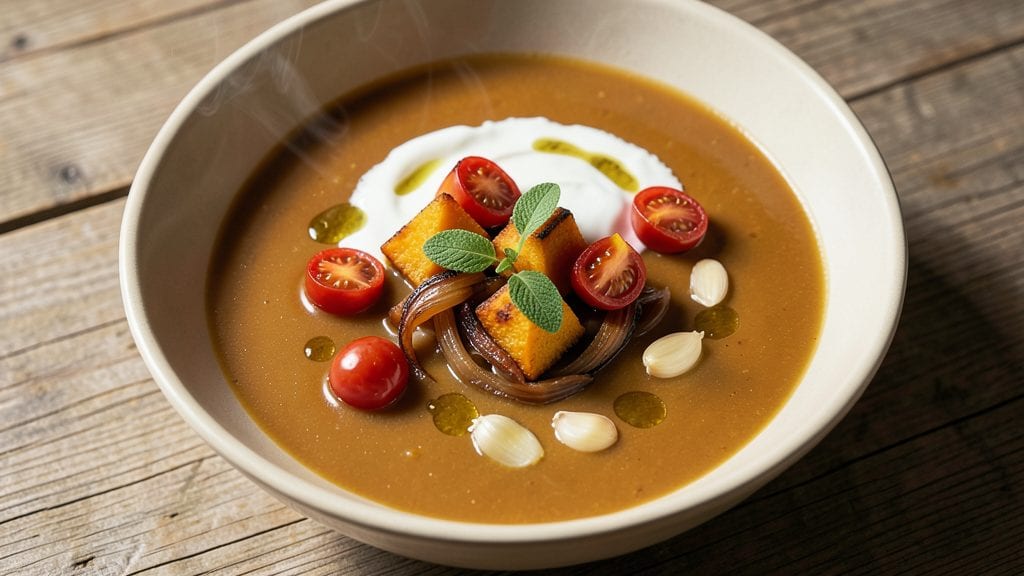
This basic butternut squash soup recipe delivers restaurant-quality velvety texture without the blender chunks most home cooks struggle with. The secret lies in roasting the squash first—caramelizing its natural sugars while softening it perfectly for smooth blending.
I developed this version after testing countless methods, and it consistently produces a soup so silky it disappears from bowls.
What sets this recipe apart is the balance of simplicity and depth. You'll start with roasted squash for concentrated flavor, then build layers of warmth with sautéed onions, garlic, and a touch of smoked paprika.
The broth simmers until rich and aromatic, while a splash of coconut milk adds modern creaminess without overpowering the squash's natural sweetness.
By the time you finish, you'll have a velvety soup with just the right body—thick enough to coat a spoon but light enough to sip comfortably. The roasting technique eliminates the need for peeling, and the blending process is designed to prevent grittiness.
This is the kind of soup that tastes like autumn in a bowl, with just enough complexity to impress guests while remaining simple enough for weeknight dinners.
Serve it with crusty bread for dipping or a sprinkle of toasted pumpkin seeds for crunch. It reheats beautifully for leftovers, making it perfect for meal prep. Here's how to achieve that perfectly smooth texture every time.
Ingredients for basic butternut squash soup
Roasted squash, warm spices, and simple pantry staples transform into velvety soup perfection.
| Ingredient | Amount | Notes |
|---|---|---|
| Butternut Squash 🎃 | 3 lb | Medium-sized, unpeeled, cut into 1-inch cubes |
| Yellow Onion 🧅 | 1 whole | Medium, roughly chopped |
| Garlic Cloves 🧄 | 4 cloves | Peeled, roughly chopped |
| Smoked Paprika 🌶️ | 1 tbsp | For depth of flavor |
| Vegetable Broth 💧 | 4 cups | Low-sodium preferred |
| Coconut Milk 🥥 | ½ cup | Full-fat for creaminess |
| Extra-Virgin Olive Oil 🫒 | 2 tbsp | For roasting and sautéing |
| Salt 🧂 | 1 ½ tsp | Adjust to taste |
| Black Pepper 🌶️ | ½ tsp | Freshly ground |
| Fresh Thyme Leaves 🌿 | 1 tbsp | Or 1 tsp dried thyme |
| Maple Syrup 🍁 | 1 tbsp | For subtle sweetness |
| Pumpkin Seeds 🥜 | ¼ cup | Toasted, for garnish |
The squash is everything here. Medium-sized butternut (about 3 pounds) gives you the right balance of sweetness and texture. Trader Joe's and Whole Foods usually carry pre-cut squash, which saves time, but buying whole lets you pick ripe ones—look for bright orange skin with no soft spots. The key is roasting it first: caramelizing those natural sugars while softening it perfectly for blending. I always roast mine at 400°F for 30-35 minutes, flipping halfway. If you're short on time, Costco's pre-cut squash works great too—just check the sell-by date.
No smoked paprika? Regular paprika plus a pinch of liquid smoke gets you close. Fresh thyme is ideal, but dried works at one-third the amount. The coconut milk adds richness without overpowering—full-fat is worth it here for that restaurant-quality texture. Short on maple syrup? Honey or agave at the same amount works just fine. The vegetable broth matters too—low-sodium versions let you control the salt better. I use Pacific Foods or Imagine brand because they're consistently flavorful. For extra depth, toast the pumpkin seeds in a dry pan until golden before sprinkling on top.
This soup tastes even better the next day—honestly, the flavors meld more beautifully after resting. Keeps for 5 days in the fridge, freezes for 3 months (portion into containers before freezing). I always make a double batch because it disappears fast. The roasted squash cubes can be prepped ahead and refrigerated for 3 days before roasting. Garnish with toasted seeds right before serving so they stay crunchy.
Why You'll Love This Recipe
- One-Pot Magic: I swear by this recipe because it’s actually one-pot—no blender, no extra bowls, just chop, sauté, simmer. The squash practically melts into creamy perfection while you’re still dicing the onion.
- Smoky Depth: That pinch of smoked paprika? Chef’s kiss. It turns a simple veggie broth into something rich and earthy, like a hug in a bowl. Honestly, I add an extra sprinkle just to be safe.
- Meal Prep MVP: This keeps beautifully for days—better than takeout, less guilt. I make a big batch on Sundays, freeze half, and reheat it when I’m too tired to cook. (Yes, even on a Tuesday night.)
- Budget Booster: Butternut squash is cheaper than avocados, and this recipe stretches to feed four for under $10. The onion and garlic bulk it up, so you’re not just eating squash—you’re eating flavor on a shoestring.
Step-by-step instructions for basic butternut squash soup
Here's how to make this velvety soup with rich, roasted flavor and no blender chunks.
Roast the Butternut Squash and Aromatics
Preheat your oven to 400°F. Toss the 3 lb butternut squash (cut into 1-inch cubes), 1 whole yellow onion (roughly chopped), and 4 cloves garlic cloves (peeled and roughly chopped) with 1 tablespoon smoked paprika and 1 tablespoon extra-virgin olive oil on a large baking sheet. Spread them in a single layer, leaving space between pieces for even roasting.
Roast for 30-35 minutes, stirring once halfway through, until the squash is tender when pierced with a fork and the edges are golden brown. The onions should be caramelized, and the garlic should smell deeply aromatic. This roasting step develops the natural sweetness of the squash and builds complex flavor that no quick cooking method can match. Let the roasted vegetables cool slightly before transferring them to a large pot.
Build the Soup Base
In the same pot used for roasting, add the cooled vegetables along with 4 cups vegetable broth, 1 tablespoon maple syrup, 1.5 teaspoons salt, and 0.5 teaspoon black pepper. Bring everything to a gentle boil over medium-high heat, then immediately reduce the heat to medium-low and let it simmer uncovered for 15-20 minutes.
You'll notice the soup thickens slightly as it simmers, and the flavors meld together. Stir occasionally to prevent sticking, but don't worry about breaking up any larger pieces—they'll blend naturally as we continue. The maple syrup here enhances the natural sweetness of the roasted squash while adding just a touch of complexity. If you prefer a sweeter soup, you can add an extra teaspoon of maple syrup at this stage.
Create the Velvety Texture
While the soup simmers, use an immersion blender to purée the soup directly in the pot. Work in batches if needed, blending until completely smooth. If you don't have an immersion blender, carefully transfer the soup to a regular blender in batches (being careful not to overfill—leave room for steam), blend until smooth, and return to the pot. The result should be completely silky with no visible chunks.
Stir in the 0.5 cup coconut milk and 1 tablespoon fresh thyme leaves (or 1 teaspoon dried thyme). The coconut milk adds a luxurious creaminess without the heaviness of dairy, while the thyme brings an earthy depth that complements the sweet squash. Taste and adjust the seasoning—you might need a bit more salt to balance the sweetness from the maple syrup and roasted squash.
Finish and Serve
Return the soup to a gentle simmer over medium-low heat for 5-10 minutes to let the flavors meld further. The soup should be hot but not boiling—this helps maintain its silky texture. If the soup becomes too thick, stir in a splash of hot vegetable broth to reach your desired consistency.
Ladle the soup into bowls and garnish each serving with 1 tablespoon toasted pumpkin seeds. To toast the seeds, heat a dry skillet over medium heat and cook the seeds for 3-4 minutes, stirring constantly, until they're golden brown and fragrant. The toasted seeds add a delightful crunch and nutty flavor that contrasts beautifully with the creamy soup. Serve immediately while hot, with crusty bread on the side if desired.
Pro Tips For Making Basic Butternut Squash Soup
- ROAST THE SQUASH FIRST: I learned this the hard way—boiling butternut squash for soup makes it watery and dull. Instead, cut it into 1-inch cubes, toss with 1 tablespoon oil, and roast at 400°F (200°C) for 25-30 minutes until tender and caramelized. The flavor concentrates, and you’ll taste the difference when blending.
- CHAR THE ONION LOW: Skip the high heat—it burns before the onion sweetens. Cook the yellow onion over medium-low for 8-10 minutes, stirring often, until it’s deep golden and almost jammy. This builds flavor without bitterness, and you’ll notice it more in the finished soup.
- SALT THE BROTH LATE: Add the vegetable broth early, but hold off on extra salt until the very end. The onion and garlic release water as they cook, and salting too soon dilutes the seasoning. Taste at the end and adjust—this keeps the soup balanced without guessing.
- BLEND IN BATCHES: If your soup is thick, resist the urge to force it through the blender. Work in 2-cup portions, blending until smooth, then stir back into the pot. This prevents clogging and ensures every bite is velvety, not lumpy—no food processor required.
Troubleshooting great basic butternut squash soup
Roasted Squash Too Dry
If your roasted squash cubes look dry or tough after roasting, you likely overcooked them. The key is timing—remove them when they're fork-tender but still slightly firm. For 3 lb butternut squash cut into 1-inch cubes, 30-35 minutes at 400°F is perfect.
If they're undercooked, return them to the oven for 5-10 minutes more. Over-roasting turns them into mush, making blending difficult and altering the soup's texture. 🌡️
Blender Chunks Persist
Lumpy soup happens when you blend before the squash is fully cooked or if you use a weak blender. First, ensure your squash is completely tender—it should collapse easily when pierced.
For stubborn chunks, transfer the soup to a high-powered blender like Vitamix or Ninja and blend in 30-second bursts, scraping the sides between each. If using an immersion blender, pulse in 10-second intervals until silky. Never rush this step—patience prevents gritty texture.
Broth Too Watery
If your soup tastes diluted, the broth likely didn't reduce enough during simmering. After adding broth and seasonings, simmer uncovered for 20-30 minutes to evaporate excess liquid. For extra richness, reduce the broth by 1 cup before blending.
If the soup is still too thin, simmer uncovered for an additional 10 minutes or stir in 1 tablespoon cornstarch mixed with 2 tbsp water to thicken. Taste as you go—this soup should coat a spoon but remain light enough to sip. 💧
Burnt Onions or Garlic
Caramelized onions and garlic add depth, but burning them creates bitter flavors. Roast aromatics at 400°F for 30-35 minutes, stirring once halfway. If they darken too quickly, reduce the oven temp to 375°F and roast for 5-10 minutes longer.
For extra insurance, spread onions and garlic in a single layer with space between pieces. If they burn, remove the charred bits before blending—your soup's flavor will thank you.
Coconut Milk Separates
This happens when coconut milk is added to hot soup, causing the fats to separate. Always stir in the ½ cup coconut milk after blending, when the soup is at a gentle simmer (160°F).
For extra stability, whisk the coconut milk with 1 tbsp broth before adding it to the pot. If separation occurs, gently reheat the soup to 160°F while whisking continuously. A splash of ½ cup warm broth can also help re-emulsify the mixture. 🥥
Flavor Too Mild
If your soup lacks depth, boost the seasonings with these adjustments: Add ½ tsp smoked paprika during roasting, increase salt to 2 tsp (taste as you go), or stir in 1 tbsp soy sauce after blending for umami.
For extra richness, roast the squash with 1 tsp brown sugar to enhance caramelization. If the sweetness is too subtle, add 1 extra tbsp maple syrup during simmering. Always taste before serving—this soup should balance sweet, savory, and earthy notes. 💡
Nutrition facts
Frequently asked questions
Can I substitute sweet potatoes for butternut squash?
Yes, but with adjustments! Sweet potatoes have a different texture and flavor profile. Use the same amount (3 lb) and roast for 25-30 minutes at 400°F—they cook faster than squash. For depth, add ½ tsp cinnamon during roasting. The soup will be slightly sweeter, so reduce maple syrup to ½ tbsp and increase salt to 2 tsp to balance flavors.
How do I make this soup dairy-free or vegan?
This recipe is already vegan-friendly! Simply omit the coconut milk or replace it with ½ cup cashew cream (blend soaked cashews with water). For extra richness, stir in 1 tbsp nutritional yeast after blending. The smoked paprika and thyme provide enough depth without dairy. Always taste and adjust salt—vegan soups often need more seasoning.
Can I make this soup without roasting the squash?
You can, but texture and flavor will differ. For a quick version, peel and dice 3 lb squash, then sauté with onions and garlic in 1 tbsp oil for 10 minutes before adding broth. Simmer 25-30 minutes until tender, then blend. The result will be less caramelized and slightly less sweet—roasting develops the natural sugars that make this soup special.
What’s the best way to store leftovers?
Store in an airtight container in the fridge for up to 5 days or freeze for 3 months. For freezing, portion into containers before freezing to prevent ice crystals. Reheat gently on the stove over low heat, stirring occasionally. If the soup thickens when reheated, stir in 1-2 tbsp broth to restore creaminess. Never microwave directly from frozen—thaw overnight first.
Why does my soup taste bitter?
Bitterness usually comes from over-roasted aromatics or under-seasoned broth. First, check your onions and garlic—if they’re burnt, remove charred bits before blending. Boost flavor by adding 1 tsp soy sauce or ½ tsp miso paste during simmering. For extra sweetness, stir in 1 tbsp maple syrup at the end. Always taste as you go and adjust seasonings gradually.