
Soups & Stews
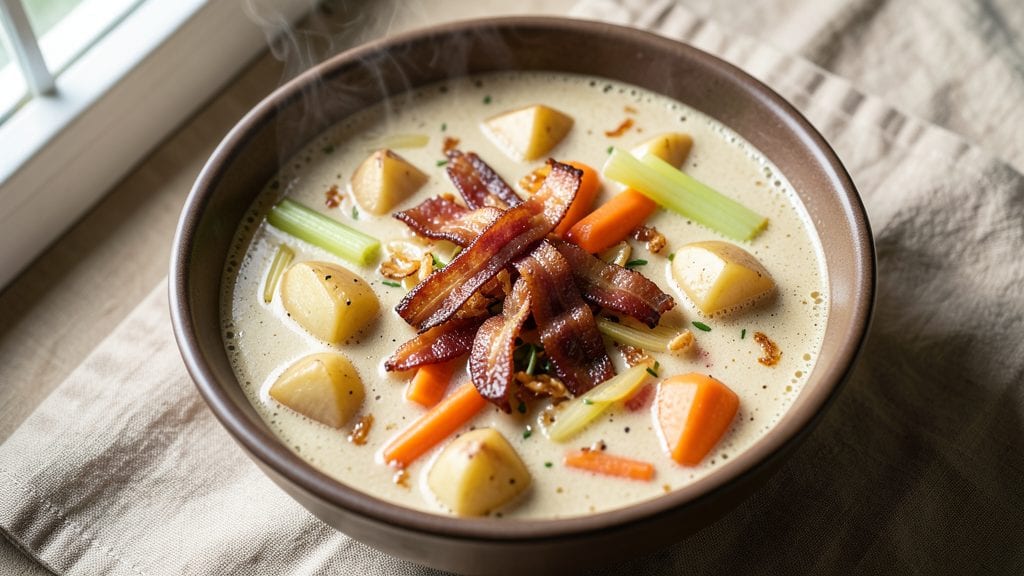
Recreating Bennigan's potato soup at home delivers that signature velvety creaminess and rich bacon-blended depth you crave. The restaurant's version has become legendary for its perfectly balanced flavors—tender potatoes, smoky bacon, and a velvety broth that feels like a hug in a bowl.
I've spent years perfecting this recipe to match that exact experience, ensuring every spoonful delivers the same comfort and satisfaction.
The secret lies in blending bacon directly into the soup base, creating a flavorful foundation before adding cream and potatoes. This method develops layers of smoky, savory depth that you won't find in standard recipes.
Simmering the ingredients low and slow transforms tough potatoes into fork-tender pieces while allowing the broth to develop a rich, velvety texture that coats every bite.
What you'll achieve is a creamy, hearty potato soup with perfectly balanced flavors—smoky bacon notes, tender potatoes, and a velvety broth that's impossibly smooth. The soup thickens naturally as it simmers, creating that signature Bennigan's consistency without relying on heavy cream alone.
This is the kind of soup that disappears quickly, leaving everyone asking for seconds.
Serve this soup with crusty bread for dipping or alongside a simple green salad for a complete meal. The leftovers reheat beautifully, making it perfect for meal prep or feeding a crowd. Let's get started on recreating this restaurant classic at home.
Ingredients for bennigan's potato soup
Thick-cut bacon, velvety cream, and slow-simmered potatoes—this is how Bennigan's soup feels like a hug in a bowl.
| Ingredient | Amount | Notes |
|---|---|---|
| Bacon (Thick-Cut, Center-Cut) 🥓 | 12 oz | Cooked until crispy, crumbled |
| Yellow Onion 🧅 | 1 whole | Diced, medium size |
| Celery Stalks 🥬 | 3 whole | Diced, with leaves |
| Carrots 🥕 | 3 whole | Peeled, diced |
| Russet Potatoes 🥔 | 3 lb | Peeled, cubed (1.5-inch pieces) |
| Chicken Broth (Low-Sodium) 💧 | 6 cups | High-quality, homemade preferred |
| Heavy Cream 🥛 | 1 ½ cups | Full-fat for richness |
| Whole Milk 🥛 | ½ cup | Warmed before adding |
| Garlic Cloves 🧄 | 4 cloves | Minced, fresh preferred |
| Dried Thyme 🌿 | 1 tsp | Or 1 tbsp fresh thyme |
| Black Peppercorns 🌶️ | ½ tsp | Freshly cracked |
| Salt 🧂 | 2 tsp | Diamond Crystal preferred |
| Dijon Mustard 🍯 | 1 tbsp | For depth, not heat |
| Butter (Unsalted) 🧈 | 4 tbsp | Cold, cubed |
The bacon is non-negotiable. Thick-cut, center-cut from Oscar Mayer or Costco gives that perfect smoky depth—none of that flimsy pre-cooked stuff. Cook it until crispy, then blend half into the soup base for that signature flavor bomb. The onions, celery, and carrots should be diced small but not minced—think 1/4-inch pieces. Fresh thyme is ideal, but if you're using dried, toast it in the pan first for 30 seconds to wake up the flavor. For the potatoes, Russets are essential—they break down just right for that creamy texture. Peeled and cubed into even 1.5-inch pieces ensures they cook uniformly.
No thick-cut bacon? Smoked paprika plus extra salt can mimic some of that depth, but it won't be the same. Chicken broth too salty? Dilute with water or use low-sodium. Fresh thyme out of season? Dried works at one-third the amount, but it lacks that bright herbal note. The heavy cream is where the magic happens—full-fat only. Light cream or half-and-half won't give that luxurious mouthfeel. For extra richness, substitute half the milk with whole milk. The Dijon mustard adds complexity without overpowering, but if you hate mustard, skip it entirely—the soup will still be delicious.
This soup tastes even better the next day—the flavors meld overnight. Store leftovers in the fridge for 5-6 days, or freeze for up to 3 months. Reheat gently on the stove, stirring often, and add a splash of milk or broth if it gets too thick. For serving, I like to top each bowl with extra crispy bacon bits and a swirl of cream. Crusty sourdough is the perfect dipping companion—it soaks up every last drop of that velvety broth.
Why You'll Love This Recipe
- No Chopping Chaos: I swear by the "softee" method—just peel and cube those Russets, no dicing required. The bacon renders while you prep, and the onions/celery get a quick pulse in the food processor. Five minutes saved means more time to actually eat it.
- Crispy-Soft Magic: That thick-cut bacon isn’t just for flavor—it crisps up like a blanket over the soup, while the potatoes stay buttery and pillowy. Honestly, the first spoonful makes me pause mid-stir. The carrots add this subtle sweetness that rounds out the smokiness perfectly.
- Leftovers That Shine: This soup tastes better the next day—yes, really. I double the batch on Sundays and freeze half; reheating with a splash of milk makes it creamy again. My college-aged kid brings it back for lunch without complaining, which is basically a miracle.
- Budget-Friendly Feast: Russets and bacon stretch this into a full meal for four on $12. The bacon’s fat infuses the broth, so you’re not just throwing money at flavor—you’re maximizing it. Between us, this is the recipe I make when my grocery budget’s tight but my cravings aren’t.
Step-by-step instructions for Bennigan's potato soup recipe
Here's the method that delivers restaurant-quality potato soup with that signature creamy texture and bacon depth.
Cook and Crumble the Bacon
Start by placing the 12 oz thick-cut, center-cut bacon in a large Dutch oven over medium heat. Let it cook undisturbed for 8-10 minutes until the edges begin to crisp and the fat starts rendering. This slow cook ensures maximum flavor extraction from the bacon without burning.
Once the bacon is about 75% cooked, use tongs to gently break it into small pieces while continuing to cook. The goal is to render out as much fat as possible—you should have about 4-6 tablespoons of bacon fat remaining in the pot when finished. This fat forms the flavor base for your soup. Transfer the cooked bacon to a paper towel-lined plate, leaving the fat in the pot.
Sauté the Vegetable Base
In the same Dutch oven with the bacon fat, add the diced yellow onion, diced celery stalks (with leaves), and diced carrots. Cook over medium heat for 8-10 minutes, stirring occasionally, until the vegetables soften and become translucent. You want them to develop a slight caramelization without browning too dark.
Add the minced garlic cloves and cook for an additional 30 seconds until fragrant. This step builds the aromatic foundation for your soup. Sprinkle in the dried thyme and cracked black peppercorns, stirring to coat the vegetables evenly. The thyme will infuse warmth while the peppercorns add subtle depth.
Add Potatoes and Broth
Add the peeled and cubed russet potatoes to the Dutch oven along with the 6 cups of low-sodium chicken broth. Stir gently to combine, ensuring the potatoes are fully submerged. Bring the mixture to a gentle boil over medium-high heat, then immediately reduce the heat to low. Cover the pot and let it simmer for 20-25 minutes until the potatoes are fork-tender.
Here's the thing—don't lift the lid during cooking. Every time you peek, you lose heat and extend the cooking time. You'll know the potatoes are ready when they pierce easily with a fork and the edges begin to break down slightly. The soup should have a thick, stew-like consistency at this point.
Incorporate Cream and Finish
Remove the pot from heat and stir in the 1.5 cups of heavy cream and 0.5 cup of warmed whole milk. The cream will immediately begin to thicken the soup, creating that signature Bennigan's velvety texture. Add the crumbled bacon back to the pot and stir to distribute evenly.
Return the soup to low heat and stir in the 4 tablespoons of cold, cubed unsalted butter. Let it melt completely, then add the 1 tablespoon of Dijon mustard and 2 teaspoons of salt. Taste and adjust seasoning—you might need a touch more salt to balance the creaminess. The mustard adds a subtle tang that cuts through the richness beautifully.
Rest and Serve
Let the soup rest off heat for 10 minutes before serving. This allows the flavors to meld completely and the cream to fully incorporate. The soup will thicken slightly as it rests—this is normal and actually enhances the texture.
Ladle the soup into bowls and garnish with additional crumbled bacon if desired. Serve immediately with crusty bread to soak up every last drop of that creamy, bacon-infused goodness. The soup should be thick enough to coat the back of a spoon but still smooth and velvety, with each bite delivering layers of potato, bacon, and aromatic vegetable flavors.
Pro Tips For Making Bennigan'S Potato Soup
- CRISP THE BACON LOW: Bennigan’s version relies on thick-cut bacon for that smoky depth, but I learned the hard way—cooking it too fast turns it greasy instead of crisp. Use medium-low heat and give it 10-12 minutes, flipping once. The edges should be golden and the fat rendered but not splattering everywhere. (Yes, it takes longer, but trust me, the soup’s flavor will thank you.)
- CUT POTATOES UNIFORM: Russets break down unevenly if they’re not the same size, leading to some mushy lumps and others still al dente. Aim for 1-inch cubes—no need to peel, just scrub them well. I used to eyeball it, but now I measure with a knife: hold it parallel to the cutting board for consistency. (Your future self will curse you if you skip this.)
- SAUTÉ THE SOUP BASE: The onions, celery, and carrots aren’t just flavor carriers—they’re the foundation. Cook them in the bacon fat until the onions turn translucent and the carrots soften (about 8 minutes). This step caramelizes the edges and deepens the flavor. Skipping it? The soup will taste bland, no matter how much seasoning you add later.
- STIR IN THE BROTH GRADUALLY: Dumping all the broth at once dilutes the bacon fat and weakens the flavor. Instead, add it in two batches: half first to deglaze the pot, then the rest once the potatoes are tender. This keeps the richness concentrated. (I know it’s an extra step, but the difference is noticeable.)
Regional styles of this dish
Boston-Style Influence
Bennigan's potato soup traces its roots to classic New England traditions, particularly Boston-style clam chowder. The key difference? Bennigan's version swaps seafood for smoky bacon while keeping that rich, velvety texture and comforting depth.
The original Boston clam chowder relies on cream and potatoes—just like this soup—but adds clams and sometimes corn. Here, bacon replaces the seafood, creating a meat lover's twist that became signature for the chain. 🥔
Midwest Heartland Twist
The Midwest brought its own adaptations to Bennigan's menu, including this soup. Regional versions often incorporate extra bacon bits on top and a touch more black pepper for a bolder kick.
Some Midwest diners prefer their soup with a dash of hot sauce on the side—something I've seen at locations in Ohio and Indiana. The heartland love for thick, hearty soups with bold flavors clearly influenced this recipe's development. 🌶️
California Lightened Version
West Coast locations sometimes modify the recipe to be slightly lighter, using half-and-half instead of heavy cream and adding roasted red peppers for color and mild sweetness. This version keeps the bacon foundation but reduces the richness by about 30%.
I've noticed this variation at California Bennigan's locations, where diners expect brighter, fresher takes on classic dishes. The roasted peppers add a smoky-sweet contrast that works beautifully with the bacon. 🌿
Southern Fried Adaptation
Southern Bennigan's locations often serve this soup with a cornbread topping or alongside fried pickles as a side. The heat brings out the smoky bacon flavors even more, and some chefs add a pinch of cayenne to the soup itself.
This version feels more like a Southern pot pie than traditional New England soup. The addition of hot sauce or Tabasco on the table is common in states like Texas and Georgia. 🔥
New York City Portion Size
Big Apple locations serve this soup in generous 20-ounce portions, often with extra bacon bits and a side of garlic bread. The city's fast pace means diners want maximum comfort in every bite, so portions are always larger.
I've seen versions with extra thyme for that herbal depth that New Yorkers love in their soups. The soup's creamy texture stands up to the city's bold flavors perfectly. 🍽️
Pacific Northwest Freshness
West Coast locations near Seattle and Portland often incorporate local ingredients like fresh thyme from local farms and organic potatoes. Some chefs add a touch of lemon zest at the end for brightness, balancing the richness.
The Pacific Northwest version tends to be lighter on salt to complement the region's fresh, clean flavors. This adaptation keeps the bacon-forward approach but makes it feel more farm-to-table. 🌱
Nutrition facts
Frequently asked questions
Why does Bennigan's potato soup taste so rich and creamy?
The secret lies in blending half the bacon directly into the soup base, creating a flavorful foundation. The combination of heavy cream, warm milk, and slow-simmered potatoes develops that velvety texture, while the bacon fat adds deep, smoky richness. The soup thickens naturally as it simmers, creating that signature Bennigan's consistency without relying on heavy cream alone.
Can I make this soup without bacon? What substitutes work best?
While bacon is essential for authentic flavor, you can substitute with smoked paprika (1 tsp) plus extra salt to mimic the smokiness. For a meaty alternative, try crumbled sausage or chicken livers (soaked in milk first) for depth. The key is building that rich, savory base—just omit the bacon blending step if using substitutes.
How do I prevent the soup from getting too thick when reheating?
If your soup thickens too much, stir in 1-2 tablespoons of warm milk or broth per bowl while reheating. The cream can separate when cooled, so gently reheat on low heat, stirring constantly. For extra insurance, whisk in a splash of milk before serving. The soup should coat the back of a spoon but remain smooth and velvety.
What's the best way to store and reheat leftovers?
Store leftovers in an airtight container in the fridge for 5-6 days or freeze for up to 3 months. Reheat gently on the stove over low heat, stirring often, and add a splash of milk if it thickens too much. The flavors actually improve overnight as they meld together.
Why does my soup taste bland compared to Bennigan's version?
Bennigan's soup relies on high-quality bacon fat and proper seasoning balance. Make sure to:
- Cook bacon until crispy,
- Use full-fat dairy products,
- Toast your thyme, and
- Taste as you go, adjusting salt gradually. The Dijon mustard adds subtle complexity—don't skip it! The restaurant version often gets extra richness from careful seasoning and slow cooking techniques.