
Soups & Stews
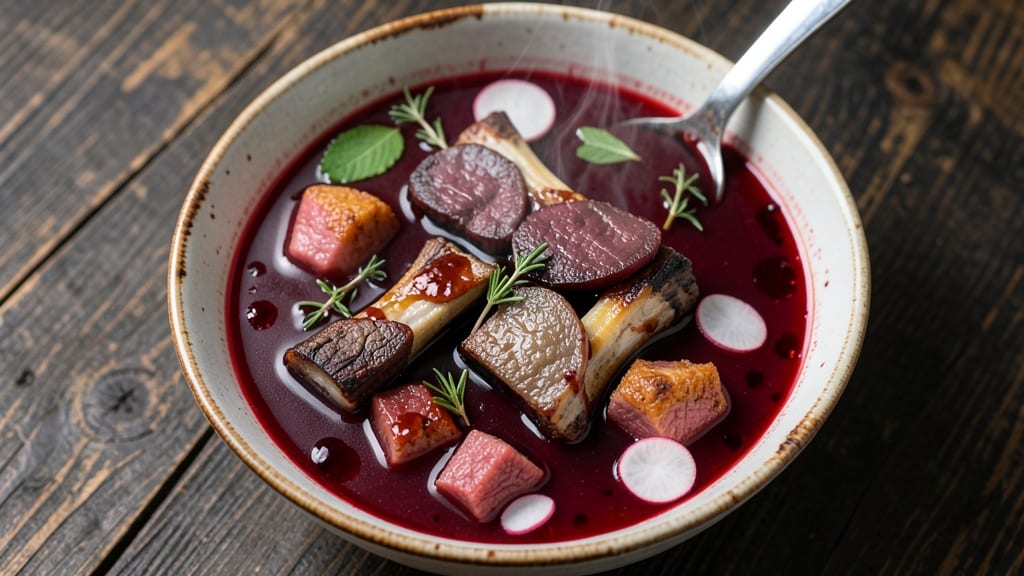
This blood soup recipe delivers the deep, savory richness of traditional Eastern European cuisine in every spoonful. My grandmother used to make it during winter, where the slow-simmered broth became the heart of our family table—warm, comforting, and packed with umami from bone marrow and organ meats.
The key lies in balancing blood's iron-rich intensity with aromatic herbs and vinegar, creating a dish that's both rustic and refined.
What sets this recipe apart is its dual-layered approach: a base of bone broth infused with marrow and organ meats, then finished with blood for color and depth. The simmering process extracts collagen for natural thickening, while vinegar brightens the earthy flavors.
Safety is critical—always use fresh, high-quality blood and proper sanitation to prevent spoilage. This isn't just soup; it's a labor of love that transforms humble ingredients into something extraordinary.
The result is a velvety, deeply flavorful broth with just the right balance of richness and acidity. Each bite delivers tender meat, gelatinous marrow, and a subtle metallic note from the blood that's both unexpected and addictive.
Serve it with crusty bread to soak up every last drop or accompany with pickled vegetables for contrast. This is the kind of dish that brings people together—not just to eat, but to remember.
For those new to blood-based cooking, start with smaller batches to perfect the technique. The recipe scales beautifully for gatherings, but the magic happens in the slow simmer and careful seasoning.
Trust the process, and you'll create something that tastes like home—whether it's your first time or your hundredth. Let's get started on this traditional masterpiece.
Ingredients for blood soup
The heart of this blood soup lies in its bones, blood, and slow-simmered umami magic.
| Ingredient | Amount | Notes |
|---|---|---|
| Beef Bones (marrow and knuckle) 🦴 | 4 lb | Organic, unwashed for flavor |
| Beef Liver 🍖 | 1 lb | Fresh, cleaned, sliced thin |
| Beef Heart 💓 | 1 whole | Cleaned, trimmed of fat |
| Beef Blood (fresh) 🩸 | 1 cup | From slaughtered animal, chilled |
| Red Wine Vinegar 🍷 | ½ cup | Balsamic or apple cider works |
| Fresh Thyme 🌿 | ¼ cup | Stems removed, loosely packed |
| Fresh Parsley 🌿 | ¼ cup | Flat-leaf preferred, chopped |
| Garlic Cloves 🧄 | 6 cloves | Peeled, smashed for infusion |
| Onion (yellow) 🧅 | 2 whole | Peeled, halved, charred |
| Carrots 🥕 | 3 whole | Peeled, cut into chunks |
| Celery Stalk 🌿 | 3 whole | Peeled, chopped into pieces |
| Bay Leaves 🌿 | 2 whole | Dried, whole leaves |
| Black Peppercorns 🌶️ | 1 tbsp | Crushed, fresh preferred |
| Salt 🧂 | 2 tsp | Diamond Crystal kosher |
| Olive Oil 🫒 | ¼ cup | Extra-virgin, for searing |
The bones are non-negotiable—marrow and knuckle deliver that gelatinous richness. Grab them from a trusted butcher or Costco's bulk section—they're often labeled as 'beef soup bones.' The liver and heart? Fresh is critical—they should smell clean, not ammonia-like. If you can't find beef blood, some butchers sell it frozen; otherwise, this isn't the dish for you. For the vinegar, Bragg's red wine vinegar is my go-to—it adds depth without overpowering. Thyme and parsley? Fresh from the farmers market if possible, but dried works in a pinch (use half the amount).
No fresh blood? This isn't a recipe to improvise—blood's metallic edge is essential. Can't find marrow bones? Substitute with beef shanks, but expect less gelatin. Swap red wine vinegar for apple cider vinegar or white vinegar, but adjust to taste. The onions and carrots can be roasted first for extra sweetness—toss them in the oven at 400°F for 20 minutes before adding to the pot. For a vegetarian twist (though not traditional), mushrooms and soy sauce can mimic some of the umami, but the texture won't be the same.
This soup tastes even better the next day—plan ahead. Store in an airtight container in the fridge for 3-4 days or freeze for up to 3 months. The blood will separate; just stir it back in before serving. For gatherings, double the batch—it reheats beautifully. Serve with crusty sourdough or pickled vegetables to cut through the richness. Leftovers? Freeze in ice cube trays for easy portioning later.
Why You'll Love This Recipe
- One-Pot Wonder: I swear by this—just toss the bones, liver, and heart into a pot with water, simmer until the marrow melts into the broth, then stir in the blood at the end. No chopping, no fuss, and the blood thickens the soup like magic.
- Rich Umami Bomb: That beef blood isn’t just an ingredient—it’s the secret weapon. The vinegar cuts through the richness, while the liver and heart add a deep, savory punch. Honestly, the first sip makes you wonder why you haven’t made this every week.
- Weeknight Workhorse: Need a meal that feeds a crowd but won’t take all day? This soup doubles effortlessly—make a big batch on Sunday, and you’ve got lunches covered. Freeze what you don’t use, and thaw it straight into a simmering pot when you’re short on time.
- Budget Booster: Between us, this is one of the most cost-effective soups I know. Bones and offal are cheap, and the blood? Often free if you ask your butcher. A single pot feeds four for under $10, and the leftovers taste even better the next day.
Step-by-step instructions for rich bone broth with umami depth
This isn't your grandma's broth—we're building a deep, complex base that transforms simple ingredients into something extraordinary.
Prepare and Sear the Bones for Maximum Flavor
Start by preheating your oven to 425°F. Pat the 4 lb beef bones (marrow and knuckle) completely dry with paper towels—this ensures maximum browning. Place them on a rimmed baking sheet and roast for 30 minutes, turning occasionally, until they develop a deep mahogany color. You're looking for that caramelized crust that will dissolve into the broth and create layers of flavor.
While the bones roast, heat 0.25 cup olive oil in a large Dutch oven over medium-high heat. Add the 1 whole beef heart (trimmed of fat) and 1 lb beef liver (sliced thin), searing for 3-4 minutes per side until they develop a golden crust. Remove and set aside—they'll infuse the broth with their rich, meaty essence. Don't overcrowd the pan or they'll steam instead of sear.
Build the Aromatic Base with Charred Vegetables
In the same Dutch oven, add 2 whole yellow onions (peeled and halved) and 3 whole carrots (peeled and cut into chunks). Sear for 8-10 minutes until deeply caramelized—this is where the sweetness develops. Add 3 whole celery stalks (peeled and chopped) and continue cooking for another 5 minutes until they soften and take on color.
Push the vegetables to one side of the pot and add 6 cloves garlic (peeled and smashed) and 1 tbsp crushed black peppercorns. Cook for 1 minute until fragrant—this quick cooking preserves their bright flavor. Add 2 whole bay leaves and stir everything together. The vegetables should be soft but still hold their shape, releasing their essence into the pot.
Simmer the Broth for Deep Umami Development
Return the seared beef heart and liver to the pot along with the roasted bones. Add 8 cups cold water (enough to cover everything by about 2 inches) and bring to a rolling boil. Once boiling, reduce heat to low and skim off any foam that rises to the surface—this removes impurities and gives you a clear broth.
Add 0.5 cup red wine vinegar, 0.25 cup fresh thyme, 0.25 cup fresh parsley, and 2 tsp salt. The vinegar brightens the broth while the herbs add herbal complexity. Cover the pot and let it simmer gently for 3 hours—this long cook time extracts collagen from the bones, creating a naturally thick, gelatinous broth. Stir occasionally to prevent sticking, but don't let it boil vigorously after the initial start.
Incorporate Blood for Richness and Finish
After 3 hours, strain the broth through a fine-mesh sieve into a clean pot, pressing gently on the solids to extract maximum flavor. Discard the solids. Return the strained broth to the heat and bring it to a gentle simmer. Slowly ladle in 1 cup fresh beef blood, whisking constantly to distribute it evenly—this creates the signature richness of blood soup.
Simmer for another 10-15 minutes until the broth reaches 195°F—this is the ideal temperature for gelatin to set properly. Taste and adjust seasoning with additional salt if needed. The broth should have a deep, savory umami quality with a hint of metallic richness from the blood. Let it cool slightly before serving, or chill for up to 3 days in the refrigerator.
Pro Tips For Making Blood Soup
- Blister the Bones First: Get those knuckle bones smoking—not simmering—over high heat for 10 minutes before adding liquid. I learned this the hard way: skipping this step means your broth stays cloudy and the marrow yields like glue instead of rich, buttery pools.
- Salt the Blood: Toss fresh beef blood with ½ teaspoon salt per cup before adding it to the pot. Unsalted blood clumps like rubber in your soup, and no amount of stirring later fixes it. (Yes, even if you’re impatient like me.)
- Strain Twice: First strain through a fine-mesh sieve to catch liver bits, then run it through cheesecloth for a silky finish. I used to skip the cheesecloth—big mistake. The difference between murky and restaurant-worthy is those last stubborn particles.
- Vinegar Last: Add red wine vinegar after the soup cools slightly—around 160°F (70°C)—or it’ll curdle the blood like a science experiment gone wrong. A splash too early turns your rich broth into a sad, lumpy mess. (Your future self will thank you.)
Troubleshooting your blood soup
Blood Separation Fix
If your broth looks cloudy or the blood separates after chilling, don’t panic—this is normal. Bring the soup back to a gentle simmer and whisk vigorously for 3-5 minutes. The heat will help re-emulsify the blood and clarify the broth.
For extra insurance, add 1 tsp cornstarch mixed with 2 tbsp cold water and stir until smooth. The starch acts as a gentle thickener without altering flavor. 💫
Broth Too Thin?
If your finished broth lacks body, you likely didn’t simmer long enough to extract collagen. Return the strained broth to the pot and simmer uncovered for an additional 1-2 hours, skimming any foam.
For quicker results, whisk in 1 tbsp cold water + 1 tbsp cornstarch and simmer for 5 minutes until thickened. Avoid over-salting—this can make thin broths taste even flatter.
Meat Too Tough?
The beef heart and liver should be tender after simmering. If they’re still chewy, you likely didn’t cook them long enough. Next time, simmer the broth for 4 hours total (including the initial 3-hour base).
For immediate fixes, shred the meat with forks and blend it into the broth for a smoother texture. The liver’s natural enzymes break down during long cooking, so patience is key!
Blood Overpowering?
Too much blood can make the soup taste metallic. Start with ½ cup blood and whisk it in gradually. If the flavor is still too strong, balance it with 1 tbsp red wine vinegar or a splash of lemon juice.
The acidity cuts through the iron notes beautifully. For a milder version, reduce blood to ⅓ cup and boost umami with 1 tbsp soy sauce instead.
Foam Won’t Stop?
Excessive foaming means proteins are breaking down too quickly. Skim the foam aggressively during the first 30 minutes of simmering, then reduce heat to lowest setting. Adding ½ tsp citric acid (found in baking aisles) can help stabilize the broth.
If foam persists, strain the broth again through a fine-mesh sieve lined with cheesecloth for a crystal-clear finish.
Safety Reminder
Never taste raw blood or undercooked meat—always bring the broth to at least 165°F before tasting. Use a thermometer to verify. Store leftovers in the fridge for 3-4 days or freeze for 3 months.
If the broth smells sour or develops a slimy texture, discard it immediately. Fresh ingredients and proper sanitation are non-negotiable for this recipe. 🔥
Nutrition facts
Frequently asked questions
Where can I find fresh beef blood for this recipe?
Fresh beef blood is available at most family-owned butcher shops or from farms where animals are processed on-site. Look for butchers who handle whole animals—many will save the blood for customers upon request. If you can't find it fresh, some specialty meat markets sell it frozen. Never use blood from grocery store meat counters, as it's typically not suitable for cooking.
Can I substitute beef blood with another ingredient?
While nothing perfectly replaces blood's unique metallic richness, you can try 1 tbsp soy sauce or ½ cup beef dashi for umami depth. For color, add 1 tsp beet juice or ½ tsp liquid smoke. Remember, blood adds both flavor and texture—these substitutes will alter the final result.
How do I know when the broth is properly cooked?
The broth is ready when it reaches 195°F and has a gelatinous consistency when chilled. The meat should be fork-tender, and the liquid should coat the back of a spoon. For safety, always cook to at least 165°F before tasting. The long simmer time (3+ hours) is crucial for extracting collagen and developing deep flavor.
What's the best way to serve this blood soup?
This rich soup pairs beautifully with crusty sourdough bread or fresh egg noodles to soak up the broth. For contrast, serve with pickled vegetables or a side of buttery polenta. In traditional settings, it's often accompanied by dark rye bread and a simple green salad. The blood's iron content makes it especially nourishing during cold months.
Can I make this recipe vegetarian?
A true vegetarian version isn't possible since blood is the core ingredient, but you can create a similar umami-rich broth using mushrooms (shiitake or portobello), soy sauce, and miso paste. For color, add beet juice or spirulina. The texture and depth won't be identical, but you'll achieve a hearty vegetable-based soup with complex flavors.