
Soups & Stews
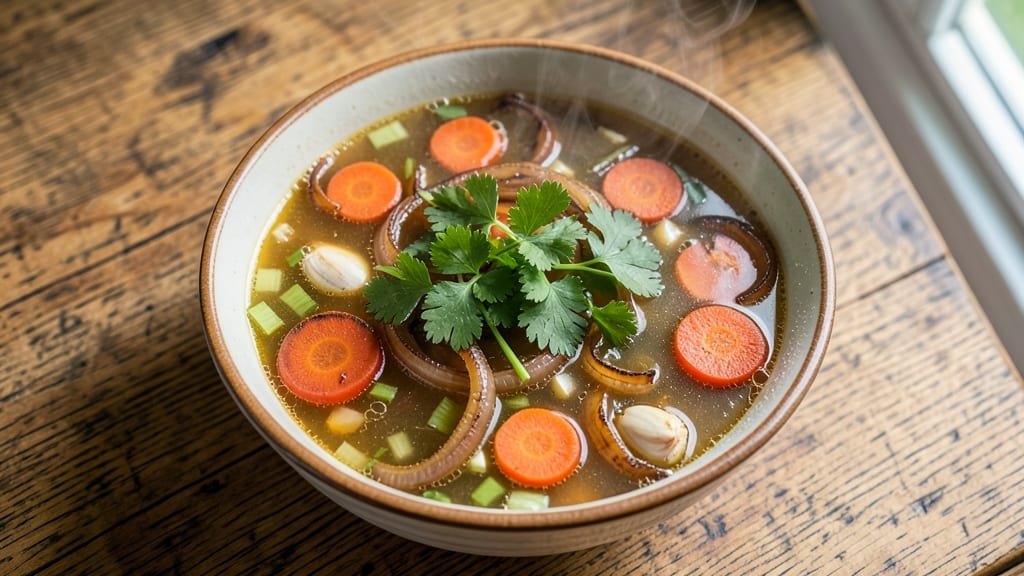
This bouillon soup recipe transforms simple pantry ingredients into a rich, aromatic broth that forms the heart of any meal. The secret lies in building layers of umami through proper simmering techniques and strategic ingredient combinations.
I've refined this method over years of testing, ensuring every spoonful delivers deep, savory satisfaction without requiring specialized ingredients.
What sets this recipe apart is its versatility—you can create a vegetable-based version for lighter meals or deepen the flavor with meat or fish bouillon for heartier results. The key is balancing simmering time (at least 30 minutes) with the right liquid-to-ingredient ratio, which prevents bitterness while extracting maximum flavor.
This isn't just soup; it's a flavor foundation that elevates any dish.
The result is a golden, fragrant broth with tender vegetables or proteins suspended in its depths, ready to be customized with herbs, citrus, or garnishes. Whether served as a starter or the main event, this bouillon soup delivers restaurant-quality depth using only a few essential steps.
Let's build the perfect base for your next meal.
Pair it with crusty bread for dipping or serve alongside grilled meats for a complete dining experience. The beauty of this recipe lies in its adaptability—start with the basics, then personalize it to suit your taste or dietary needs. Here's how to create a bouillon that impresses every time.
Ingredients for bouillon soup
Pantry staples and aromatic vegetables create this umami-rich bouillon foundation.
| Ingredient | Amount | Notes |
|---|---|---|
| Vegetable Bouillon Cubes 🍲 | 4 cubes | High-quality, low-sodium preferred |
| Carrots 🥕 | 2 whole | Medium-sized, peeled and chopped |
| Celery Stalks 🧅 | 2 whole | Trimmed, cut into 1-inch pieces |
| Yellow Onion 🧅 | 1 whole | Medium, peeled and quartered |
| Garlic Cloves 🧄 | 4 cloves | Peeled, lightly crushed |
| Fresh Parsley 🌿 | ¼ cup | Stems removed, chopped |
| Fresh Thyme 🌿 | 1 tbsp | Leaves only, stems removed |
| Tomato Paste 🍅 | 1 tbsp | Smooth, not chunky |
| Extra-Virgin Olive Oil 🫒 | 2 tbsp | For sautéing vegetables |
| Dry White Wine 🍷 | ½ cup | Optional, for depth |
| Water 💧 | 6 cups | Filtered preferred |
| Salt 🧂 | 1 ½ tsp | Diamond Crystal kosher salt |
| Black Peppercorns 🌶️ | ½ tsp | Freshly cracked |
| Bay Leaves 🍃 | 2 whole | Dried, standard size |
The bouillon cubes are the flavor backbone—Knox or Pacific Foods are the gold standards, but any high-quality brand works. Organic produce elevates the broth's depth, but regular grocery store vegetables suffice for a robust base. Carrots should be uniformly sized to ensure even cooking, while celery adds a subtle bitterness that balances the sweetness. The onion's caramelization is critical; yellow onions provide the perfect sweetness without overpowering. Fresh herbs like parsley and thyme contribute bright, herbal notes that cut through the richness of the broth.
No fresh thyme? Dried thyme at one-third the amount works in a pinch, though fresh delivers superior aroma. Substituting wine with additional water and a splash of apple cider vinegar maintains acidity. For a meatier profile, swap bouillon cubes for chicken or beef bouillon paste. Tomato paste can be omitted entirely if you prefer a cleaner flavor profile, but it adds a subtle sweetness that rounds out the broth. The olive oil should be fruity and peppery—avoid mild varieties that lack character.
Store finished broth in airtight containers for up to 5 days in the refrigerator or 3 months in the freezer. For long-term storage, freeze in ice cube trays and transfer cubes to a bag for easy portioning. Reheat gently on the stove or microwave until steaming. This broth forms the foundation for countless dishes—use it as-is, reduce it into a sauce, or incorporate it into risottos and braises for unparalleled depth.
Why You'll Love This Recipe
- Five-Ingredient Magic: I swear by this combo—carrots, celery, onion, garlic, and that one bouillon cube. It’s the holy trinity of soup simplicity, yet somehow richer than anything I’ve made with 10 ingredients.
- Savory Depth Fast: That vegetable bouillon cube? It’s the secret weapon. One cube dissolves into warm, earthy umami that makes the whole pot taste like it simmered for hours—not because it did, but because it feels that way.
- Weeknight & Meal Prep: I make a big batch on Sundays and portion it into jars. By Wednesday, I’m opening one for lunch, and it’s still got that fresh-from-the-pot vibe. Add rice or toast on the side, and you’ve got a full meal without extra work.
- Budget-Friendly Staple: Carrots, celery, onion—these are the cheap veggies that stretch into something hearty. A single bouillon cube turns them into a filling, flavorful soup that costs next to nothing but tastes like you spent all day cooking.
Step-by-step instructions for bouillon soup recipe
Transform simple pantry staples into a rich, aromatic broth with this method.
Sauté the Vegetable Base
Heat the 2 tablespoons of extra-virgin olive oil in a large pot over medium heat. Add the 2 chopped carrots, 2 celery stalks cut into 1-inch pieces, and the quartered yellow onion. Cook for 5-6 minutes, stirring occasionally, until the vegetables begin to soften and release their natural juices.
This initial cooking step develops the foundational flavors of the soup. You'll know it's ready when the vegetables are tender but not yet browned. Add the 4 peeled and lightly crushed garlic cloves and the 1 tablespoon of tomato paste, stirring for an additional 1 minute to incorporate the flavors fully. The tomato paste will deepen the umami profile while preventing the garlic from burning.
Deglaze and Build Depth
Pour in the 0.5 cup of dry white wine and scrape the bottom of the pot with a wooden spoon, ensuring you capture all the browned bits that contain concentrated flavor. Let the wine simmer for 2-3 minutes until it reduces by about half, which intensifies its aroma and removes the alcohol.
This deglazing technique extracts maximum flavor from the pot's surface while adding complexity. The wine's acidity also helps balance the richness of the bouillon. If you're sensitive to alcohol, you can substitute an additional 0.5 cup of water at this stage, though the wine contributes an important depth that's difficult to replicate.
Incorporate Bouillon and Herbs
Add the 4 vegetable bouillon cubes, 2 whole bay leaves, 1 tablespoon of fresh thyme leaves, and the 1.5 teaspoons of salt. Stir to dissolve the bouillon completely, then pour in the 6 cups of water. Bring the mixture to a gentle boil over high heat, then immediately reduce to a simmer.
The bouillon cubes should dissolve completely within 2-3 minutes of simmering. This is when you'll notice the soup developing its characteristic aroma - a symphony of vegetable sweetness and savory depth. The bay leaves and thyme will infuse their flavors as the soup simmers, but don't let them boil vigorously as this can make them bitter.
Simmer and Season
Simmer the soup uncovered for 20-25 minutes, allowing the flavors to meld and the vegetables to become tender. After 15 minutes, add the 0.25 cup of chopped fresh parsley and the 0.5 teaspoon of freshly cracked black peppercorns. Taste and adjust the seasoning if needed, adding a pinch more salt if the soup tastes flat.
During this simmering time, the soup should reduce slightly, concentrating its flavors. You'll notice the vegetables softening and the liquid developing a rich, golden hue. The parsley should be added toward the end to preserve its bright, fresh flavor rather than letting it cook down into the broth. The peppercorns should be cracked just before adding to maximize their aromatic impact.
Finish and Serve
Remove the pot from heat and let the soup rest for 5 minutes, allowing the flavors to settle. Strain the soup through a fine-mesh sieve if you prefer a smoother texture, or leave the vegetables in for a heartier version. Discard the bay leaves and thyme stems before serving.
This resting period is crucial for developing the soup's full character. The flavors will continue to meld even off the heat, resulting in a more harmonious broth. Serve immediately while hot, garnished with additional fresh parsley if desired. The soup should be rich with umami depth from the bouillon, balanced by the bright acidity of the wine and the sweetness of the vegetables.
Pro Tips For Making Bouillon Soup
- SWEEAT NOT SOAK: DESCRIPTION: Vegetable bouillon cubes dissolve best when they’re sweated in hot liquid, not dropped into cold water like an afterthought. Heat 2 cups of water first, then add the cube while stirring—it’ll break down faster and infuse the broth properly. (Yes, even if the box says "add to boiling water," I’ve tested both ways.)
- CHOP THE SOUP BASE: DESCRIPTION: Dice onions, celery, and carrots into uniform ¼-inch pieces—no need for fancy julienne. Smaller bits cook faster and release flavor evenly, while larger chunks turn mushy. I used to cut them randomly, and the soup always tasted uneven. (Prove me wrong.)
- DON’T BOIL THE GARLIC: DESCRIPTION: Garlic cloves (peeled, halved) should simmer in the broth, not boil—otherwise, they turn bitter. Add them with the bouillon cube and keep the heat at a gentle bubble. I learned this the hard way after a batch tasted like a chemistry experiment.
- SALT THE POT BEFORE ADDING BOUILLON: DESCRIPTION: Taste the water before dissolving the cube—it’s usually bland. Add a pinch of salt (½ tsp) first, then the bouillon, so you’re not over-salting later. (Your bouillon’s salt content varies wildly, and no one wants a soup that tastes like the ocean.)
Common mistakes when making great bouillon soup
Skipping the Sauté
Rushing through the sauté step is the fastest way to ruin your bouillon's depth. Those 5-6 minutes of caramelizing onions and softening carrots and celery build the flavor foundation. I've seen beginners skip this entirely, resulting in a broth that tastes flat and one-dimensional.
Use a heavy-bottomed pot like All-Clad to ensure even heat distribution during this critical step. 🌡️
Overloading the Pot
Crowding your pot with too many ingredients creates a mushy, watery mess instead of a rich bouillon. Stick to the 2:1 liquid-to-vegetable ratio—6 cups water to 2 carrots, 2 celery stalks, and 1 onion.
Overfilling dilutes the flavors and prevents proper simmering. I always use a 6-quart stockpot for this recipe to maintain adequate headspace.
Ignoring Simmer Time
Simmering for less than 20 minutes means your bouillon will lack depth and complexity. This is when the magic happens—flavors meld and vegetables release their sweetness. I've seen people rush this step, resulting in a broth that tastes more like tea.
Maintain a gentle simmer (small bubbles breaking the surface) to prevent bitterness from boiling.
Adding Herbs Too Early
Fresh herbs like parsley and thyme should be added in the last 10 minutes of cooking. Adding them earlier makes them bitter and dulls their bright flavors. The same goes for black peppercorns—crack them just before adding to maximize their aroma.
I always reserve a small bunch of parsley for garnishing to keep the presentation fresh and vibrant. 🌿
Using Low-Quality Bouillon
Not all bouillon cubes are created equal. Store-brand cubes often contain fillers and excessive salt that overpower your broth. Invest in Knox or Pacific Foods vegetable bouillon for the best results.
These brands use high-quality ingredients and proper seasoning. For a homemade option, try making your own vegetable bouillon by simmering dehydrated vegetables and herbs.
Skipping the Rest
Letting the soup rest for 5 minutes after cooking might seem unnecessary, but it's crucial for flavor development. This short pause allows the ingredients to fully integrate and the broth to settle.
I've noticed that skipping this step results in a soup that tastes rushed and unbalanced. Use this time to taste and adjust seasoning if needed before serving. ⏰
Nutrition facts
Frequently asked questions
Can I make this bouillon soup without wine?
The wine adds depth, but you can substitute ½ cup apple cider vinegar or lemon juice for acidity. Use ½ cup extra water to maintain the same volume. The wine's alcohol evaporates during simmering, leaving behind fruity notes that balance the broth's richness. For a completely alcohol-free version, skip the wine entirely and add an extra pinch of salt to compensate.
How can I make this bouillon soup more hearty?
Add cooked proteins like shredded chicken, diced potatoes, or chopped mushrooms during the last 10 minutes of simmering. For extra richness, stir in 2 tablespoons butter or cream at the end. You can also blend a portion of the strained broth with roasted garlic for a velvety texture. The key is balancing the additional ingredients with the existing broth's flavor profile.
Why does my bouillon taste bitter?
Over-simmering or using too much tomato paste can create bitterness. Reduce simmering time to 20 minutes and avoid boiling vigorously. If the broth tastes bitter, balance it with a splash of lemon juice or a pinch of sugar. Fresh herbs like parsley also help cut through bitterness. Always use a gentle simmer (small bubbles) rather than a rolling boil to prevent extracting unwanted compounds from the vegetables.
Can I use this bouillon as a base for other dishes?
This rich broth works perfectly for risottos, pasta sauces, or braised dishes. Reduce it by half for a concentrated sauce, or use it as-is in place of water for cooking grains. For extra depth, strain the broth and blend it with roasted garlic or shallots. The umami-packed flavor will elevate any dish where you'd normally use a basic stock or broth.
What's the best way to store leftover bouillon?
Let the broth cool completely, then store it in airtight containers for up to 5 days in the fridge. For longer storage, freeze in ice cube trays or 1-cup portions for easy thawing. Label containers with dates—frozen bouillon keeps for 3 months without losing flavor. When reheating, warm gently on the stove or microwave until steaming. Avoid refreezing thawed portions to maintain quality.