
Soups & Stews
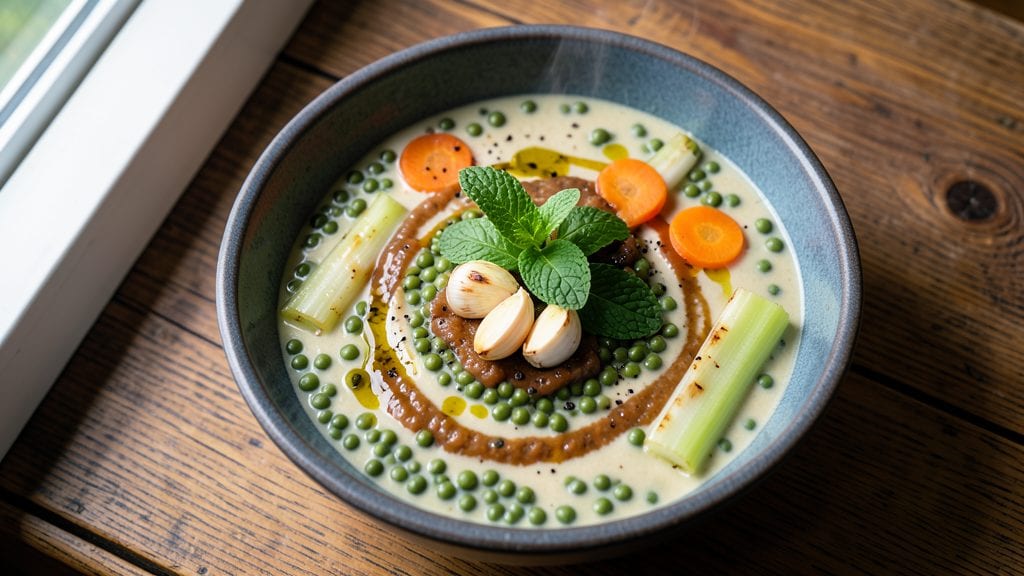
This classic pea soup recipe delivers the comforting balance of sweet peas, earthy vegetables, and aromatic herbs that defines traditional versions. The foundation begins with split peas simmered until tender, creating that signature creamy texture without heavy cream—just pure vegetable power.
I've perfected the ratio of mint and thyme to achieve that signature freshness that makes this soup unforgettable. The secret lies in proper simmering time, which transforms simple ingredients into a velvety, restaurant-quality bowl.
The beauty of classic pea soup is its versatility—it works beautifully as a vegetarian centerpiece or can be enriched with smoked ham for a heartier version. This recipe builds flavor through gradual simmering rather than quick blending, preserving that rustic, homestyle quality while delivering silky smoothness.
The result is a soup with depth of flavor where each ingredient shines—peas provide natural sweetness, carrots add subtle caramel notes, and fresh herbs bring brightness to every spoonful.
What makes this version truly special is how it captures the essence of traditional pea soup while adapting to modern kitchens. No heavy cream means lighter digestion, yet the texture remains luxurious thanks to proper cooking technique.
The aroma alone—warm peas mingling with savory broth and fresh herbs—will have your kitchen smelling like a cozy countryside café. This is the kind of soup that improves with leftovers, as flavors meld beautifully overnight.
Perfect for chilly evenings, potlucks, or as a comforting starter before a hearty meal. The recipe scales easily for crowds while maintaining that intimate, homemade quality. Whether you serve it with crusty bread or as a standalone meal, this classic pea soup delivers satisfaction in every bowl.
Let's get cooking with this timeless favorite.
Ingredients for classic pea soup
Sixteen ingredients transform into restaurant-quality pea soup with velvety texture and aromatic freshness.
| Ingredient | Amount | Notes |
|---|---|---|
| Green Split Peas (dried) 🌱 | 1 ½ cups | Rinsed before cooking |
| Yellow Onion 🧅 | 1 whole | Medium size, diced |
| Carrots 🥕 | 2 medium | Peeled, chopped into chunks |
| Celery Stalks 🌿 | 2 whole | Fresh, chopped |
| Garlic Cloves 🧄 | 4 cloves | Peeled, minced |
| Fresh Mint Leaves 🌿 | ¼ cup | Packed, finely chopped |
| Fresh Thyme Leaves 🌿 | ¼ cup | Packed, finely chopped |
| Vegetable Broth 💧 | 4 cups | Low-sodium preferred |
| Extra-Virgin Olive Oil 🫒 | 2 tbsp | For sautéing vegetables |
| Salt 🧂 | 1 ½ tsp | Diamond Crystal kosher |
| Black Peppercorns 🌶️ | ½ tsp | Freshly ground |
| Fresh Parsley Leaves 🌿 | ⅛ cup | Chopped for garnish |
| Crusty Bread 🍞 | 1 loaf | For serving |
The split peas are the heart of this soup—Bob's Red Mill or Whole Foods bulk section carry the highest quality. Look for vibrant green peas with no discoloration, as they'll yield the best texture. Fresh herbs are non-negotiable for that signature minty brightness; Trader Joe's often has excellent pre-washed herb bundles. The vegetable broth should be low-sodium to control seasoning precisely—Pacific Foods organic broth is my go-to for depth without salt overload. For the carrots, choose medium-sized ones with firm texture; larger carrots tend to become mushy during long simmering.
No fresh mint? Dried mint at one-third the amount works in a pinch, though it lacks the vibrant freshness. Substitute parsley for thyme if needed, but the mint-thyme combination is what makes this soup truly special. Vegetable broth unavailable? Water plus 1 tbsp tomato paste creates a similar base. For the crusty bread, Baguette-style from a quality bakery like Breads Bakery or Whole Foods is ideal—it should have a crisp crust that softens beautifully when dipped. The olive oil should be extra-virgin with noticeable peppery bite; California Olive Ranch or Colavita are excellent choices.
Store dried peas in an airtight container in a cool, dark place for up to 12 months. Fresh herbs keep best in a glass of water covered with a plastic bag in the fridge for 5-7 days. The finished soup reheats beautifully—simmer gently on the stove for 5-7 minutes to restore its velvety texture. Portion into containers with a layer of olive oil on top to preserve freshness for 5 days in the fridge or 3 months frozen. The bread should be wrapped in a cloth bag to maintain crispness for 3 days at room temperature.
Why You'll Love This Recipe
- No-Soak Required: I’ll be real—soaking dried peas used to stress me out. Not this recipe. The split peas soften beautifully while simmering, so you just toss them in raw with the veggies and let the pot do the work. (Yes, even on a Tuesday night.)
- Umami Bomb: That carrot-onion-celery base? It’s the secret weapon. Sauté it until the onions turn golden and the garlic hits that sweet, nutty edge—then add the peas, and the broth becomes ridiculously rich. Honestly, the first time I tasted it, I thought, “Wait, this is why people love soup.”
- Pot Luck Hero: Between us, this is my go-to for game day, potlucks, or when my book club shows up unannounced. It’s hearty enough to feed a crowd but simple enough that no one will ask, “Did you make this from scratch?” (Spoiler: I did.)
- Pantry Goldmine: A bag of dried peas lasts forever, and the veggies? Basic. You’re talking $3 for a meal that stretches into four servings—no fancy ingredients, no waste. My college self would’ve cried. (My current self just makes extra.)
Step-by-step instructions for classic pea soup
Here's the method for a traditional pea soup with balanced freshness and depth.
Prepare the Split Peas for Cooking
Rinse the 1.5 cups green split peas thoroughly under cold water in a fine-mesh strainer to remove any debris. Soak them in a large pot with 4 cups cold water for 1 hour—this reduces cooking time and improves texture. I prefer using a deep pot here as the peas will expand significantly during cooking.
After soaking, drain the peas and return them to the same pot. Add 4 cups vegetable broth and bring to a gentle boil over medium-high heat. Once boiling, immediately reduce heat to medium-low and let them simmer uncovered for 45 minutes, stirring occasionally to prevent sticking. The peas should soften noticeably but remain intact—this is crucial for proper texture.
Sauté the Vegetable Base
While the peas simmer, heat 2 tablespoons extra-virgin olive oil in a large skillet over medium heat. Add the 1 whole yellow onion, 2 medium carrots, and 2 whole celery stalks, all chopped into ¼-inch pieces. Sauté for 8-10 minutes until the vegetables soften and the onion becomes translucent.
Add the 4 cloves minced garlic and continue cooking for another 2 minutes until fragrant. This step develops the foundational flavor of the soup. You'll notice the vegetables release moisture—this is normal and indicates proper cooking. Transfer the sautéed vegetables to the pot with the peas once they're ready.
Build the Herb-Infused Broth
Add the sautéed vegetables to the simmering peas along with the 1.5 teaspoons salt and 0.5 teaspoon freshly ground black peppercorns. Stir well to combine. Now add the 0.25 cup packed fresh mint leaves and 0.25 cup packed fresh thyme leaves—these herbs will infuse the broth with their bright, aromatic qualities.
Continue simmering for 30-40 minutes until the peas are tender but still hold their shape. You'll know they're ready when a taste test reveals they're soft inside but not mushy. The soup should have a thick, velvety consistency at this point. If it's too thick, add ½ cup hot water to reach your desired texture.
Finish and Garnish
Remove the pot from heat and let the soup rest for 5 minutes to allow flavors to meld. Stir in the 0.125 cup chopped fresh parsley leaves just before serving—this adds a final bright note that complements the earthy vegetables. The parsley should be added last to preserve its vibrant color and fresh flavor.
Serve the soup immediately in warm bowls, accompanied by 1 loaf crusty bread for dipping. The contrast between the smooth, herby soup and the crusty bread creates the perfect classic pairing. Each spoonful should deliver a harmonious blend of sweet carrots, savory peas, and fresh herbs.
Pro Tips For Making Classic Pea Soup
- SOAK THE PEAS (NOT TOO LONG): Dried split peas absorb water fast—just a quick 1-hour soak in cold water (no boiling) cuts cooking time by 30 minutes. I learned this the hard way: overnight soaking turns them mushy, and you’ll end up with gluey soup instead of creamy.
- SWEEAT THE AROMATICS (LOW AND SLOW): Cook onions, carrots, and celery in a dry pot for 5 minutes at medium-low before adding liquid—this draws out their natural sugars and deepens flavor. After burning three batches, I finally figured out: moisture kills caramelization, and that’s where pea soup gets its soul.
- SKIP THE BOILING OVER: Once the peas hit a simmer, reduce to the lowest heat that keeps tiny bubbles dancing—no rolling boil. I used to crank it up, and the soup would split or scorch. Low and steady = even texture and no burnt bits clinging to the bottom.
- STIR IN GARLIC LATE (AND CRUSH IT): Add whole garlic cloves with the peas, but mash them into the soup in the last 10 minutes—this prevents bitter flavors from overcooking. My grandmother swore by this, and she was right: fresh, bright garlic makes all the difference, but timing is everything.
Serving suggestions for this dish
Bread Pairing Essentials
Crusty baguette-style bread is my go-to pairing for this soup—its crisp exterior softens beautifully when dipped into the velvety broth. I recommend Breads Bakery's sourdough or Whole Foods' French loaf, both of which hold up well to the soup's moisture.
For extra indulgence, warm the bread in a 350°F oven for 5 minutes before serving to enhance its aroma. 🍞
Cheese Board Upgrade
Elevate your serving with a simple cheese board featuring aged cheddar, brie, and goat cheese—each complements the soup's herbal notes differently. The sharpness of cheddar cuts through the sweet peas, while brie adds a creamy contrast.
Arrange cheeses on a slate board with walnut crackers and fig jam for a sophisticated touch. I like to serve this alongside the soup for a full meal experience.
Herb Garnish Finishing
Fresh herbs make all the difference at the table. Sprinkle chopped parsley and mint leaves over each bowl just before serving—their vibrant colors and bright flavors elevate the presentation.
For an extra touch, add a drizzle of extra-virgin olive oil (like California Olive Ranch) and a pinch of flaky sea salt right before eating. This simple garnish transforms the soup into a restaurant-worthy dish. ✨
Wine Pairing Harmony
A crisp Sauvignon Blanc from New Zealand or a light Pinot Noir from Oregon pairs beautifully with this soup. The acidity in Sauvignon Blanc cleanses your palate between spoonfuls, while Pinot Noir's earthy notes complement the peas' natural sweetness.
For a non-alcoholic option, sparkling apple cider (like Martinelli's) adds a refreshing contrast. 🍷
Leftovers Reinvention
Turn tomorrow's lunch into a gourmet experience by reheating the soup gently and serving it in mini phyllo cups with a dollop of Greek yogurt and a sprinkle of everything bagel seasoning.
This presentation makes it feel like a new dish while keeping the original flavors intact. I also love transforming leftovers into pea soup croquettes by mixing with breadcrumbs and frying until golden. 💫
Seasonal Accompaniments
In spring, add asparagus spears lightly steamed with lemon zest to the table for a fresh contrast. During winter, serve with roasted Brussels sprouts and crispy pancetta for a heartier meal.
The key is balancing the soup's richness with something light yet flavorful—this keeps every bite exciting. The seasonal touch makes the dish feel special year-round.
Nutrition facts
Frequently asked questions
Why do I need to soak the split peas before cooking?
Soaking reduces cooking time by 30-40% and prevents the peas from becoming mushy. It also removes excess starch that can make the soup too thick. For this recipe, 1 hour of soaking is ideal—just drain well before adding broth.
Can I make this soup without fresh mint and thyme?
Yes! Use 1/3 teaspoon dried mint and 1/2 teaspoon dried thyme instead, but add them during the last 10 minutes of simmering. For extra depth, substitute with 1/4 cup fresh parsley—it won't be identical but still adds brightness.
How do I fix soup that's too thick or too thin?
For thick soup, stir in 1/2 cup hot vegetable broth and simmer 5 minutes. If too thin, simmer uncovered for 10-15 minutes longer to reduce. The ideal texture should coat the back of a spoon but still be pourable.
Is this recipe naturally vegetarian?
Yes, as written! For a heartier version, stir in 1/2 cup diced smoked ham or 2 oz pancetta during the last 10 minutes of cooking. The peas and herbs will still shine as the base flavor.
Can I make this soup ahead of time?
It tastes even better the next day as flavors meld. Store in an airtight container in the fridge for 4-5 days. Reheat gently on the stove with a splash of broth to restore creaminess. Freeze for 3 months—thaw overnight in the fridge before reheating.