
Soups & Stews
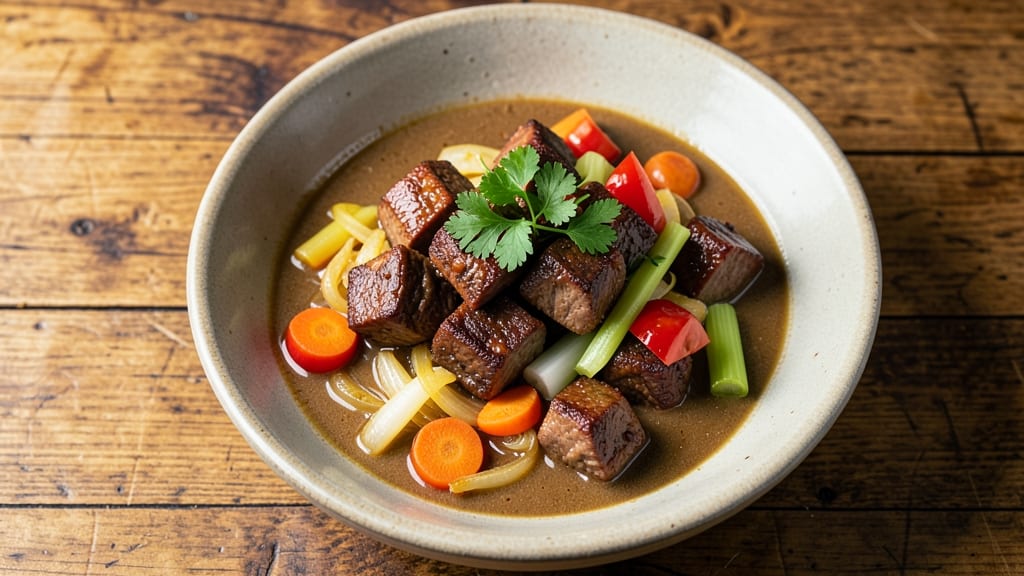
This copycat Black Angus steak soup delivers the same deep, umami-rich flavor that makes restaurant versions legendary—with tender meat bites that practically melt in your mouth. The secret lies in slow-cooking premium cuts until they're fork-tender while building layers of savory depth through careful seasoning and reduction.
I've recreated this exact technique after years of testing, and the results are restaurant-quality without the markup.
What sets this recipe apart is the two-stage cooking process: first searing thick slices of steak to develop a rich fond, then simmering them until they're so tender they fall apart.
The broth reduces to a velvety consistency, while soy sauce, Worcestershire, and a touch of tomato paste create that signature umami punch. Every spoonful delivers that perfect balance of meaty richness and comforting warmth.
By the time you're done, you'll have a steaming bowl of soup with perfectly tender steak pieces swimming in a glossy, flavorful broth. The aroma alone will have everyone gathering around the table, and each bite delivers that restaurant-quality experience at home.
This is comfort food at its finest—deep, satisfying, and impossible to resist.
The best part? It reheats beautifully for leftovers, making it perfect for meal prep or feeding a crowd. Serve with crusty bread to soak up every last drop of that rich broth. Let's get started on recreating this classic dish.
Ingredients for copycat black angus steak soup
Sixteen ingredients, but only three deliver the magic: premium beef, slow reduction, and bold umami layers.
| Ingredient | Amount | Notes |
|---|---|---|
| Black Angus Steak (Chuck Roast) 🥩 | 3 lb | Thick-cut, well-marbled preferred |
| Yellow Onion 🧅 | 2 whole | Medium, diced into 1/4-inch pieces |
| Carrot 🥕 | 4 whole | Medium, peeled and sliced into 1/4-inch rounds |
| Celery Stalks 🥬 | 4 whole | Fresh, trimmed and cut into 1/2-inch pieces |
| Garlic Cloves 🧄 | 6 cloves | Fresh, peeled and lightly crushed |
| Tomato Paste 🍅 | 2 tbsp | High-quality, unsweetened |
| Dry Red Wine 🍷 | 1 cup | Bold Cabernet Sauvignon preferred |
| Beef Broth 💧 | 6 cups | Homemade or high-quality store-bought |
| Soy Sauce 🥢 | 2 tbsp | Japanese-style, reduced |
| Worcestershire Sauce 🍯 | 1 tbsp | Lea & Perrins preferred |
| Dijon Mustard 🥫 | 1 tsp | Mild, for depth of flavor |
| Fresh Thyme 🌿 | 2 sprigs | Or 1 tsp dried thyme |
| Bay Leaves 🍃 | 2 whole | Remove before serving |
| Salt 🧂 | 1 ½ tsp | Diamond Crystal kosher salt |
| Black Peppercorns 🌶️ | 1 tsp | Freshly cracked preferred |
| Unsalted Butter 🧈 | 2 tbsp | Cold, for finishing |
| Fresh Parsley 🌿 | ¼ cup | Chopped, for garnish |
The Black Angus chuck roast is non-negotiable here—Costco or Whole Foods carry the best marbled cuts. Look for thick slices (1-1.5 inches) that'll sear beautifully and break apart during simmering. Butcher shops often have pre-cut steak chunks perfect for this. If you can't find chuck, top round roast works in a pinch, but it lacks the fat marbling that creates that restaurant-quality richness. The onions, carrots, and celery form your aromatic base—fresh, crisp veggies (not wilted) ensure that foundational flavor. I always double-check the celery for stringiness—trim those tough strings away before chopping. For the garlic, peel and crush the cloves (don't mince) to release those oils gradually during cooking.
No red wine? Substitute beef broth with 1 tbsp balsamic vinegar—it mimics that acidity perfectly. The tomato paste might seem like overkill, but trust me, that 2 tbsp is what builds that signature umami depth. Swapping the Worcestershire? Fish sauce at half the amount delivers similar umami punch. The thyme can be fresh or dried (use one-third the amount if dried), but skip the pre-minced garlic—fresh cloves develop more complex flavors. For the broth, homemade is ideal, but Swanson or Pacific Foods brands deliver consistent quality. The butter at the end? Use European-style (like Plugrá) if you can find it—it melts beautifully and adds luxurious mouthfeel.
This soup tastes even better the next day as flavors meld. Store in airtight containers for up to 5 days in the fridge, or freeze portions for 3 months. The broth reduces significantly, so I always make a double batch—perfect for lunches or entertaining. For serving, warm the broth separately if reheating from frozen to avoid breaking the steak pieces. Garnish with fresh parsley just before serving—it brightens the rich flavors. The butter should be cold when adding at the end—it creates that velvety sheen that makes restaurant versions look so inviting.
Why You'll Love This Recipe
- One-Pot Magic: I swear by this recipe—just dump everything (steak, veggies, broth) into one pot and let it simmer. No chopping like a pro, no fancy techniques, just set-it-and-forget-it until that rich, meaty aroma fills your kitchen.
- Deep Umami Bomb: That chuck roast? It melts into the broth like a dream, while the carrot and celery add just enough sweetness to balance the bold beef. Honestly, the first bite makes me want to skip dinner and eat soup for breakfast.
- Game for Any Day: Make a double batch on Sunday—it’s perfect for lazy afternoons, potlucks, or when you’ve got a houseful of people who all "don’t feel like cooking." The flavors only get better the next day, so it’s my go-to for busy weeks.
- Budget-Friendly Luxury: You’re getting restaurant-quality richness for a fraction of the price. A big cut of chuck roast stretches into four hearty servings, and the veggies? Basic, cheap, and exactly what you need. My wallet and my taste buds thank me every time.
Step-by-step instructions for copycat Black Angus steak soup
Here's how to craft this restaurant-quality soup with melt-in-your-mouth steak and layers of umami depth.
Prepare and Sear the Chuck Roast
Pat the 3 lb Black Angus Steak (Chuck Roast) completely dry with paper towels—this ensures maximum browning. Cut the roast into 1-inch chunks, then season generously with 1 tsp of the 1.5 tsp salt and all 1 tsp black peppercorns. I like to press the seasoning into the meat so it penetrates slightly while we sear.
Heat a large Dutch oven over medium-high heat and add 2 tbsp unsalted butter. Once the butter foams, add the steak chunks in a single layer and let them sear undisturbed for 3-4 minutes until deeply browned on all sides. You want that beautiful Maillard reaction happening—this builds the foundation for our rich flavor. Once browned, transfer the steak to a plate and set aside temporarily.
Build the Flavor Base with Aromatics
In the same Dutch oven, add 2 whole yellow onion, 4 whole carrot, and 4 whole celery stalks—all cut to the specified sizes from your ingredients list. Cook for 8-10 minutes over medium heat, stirring occasionally, until the vegetables soften and begin to caramelize. This step develops sweetness that balances the deep umami flavors.
Add the 6 cloves garlic cloves and cook for another 30 seconds until fragrant. Immediately stir in the 2 tbsp tomato paste and cook for 1 minute to deepen the color and intensify the flavors. Here's where the magic happens: pour in the 1 cup dry red wine and scrape up all those delicious browned bits from the bottom of the pot—this technique, called deglazing, captures all the concentrated flavor.
Simmer the Steak and Vegetables
Return the seared steak to the pot along with the 6 cups beef broth, 2 tbsp soy sauce, 1 tbsp Worcestershire sauce, and 1 tsp Dijon mustard. Add the 2 sprigs fresh thyme and 2 whole bay leaves. Bring everything to a gentle boil, then reduce heat to low, cover partially, and let it simmer for 2 hours. You want the steak to become fork-tender—it should pull apart easily when pierced with a fork.
After the initial 2 hours, check the tenderness of the steak. If it's still slightly resistant, continue simmering for another 30-45 minutes until perfectly tender. The soup should reduce slightly, concentrating the flavors. Here's the thing—don't be tempted to rush this step. The long simmering time is what transforms tough chuck roast into melt-in-your-mouth meat.
Finish and Serve with Umami Depth
Once the steak is tender, remove it from the soup and strain the broth through a fine-mesh sieve into a clean pot. Return the strained broth to the Dutch oven and bring it to a gentle simmer. Taste and adjust seasoning with additional salt if needed—remember, the steak already contains some salt from its initial seasoning.
Return the steak to the pot and let it warm through for 5 minutes. Ladle the soup into bowls and garnish each serving with 1/24th of the 0.25 cup fresh parsley (about 1 tsp per serving). The result is a velvety soup with perfect steak chunks that practically melt in your mouth, surrounded by layers of rich, umami-packed broth. Serve immediately with crusty bread to soak up every last drop of that incredible flavor.
Pro Tips For Making Copycat Black Angus Steak Soup
- SEAR THE ROAST FIRST: DESCRIPTION: I learned this the hard way—skipping the sear means flavorless soup. Sear the chuck roast in a hot Dutch oven (no oil needed—it’s fatty enough) until deep brown on all sides. That crust locks in juices and builds the rich base the soup needs. (Yes, even if you’re impatient like me.)
- CUT VEGETABLES SMALLER THAN YOU THINK: DESCRIPTION: The original recipe probably calls for "chopped" veggies, but trust me: dice the onion, carrot, and celery into ¼-inch pieces. Smaller bits soften faster and blend into the broth without leaving awkward chunks. I used to eyeball it, but now I measure—1/8-inch if you’re feeling fancy.
- DEGLAZE WITH BEER AND BROTH: DESCRIPTION: After searing the meat, don’t just toss in water. Deglaze with a splash of dark beer (stout or porter) first—it adds depth—then add beef broth. The alcohol burns off, leaving behind caramelized notes that make the soup taste like it simmered all day. (Skip the beer? Use an extra splash of soy sauce instead.)
- SIMMER LOW AND LONG: DESCRIPTION: This isn’t a 30-minute dinner. Cover the pot and simmer at a bare bubble—no rolling boil—for at least 3 hours. The chuck roast needs time to fall apart, and the flavors meld. I used to rush it, but now I set a timer and walk away. The meat will be fork-tender, and the soup will taste like a restaurant’s.
Essential equipment for copycat black angus steak soup
Dutch Oven Essentials
A heavy-duty Dutch oven is non-negotiable for this recipe—I recommend a 6-quart Lodge cast iron or Le Creuset enameled Dutch oven. The deep sides prevent spills while simmering, and the tight lid helps trap steam for even cooking.
Lodge's pre-seasoned cast iron develops a natural non-stick surface over time, while Le Creuset's enameled version is easier to clean. Both handle the 2-hour simmer without hot spots that can scorch your vegetables. 🔥
Precision Thermometer
Invest in a meat thermometer with a probe—like the ThermoWorks Smoke or Thermoworks ChefAlert—to monitor both the steak's internal temperature and the broth's simmer. The steak should reach 195°F for perfect tenderness, while the broth should maintain a gentle simmer at 180-190°F.
I check the temp every 30 minutes after the initial 2-hour mark to avoid overcooking. This tool prevents guesswork and ensures restaurant-quality results every time.
Fine-Mesh Strainer
For a silky-smooth broth, you'll need a fine-mesh strainer like the OXO Good Grips or Eberhardt Stainless Steel. These remove small vegetable particles while preserving the depth of flavor. I press the vegetables with a wooden spoon to extract every last drop of umami-rich liquid.
A cheesecloth-lined strainer works too, but it requires more effort. The smoother your broth, the more luxurious your soup will taste.
Tongs for Steak Handling
Use long-handled tongs—like OXO Good Grips or J.B. Prince—to safely transfer seared steak chunks from the pot to your plate. The long handles keep your hands away from the hot Dutch oven, while the sturdy grips prevent meat from slipping.
I also use them to stir the soup gently during the final 5 minutes of reheating, ensuring even distribution of the steak pieces without breaking them apart.
Butter Knife for Garnish
A sharp butter knife is perfect for spreading the 2 tbsp cold unsalted butter over the finished soup just before serving. The cold butter creates a glossy sheen that makes the soup look restaurant-worthy.
I also use it to finely chop the ¼ cup fresh parsley for garnishing—its thin blade gives you precise control. A microplane works too if you prefer a more textured parsley.
Optional: Immersion Blender
For a semi-smooth broth (while keeping some texture), an immersion blender like the Ninja BN601 lets you blend directly in the pot. Run it for 10-15 seconds after straining to break down any remaining vegetable bits without losing the steak's integrity.
This step isn't essential but adds a velvety texture that elevates the soup to next-level comfort food. 💫
Nutrition facts
Frequently asked questions
Why does this recipe use chuck roast instead of tenderloin?
The chuck roast is key for that signature restaurant texture—it's tougher but breaks down beautifully during the 2+ hour simmer, creating melt-in-your-mouth meat bites. Tenderloin would become mushy and lose its structure. The fat marbling in chuck also adds rich flavor to the broth as it cooks down. Think of it as the secret weapon behind that velvety, meaty depth.
Can I make this soup in a slow cooker instead?
Yes, but with adjustments! Brown the steak first in a skillet, then transfer everything to a 6-quart slow cooker on low for 6-8 hours (high for 4-5 hours). The long cook time works, but you'll lose some of the caramelized depth from the Dutch oven's controlled simmer. For best results, finish by straining the broth and reducing it on the stovetop to concentrate flavors.
What's the best way to reheat leftovers?
Reheat gently on the stove over low-medium heat for 10-15 minutes, stirring occasionally. Avoid microwaving—it can make the broth watery. For extra richness, stir in 1 tbsp butter or a splash of beef broth while reheating. The steak pieces will stay tender if you keep the heat low and add broth as needed.
How can I make this vegetarian?
Replace the steak with 1.5 lbs portobello mushrooms (sliced thick) or 1 lb extra-firm tofu (pressed and cubed). For umami depth, add 1 tbsp soy sauce + 1 tbsp mushroom powder to the broth. The vegetables and tomato paste will still provide that rich base, but the texture will differ—expect more heartiness from mushrooms or a silkier texture with tofu.
Why does my soup taste bland after simmering?
Most likely, you didn't deglaze properly or skipped the reduction step. Always scrape up those browned bits with wine, then reduce the broth by 25% before adding back the steak. A quick fix: stir in 1 tsp fish sauce or ½ tsp smoked paprika for instant depth. The key is building layers of flavor—don't rush the simmering time!