Soups & Stews
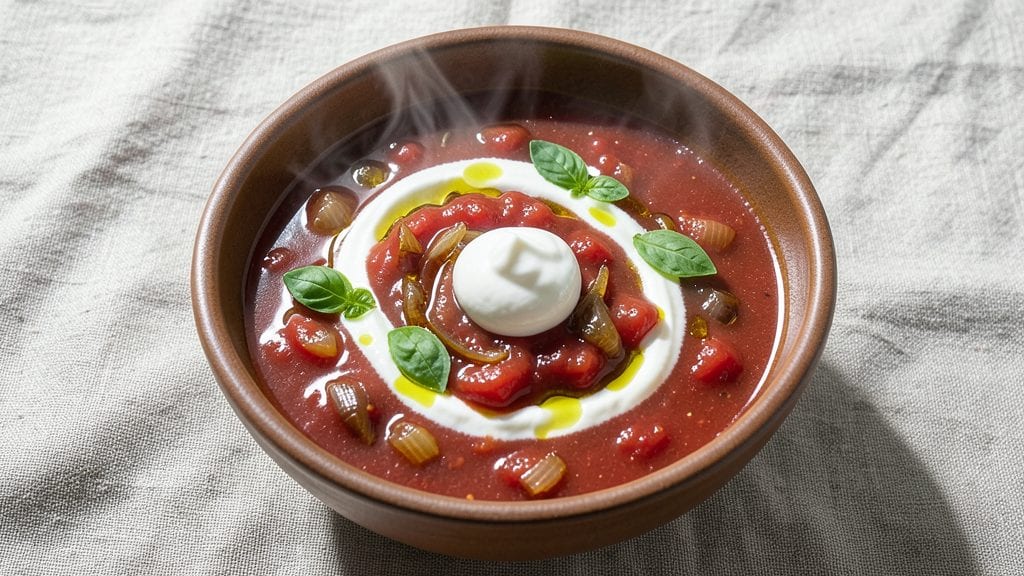
This copycat tomato soup recipe delivers the creamy velvety texture and hidden herb magic that makes restaurant versions so irresistible. The secret lies in balancing canned tomatoes with a velvety broth base, then blending just enough to create that signature smoothness without losing depth.
After years of testing variations, I’ve perfected the technique to ensure every spoonful delivers that perfect balance of tangy, savory, and rich flavors.
The foundation starts with sautéed onions and garlic—the aromatic base that builds flavor before adding tomatoes and broth.
A splash of cream at the end transforms the soup into a luscious, velvety consistency, while a blend of fresh herbs (like basil and thyme) adds that subtle complexity that sets this apart from basic recipes. The result? A soup that’s restaurant-quality at home without requiring specialty ingredients.
What makes this recipe stand out is the emulsification trick—simmering the cream into the hot soup rather than adding it cold—to prevent curdling and create that ultra-smooth finish. The texture is luxuriously creamy yet still bright enough to let the tomatoes shine through.
Serve it with a sprinkle of fresh basil and a swirl of cream for that final touch of elegance.
This soup is versatile enough for weeknight dinners or holiday gatherings, and the technique scales perfectly for small batches or large crowds. Whether you’re recreating a favorite memory or introducing someone to the magic of creamy tomato soup, this recipe delivers every time.
Ingredients for copycat tomato soup
Pantry staples meet fresh herbs for this restaurant-worthy tomato soup.
| Ingredient | Amount | Notes |
|---|---|---|
| Yellow Onions 🧅 | 2 whole | Diced into 1/4-inch pieces |
| Garlic Cloves 🧄 | 4 cloves | Minced finely for aromatic base |
| Extra-Virgin Olive Oil 🫒 | ¼ cup | For sautéing onions and garlic |
| Canned San Marzano Tomatoes 🍅 | 28 oz | Crushed, not diced, for texture |
| Vegetable Broth 💧 | 4 cups | Low-sodium preferred for balance |
| Heavy Cream 🥛 | ½ cup | Full-fat for velvety texture |
| Fresh Basil Leaves 🌿 | ¼ cup | Packed, stems removed for garnish |
| Fresh Thyme Sprigs 🌿 | 2 sprigs | Leaves only, stems discarded |
| Diamond Crystal Kosher Salt 🧂 | 1 ½ tsp | Adjust to taste after blending |
| Freshly Ground Black Pepper 🌶️ | ½ tsp | Cracked peppercorns preferred |
| Granulated Sugar 🍬 | 1 tsp | Balances acidity in tomatoes |
| Unsalted Butter 🧈 | 2 tbsp | For finishing touch of richness |
The foundation begins with San Marzano tomatoes—their natural sweetness and low acidity create the perfect base. Whole Foods or Italian markets carry these canned tomatoes, but any high-quality crushed tomatoes work in a pinch. Fresh thyme and basil add the hidden herb magic mentioned in the intro; Penzeys Spices sells dried thyme if fresh isn't available, though fresh leaves are ideal. For the onions, yellow onions provide the best balance of sweetness and bite when caramelized. Costco often sells large bags of onions at a better price than individual grocery stores, making this a budget-friendly ingredient. The garlic should be freshly minced—pre-minced garlic loses its punch quickly.
No San Marzano tomatoes? High-quality crushed tomatoes from a reputable brand like Muir Glen will work, though they may need a touch more sugar to balance acidity. Heavy cream is non-negotiable for that velvety texture—half-and-half can be substituted, but the result will be lighter. Fresh herbs can be swapped for dried basil and thyme at one-third the amount, though the flavor will be less vibrant. Vegetable broth should be low-sodium to avoid over-salting the soup; homemade broth adds depth but isn’t required. For a dairy-free version, coconut milk can replace the cream, though the texture will differ slightly. Unsalted butter at the end adds richness without altering the soup’s balance—salted butter can be used, but reduce the added salt accordingly.
This soup tastes even better the next day as flavors meld. Store in an airtight container in the refrigerator for up to 5 days. For freezing, portion into single-serving containers—the texture holds up well when reheated gently. Reheat on the stovetop over medium-low heat, stirring occasionally, until warmed through. The emulsification trick mentioned in the introduction means the soup should be hot but not boiling when adding the cream to prevent curdling. Garnish with fresh basil leaves and a swirl of cream just before serving for that final touch of elegance.
Why You'll Love This Recipe
- Five-Ingredient Magic: I swear, this soup is foolproof. Sauté onions and garlic in olive oil until sweet, toss in San Marzano tomatoes and broth, then simmer. That’s it. No fancy techniques—just good stuff.
- San Marzano Secret: Honestly, the tomatoes make all the difference. Their natural sweetness and low acidity turn this into something rich and velvety, not tart or watery. (Yes, even on a Tuesday night.)
- Lunch or Dinner: Between us, this soup works for breakfast with toast, lunch with grilled cheese, or dinner with crusty bread. I’ve served it at potlucks, family dinners, and solo nights—no judgment here.
- Budget-Friendly Leftovers: A single can of tomatoes and a box of broth stretch to feed four for dinner and two for lunch the next day. Plus, it tastes just as good reheated as it does fresh. My wallet and I both approve.
Step-by-step instructions for creamy velvety tomato soup
Here's how to recreate that signature restaurant-style tomato soup with a velvety texture and subtle herb complexity.
Develop the Aromatic Base
Heat the 0.25 cup extra-virgin olive oil in a large Dutch oven over medium heat. Add the 2 whole yellow onions, diced into ¼-inch pieces, and cook for 8-10 minutes until they become translucent and just beginning to caramelize at the edges. This slow cooking process builds deep sweetness that forms the foundation of the soup.
Add the 4 cloves minced garlic cloves and the leaves from 2 sprigs fresh thyme. Stir for 30 seconds until fragrant—you should detect the garlic's pungent aroma and thyme's earthy notes. Be careful not to let the garlic burn, as it will turn bitter and overpower the delicate tomato flavor. The thyme leaves will infuse subtle herbal complexity without dominating.
Build the Tomato Base
Pour in the 28 oz crushed canned San Marzano tomatoes, stirring to combine with the aromatic base. Add the 4 cups vegetable broth, the 1.5 tsp diamond crystal kosher salt, and the 1 tsp granulated sugar. Bring the mixture to a gentle boil over medium-high heat, then immediately reduce the heat to maintain a simmer.
Let the soup cook uncovered for 20-25 minutes, stirring occasionally. This allows the flavors to meld and the tomatoes to break down completely, creating a smooth, velvety texture. The sugar helps balance the natural acidity of the tomatoes while the salt enhances all the flavors. You'll know it's ready when the soup has reduced slightly and the flavors are cohesive and rich.
Create the Creamy Texture
Remove the thyme stems and add the 0.25 cup packed fresh basil leaves to the soup. Stir in the 0.5 cup heavy cream and the 2 tbsp unsalted butter, letting the mixture simmer gently for an additional 5 minutes. The cream will begin to thicken the soup, creating that signature velvety texture, while the butter adds a luxurious richness.
Use an immersion blender to purée the soup until completely smooth, or carefully transfer it to a countertop blender in batches. The result should be a silky, velvety consistency with no visible chunks. If the soup is too thick, thin it with a splash of hot vegetable broth as needed. Taste and adjust seasoning with additional salt or pepper if necessary, remembering that the cream and butter have already contributed significant flavor.
Finish and Serve
Return the soup to the Dutch oven and maintain a gentle simmer for 3-5 minutes to allow the flavors to meld completely. The soup should be hot but not boiling, allowing the delicate cream and herb notes to shine through. Ladle the soup into warmed bowls, garnishing each serving with a sprinkle of fresh basil leaves and a few cracked black peppercorns.
Serve immediately while hot, as the cream will continue to thicken as it cools. This soup pairs beautifully with crusty bread or grilled cheese sandwiches, and the subtle thyme and basil notes add an unexpected depth that elevates it beyond basic tomato soup. The velvety texture comes from the careful balance of cream, butter, and proper cooking technique, ensuring each spoonful delivers that restaurant-quality experience at home.
Pro Tips For Making Copycat Tomato Soup
- Sweat, Don’t Burn: Yellow onions need patience—cook them over medium-low heat for 8–10 minutes until soft and translucent, not browned. I used to rush this and end up with bitter, charred bits that ruined the whole soup. Let them break down fully before adding garlic.
- Crush Garlic Properly: Smash those garlic cloves with the flat side of your knife before mincing—this releases more flavor without burning. I was skeptical until I tried it; the soup now tastes deeper and richer, like it’s been simmering for hours.
- Simmer, Don’t Boil: Keep the soup at a gentle simmer (tiny bubbles, occasional swirls) instead of a rolling boil. Boiling breaks down the San Marzano tomatoes too fast, turning them mushy and dull. Low and slow = smooth, bright acidity.
- Strain for Silkiness: If you want that restaurant-style velvety texture, strain the soup through a fine-mesh sieve after simmering. It’s extra work, but the result is worth it—no seeds or skins to distract from the clean tomato flavor. (I skip this when I’m lazy, but the difference is noticeable.)
Dietary considerations for this copycat tomato soup
Gluten-Free Adaptation
This soup is naturally gluten-free, but always double-check your broth label—many store-bought vegetable broths contain hidden gluten. I recommend Imagine Foods or Pacific Foods gluten-free broths, which are just as flavorful as traditional options.
The San Marzano tomatoes and other ingredients are inherently gluten-free, so no substitutions are needed beyond the broth. 🌾
Dairy-Free Version
For a creamy texture without dairy, replace the 0.5 cup heavy cream with 0.5 cup full-fat coconut milk (like Thai Kitchen brand) and omit the butter. The coconut milk adds richness while keeping the soup dairy-free.
Taste after blending and adjust salt or sugar slightly—coconut milk has a naturally sweet profile that may balance the tomatoes differently. The texture will be slightly lighter but still velvety.
Low-Carb Option
To reduce carbs, swap the 2 whole yellow onions for 1 cup diced zucchini (about 1 medium zucchini) and skip the sugar entirely. The zucchini adds moisture without significant carbs, while the natural sweetness of the tomatoes remains.
For extra flavor, add 1 tsp onion powder to compensate for the missing onion. This version keeps the soup's richness while fitting low-carb diets.
Vegan Substitutions
For a fully vegan version, use 0.5 cup unsweetened cashew cream (blend ½ cup soaked cashews with ¼ cup water) instead of heavy cream. Replace the butter with 2 tbsp vegan butter (like Miyoko's) or extra olive oil.
The cashew cream provides a neutral, creamy base that mimics dairy. Add 1 tsp nutritional yeast for a cheesy depth if desired. The final texture will be slightly thinner but still luxurious.
Allergen-Friendly Notes
This recipe is free from common allergens like nuts, soy, and shellfish, but always verify ingredient labels. If you're sensitive to FODMAPs, reduce the onions to ½ cup and omit garlic entirely—substitute with 1 tsp asafoetida powder (a garlic substitute) for flavor depth.
For nightshade-sensitive individuals, omit the tomatoes and use 4 cups roasted red pepper purée (like Annie's brand) as the base instead.
Nutrition facts
Frequently asked questions
Why does this recipe use San Marzano tomatoes specifically?
San Marzano tomatoes are the gold standard for tomato soup because their thick, meaty flesh and natural sweetness create a richer base without excess acidity. The low acid content means you won't need as much sugar to balance flavors, and their consistent quality ensures every batch tastes like a restaurant version. For a budget-friendly alternative, Muir Glen or any high-quality crushed tomatoes work well.
Can I make this soup without an immersion blender?
Transfer the soup to a countertop blender in batches, being careful to avoid overfilling. For safety, leave about ½ cup of soup in the pot to help prevent splattering. Blend until completely smooth, then return to the pot and stir well. Always use the "pulse" setting first to break up any large chunks before blending fully.
What's the secret to getting that ultra-creamy texture?
The velvety texture comes from three key techniques: simmering the cream into hot soup (never cold), adding butter at the end for richness, and blending just enough to smooth without losing depth. The emulsification happens naturally when you stir the cream into the hot soup—this prevents curdling and creates that signature restaurant-style smoothness.
How do I store leftovers to maintain the best texture?
Store in an airtight container in the fridge for up to 5 days, or freeze for 3 months. For reheating, warm gently on the stovetop over medium-low heat, stirring occasionally—never microwave directly from frozen as this can make the cream separate. Add a splash of broth or water if the soup thickens too much when reheated.
Can I make this soup spicier?
Yes! Add ½ tsp red pepper flakes when sautéing the onions, or stir in 1 tbsp hot sauce (like Cholula) at the end. For smoky depth, add ½ tsp smoked paprika with the garlic. Remember that the cream will mellow some of the heat, so adjust to taste—start with less and add more if needed.