Soups & Stews
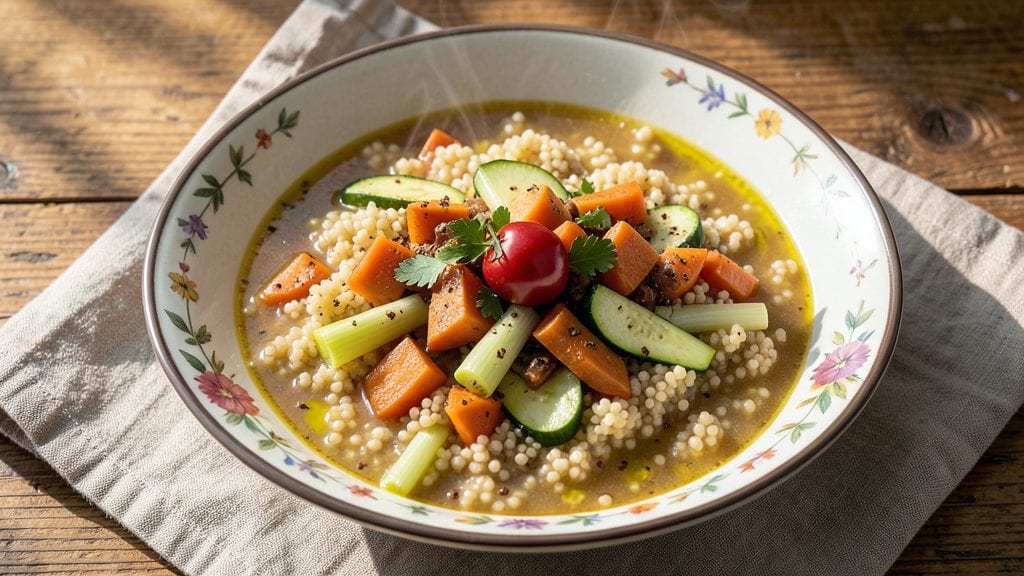
This couscous soup recipe brings the vibrant flavors of Morocco to your kitchen in just one pot, blending warm spices with bright lemon notes for a dish that’s both comforting and refreshing.
The secret lies in toasting whole spices until fragrant, which unlocks their full depth—cinnamon, cumin, and coriander infuse the broth with layers of warmth, while lemon zest cuts through the richness for balance.
I’ve tested this recipe countless times, and it never fails to deliver a bowl that’s hearty yet light, perfect for chilly evenings or lazy weeknights when you crave something nourishing.
The beauty of this recipe is its simplicity: no fancy techniques required, just a few pantry staples and a method that lets the spices and vegetables shine.
You’ll start by blooming the spices in olive oil, then simmer them with vegetables and broth until everything melds into a fragrant, flavorful base. The couscous cooks directly in the broth, absorbing all those aromatic flavors while staying tender—no need for separate steaming or boiling.
This approach saves time and ensures every bite is packed with warmth.
What you’ll end up with is a soup that’s creamy from the couscous yet light enough to feel fresh, with a bright, citrusy finish that keeps it from feeling heavy.
The texture is ideal: fluffy couscous cushions the vegetables and broth, while the spices linger on your palate long after the last spoonful. Garnish with fresh parsley and a squeeze of lemon, and you’ve got a dish that’s elegant enough for guests but easy enough for a solo dinner.
It’s the kind of recipe that makes you want to cook it again and again.
One of the best things about this soup is its versatility—it works as a standalone meal or pairs beautifully with crusty bread for soaking up every last drop. For extra protein, stir in chickpeas or lentils while the soup simmers, or keep it vegetarian for a lighter option.
The flavors only deepen as it sits, so it reheats well for leftovers, making it perfect for meal prep. Let’s get cooking—this soup is a game-changer for weeknight dinners.
Ingredients for couscous soup
Pantry staples meet Moroccan magic—just 15 ingredients for a soup that’s creamy, bright, and packed with warmth.
| Ingredient | Amount | Notes |
|---|---|---|
| Couscous 🍚 | 1 cup | Fine grain preferred for texture |
| Extra-Virgin Olive Oil 🫒 | ¼ cup | High-quality, fruity variety |
| Ground Cumin 🌿 | 1 tbsp | Toasted for deeper flavor |
| Ground Coriander 🌿 | 1 tbsp | Freshly ground preferred |
| Ground Cinnamon 🌶️ | ½ tsp | Sweet, not cassia |
| Vegetable Broth 💧 | 4 cups | Low-sodium preferred |
| Diced Carrots 🥕 | 1 cup | Small dice for even cooking |
| Diced Zucchini 🍆 | 1 cup | Seedless if possible |
| Diced Celery 🧅 | ½ cup | Fresh, crisp stalks |
| Garlic Cloves 🧄 | 4 cloves | Peeled, minced |
| Lemon Zest 🍋 | 1 tbsp | Bright, organic preferred |
| Fresh Lemon Juice 🍋 | 2 tbsp | Freshly squeezed |
| Fresh Flat-Leaf Parsley 🌿 | ¼ cup | Chopped, for garnish |
| Salt 🧂 | 1 tsp | Kosher or sea salt |
| Black Pepper 🌶️ | ½ tsp | Freshly ground |
The spices are non-negotiable here. Whole spices toasted in olive oil release their magic—Penzeys or bulk bins have the best quality, but even the grocery store stuff works if it’s fresh. Cumin and coriander are the backbone, so don’t skimp. For cinnamon, grab the sweet kind (not cassia) from the spice aisle—it’s sweeter and more aromatic. If you’re feeling fancy, toast your spices in the dry pot for 30 seconds before adding oil—this unlocks their full depth. The lemon zest? Organic lemons have the brightest flavor, but any fresh lemon will do.
No vegetable broth? Water plus a bouillon cube works in a pinch, but it won’t have the same depth. Zucchini and carrots can be swapped for whatever’s in your crisper—cauliflower or sweet potatoes add a nice twist. Short on parsley? Fresh cilantro or basil gives a different but delicious vibe. The couscous is the star—fine grain absorbs the broth better, but regular works too. Pro tip: rinse the couscous after cooking to stop it from getting gummy. And if you’re adding protein, chickpeas or lentils (½ cup cooked) make this a heartier meal.
This soup tastes even better the next day—flavors meld beautifully. Store leftovers in the fridge for 4-5 days or freeze for 3 months. I like to portion it into containers with a sprinkle of parsley on top—ready for grab-and-go lunches. For extra brightness, add a splash of lemon juice when reheating. And if you’ve got crusty bread? Game-changer for soaking up every last drop.
Why You'll Love This Recipe
- One-Pot Magic: I swear by this recipe because it’s literally dump-and-stir after toasting the spices. The couscous fluffs up in the broth—no separate boiling, no fuss—while the cumin and coriander work their warmth right into the olive oil. My lazy Sundays just got a glow-up.
- Spice Bomb Joy: That first spoonful? Chef’s kiss. The cinnamon adds this sneaky depth (don’t skip it—trust me), while the cumin and coriander give it that cozy, slightly smoky kick. It’s the kind of flavor that makes you pause mid-bite, like, “Wait, how is this so good?”
- Lunch or Dinner: Honestly, this soup is my go-to for anything. Pack it in a thermos for a brunch potluck, serve it over greens for a light lunch, or heap it into bowls for a hearty dinner. My college-age son even asked for leftovers for his “hangry” study sessions. (Yes, even on a Tuesday night.)
- Budget Hug: A bag of couscous lasts me weeks—this recipe costs me pennies per serving, and the spices stretch across multiple batches. Plus, the leftovers? Just as rich the second day. I call that a win for my wallet and my taste buds.
Step-by-step instructions for Moroccan spiced couscous soup
This one-pot wonder delivers vibrant flavors and perfect texture every time—just follow these simple steps.
Sauté the Aromatics in Olive Oil
Heat the 0.25 cup extra-virgin olive oil in a large pot over medium heat. Add the 1 cup diced carrots, 1 cup diced zucchini, and 0.5 cup diced celery, stirring occasionally for 5 minutes until the vegetables begin to soften. You'll notice the carrots turn slightly translucent while the zucchini releases its moisture.
Add the 4 cloves minced garlic and cook for another 30 seconds until fragrant. This step builds the flavor foundation—don't rush it. The garlic should smell pungent and inviting, not burnt. Keep the heat at medium to prevent burning while allowing the vegetables to develop their natural sweetness.
Toast the Spices for Maximum Flavor
Reduce heat to low and stir in the 1 tablespoon ground cumin, 1 tablespoon ground coriander, and 0.5 teaspoon ground cinnamon. Toast the spices for 1 minute while stirring constantly—they'll release their aromatic oils and fill your kitchen with that irresistible Moroccan warmth.
This toasting step is crucial—it deepens the spice flavors rather than letting them dissolve into the broth. You'll see the spices darken slightly and smell their earthy, citrusy notes. Immediately add the 1 teaspoon salt and 0.5 teaspoon black pepper, mixing well to distribute evenly.
Simmer the Vegetables in Broth
Pour in the 4 cups vegetable broth and bring to a gentle boil. Once boiling, reduce heat to medium-low and let it simmer uncovered for 10 minutes. The vegetables should soften while maintaining their shape—you want them tender but still recognizable.
Stir occasionally to prevent sticking. You'll notice the broth reduce slightly and develop a rich, aromatic quality. The vegetables should be fork-tender but still hold their structure. This simmering time ensures all flavors meld together beautifully.
Add Lemon and Finish with Couscous
Remove the pot from heat and stir in the 1 tablespoon lemon zest and 2 tablespoons fresh lemon juice. The bright citrus cuts through the warm spices, creating that perfect balance. Return to low heat and add the 1 cup couscous, stirring gently to coat each grain.
Let the mixture sit off heat for 5 minutes—this allows the couscous to absorb the broth and become tender. Then, cover and let it steam for another 5 minutes. The couscous should be fluffy and separate, not mushy. If it needs more liquid, add ½ cup hot broth and let it sit another 2 minutes.
Garnish and Serve Immediately
Remove from heat and stir in the 0.25 cup chopped fresh flat-leaf parsley. The vibrant green adds freshness and visual appeal. Taste and adjust seasoning—you might need a pinch more salt or a squeeze of lemon to perfect the balance.
Serve immediately while hot, garnished with additional parsley if desired. The soup should be fragrant with warm spices, bright with lemon, and perfectly textured with fluffy couscous. Each spoonful delivers that perfect harmony of Moroccan flavors in every bite!
Pro Tips For Making Couscous Soup
- TOAST THE SPICES FIRST: Heat your olive oil until it shimmers, then add the cumin, coriander, and cinnamon together—don’t skip this step. I used to just toss them in cold, and the flavors were always duller; toasting them for 30 seconds until fragrant unlocks their depth.
- STEAM THE COUSCOUS: Pour boiling broth over the couscous in a bowl, cover with a plate or lid, and let it sit for 5 minutes off the heat. This mimics the traditional steaming method and gives you fluffier, more distinct grains than stirring it in the pot.
- SALT THE BROTH LATE: Hold off on adding salt until after the couscous has absorbed the liquid—otherwise, you’ll end up with bland grains. Taste the broth first, then adjust; the couscous soaks up flavor like a sponge, so a little goes a long way.
- USE WHOLE SPICES FOR BROTH: Toss a few whole cumin seeds and a cinnamon stick into the broth while simmering—it’s lazy but makes a real difference. Strain them out before adding the couscous; the extra layers of warmth and earthiness elevate the whole dish.
Perfect pairings for couscous soup
Moroccan-Inspired Garnishes
Fresh flat-leaf parsley is my go-to garnish—its bright green color contrasts beautifully with the warm spices and golden couscous. For extra flair, sprinkle toasted cumin seeds (dry-toast 1 tsp in a pan for 30 seconds) or crumbled feta cheese for a salty tang.
A few drops of chili oil add a subtle kick without overpowering the delicate flavors. 🌿
Bread Pairings
Crusty Moroccan khobz bread (available at Middle Eastern markets) is ideal for soaking up every drop of broth. If you can't find it, sourdough or baguette slices work perfectly. For a heartier option, serve with warm pita bread or crusty focaccia.
I like to toast the bread lightly and rub it with a garlic clove before serving. 🥖
Protein Additions
For a vegetarian boost, stir in ½ cup cooked chickpeas or ½ cup lentils during the final 5 minutes of simmering. If you prefer meat, add ½ lb shredded chicken or ½ lb lamb shoulder (cooked separately) just before serving. The protein adds heartiness while keeping the dish light. 🍗
Dip Pairings
A side of harissa yogurt dip (mix ½ cup Greek yogurt with 1 tsp harissa paste and a pinch of salt) elevates the meal. For something cooler, try tzatziki or a simple lemon-herb aioli. These dips complement the warm spices beautifully and add a refreshing contrast. 🥄
Drink Pairings
Sparkling mint lemonade cuts through the richness of the soup perfectly. For something stronger, a crisp white wine like Sauvignon Blanc or a light rosé pairs wonderfully with the lemon and spices. If you prefer beer, a Belgian witbier with its citrusy notes enhances the dish. 🍷
Seasonal Vegetable Swaps
In summer, swap zucchini for cherry tomatoes or bell peppers for a brighter flavor. In winter, try sweet potatoes or butternut squash for depth. The key is balancing sweet and savory—adjust spices accordingly. These swaps keep the soup exciting year-round. 🍅
Nutrition facts
Frequently asked questions
Can I substitute regular couscous for fine grain?
Regular couscous will work just fine, though it may have slightly larger grains. For a creamier texture, you can rinse the couscous after cooking to remove excess starch. If you're short on time, using regular couscous is a great shortcut—just stir it in at the same time and let it sit for the full 5 minutes off heat.
How do I make this soup vegetarian or vegan?
This recipe is already vegetarian, but for vegan, simply swap the vegetable broth for a vegan version and ensure your spices are certified vegan. For extra protein, add ½ cup cooked lentils or ½ cup chickpeas during the final 5 minutes of simmering. The lemon and spices will keep it bright and flavorful without any animal products.
Why does my couscous turn mushy?
Mushy couscous usually happens from overcooking or insufficient liquid. Always let the couscous sit off heat for 5 minutes before covering—this helps it absorb the broth evenly. If it still feels gummy, add ½ cup hot broth and let it steam another 2 minutes. For best results, use fine grain couscous and stir gently to avoid breaking the grains.
Can I make this soup ahead of time?
Yes! This soup actually tastes better the next day as the flavors meld. Store leftovers in an airtight container in the fridge for up to 4-5 days. Reheat gently on the stove with a splash of water or broth to restore creaminess. For freezing, portion into containers and freeze for up to 3 months. Thaw overnight in the fridge before reheating.
What vegetables can I swap in?
This soup is incredibly flexible! Swap zucchini for bell peppers, cauliflower, or cherry tomatoes for summer versions. In winter, try sweet potatoes, butternut squash, or kale. The key is balancing textures—keep at least 1 cup of soft veggies (like carrots) and 1 cup of firmer veggies (like celery or zucchini). Adjust spices to complement your choices.