
Soups & Stews
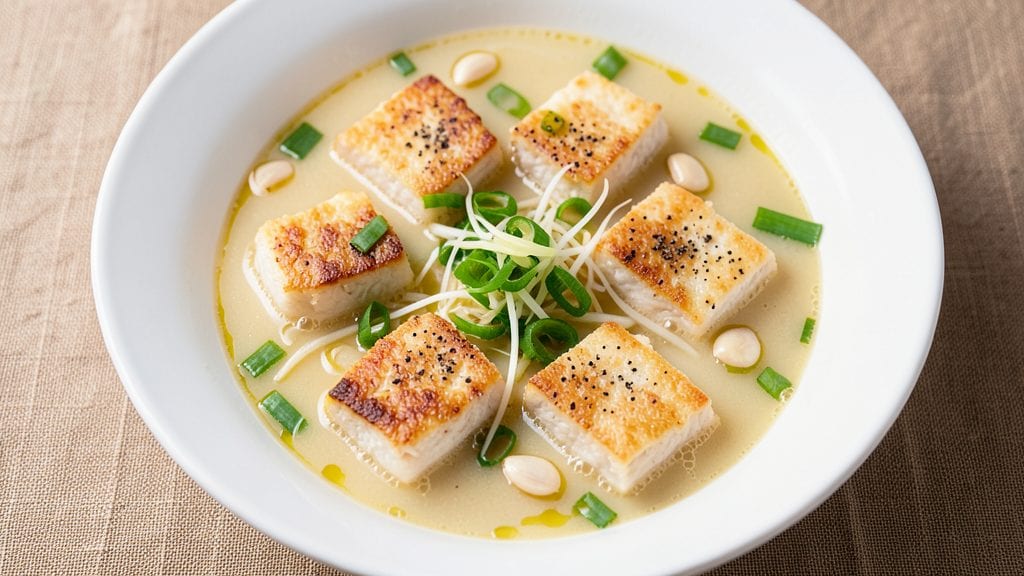
This fish cake soup recipe delivers the perfect balance of crispy golden bites and a silky broth that feels like a hug in a bowl.
The secret lies in delicate fish cakes that stay tender inside while developing a satisfying crunch, paired with a broth so rich it transforms simple ingredients into something extraordinary.
After years of perfecting the technique—especially the binding method and cooking time—I’ve created a version that’s both restaurant-worthy and achievable at home.
The fish cakes themselves are the star, made with fresh white fish, finely chopped vegetables, and a touch of cornstarch for that signature crispiness. They’re gently steamed first to set the structure, then pan-fried until golden brown, ensuring they hold their shape in the broth.
Meanwhile, the broth simmers low and slow, infused with aromatic ginger, garlic, and a splash of soy sauce for depth. The result? A harmonious blend of textures and flavors that’s impossible to resist.
What makes this recipe truly special is how the crispy fish cakes maintain their texture even after simmering, while the broth remains velvety smooth.
The contrast between the tender fish and the crunchy exterior creates every bite, and the aroma alone—warm, savory, and slightly sweet—will have everyone gathering around the table. This is comfort food at its finest, elevated by precise technique and simple, high-quality ingredients.
Serve it with a drizzle of chili oil for heat or fresh cilantro for brightness, and watch as it disappears from the bowl. The method scales easily for a crowd, and leftovers reheat beautifully, making it the perfect solution for busy weeknights or special gatherings.
Let’s get cooking—your taste buds won’t know what hit them.
Ingredients for fish cake soup
Simple ingredients transform into restaurant-quality fish cake soup with crispy bites and velvety broth.
| Ingredient | Amount | Notes |
|---|---|---|
| White Fish Fillets 🐟 | 1 lb | Cod or haddock preferred |
| All-Purpose Flour 🌾 | ½ cup | For binding fish cakes |
| Cornstarch 🌾 | ¼ cup | Essential for crispy exterior |
| Fresh Ginger 🧄 | 2 tbsp | Finely grated, aromatic |
| Garlic Cloves 🧄 | 4 cloves | Minced for aromatic base |
| Green Onions 🧅 | ¼ cup | Finely chopped, white and green |
| Eggs 🥚 | 2 whole | For binding mixture |
| Vegetable Oil 🫒 | ½ cup | For frying fish cakes |
| Dashi Broth 💧 | 4 cups | Homemade or quality store-bought |
| Soy Sauce 🍶 | ¼ cup | For depth of flavor |
| Sesame Oil 🫒 | 1 tbsp | For finishing aroma |
| Sea Salt 🧂 | 1 ½ tsp | Adjust to taste |
| White Pepper 🌶️ | ½ tsp | For subtle seasoning |
| Fresh Cilantro 🌿 | ¼ cup | Chopped for garnish |
| Chili Oil 🌶️ | 1 tbsp | Optional for serving |
The fish selection is critical—cod or haddock holds its shape best during cooking. Look for fillets with a firm texture and no fishy odor at Whole Foods or your local seafood market. Fresh ginger and garlic should be vibrant and aromatic—avoid dried ginger for this recipe. The dashi broth can be homemade (simmer kombu and bonito flakes) or store-bought like Hondashi. For the crispy exterior, cornstarch is non-negotiable—all-purpose flour alone won't give that satisfying crunch.
No dashi on hand? Substitute with seafood stock or even chicken broth in a pinch, though the flavor will be slightly different. Running out of sesame oil? Toast sesame seeds in a dry pan and grind them into a paste for a similar aromatic punch. The fish cakes can be made ahead and refrigerated for up to 24 hours—just pan-fry them fresh before adding to the soup. For extra richness, stir in a spoonful of butter or cream at the end, though the traditional version relies on the broth's natural depth.
This soup reheats beautifully—simmer gently on the stove for 5-7 minutes to restore its velvety texture. Store leftovers in an airtight container for up to 3 days in the refrigerator. The fish cakes will soften slightly but still hold their shape. For a crowd, double the recipe—just ensure you have enough space in your pot for the fish cakes to float comfortably. The aroma alone will have everyone anticipating that first bite of crispy, tender fish cake.
Why You'll Love This Recipe
- No-Fuss Assembly: I swear by this recipe because it’s the kind of dish where you can actually multitask. The fish cakes only need a quick flour-cornstarch dip—no rolling, no fuss—while the broth simmers. Honestly, I’ve made it while scrolling through emails, and it still turned out tender and golden.
- Ginger-Garlic Magic: That first spoonful of soup? Chef’s kiss. The fresh ginger and garlic aren’t just background players—they sing. The cornstarch gives the fish cakes that perfect bite, while the broth stays silky smooth. It’s the kind of flavor that makes you pause mid-bite, even if your hands are still sticky from chopping.
- Lunch or Dinner: Between us, this soup is my secret weapon for lazy days and busy nights. Pack it for work—it reheats like a dream—or serve it steaming hot with rice for a proper meal. My college-aged kid snags it for late-night study sessions, and my partner requests it after long shifts. It works everywhere.
- Budget-Friendly Leftovers: White fish is affordable, and a single batch stretches for days. I make double portions on Sundays, and by Wednesday, I’m still eating it—sometimes cold with chili oil, sometimes reheated with a sprinkle of green onions. No waste, no stress, just pure satisfaction. (Yes, even on a Tuesday night.)
Step-by-step instructions for fish cake soup with crispy golden bites
This method delivers perfectly crispy fish cakes that float in a silky broth—every bite is a balance of texture and flavor.
Prepare the Fish Cake Mixture
In a food processor, combine the 1 lb white fish fillets with the 0.5 cup all-purpose flour, 0.25 cup cornstarch, 1.5 tsp sea salt, and 0.5 tsp white pepper. Pulse until the mixture forms a coarse but even texture—this ensures the fish cakes hold together without being dense. Avoid over-processing, or the cakes will turn out rubbery.
Transfer the mixture to a mixing bowl and fold in the 2 whole eggs, 2 tbsp finely grated fresh ginger, 4 minced garlic cloves, and 0.25 cup finely chopped green onions. Mix gently with a spatula until fully combined. Here's the thing—don't overmix. Just until you see no dry spots remaining. The mixture should be moist but not wet, allowing the fish cakes to maintain their shape when fried.
Form and Fry the Fish Cakes
Heat the 0.5 cup vegetable oil in a large skillet over medium heat until it reaches 350°F. This temperature is critical—too low and the cakes will absorb oil; too high and they'll burn before cooking through. Test the oil by dropping a small piece of fish mixture into it; it should sizzle and rise to the surface immediately.
Using a spoon or ice cream scoop, carefully drop rounded portions of the fish mixture into the hot oil, spacing them about 1 inch apart. Fry for 3 to 4 minutes per side until golden brown and crispy. You'll know they're ready when the edges turn a deep golden color and the interior reaches 145°F. Transfer the cooked fish cakes to a paper towel-lined plate to drain excess oil. Keep them warm in a 200°F oven while you prepare the broth.
Simmer the Silky Broth
In the same skillet, reduce the heat to medium-low and add 4 cups dashi broth and 0.25 cup soy sauce. Bring to a gentle simmer and let it cook uncovered for 10 minutes to allow the flavors to meld. Here's where the magic happens—the broth should reduce slightly, intensifying its umami depth while remaining silky smooth.
Stir in the 1 tbsp sesame oil and adjust the seasoning with additional sea salt if needed. The broth should taste balanced—salty from the soy sauce, rich from the dashi, and aromatic from the sesame oil. If it's too thin, simmer for another 5 minutes to concentrate the flavors, but don't let it reduce too much or the fish cakes will absorb too much liquid.
Assemble and Serve
Return the crispy fish cakes to the simmering broth and let them warm through for 2 to 3 minutes. The heat from the broth will gently finish cooking the centers while keeping the exteriors crispy. Ladle the soup into bowls, ensuring each serving has at least 2 fish cakes floating in the broth.
Garnish each bowl with 1 tbsp chili oil and 1 tbsp chopped fresh cilantro. The chili oil adds a subtle heat that cuts through the richness of the fish cakes, while the cilantro brings a fresh finish. Serve immediately while the fish cakes are still crispy and the broth is steaming hot—this dish is best enjoyed right away for that perfect contrast of textures.
Pro Tips For Making Fish Cake Soup
- CHOP GINGER SMALL: I learned this the hard way—big chunks of ginger just sit there like stubborn guests. For fish cake soup, mince it into tiny pieces (almost paste-like) so it dissolves completely and flavors every bite. No one wants to chew mystery chunks in their broth.
- SEAR THE CAKES LOW: Crank the heat too high, and your fish cakes will steam instead of brown. Medium-low is the sweet spot—let them develop that golden crust for 2-3 minutes per side without rushing. Patience here makes the difference between "meh" and "wow."
- USE CORNSTARCH LAST: If you add it to the flour mix too early, it’ll turn gummy when wet. Keep it separate, then sprinkle it over the cooked fish cakes just before adding liquid. This keeps the soup silky instead of gluey—trust me, your spoon will thank you.
- DON’T OVERMIX THE BATTER: After burning three batches of dense, rubbery fish cakes, I finally stopped overworking the fish-flour mix. Just stir until combined—lumps are fine. The texture should be tender, not doughy, or your soup turns into a sad, dense blob instead of light, flaky bites.
Best sauces and condiments for these flavors
Sesame Oil Finish
The star of this soup’s aroma, sesame oil is what elevates the dish from good to unforgettable. I always use toasted sesame oil (like Kikkoman) because it carries deeper, nuttier notes than the lighter varieties.
Add it at the very end—just 1 tablespoon—while the broth simmers gently. The heat releases its aromatic compounds, filling your kitchen with that irresistible toasty-savory scent. 🌟
Pro tip: If you’re using untoasted sesame oil, warm it first in a small pan for 30 seconds over low heat to enhance its flavor. This step transforms the oil from subtle to bold, making it the perfect finishing touch for the soup’s umami-rich broth.
A little goes a long way—overdoing it can make the dish taste bitter.
Chili Oil Heat
For a kick that balances the soup’s richness, drizzle each bowl with 1 tablespoon of chili oil before serving. I love Lao Gan Ma chili oil for its smoky, slightly sweet heat, but homemade versions with dried chili flakes and garlic are just as delicious.
The oil should be warm but not hot—simmer it for 2 minutes before adding to the soup to mellow its intensity slightly.
If you prefer a milder heat, reduce the amount to ½ tablespoon or replace it with a sprinkle of red pepper flakes. The chili oil not only adds heat but also ties together the soup’s savory and aromatic elements with its smoky depth.
Trust me, this is the garnish that makes your fish cake soup feel like a restaurant-worthy dish. 🌶️
Soy Sauce Depth
The soy sauce in this recipe isn’t just for seasoning—it’s the foundation of the broth’s complexity. I recommend using Japanese-style soy sauce (like Kikkoman) for its cleaner, slightly sweeter profile.
Add ¼ cup to the simmering broth and let it reduce for 5-10 minutes to deepen its umami flavor without overpowering the delicate fish cakes.
For a richer broth, swap out half the soy sauce with dark soy sauce (like Lee Kum Kee)—it adds a deeper, almost caramelized note. If you’re using a lighter soy sauce, taste the broth as it simmers and adjust with a pinch of white miso paste for extra depth.
The goal is a broth that’s savory, balanced, and full of layers. 💛
Ginger-Garlic Base
Freshly grated ginger and minced garlic are the aromatic backbone of this soup, and they need to be handled right. I always use a microplane for the ginger to get fine, even strands that dissolve seamlessly into the broth.
For garlic, I crush the cloves with the flat side of my knife before mincing to release their enzymes—this ensures maximum flavor extraction.
Sauté these aromatics in a little oil for 1-2 minutes until fragrant but not browned before adding the broth. Overcooking them can turn the soup bitter, so keep an eye on the color.
The ginger should turn a pale golden hue, and the garlic should smell pungent but not burnt. This step is non-negotiable for building the soup’s depth of flavor. 🧄
Nutrition facts
Frequently asked questions
Can I make the fish cakes ahead of time?
Shape the fish cakes and refrigerate them on a tray for up to 24 hours before cooking. When ready, pan-fry them fresh from the fridge—they’ll still achieve that perfect crispy exterior. If freezing, wrap them tightly in plastic wrap and freeze for up to 1 month. Thaw in the fridge overnight before cooking to maintain texture.
What if my fish cakes fall apart when frying?
This usually happens when the mixture is overmixed or lacks enough binding agents. Make sure to pulse the fish in the food processor just until combined, not pureed. Add 1 extra tablespoon of cornstarch if needed, and keep the eggs cold when mixing. Also, don’t overcrowd the pan—fry in batches with enough space between cakes.
How do I adjust the soup for a creamier texture?
For a richer, velvety broth, stir in ¼ cup of coconut milk or heavy cream at the end of simmering. Alternatively, blend ½ cup of the broth with 1 tablespoon of butter until smooth, then return it to the pot. Keep in mind this will make the soup slightly heavier, so reduce the dashi by ½ cup to balance the consistency.
Can I substitute white fish with another type?
Yes, but choose firm white fish like tilapia, halibut, or mahi-mahi—they hold their shape best. Avoid flaky fish like salmon or cod (unless it’s fresh and high-quality), as they may disintegrate. If using frozen fish, thaw it completely and pat it very dry before processing to prevent a soggy mixture.
Why is my broth too salty?
This often happens when using store-bought dashi or soy sauce that’s highly concentrated. Taste the broth before adding the fish cakes and adjust by adding ¼ cup of warm water per cup of broth to dilute the saltiness. You can also balance it with a splash of rice vinegar (1 tsp) or a pinch of sugar (½ tsp) to refresh the flavor.