Soups & Stews
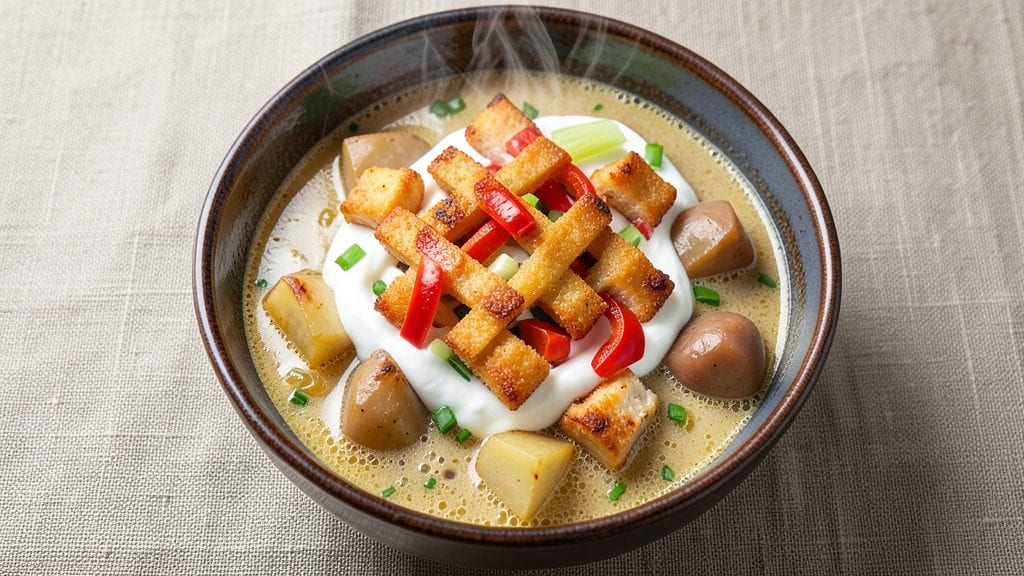
This halibut chowder soup transforms delicate white fish into a luxurious, velvety dish with a crispy bread topping that steals every bite. The secret lies in slow-cooked potatoes and onions that form the creamy base, while flaky halibut melts into tender, flake-perfect pieces.
After years of refining this recipe, I’ve perfected the balance between rich broth and delicate seafood—no fishy aftertaste here.
What sets this chowder apart is the two-stage cooking method: first simmering the vegetables until tender, then adding the halibut just long enough to warm through without overcooking.
The crispy bread topping, made with a simple mix of panko and melted butter, adds texture that contrasts beautifully with the silky soup. This isn’t your grandmother’s chowder—it’s a restaurant-worthy dish that feels like a hug in a bowl.
The result is a silky seafood velvet with layers of flavor: creamy potatoes, sweet onions, and the delicate sweetness of halibut. Each spoonful delivers a perfect harmony of textures—smooth broth, tender fish, and that satisfying crunch from the bread topping.
Serve it with a side salad or crusty bread to soak up every last drop.
Ready in under an hour, this chowder is perfect for chilly evenings or when you want to impress guests without spending all day in the kitchen. The instructions are straightforward, and the ingredients are simple—just quality seafood and fresh vegetables. Let’s get cooking!
Ingredients for halibut chowder soup
Quality seafood and fresh vegetables transform into this luxurious, velvety seafood chowder with a crispy bread crown.
| Ingredient | Amount | Notes |
|---|---|---|
| Halibut Fillets 🐟 | 1 ½ lb | Skinless, cut into 1-inch pieces |
| Yellow Onions 🧅 | 1 whole | Medium, thinly sliced |
| Russet Potatoes 🥔 | 2 lbs | Peeled, cubed into 1-inch pieces |
| Celery Stalks 🧅 | 3 whole | Trimmed, cut into 1-inch pieces |
| Heavy Cream 🥛 | 1 cup | Full-fat for creamy texture |
| Chicken Broth 💧 | 4 cups | Low-sodium preferred |
| Extra-Virgin Olive Oil 🫒 | ¼ cup | For sautéing vegetables |
| Fresh Thyme Sprigs 🌿 | 2 whole | Leaves only, finely chopped |
| Garlic Cloves 🧄 | 4 cloves | Minced for depth of flavor |
| Salt 🧂 | 1 ½ tsp | Diamond Crystal kosher salt |
| Black Pepper 🌶️ | ½ tsp | Freshly cracked black pepper |
| Japanese Panko Breadcrumbs 🍞 | ½ cup | For crispy bread topping |
| Unsalted Butter 🧈 | ¼ cup | Melted for bread topping |
| Fresh Parsley 🌿 | ¼ cup | Chopped for garnish |
| Lemon Juice 🍋 | 1 tbsp | Freshly squeezed |
The halibut is the star—fresh, sustainably sourced fillets make all the difference. Look for wild-caught halibut at your local seafood market or trusted grocers like Whole Foods or Trader Joe's. The potatoes should be firm and starchy—Russet or Yukon Gold work best. For the bread topping, Japanese panko gives that perfect crispiness. If you can't find it, regular breadcrumbs toasted in a dry pan work too, but panko is worth the hunt. The thyme and parsley? Fresh is non-negotiable here—dried just won't cut it.
No halibut? Cod or haddock work beautifully—just keep the pieces slightly larger so they stay intact. Short on cream? Half-and-half or coconut milk adds richness without overpowering. The broth is crucial—low-sodium chicken broth prevents the chowder from tasting flat. Want extra depth? Add a splash of dry white wine when sautéing the onions. The bread topping can be made ahead and toasted just before serving—store it in an airtight container at room temperature. And if you're feeling fancy, swap the parsley for chives or dill for a different herbal note.
This chowder reheats beautifully—just warm it gently on the stove, stirring occasionally. The bread topping? Toast it in the oven at 375°F for 3-5 minutes right before serving to keep it crispy. Store leftovers in the fridge for up to 3 days, but honestly, it tastes even better the next day as the flavors meld. Freeze portions for up to 2 months—just thaw overnight in the fridge. I always make a double batch because it disappears faster than you'd think, especially with that irresistible bread topping calling out for seconds.
Why You'll Love This Recipe
- One-Pot Wonder: I swear by this recipe because it’s basically a “dump and simmer” situation—just dice the potatoes and onions, toss in the halibut, and let the broth work its magic. No chopping boards full of scraps or multiple pans to wash.
- Creamy with Crunch: That first bite of flaky halibut cutting through the velvety heavy cream? It’s like a hug for your taste buds, especially when the potatoes get that tender-but-still-firm texture. The celery adds just enough bite to keep it from being too rich.
- Lunchbox Hero: Between us, this soup is my secret weapon for meal prep. The halibut stays moist when reheated, and I’ll often pack it in thermoses for work—just add a sprinkle of fresh parsley at home. (Yes, even on a Tuesday night.)
- Budget-Friendly Luxury: Halibut might sound fancy, but buying it on sale and freezing half means I get restaurant-quality flavor without the price tag. Plus, the leftovers taste just as good the next day—proof that good food doesn’t have to break the bank.
Instructions for halibut chowder soup with crispy bread topping
Here's how to create a velvety halibut chowder with that perfect crispy bread topping—every spoonful delivers rich seafood flavor and satisfying texture.
Sauté the Vegetable Base
Heat the 0.25 cup extra-virgin olive oil in a large Dutch oven over medium heat. Add the 1 whole yellow onions and 3 whole celery stalks, both cut into 1-inch pieces, and cook for 5-6 minutes until the onions become translucent and the celery softens slightly. This foundational step builds deep flavor through caramelization.
Add the 4 cloves minced garlic and 2 whole fresh thyme sprigs (leaves only, finely chopped) and cook for another 30 seconds until fragrant. The garlic should just begin to color—don't let it burn, or it'll turn bitter. Here's the thing—properly sautéed aromatics form the soul of any chowder. Push the vegetables to one side of the pot and add the 1.5 lb halibut fillets (cut into 1-inch pieces) to the empty space. Let them sear undisturbed for 2-3 minutes until golden brown on one side.
Build the Creamy Foundation
Pour in the 4 cups chicken broth and bring everything to a gentle simmer. Let the mixture bubble for 5 minutes to extract maximum flavor from the vegetables and halibut. The broth should be hot enough to cook but not so vigorous that it boils over—this is where patience pays off.
Add the 2 lbs russet potatoes (peeled and cubed into 1-inch pieces) and simmer for 10-12 minutes until the potatoes are fork-tender but still hold their shape. Here's the critical checkpoint: when you pierce a potato with a knife, it should slide in easily but not fall apart completely. If you notice the broth reducing too quickly, add ½ cup water to maintain proper consistency.
Create the Signature Creamy Texture
Reduce the heat to low and stir in the 1 cup heavy cream along with 1.5 tsp salt and 0.5 tsp black pepper. Let the soup simmer gently for 5-7 minutes until it reaches a luxurious, velvety consistency. The cream should blend seamlessly, creating that signature silky texture we're after. Taste and adjust seasoning—this is your chance to perfect the balance between the rich halibut, creamy base, and savory vegetables.
Remove from heat and stir in the 1 tbsp lemon juice. This brightens the entire dish, cutting through the richness while enhancing the seafood flavor. Let the chowder rest for 5 minutes to allow the flavors to meld completely. This resting period is non-negotiable—it transforms good soup into exceptional soup.
Prepare the Crispy Bread Topping
While the chowder rests, melt the 0.25 cup unsalted butter in a small skillet over medium heat. Add the 0.5 cup Japanese panko breadcrumbs and toast for 2-3 minutes, stirring constantly, until they turn a beautiful golden brown and smell toasty. The key here is constant stirring—if you let them sit too long, they'll burn before browning properly.
Remove from heat and immediately mix in the 0.25 cup chopped fresh parsley. The parsley adds a fresh, vibrant contrast to the rich chowder. Transfer the breadcrumb mixture to a small bowl and keep it warm until serving. This crispy topping is what makes this chowder truly special—it delivers that satisfying crunch with every bite.
Serve with Perfect Presentation
Ladle the warm chowder into bowls, dividing it evenly among 4 servings. Spoon the crispy bread topping generously over each portion, creating that beautiful contrast between the velvety soup and crunchy topping. Garnish with an additional sprinkle of chopped parsley if desired. Serve immediately while the bread topping is still crisp and the chowder maintains its perfect temperature.
The result should be a harmonious balance of textures and flavors—creamy yet substantial, rich yet bright, and topped with that irresistible crunch. Each spoonful delivers melt-in-your-mouth halibut, tender potatoes, and aromatic vegetables, all united in a velvety broth that's nothing short of extraordinary. This is the kind of chowder that makes people ask for seconds before they even finish their first bowl.
Pro Tips For Making Halibut Chowder Soup
- Sear Halibut First: Hit the fillets with a quick sear in butter or oil before adding liquid—just 2-3 minutes per side. This locks in flavor and keeps them from turning to mush later, especially with the long simmer ahead.
- Dice Potatoes Uniformly: Cut the russets into 1-inch cubes, not random chunks. Even-sized pieces cook at the same rate, so you won’t end up with some mushy and others still raw. (Yes, it’s tedious, but it’s worth it.)
- Salt the Potatoes Early: Toss the diced potatoes in salt and a splash of cold water before adding them to the pot. This jumpstarts the softening process and prevents them from absorbing too much liquid later, keeping the chowder thick and creamy.
- Whisk in Cream Slowly: Temper the heavy cream by mixing it in a separate bowl with a ladle of hot chowder first, then slowly stir it into the pot. Dumping cold cream straight in can curdle it—no one wants a lumpy chowder. (I learned this after one disastrous batch.)
Storing and reheating this dish
Refrigerator Storage
Transfer your halibut chowder to an airtight container (I love Pyrex glass containers) while still warm but not piping hot. Let it cool completely at room temperature for no more than 2 hours—this prevents bacterial growth.
Store in the fridge at 40°F or below for up to 4 days. The flavors actually deepen overnight as the spices meld together beautifully. 💫
Freezer Storage
For longer storage, freeze portions in quart-sized freezer bags with 1 inch of headspace to prevent expansion cracks. Seal tightly to avoid freezer burn. This chowder maintains quality for up to 2 months.
Thaw overnight in the fridge before reheating—never microwave directly from frozen. The texture remains creamy when reheated properly.
Stovetop Reheating
My preferred method is gentle stovetop reheating. Pour chowder into a heavy-bottomed pot and warm over medium-low heat for 8-10 minutes, stirring occasionally. Add 2-3 tablespoons of water or broth if it looks too thick.
The bread topping should be toasted fresh—375°F for 3-5 minutes—right before serving to maintain crispiness. 🔥
Microwave Reheating
For quick reheating, transfer chowder to a microwave-safe bowl and heat on 50% power for 2-3 minutes, stirring halfway. The bread topping can be reheated separately in the microwave for 15-20 seconds or toasted in a dry skillet.
This method works best for single servings—just be careful not to overheat or the cream may separate.
Bread Topping Preservation
The crispy bread topping stays fresh for 2 days at room temperature in an airtight container. For longer storage, freeze it separately in a ziplock bag for up to 1 month.
Toast directly from frozen in the oven at 375°F for 5-7 minutes—no thawing needed! This keeps that perfect crunch intact. The parsley should be added fresh after reheating for maximum flavor. ✨
Make-Ahead Tips
I always make a double batch because this chowder reheats beautifully. Store components separately: chowder in the fridge, bread topping at room temperature. When ready to serve, simply reheat the soup and toast the topping.
The halibut stays tender when reheated gently—never let it boil. This strategy saves time and ensures restaurant-quality results every time. 💡
Nutrition facts
Frequently asked questions
Can I substitute halibut with another fish in this chowder?
Cod or haddock work beautifully as substitutes—they have a similar mild flavor and firm texture. For delicate fish like flounder or sole, use slightly larger pieces (1.5 inches) so they don't fall apart during cooking. The key is to add the fish just before serving to maintain tenderness.
Why does my chowder look too thick after adding cream?
This usually happens if the potatoes release excess starch or the broth reduces too much. The fix is simple: stir in 2-3 tablespoons of warm water or broth until you reach a velvety consistency. For future batches, simmer uncovered for 5 minutes before adding cream to prevent over-thickening.
How can I make this chowder dairy-free?
Replace the heavy cream with 1 cup coconut milk (full-fat for best texture) and use a dairy-free butter substitute for the bread topping. For extra richness, add 1 tablespoon nutritional yeast when blending the cream—it adds a cheesy depth without dairy. The flavor remains creamy and satisfying!
Can I prepare the bread topping ahead of time?
Yes! The bread topping keeps well for 2 days at room temperature in an airtight container. For longer storage, freeze it in a ziplock bag for up to 1 month. Toast directly from frozen at 375°F for 5-7 minutes—no thawing needed! Just add fresh parsley after topping to keep it vibrant.
What's the secret to perfectly tender halibut in chowder?
The secret lies in timing: add the halibut pieces to the simmering broth just 5 minutes before serving. Overcooking turns flaky fish into rubbery chunks. For extra insurance, poach the halibut separately in simmering broth for 3-4 minutes before adding it to the finished chowder—this guarantees melt-in-your-mouth texture.