
Soups & Stews
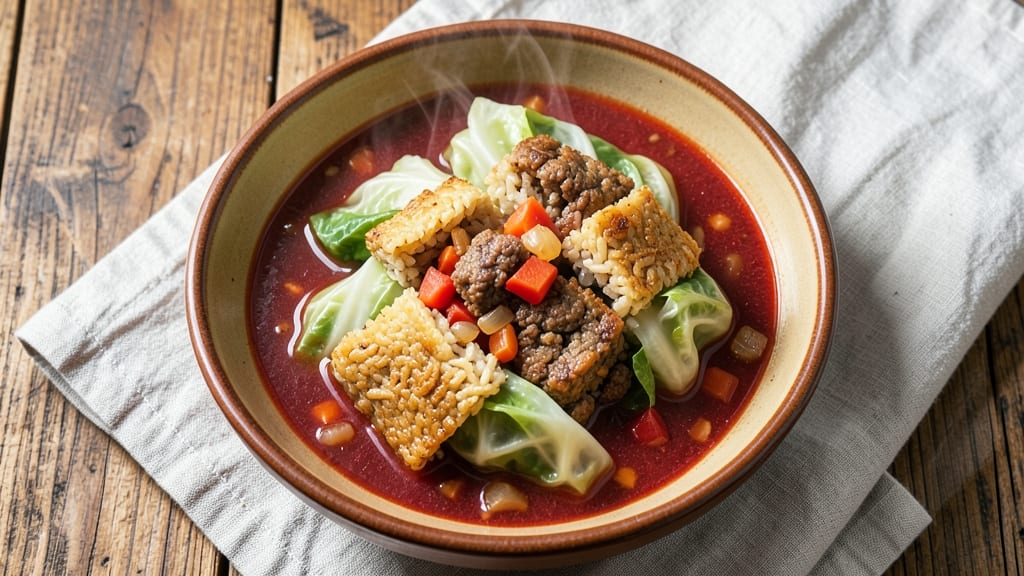
Hungarian stuffed cabbage soup transforms humble ingredients into a hearty, comforting dish that tastes like home. This traditional recipe combines tender cabbage leaves wrapped around savory meat and rice, simmered in a rich, aromatic broth until everything melds into perfect harmony.
The secret lies in proper cabbage preparation—softening leaves without tearing—and a filling that stays moist through hours of braising.
What makes this soup special is its balance of textures: crisp cabbage leaves give way to tender meat and fluffy rice, all swimming in a deeply flavorful broth infused with carrots, onions, and paprika.
Unlike many stuffed cabbage dishes that require individual wrapping, this version uses a clever layering technique that keeps everything intact while cooking. It’s the kind of recipe that improves with time, developing richer flavors as it simmers.
By the time you serve this soup, you’ll have a steaming bowl of rustic comfort—golden cabbage leaves peeking through a fragrant broth, each bite delivering layers of savory meat, herby rice, and subtle sweetness from the vegetables.
The aroma alone will have everyone gathered around the table, and the leftovers taste even better the next day. Perfect for chilly evenings or family gatherings, this dish proves that simple ingredients can create something extraordinary.
For those short on time, I’ve included a modern adaptation using ground meat instead of whole cuts, while keeping the traditional flavors intact. Let’s get cooking—this soup is worth every minute of preparation.
Ingredients for hungarian stuffed cabbage soup
Traditional flavors meet modern convenience in this hearty Hungarian stuffed cabbage soup.
| Ingredient | Amount | Notes |
|---|---|---|
| Cabbage (Green or Savoy) 🥬 | 1 whole | Large head, leaves removed |
| Ground Beef 🥩 | 1 ½ lb | 80/20 fat ratio preferred |
| White Rice (Long-Grain) 🍚 | 1 cup | Uncooked, jasmine or basmati |
| Yellow Onions 🧅 | 2 whole | Medium size, finely chopped |
| Carrots 🥕 | 4 whole | Medium size, peeled and sliced |
| Garlic Cloves 🧄 | 6 cloves | Fresh, minced |
| Sweet Paprika 🌶️ | 2 tbsp | Hungarian or smoked preferred |
| Tomato Paste 🍅 | ½ cup | Smooth, no sugar added |
| Beef Broth (Low-Sodium) 💧 | 4 cups | Homemade or high-quality |
| Bay Leaves 🌿 | 2 whole | Fresh or dried |
| Fresh Parsley 🌿 | ¼ cup | Chopped, for garnish |
| Black Peppercorns 🌶️ | 1 tsp | Freshly ground |
| Salt 🧂 | 1 ½ tsp | Kosher or sea salt |
| Vegetable Oil 🫒 | 2 tbsp | For sautéing |
The cabbage is the foundation—look for firm, crisp leaves with no yellowing. Savoy cabbage adds texture, but green works too. Whole Foods or local markets often carry fresher heads than grocery stores. If using green, remove the tough outer leaves first. For the meat, 80/20 ground beef ensures juiciness—leaner blends dry out during the long simmer. Pre-chopped onions and carrots from the produce section save time, but fresh always tastes better. The paprika? Hungarian sweet paprika (like Szegedi) delivers that authentic flavor, but regular sweet works in a pinch.
No fresh parsley? Dried works at half the amount, but fresh brightens the dish. Short on beef broth? Chicken broth plus 1 tbsp soy sauce mimics depth. The tomato paste can be substituted with 1 cup crushed tomatoes, though it'll be slightly less concentrated. For a vegetarian twist, swap the beef for lentils or mushrooms—just reduce the broth by 1 cup to maintain balance. The rice should be uncooked here; it absorbs the broth beautifully during cooking. If you prefer a different texture, try quinoa or wild rice instead.
This soup tastes even better the next day—3-4 days in the fridge, or freeze portions for up to 3 months. Store in airtight containers with a splash of broth to keep the cabbage moist. For serving, ladle into bowls and garnish with extra parsley and a drizzle of oil. Leftovers reheat beautifully—just add a splash of water or broth if it thickens too much. Double the batch; it disappears fast during cold weather.
Why You'll Love This Recipe
- One-Pot Magic: I swear by this recipe because it’s actually one-pot—no fussing with separate pans or layers. Just brown the beef with onions, cook the rice right in the pot, and tuck those cabbage leaves in like little pockets. The broth simmers everything into one deep, flavorful bowl.
- Meat-and-Veggie Hug: That ground beef gets tender wrapped in cabbage leaves, while the carrots and onions caramelize into the broth. Honestly, the first bite—warm, savory, with that slight sweetness from the cabbage—makes me pause mid-spoonful. It’s the kind of dish that feels like a hug for your taste buds.
- Lunchbox Hero: Between us, this soup is my go-to for meal prep. It reheats beautifully, and the cabbage stays tender while the rice holds its shape. Pack it in jars, and you’ve got hearty lunches for days—no sad, soggy salads here.
- Budget Win: Ground beef, rice, and cabbage? Check. Affordable, filling, and packed with flavor. I’ll be real: I’ve made this for $1.50 per serving, and my picky-eater husband still clears his bowl. That’s a victory for my wallet and my sanity.
Step-by-step instructions for Hungarian stuffed cabbage soup
This method delivers hearty, flavorful cabbage rolls with a rich beef broth base—each step builds the perfect balance of tender filling and aromatic soup.
Prepare the Cabbage and Prep Filling Ingredients
Begin by removing the outer wilted leaves from the whole cabbage, saving the fresh inner leaves for wrapping. Core the cabbage by slicing out the tough central stem, then boil the whole head in salted water for 10-12 minutes until leaves soften enough to peel away cleanly. While the cabbage cooks, chop 2 whole yellow onions and 4 whole carrots into small dice—uniform size ensures even cooking.
In a separate bowl, combine 1 cup white rice, 1.5 lb ground beef, 6 minced garlic cloves, 2 tbsp sweet paprika, 0.5 cup tomato paste, 1.5 tsp salt, and 1 tsp black peppercorns. Mix gently with your hands until the rice and beef form a cohesive, crumbly mixture. The paprika and tomato paste will deepen the filling's flavor as it cooks, so don't skip this step. Keep all prepped ingredients within reach for the next phase.
Assemble and Parboil the Cabbage Rolls
Lay each softened cabbage leaf flat on a clean surface, vein-side up. Spoon 2-3 tablespoons of the beef-rice mixture onto the leaf's thickest end, then fold the sides inward and roll tightly toward the stem, tucking in the edges as you go. Place each roll seam-side down in a large pot—you should have about 12-15 rolls depending on cabbage leaf size.
Add 4 cups beef broth and 2 whole bay leaves to the pot, ensuring the broth covers the rolls by at least 1 inch. Bring to a gentle simmer over medium heat and cook uncovered for 25-30 minutes, stirring occasionally. The rolls should float slightly as they cook, and the broth should reduce enough to coat the bottom of the pot. If the liquid evaporates too quickly, add ½ cup hot water—never cold, as it shocks the rolls.
Build the Soup Base and Finish Cooking
Once the rolls are parboiled, remove them with a slotted spoon and set aside. In the same pot, heat 2 tbsp vegetable oil over medium heat, then add the chopped onions and carrots. Sauté for 8-10 minutes until the vegetables soften and the onions turn golden brown. This step develops the soup's foundational flavor—don't rush it.
Return the cabbage rolls to the pot and pour in enough broth to cover them completely. Stir in 0.25 cup chopped fresh parsley and bring the mixture to a gentle boil. Reduce heat to low, cover partially, and simmer for 45-50 minutes until the rice inside the rolls is tender and the cabbage leaves are translucent. The rolls are done when a knife inserted into the center slides in easily with no resistance.
Serve with Garnish and Fresh Herbs
Carefully transfer the rolls to a serving platter, ladling the flavorful broth over them. Let the soup sit for 5 minutes before serving to allow the rolls to absorb any remaining liquid. Garnish each serving with an additional sprinkle of chopped fresh parsley and a drizzle of broth from the pot. The parsley brightens the dish and adds a fresh contrast to the rich filling.
Serve immediately while hot, as the rolls hold together best when served fresh. The soup's depth of flavor comes from the slow-cooked beef and paprika, while the cabbage leaves provide a satisfying texture. Leftovers keep well in the refrigerator for 3-4 days, though they're best enjoyed within 24 hours for optimal texture.
Pro Tips For Making Hungarian Stuffed Cabbage Soup
- Parboil Cabbage First: I learned this the hard way—raw cabbage leaves take forever to soften and end up mushy. Drop whole leaves in boiling water for 2 minutes before stuffing. They’ll hold shape better and cook through evenly while the filling does its thing.
- Brown the Beef Well: Skip this, and your soup tastes like it’s missing something. Cook the ground beef until it’s deep brown, not just pink—about 5-6 minutes on medium-high. That crust packs flavor, and it won’t turn to mush later like undercooked meat does.
- Rinse Cooked Rice: Sounds weird, but it works: drain the rice, then rinse it under cold water until the water runs clear. This removes excess starch, so your stuffed cabbage stays firm instead of turning into a gluey blob when simmering.
- Simmer, Don’t Boil: After adding the stuffed cabbage to the pot, keep the heat low enough that you barely see bubbles. Boiling makes the leaves fall apart, and you’ll end up with a sad, watery mess instead of tender, hearty soup.
Regional styles of these flavors
Transylvanian Comfort Style
In Transylvania, this soup is often called töltött káposzta leves and served with a side of sour cream and crusty bread to soak up the rich broth. The key difference here is the addition of smoked paprika (about 1 tsp) to the filling, which adds a deep, smoky depth.
I like to finish the dish with a sprinkle of caramelized onions on top for extra sweetness that balances the smokiness. 🌶️
Budapest Street Food Twist
For a more casual, street-food-inspired version, Hungarians in Budapest often serve this soup in small ceramic bowls with a side of pickled vegetables (like cucumbers or radishes) for acidity.
The broth is sometimes thickened with a roux made from 2 tbsp butter and 2 tbsp flour before adding the vegetables, giving it a velvety texture. Garnish with fresh dill instead of parsley for a brighter, fresher note.
Carpathian Mountain Adaptation
In the Carpathian Mountains, hunters and shepherds traditionally added wild game like venison or rabbit to the filling, replacing the beef. If you want to try this, use 1 lb ground venison or rabbit instead of beef, and add 1 tsp juniper berries to the broth for an earthy aroma.
The filling should still be seasoned with paprika and tomato paste to keep the flavors cohesive. This version is heartier and more rustic, perfect for cold mountain evenings.
Modern Urban Take
For a quicker, city-friendly adaptation, many Hungarians today use pre-shredded cabbage and ground turkey (or even lentils for a vegetarian option) to cut down on prep time.
The filling can be pre-cooked in a skillet before wrapping, and the soup is often finished with a blend of fresh herbs (parsley, dill, and chives) for a vibrant touch. Serve with a side of roasted potatoes for a complete, balanced meal.
This version keeps the soul of the traditional dish while fitting into a busy lifestyle.
Szeged Spice Profile
The city of Szeged is famous for its spicy paprika, and locals often use a blend of sweet and hot paprika (about 1 tbsp sweet + ½ tsp hot) in the filling for a subtle kick.
The broth is also infused with fennel seeds (about ½ tsp) for a licorice-like sweetness that pairs beautifully with the cabbage. This version is bolder and more aromatic, making it a showstopper for dinner guests. 💫
Nutrition facts
Frequently asked questions
Why do the cabbage leaves need to be blanched before wrapping?
Blanching softens the leaves so they wrap neatly without tearing, while keeping them intact during cooking. The 10-12 minute boil makes them pliable enough to hold the filling but still sturdy enough to maintain shape in the broth. Skipping this step often results in broken rolls that unravel during simmering.
Can I make this soup vegetarian?
Swap the ground beef for 1.5 cups cooked lentils or 1 lb mushrooms (finely chopped and sautéed first). Reduce the broth by 1 cup since plant-based fillings release less moisture. For extra flavor, add 1 tbsp soy sauce to the filling to mimic the umami depth of meat.
What if my cabbage rolls fall apart while cooking?
This usually happens if the leaves weren't blanched enough or the filling wasn't packed tightly. For future attempts, ensure leaves are fully softened (they should peel away cleanly) and roll the filling snugly, tucking in the sides. If they still break, try using Savoy cabbage—its thicker leaves hold together better.
How do I store leftovers without drying them out?
Store in an airtight container with a splash of broth to keep the cabbage moist. Reheat gently on the stove with ½ cup additional broth to prevent drying. Leftovers keep well for 3-4 days in the fridge or 3 months frozen. Never microwave directly from frozen—thaw overnight first.
Can I use pre-shredded cabbage instead of whole leaves?
Pre-shredded cabbage works for a quicker version, but it won't wrap like whole leaves. For best results, use it as a topping: layer ½ cup shredded cabbage on top of the filling in the pot, then simmer until tender. The texture will be different but still delicious—great for busy weeknights!