
Soups & Stews
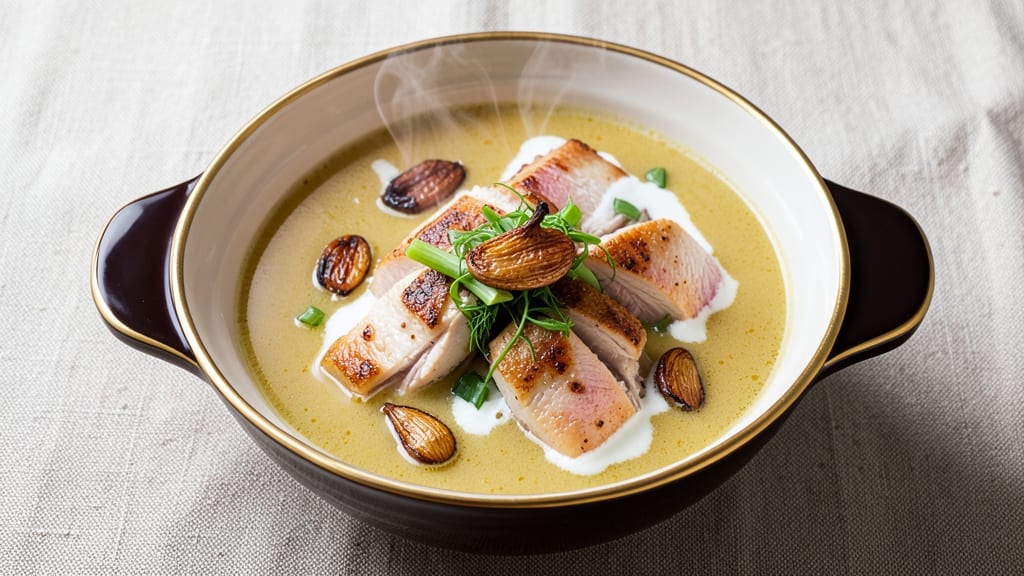
This imperial soup recipe transforms humble ingredients into a velvety masterpiece with a roasted garlic-leek base that forms the soul of every spoonful. The technique I’ve perfected—slow-roasting garlic and leeks until caramelized—creates a depth of flavor that elevates ordinary broth into something truly luxurious.
What makes this recipe stand out is its balance: rich yet light, aromatic without being overpowering, and foolproof for home cooks who want restaurant-quality results.
The foundation begins with a velvety roasted base that simmers for hours, extracting maximum flavor from garlic, leeks, and aromatic herbs. Unlike quick soups, this one develops layers of complexity as it cooks, making it ideal for special occasions or when you want to impress without fuss.
The roasting process caramelizes the natural sugars in the vegetables, creating a golden, aromatic paste that forms the heart of the soup.
By the time you serve it, you’ll have a luxuriously smooth broth with tender chicken, silky vegetables, and a garnish that adds freshness and color.
The roasted garlic-leek base ensures every bite carries that unmistakable depth, while the finishing touches—like a drizzle of olive oil or fresh parsley—elevate it to something truly special.
This is the kind of soup that feels like a hug in a bowl, perfect for chilly evenings or gathering loved ones around the table.
Whether you’re serving it as a starter or a hearty main, this imperial soup delivers professional results with minimal effort. The technique is simple, but the outcome is anything but ordinary—rich, flavorful, and deeply satisfying. Let’s get started on creating your own velvety masterpiece.
Ingredients for imperial soup
Sixteen ingredients, one luxurious bowl of velvety perfection.
| Ingredient | Amount | Notes |
|---|---|---|
| Whole Leeks 🧅 | 4 large | Cleaned, white and light green parts |
| Garlic Cloves 🧄 | 12 whole | Unpeeled for roasting |
| Extra-Virgin Olive Oil 🫒 | ½ cup | High quality, fruity |
| Chicken Breast 🍗 | 2 lb | Boneless, skinless, cut into chunks |
| Chicken Broth 💧 | 6 cups | Low-sodium preferred |
| Heavy Cream 🥛 | 1 cup | Full-fat for creaminess |
| Fresh Thyme 🌿 | ½ ounce | Stems removed, leaves only |
| Fresh Parsley 🌿 | ¼ cup | Chopped, for garnish |
| Carrots 🥕 | 3 medium | Peeled, cut into chunks |
| Celery Stalks 🥬 | 3 whole | Trimmed, cut into pieces |
| Salt 🧂 | 1 ½ tsp | Diamond Crystal preferred |
| Black Peppercorns 🌶️ | ½ tsp | Freshly ground |
| Fresh Lemon Juice 🍋 | 1 tbsp | From 1 lemon |
The leeks and garlic are the stars—look for vibrant green tops on leeks (that means freshness) and plump garlic cloves with no sprouting. Whole Foods or local markets usually carry the best quality. For the garlic, roasting whole intensifies the sweetness—don't peel until after roasting. The chicken breast should be freshly cut into even chunks (about 1-inch pieces) so it cooks uniformly. If you're feeling fancy, grab free-range chicken from the butcher counter for richer flavor. The celery and carrots? Baby carrots work fine, but organic celery from the store's produce section has the best flavor.
No fresh thyme? Dried works at one-third the amount, but fresh is worth it here. Running low on heavy cream? Half-and-half or full-fat coconut milk gives a similar richness. The lemon juice can be swapped for white wine vinegar at half the amount, but fresh lemon adds that bright finish. For the broth, low-sodium is key—you'll be adding plenty of salt later. If you're using pre-cut veggies, rinse them well to remove any grit. And trust me, don't skip the roasting step—that's where the magic happens.
This soup tastes even better the next day—reheats beautifully in 2-3 minutes on the stove. Store it in the fridge for up to 4 days, or freeze portions for 3 months. I like to portion it into glass containers so it reheats faster. The roasted garlic-leek base keeps well in the fridge for 5 days if you want to make it ahead. Garnish with fresh parsley right before serving—it wilts fast, so don't add it too early.
Why You'll Love This Recipe
- Leeks Do the Work: I swear by cutting the whole leeks in half lengthwise and roasting them first—they caramelize into sweet, golden strands with almost no effort. No chopping, no crying over onions, just pure flavor from that one step.
- Garlic-Forward Magic: Between us, this soup’s secret weapon is the garlic. I brown it low and slow in olive oil until it’s deep golden, and that crispy edge with the creamy chicken? Chef’s kiss. It’s the kind of taste that lingers.
- Weeknight to Potluck: Honestly, this soup is my go-to for everything: a quick weeknight dinner, a make-ahead dish for game day, or even a potluck crowd-pleaser. The broth reduces beautifully, so it’s rich but not heavy—perfect for any occasion.
- Budget-Friendly Leftovers: Chicken breast stretches further than you’d think when shredded, and the broth freezes like a dream. I make a double batch and have soup for days without breaking the bank. (Yes, even on a Tuesday night.)
Step-by-step instructions for imperial soup recipe
This soup builds depth through roasting and slow simmering—here's exactly how to make it velvety and rich.
Roast the Garlic and Leeks for Deep Flavor
Preheat your oven to 425°F and line a baking sheet with parchment paper. Toss the 12 whole garlic cloves and 4 large whole leeks (cut lengthwise into quarters) with 0.25 cup of the extra-virgin olive oil. Spread them in a single layer on the baking sheet, cut-side down. Roast for 25-30 minutes until the garlic is golden brown and the leeks are tender when pierced with a knife.
Here's the thing—roasting caramelizes the natural sugars in the leeks and garlic, creating a sweet, nutty base that elevates the entire soup. If you see the edges browning too quickly, tent with foil to prevent burning. Once done, let them cool slightly before transferring to a food processor.
Build the Soup Base with Chicken and Vegetables
Heat 0.25 cup extra-virgin olive oil in a large Dutch oven over medium-high heat. Add the 2 lb chicken breast (cut into 1-inch chunks) and cook for 5-6 minutes until lightly browned on all sides. Remove the chicken and set aside. In the same pot, add 3 medium carrots (cut into chunks), 3 whole celery stalks (trimmed and chopped), and the roasted leek-garlic mixture from the food processor. Stir for 3-4 minutes until the vegetables soften slightly.
Deglaze the pot with 2 cups of the chicken broth, scraping up all the browned bits from the bottom. This step captures all the flavor that would otherwise stick to your pan. Add the remaining 4 cups chicken broth, bring to a simmer, then return the chicken to the pot. Season with 1.5 tsp salt and 0.5 tsp black peppercorns, then cover and simmer for 20 minutes until the chicken is fully cooked and tender.
Blend for a Silky Texture
Remove the chicken from the soup and set it aside, leaving the broth in the pot. Using an immersion blender, blend the broth until completely smooth—this creates that signature velvety texture. If you don't have an immersion blender, carefully transfer the broth to a countertop blender in batches, blending each batch until silky. Strain the blended broth back into the pot to remove any remaining vegetable fibers.
Return the chicken to the pot and stir in 1 cup heavy cream and 0.5 ounce fresh thyme. Simmer for an additional 5 minutes on low heat—just enough to warm through without breaking the cream. Taste and adjust seasoning if needed. The soup should be rich, slightly sweet from the roasted garlic, and perfectly balanced.
Finish with Fresh Herbs and Lemon
Stir in the 0.25 cup chopped fresh parsley and 1 tbsp fresh lemon juice just before serving. The parsley adds a bright, fresh contrast to the deep flavors, while the lemon juice cuts through the richness of the cream, balancing the soup beautifully. Let the soup sit for 5 minutes off the heat before serving—this allows the flavors to meld just a bit more.
Real talk: This soup tastes even better the next day as the flavors deepen. If you're making it ahead, store it in the refrigerator for up to 3 days or freeze it for up to 3 months. When reheating, do it gently over low heat to preserve that velvety texture.
Pro Tips For Making Imperial Soup
- CHAR THE LEEKS FIRST: Cut leeks lengthwise, separate layers, and rinse thoroughly—dirt hides between those papery skins like a bad ex. Soak them in cold water for 10 minutes to flush out grit, then pat bone-dry before cooking. Wet leeks steam instead of caramelize, and nobody wants sad, watery soup.
- SEAR CHICKEN IN BATCHES: Crowd the pan and the chicken steams—trust me, I’ve done it. Work in 2 batches over medium-high heat with just enough olive oil to coat the pan (about 2 tablespoons total). The crust forms faster, and you’ll end up with golden-brown edges instead of sad, pale blobs.
- DEGLAZE WITH BROTH IMMEDIATELY: As soon as you remove the chicken, pour in a splash of hot broth and scrape every last bit of fond from the pan—that’s where the flavor lives. Ignore it, and your soup tastes like it’s missing something. (Spoiler: It is.)
- SALT THE BROTH LATE: Wait until the soup is fully assembled before adding salt—taste it first, then adjust. Chicken broth varies wildly in saltiness, and adding early dilutes the seasoning. A pinch of salt at the end guarantees balance, not regret. (I learned this after a whole pot of bland soup.)
Pro cooking tips for perfect results
Roasting Secrets
The key to that deep, caramelized flavor in your imperial soup starts with roasting the garlic and leeks at 425°F for 25-30 minutes. I always use a rimmed baking sheet lined with parchment paper to prevent mess.
The secret? Spread them in a single layer with the cut sides down—this ensures even browning. If the edges start to brown too quickly, tent with foil to prevent burning. 🌱
Don’t skip peeling the garlic until after roasting—roasting whole cloves intensifies their sweetness and prevents them from turning bitter. Once roasted, let them cool slightly before blending. This step transforms ordinary vegetables into flavor bombs that become the soul of your soup.
Deglazing Magic
After browning the chicken, deglaze your Dutch oven with 2 cups chicken broth while scraping up every browned bit from the bottom. These bits are packed with flavor—what chefs call the fond.
I use a wooden spoon to really get into those corners. This step is non-negotiable if you want that restaurant-quality depth in your soup. 🍲
Pro tip: If your broth is too thin after deglazing, reduce it by simmering uncovered for 5-7 minutes before adding the remaining broth. This concentrates the flavors even more, giving your soup that velvety richness.
Blending Like a Pro
An immersion blender is my go-to tool for blending soup directly in the pot—it’s faster and easier to clean than transferring to a countertop blender. But if you’re using a blender, work in batches and always leave 1 inch of headspace to prevent splattering.
Strain the blended broth back into the pot to remove any remaining vegetable fibers for that ultra-smooth texture. 💫
For an extra-smooth finish, I like to blend the broth twice—once after simmering with vegetables, and again after adding the cream. This ensures every spoonful is completely velvety, with no lumps or grit.
Cream Handling
Adding 1 cup heavy cream at the end is what gives this soup its luxurious texture, but timing is everything. Stir it in just before serving or reheating, and keep the heat at low to prevent curdling.
If your soup looks too thick after adding cream, thin it with a splash of warm broth. 🥛
For a lighter version, substitute half the cream with half-and-half or even coconut milk, but you’ll lose some of that classic richness. The cream should be full-fat—low-fat versions can break down during simmering.
Resting for Perfection
Never serve this soup straight off the heat. Let it rest for 5-10 minutes before serving—this allows the flavors to meld and the cream to fully incorporate.
I also like to let it sit off the heat for 10 minutes after adding the lemon juice, as the acidity needs time to brighten the soup without overpowering it. 💡
This resting period is especially important if you’re making the soup ahead of time. Reheat it gently over low heat and stir frequently to prevent scorching. The longer it rests, the more the flavors develop into that perfect harmony.
Nutrition facts
Frequently asked questions
Can I make this imperial-style soup vegetarian?
Replace the chicken with 1 lb extra-firm tofu or 2 cups chickpeas for protein. Use vegetable broth instead of chicken broth, and add 1 tbsp soy sauce or mushroom powder for depth. The roasted garlic-leek base will still shine as the flavor foundation.
Why does my soup look thin after blending?
This happens when the broth wasn't reduced enough before blending. Simmer the broth uncovered for 10-15 minutes before blending to concentrate the flavors. For extra richness, stir in 1 tbsp cornstarch mixed with 2 tbsp cold water after blending, then simmer until thickened.
How do I store leftovers to keep them velvety?
Let the soup cool completely before refrigerating in airtight containers. Store for up to 4 days, but reheat gently over low heat with a splash of broth to restore creaminess. For freezing, portion into glass containers and thaw overnight in the fridge—never microwave directly from frozen.
What's the best way to reheat without breaking the cream?
Always reheat over low heat and stir constantly. For extra insurance, whisk in 1 tbsp cold heavy cream at the end. If the soup separates, blend briefly with an immersion blender to restore smoothness. Never microwave—it creates hot spots that can curdle the cream.
Can I use dried herbs instead of fresh?
Yes, but use one-third the amount of dried thyme (about 1 tsp instead of 0.5 oz fresh). For parsley, dried works in a pinch, but fresh adds vibrant color and brightness. If substituting, add dried parsley at the end and skip the lemon juice—it won't have the same freshness.