
Soups & Stews
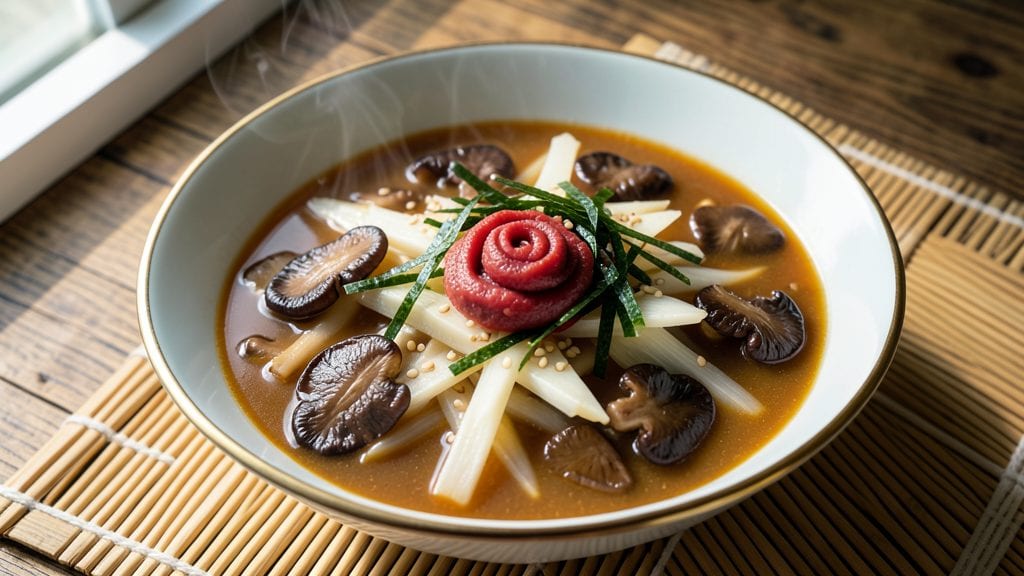
This Japanese radish soup recipe transforms humble daikon into a velvety, umami-rich masterpiece that feels like a warm embrace in a bowl. The secret lies in slow-braised miso and dashi, which melt the radish into silky perfection while building layers of savory depth.
I first discovered this technique during a winter stay in Kyoto, where every meal felt like a ritual—simple yet deeply satisfying.
The beauty of this soup is its balance: earthy daikon, fermented miso for umami, and delicate kombu for oceanic brightness. Unlike quick broths, this dish develops flavor over time—30 minutes of gentle simmering transforms tough radish into tender, melt-in-your-mouth slices.
The result is a soup so comforting it becomes a weekly staple, yet elegant enough for guests.
What makes this recipe special is how it adapts to your pantry. You can use white or red miso depending on your preference for sweetness or saltiness, and the addition of shiitake mushrooms adds meaty texture for heartier servings.
Each spoonful delivers that perfect harmony of Japanese home cooking—where every ingredient serves a purpose.
Serve this soup as a starter to whet appetites or as a light main course with steamed rice. The silky texture pairs beautifully with a crisp sake or a cup of matcha tea, creating a meal that feels both nostalgic and refined. Let’s bring this tradition to your kitchen.
Ingredients for japanese radish soup
Simple ingredients, rich traditions—this Japanese radish soup transforms humble daikon into velvety comfort.
| Ingredient | Amount | Notes |
|---|---|---|
| Daikon Radish 🥕 | 1 ½ lb | Fresh, peeled and sliced into 1/4-inch pieces |
| White Miso Paste 🍶 | ¼ cup | High-quality, preferably organic |
| Red Miso Paste 🍶 | ⅛ cup | For deeper umami flavor |
| Dashi Stock 🍵 | 3 cups | Homemade or high-quality store-bought |
| Kombu Seaweed 🍃 | 1 piece | Dried, 4x6 inches |
| Shiitake Mushrooms 🍄 | 4 whole | Fresh, stems removed |
| Green Onion 🧅 | 2 whole | Thinly sliced, for garnish |
| Sesame Oil 🫒 | 1 tbsp | Toasted, for finishing |
| Toasted Sesame Seeds 🌾 | 1 tbsp | For garnish |
| Rice Vinegar 🍶 | 1 tbsp | For brightness |
| Soy Sauce 🍶 | 1 tbsp | For depth |
| Neutral Oil 🫒 | 1 tbsp | For sautéing mushrooms |
| Salt 🧂 | ½ tsp | Adjust to taste |
The daikon is the heart of this soup, so choose one that's firm and free of blemishes—Asian grocery stores often carry the best quality. For miso, Hokkaido brand is my go-to, but any high-quality paste works. The kombu should be dark and fragrant—if it smells like the ocean, it's fresh. Dashi is non-negotiable; homemade with bonito flakes and kombu is ideal, but Marukome or Honten store-bought versions are solid shortcuts. Shiitake mushrooms add meaty texture, but if you're feeling adventurous, swap in enoki for a delicate twist.
No white miso? Red miso alone works—just add 1 tbsp of mirin for balance. Short on kombu? A dash of nori flakes boosts umami without the texture. For extra richness, stir in 1 tbsp of butter or cream cheese at the end. The mushrooms can be pre-cooked or even canned—just drain well. Green onions are traditional, but chives or scallions work in a pinch. Sesame oil is key for that nutty aroma, but if you're avoiding it, a light drizzle of toasted peanut oil adds a similar depth.
This soup tastes even better the next day—3-4 days in the fridge, covered. For longer storage, freeze portions for up to 3 months. Reheat gently on the stove, adding a splash of water if it thickens too much. Garnish with sesame seeds right before serving, as they lose their crunch when added earlier. Pair with steamed rice and a side of pickled vegetables for a complete meal.
Why You'll Love This Recipe
- Five-Ingredient Magic: I swear, this soup comes together with zero fuss—just slice the daikon, simmer the kombu, and stir in the miso. No chopping, no peeling, no stress. Honestly, I’ve made it while waiting for the kettle to boil.
- Umami Bomb: That combo of white and red miso? Chef’s kiss. The white gives this soup a creamy, comforting depth, while the red adds a bright, almost sweet punch. The dashi ties it all together—rich but never heavy, like a hug in a bowl.
- Lunchbox Hero: Between us, this is my go-to for meal prep. It reheats beautifully, keeps for days in the fridge, and even travels well in a thermos. I pack it for work all the time—no sad desk lunches here.
- Budget Warmth: Daikon and kombu are dirt cheap, and a little miso goes a long way. I’ve made this for under $3 per serving, and it still feels like a restaurant-worthy dish. (Yes, even on a Tuesday night.)
Step-by-step instructions for silky miso-braised daikon soup
This method transforms humble daikon into a luxurious, velvety soup with layers of umami and brightness.
Prepare the Kombu and Miso Base
Place the 1 piece kombu seaweed in a clean pot and cover with 3 cups dashi stock. Bring to a gentle simmer over medium-low heat for 10 minutes, then remove from heat and let steep for 30 minutes. This infusion creates a delicate, mineral-rich broth that forms the soul of your soup.
While the kombu infuses, combine 0.25 cup white miso paste and 0.125 cup red miso paste in a small bowl. I like to press the pastes through a fine-mesh sieve to remove any lumps—this ensures your soup has a silky texture rather than grainy bits. Keep the miso mixture at room temperature until ready to use.
Sauté the Shiitake Mushrooms
Heat 1 tablespoon neutral oil in a separate skillet over medium heat. Add the 4 whole shiitake mushrooms (stems removed) and cook for 5-6 minutes until they release their moisture and develop golden-brown spots. You're looking for mushrooms that are tender but still hold their shape—overcooking will make them rubbery.
Remove the mushrooms from the skillet and set aside. Pour the rendered mushroom oil into your kombu-infused broth, swirling to distribute the flavor. This step adds depth that store-bought dashi simply can't match. The mushrooms will reabsorb some of this flavor when they return to the pot.
Simmer the Daikon and Season
Add the 1.5 lb daikon radish (pre-sliced into ¼-inch pieces) to the broth along with the 1 tablespoon soy sauce and 0.5 teaspoon salt. Bring to a gentle simmer over medium heat, then reduce to low heat and cook for 15-20 minutes until the daikon is fork-tender but still holds its shape. You'll know it's ready when a knife slides in easily with just slight resistance.
Stir in the miso mixture, whisking vigorously to dissolve completely. Add the 1 tablespoon rice vinegar and return the shiitake mushrooms to the pot. Let the soup simmer gently for another 5 minutes—this final step allows all the flavors to meld together while keeping the daikon from becoming mushy. The soup should have a rich, golden color with visible miso swirls.
Finish and Serve
Remove the kombu seaweed from the soup. Taste and adjust seasoning if needed—I often add a pinch more salt or a splash of rice vinegar for brightness. Ladle the soup into bowls, then drizzle each serving with 1 tablespoon sesame oil and sprinkle with 1 tablespoon toasted sesame seeds. The oil adds a delicate aroma, while the seeds provide a satisfying crunch.
Garnish with the 2 whole green onions (thinly sliced) just before serving. The contrast between the silky soup and the fresh, crisp green onions elevates the dish. Serve immediately while the soup is piping hot, as the flavors continue to develop with each sip. This soup tastes even better the next day, so consider making extra for leftovers.
Pro Tips For Making Japanese Radish Soup
- Bloom the Kombu First: Toss that kombu into your dashi stock before heating—let it soak for 10 minutes while you prep the radish. I used to skip this, and the soup always tasted flat. The kombu’s umami needs time to wake up, and cold water works just fine (no need to heat yet).
- Grate Radish Thin: Use a mandoline or sharp knife for paper-thin daikon slices—no thicker than 1/8 inch. Thick pieces turn mushy; thin ones soften just enough to melt into the broth without disappearing. (Yes, it takes 5 minutes longer, but your soup won’t be a radish slurry.)
- Balance the Miso Last: Stir in the white miso first, then the red—after the broth simmers but before it boils. Red miso burns faster, and if you add it too early, the soup turns bitter. Taste as you go: the red should brighten, not dominate.
- Simmer, Don’t Boil: Keep the heat at a gentle simmer—tiny bubbles, not rolling. I learned this after my first batch turned cloudy from aggressive boiling. Low and slow lets the miso’s flavors marry with the dashi without scrambling the proteins. (Your future self will notice the difference.)
Storing and reheating this dish
Fridge Storage Tips
Store your Japanese radish soup in an airtight glass container—I prefer Pyrex with snap-on lids—and refrigerate for up to 4 days. The flavors actually deepen overnight as the miso and dashi meld together.
Let it cool completely before sealing to prevent condensation, which can dilute the broth. 🥄
Freezer Prep Guide
For longer storage, portion the soup into quart-sized freezer bags or glass containers, leaving 1-inch headspace for expansion. Freeze for up to 3 months—the texture remains silky when reheated properly. Label with the date to track freshness. Avoid ice crystals by squeezing out excess air before sealing.
Stovetop Reheating
My preferred method is gentle stovetop reheating. Transfer the chilled soup to a pot and heat over low-medium heat for 8-10 minutes, stirring occasionally. Add 2-3 tablespoons of water or dashi if the soup thickens too much.
The low heat preserves the daikon’s texture while reactivating the miso’s umami. 🔥
Microwave Shortcut
For quick reheating, use a microwave-safe bowl and cover with a damp paper towel. Heat on 50% power for 2-3 minutes, stir, then continue in 30-second intervals until reaching 165°F.
Add a splash of water if needed—the soup should be hot but not boiling to avoid breaking the daikon’s delicate structure.
Garnish Refresh
Always add fresh garnishes after reheating. Drizzle with 1 teaspoon sesame oil and sprinkle 1 teaspoon toasted sesame seeds per serving—they lose their crunch when added earlier. Thinly sliced green onions or chives add brightness. A pinch of black pepper or red pepper flakes can wake up flavors if needed.
Leftovers Magic
This soup tastes even better the next day—3-4 days in the fridge is ideal. For extra richness, stir in 1 tablespoon of butter or cream cheese when reheating. Pair with steamed rice and pickled vegetables for a complete meal. The contrast of textures makes every bite satisfying. ✨
Nutrition facts
Frequently asked questions
Can I substitute daikon radish with another type of radish?
While daikon is ideal for its mild, sweet flavor and silky texture, you can use regular white radish in a pinch—but expect a sharper taste and firmer bite. For a closer match, try Asian turnips or parsnips, which hold up better during simmering. Avoid red radishes (like cherry bells) as they turn bitter when cooked. The soup will still be delicious, just with different texture and flavor notes.
Why does my soup turn out too salty?
Miso and dashi already pack serious umami and saltiness, so it's easy to overdo it. Start with ½ teaspoon salt and adjust gradually—taste as you go! If it's too salty, balance it with 1 tablespoon rice vinegar or a splash of water to dilute. For extra depth without salt, add a pinch of sugar to highlight the miso's sweetness.
How do I make this soup vegetarian?
Skip the dashi made with bonito flakes and use vegetarian dashi (kombu-only) or substitute with shiitake mushroom broth. Replace soy sauce with tamari (gluten-free) or coconut aminos. For umami, add 1 tablespoon of nutritional yeast or a dash of fish-free Worcestershire sauce when simmering. The soup will still be rich and satisfying!
Can I make this soup in an Instant Pot?
Sauté the mushrooms as directed, then add all ingredients except miso to the Instant Pot. Seal and cook on high pressure for 8 minutes. Quick-release the pressure, stir in the miso, and let it simmer on low heat for 5 minutes to meld flavors. The high-pressure cooking time is shorter than stovetop, but the texture remains tender. Adjust seasoning after cooking.
What’s the best way to serve this soup as a meal?
Pair it with steamed Japanese short-grain rice and pickled vegetables (like cucumbers or takuan) for a balanced meal. For extra heartiness, add a side of miso-glazed tofu or grilled fish. The soup’s silky texture contrasts beautifully with the rice’s stickiness, while pickles cut through the richness. Serve with a chilled glass of sake or green tea for the full experience.