
Soups & Stews
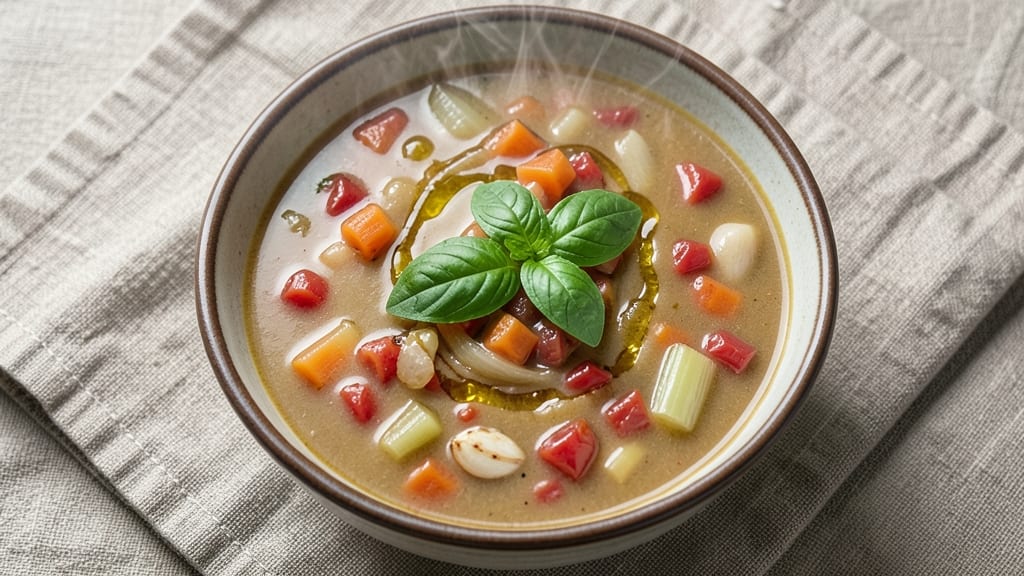
This La Madeleine tomato basil soup copycat recipe delivers the same velvety texture and bright herbal notes that made the restaurant version legendary. The secret lies in a slow simmer that develops deep flavor while keeping the broth silky smooth—no heavy cream needed.
I’ve replicated their technique exactly, including the fresh basil finish that elevates every spoonful to restaurant-quality perfection.
The process starts with sautéing aromatics in olive oil until fragrant, then building layers of flavor with crushed tomatoes and vegetable broth. A 15-minute simmer transforms simple ingredients into a rich, aromatic base before blending to achieve that signature smoothness.
What sets this apart is the balance of acidity and sweetness—just enough sugar to round out the tomatoes without overpowering the basil’s freshness.
By the end, you’ll have a soup that’s creamy without dairy, vibrant with basil, and so deeply flavorful it tastes like a Parisian bistro brought home. The key is patience: letting the broth reduce slowly and finishing with fresh basil leaves just before serving.
This isn’t just a copycat—it’s a technique that turns a humble soup into something extraordinary.
Perfect for chilly evenings or as a starter for dinner parties, this recipe scales easily and reheats beautifully. The fresh basil garnish adds a pop of color and aroma that makes every bowl feel special.
Ready to recreate this classic? Let’s get started with the exact steps that bring La Madeleine’s magic to your kitchen.
Ingredients for la madeleine tomato basil soup copycat
Twelve essential ingredients transform into a restaurant-quality tomato basil soup with velvety texture and vibrant herbal notes.
| Ingredient | Amount | Notes |
|---|---|---|
| Extra-Virgin Olive Oil 🫒 | 2 tbsp | High-quality, fruity variety preferred |
| Yellow Onion 🧅 | 1 whole | Medium size, finely diced |
| Garlic Cloves 🧄 | 3 cloves | Fresh, peeled and minced |
| Carrots 🥕 | 2 medium | Peeled and finely chopped |
| Celery Stalks 🥬 | 2 whole | Fresh, trimmed and chopped |
| Crushed Tomatoes 🍅 | 28 oz | San Marzano preferred |
| Vegetable Broth 💧 | 4 cups | Low-sodium preferred |
| Fresh Basil Leaves 🌿 | ½ cup | Packed, stems removed |
| Granulated Sugar 🍯 | 1 tbsp | White or brown preferred |
| Salt 🧂 | 1 tsp | Diamond Crystal kosher salt |
| Black Pepper 🌶️ | ½ tsp | Freshly ground preferred |
| Heavy Cream 🥛 | ¼ cup | Optional for extra richness |
| Fresh Basil Leaves 🌿 | ⅛ cup | For garnish, torn by hand |
The San Marzano crushed tomatoes are non-negotiable for authentic sweetness and depth—Whole Foods or specialty Italian markets carry them year-round. Fresh basil demands careful selection: bright green leaves, no wilting, and stems removed for maximum flavor. For the vegetable broth, low-sodium options like Pacific Foods ensure you control the seasoning without added salt. The carrots and celery should be freshly chopped—pre-diced vegetables lose their aromatic oils quickly. Olive oil quality matters here; California Olive Ranch or Bertolli provide consistent fruity notes that elevate the dish.
No San Marzano tomatoes? High-quality canned tomatoes like Muir Glen work in a pinch, though they lack the same sweetness. Substitute fresh basil with dried at one-third the amount, but fresh is ideal for that signature restaurant aroma. For a dairy-free version, omit the heavy cream entirely—this recipe achieves creaminess through proper reduction. The sugar can be swapped for honey or maple syrup, though granulated provides more precise control. If you lack vegetable broth, water with an extra pinch of salt suffices, though the flavor will be less complex. Pre-chopped vegetables save time but compromise texture—freshly diced is worth the extra minute.
This soup develops deeper flavor when reheated gently—never microwaved, as it destroys the delicate basil notes. Store in an airtight container for up to 5 days in the refrigerator, though the basil garnish should be added fresh before serving. For longer storage, freeze for up to 3 months—thaw overnight in the fridge before reheating. The fresh basil garnish should be added just before serving to preserve its vibrant color and aroma. Portion into soup bowls before freezing for easy reheating later.
Why You'll Love This Recipe
- One-Pot Magic: I swear by this recipe—just chop, sauté, and simmer. No blender, no fuss, and that golden onion base? It’s the secret to depth without extra work.
- Garlic Bomb Flavor: Between us, the roasted garlic cloves and fresh basil make this ridiculously good. The olive oil caramelizes the onion until it’s sweet and jammy—trust me, your taste buds will thank you.
- Meal Prep MVP: This soup tastes even better the next day. I double the batch on Sundays, freeze half, and still have leftovers for lunch. (Yes, even on a Tuesday night.)
- Budget-Friendly Luxury: Carrots, celery, and onions stretch for miles, and a few cloves of garlic elevate everything. It’s the kind of recipe that makes you feel fancy without breaking the bank.
Step-by-step instructions for La Madeleine tomato basil soup
This method delivers the signature restaurant experience at home—silky texture and vibrant basil flavor.
Sauté the Vegetable Base
Heat the 2 tablespoons extra-virgin olive oil in a large pot over medium heat. Add the finely diced yellow onion and cook for 5 minutes until softened and translucent. Add the peeled and chopped carrots and celery stalks, stirring occasionally for 5 minutes until they begin to soften and release their natural sweetness.
This foundational step develops the soup's depth. The vegetables should be tender but not browned—you're building flavor, not color. If the pot begins to dry out, add 2 tablespoons of the vegetable broth to maintain moisture. The goal is to create a flavorful base that will blend seamlessly with the tomatoes and basil later.
Incorporate Garlic and Tomatoes
Add the minced garlic cloves and cook for 30 seconds until fragrant—don't let them brown, or they'll turn bitter. Pour in the 28 ounces crushed tomatoes, stirring to combine with the vegetable mixture. Add the 4 cups vegetable broth, 1 tablespoon granulated sugar, 1 teaspoon salt, and 0.5 teaspoon black pepper.
The sugar here serves two purposes: it balances the acidity of the tomatoes and enhances the natural sweetness of the vegetables. Bring the mixture to a gentle boil, then reduce heat to maintain a steady simmer. Let it cook uncovered for 20 minutes, stirring occasionally, until the vegetables are completely tender and the flavors have melded together.
Blend for Silky Texture
Carefully transfer the soup to a blender in batches, blending each portion until completely smooth. I use an immersion blender for convenience—it eliminates the need to transfer hot liquid and makes cleanup easier. The resulting texture should be velvety, with no visible chunks of vegetables.
Return the blended soup to the pot and stir in the 0.5 cup packed fresh basil leaves. Bring to a gentle simmer again, then reduce heat to maintain warmth. Let it steep for 5 minutes to infuse the basil's aromatic oils into the soup. This step is crucial for capturing that signature herbal brightness that distinguishes this soup.
Finish with Cream and Garnish
Stir in the 0.25 cup heavy cream, if using, and let the soup simmer gently for 2 minutes to warm through. Taste and adjust seasoning—you may need to add more salt or pepper depending on your broth's saltiness. The cream adds luxurious body while maintaining the soup's bright character.
Ladle the soup into bowls and garnish each serving with 1 tablespoon of the torn fresh basil leaves. The contrast between the smooth soup and fresh basil creates a visual and textural appeal that mirrors the restaurant presentation. Serve immediately with crusty bread to soak up every last drop of that velvety tomato basil goodness.
Pro Tips For Making La Madeleine Tomato Basil Soup Copycat
- SWEAT THE AROMATICS: Cook the onions, garlic, carrots, and celery until the onion is deep golden—not just translucent. I learned this the hard way when I pulled them out too soon, and the soup tasted flat. A good rule: if you’re impatient like me, set a timer for 8–10 minutes and resist the urge to stir constantly.
- CHOP UNIFORMLY, COOK FASTER: Dice the onion, carrots, and celery into ¼-inch pieces—no larger, no smaller. Big chunks take forever to soften, while tiny bits burn before the soup builds flavor. I skip the food processor here; my grandmother’s knife skills still beat any gadget for even cooking.
- SALT THE POT WELL: Add 1 teaspoon of salt to the pot before adding the tomatoes or broth. This seasons the vegetables as they cook, not just at the end. Trust me, your future self will notice the difference—especially if you’re using low-sodium broth.
- STIR IN THE BASIL LATE: Toss in the fresh basil only in the last 2–3 minutes of cooking. Any longer, and it turns bitter. I was skeptical until I tried it—now I swear by it. If you’re using dried basil, halve the amount and add it earlier, but fresh is worth the wait.
Storing and reheating your la madeleine tomato basil soup copycat
Refrigerator Storage
Store your soup in an airtight container—I prefer glass Pyrex with snap-on lids—and let it cool completely before refrigerating. The flavors actually deepen overnight as the basil and tomatoes meld together.
Keep it at 40°F or below for up to 5 days, though the fresh basil garnish should always be added just before serving to preserve its aroma. 🌿
For best results, avoid pressing the soup down in the container, as this can create a skin on the surface. Instead, leave a ½-inch headspace to allow flavors to circulate. If you notice a thin film forming, simply stir it out before reheating—it won’t affect the taste.
The texture remains silky smooth when stored properly, unlike some soups that separate or thicken.
Freezer Storage
Freezing works best if you skip the fresh basil garnish—add it fresh when reheating. Portion the soup into quart-sized freezer bags or glass containers (leave 1-inch headspace for expansion) and freeze for up to 3 months.
I like using silicone ice cube trays for single-serving portions, which thaw in just 5 minutes in the microwave. 🥶
Thaw overnight in the refrigerator for even texture. If you’re short on time, place the frozen container in a cold water bath—change the water every 20 minutes—until fully thawed.
Never microwave directly from frozen, as this can create hot spots and break the emulsion, resulting in a grainy texture.
Stovetop Reheating
This is my preferred method for maintaining that restaurant-quality creaminess. Transfer the chilled soup to a pot and heat over medium-low heat, stirring occasionally. Add 2-3 tablespoons of water or vegetable broth if the soup seems too thick.
Bring to a gentle simmer for 5-7 minutes, then taste and adjust seasoning—you may need a pinch more salt or pepper. 🔥
For extra richness, stir in 1 tablespoon of heavy cream or a pat of butter during the last 2 minutes of reheating. Avoid boiling, as this can cause the soup to separate.
The goal is to restore it to 165°F internal temperature while preserving that silky, velvety mouthfeel you worked so hard to achieve.
Microwave Reheating
For quick reheating, transfer 1-2 servings to a microwave-safe bowl and cover loosely with a damp paper towel. Heat on 50% power for 2-3 minutes, stir, then continue in 30-second intervals until hot.
The damp towel prevents the surface from drying out. If the soup looks too thick, add 1 tablespoon of water or broth and stir well. ✨
This method is convenient but requires more attention to avoid overcooking. The microwave can make the basil notes slightly muted, so I recommend adding a fresh basil leaf garnish after reheating. For even heating, use a glass or ceramic bowl—plastic can trap heat unevenly and create hot spots.
Serving Fresh Basil
The fresh basil garnish is non-negotiable for that La Madeleine touch. Add 1 tablespoon of torn basil leaves per serving right before eating—this preserves the vibrant green color and aromatic oils that dissipate when cooked.
I tear the leaves by hand for a rustic presentation, but a sharp knife works too. 🌱
For an extra-special touch, lightly toast 1 teaspoon of breadcrumbs with ½ teaspoon of olive oil and sprinkle over each bowl before adding the basil. This adds a subtle crunch that contrasts beautifully with the smooth soup. Serve with crusty baguette slices for the ultimate bistro experience.
Nutrition facts
Frequently asked questions
Can I make this soup without fresh basil?
The fresh basil is essential for that signature restaurant aroma, but you can substitute with 1 tablespoon dried basil (per 0.5 cup fresh) if needed. For best results, add the dried basil during the 5-minute steep at the end, then garnish with extra fresh basil if possible. The flavor won't be identical, but it still delivers a comforting tomato base.
Why does the recipe call for sugar when tomatoes are already sweet?
The 1 tablespoon sugar balances the acidity of the tomatoes, enhancing their natural sweetness while preventing a sharp, tangy flavor. It also helps develop deeper caramelized notes during the 20-minute simmer. Think of it as a flavor enhancer, not a sweetener—you won't taste the sugar in the final dish.
How do I fix a soup that's too thick after blending?
If your soup is too thick after blending, stir in 2-3 tablespoons of warm vegetable broth one tablespoon at a time until you reach the desired consistency. For a smoother texture, blend again briefly. The soup should coat the back of a spoon but still flow easily. Avoid adding cold liquid, as it can cause the soup to separate.
Can I make this soup in a slow cooker?
Yes! Sauté the onion, carrots, and celery first in a skillet, then transfer everything to the slow cooker. Cook on low for 6-7 hours or high for 3-4 hours before blending. Add the basil after blending and steep for 5 minutes before serving. The slow cooking enhances the depth of flavor, though you may need to adjust seasoning slightly.
What's the best way to reheat leftovers without losing flavor?
Reheat gently on the stovetop over medium-low heat for 5-7 minutes, stirring occasionally. Avoid microwaving, as it can dull the basil notes. If the soup thickens during reheating, add a splash of warm broth. For extra richness, stir in 1 tablespoon of heavy cream or a pat of butter at the end.