
Soups & Stews
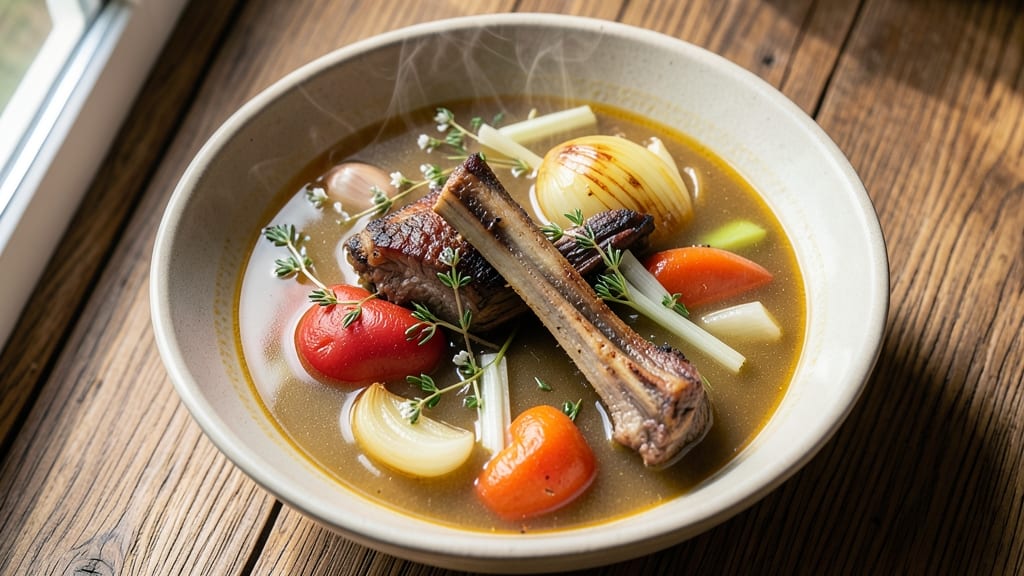
Creating lamb bone broth soup from scratch transforms ordinary bones into a deeply flavorful foundation that elevates any meal. The slow extraction of collagen and minerals from lamb bones yields a rich, umami-packed broth that forms the heart of this comforting dish.
I’ve refined this recipe over years of testing—balancing simmer times, aromatics, and vegetables to achieve that perfect harmony of savory depth and tender textures.
The process begins with rendering lamb bones at a controlled simmer, extracting maximum flavor without bitterness. While the broth develops, vegetables like carrots and celery infuse subtle sweetness, while garlic and onions build aromatic complexity.
This isn’t just broth; it’s a labor of love that rewards patience with layers of depth no store-bought version can match.
By the time you’re done, you’ll have a velvety soup with tender lamb bones (or shredded meat), perfectly cooked vegetables, and a broth so rich it coats every spoonful.
The aroma alone will fill your kitchen with warmth, while the first sip delivers that unmistakable umami satisfaction of homemade bone broth elevated to soup form.
Serve with crusty bread to soak up every last drop, or pair with grilled meats for a meal that feels both rustic and refined. The technique here ensures restaurant-quality results at home—no shortcuts, just time-honored methods refined for modern kitchens.
Ingredients for lamb bone broth soup
Fourteen ingredients transform simple bones into restaurant-quality lamb broth soup.
| Ingredient | Amount | Notes |
|---|---|---|
| Lamb Bones 🐑 | 3 lb | With meat attached preferred |
| Yellow Onions 🧅 | 2 whole | Chopped, medium size |
| Carrots 🥕 | 4 medium | Peeled, chopped into chunks |
| Celery Stalks 🌿 | 4 whole | Chopped, including leaves |
| Garlic Cloves 🧄 | 8 cloves | Smashed, skin on |
| Fresh Thyme 🌿 | ¼ cup | Stems removed, chopped |
| Fresh Rosemary 🌿 | ⅛ cup | Needles stripped, chopped |
| Bay Leaves 🍃 | 2 whole | Dried, standard size |
| Black Peppercorns 🌶️ | 1 tbsp | Crushed, not ground |
| Apple Cider Vinegar 🍎 | 2 tbsp | White vinegar substitute |
| Salt 🧂 | 2 tsp | Diamond Crystal preferred |
| Crusty Bread 🍞 | 1 loaf | For serving, optional |
| Extra-Virgin Olive Oil 🫒 | ¼ cup | For finishing drizzle |
| Fresh Parsley 🌿 | ⅛ cup | Chopped, for garnish |
The lamb bones are non-negotiable—look for marrow-rich cuts at Whole Foods or your butcher. Costco often has great deals on lamb bones, but check for freshness. The bones should smell clean, not fishy or ammonia-like. If you can't find lamb bones, beef marrow bones work in a pinch, though the flavor will differ slightly. The aromatics—onions, carrots, celery—are classic for a reason. Organic produce has better flavor, but regular grocery store stuff works fine if you're careful to trim off any bruised spots.
No fresh thyme or rosemary? Dried works at one-third the amount, but fresh is ideal. The apple cider vinegar cuts through any bitterness—white vinegar or lemon juice are good swaps. For the peppercorns, crush them lightly with a mortar and pestle for maximum flavor. The bay leaves are just for flavor; remove them before serving. If you're short on time, pre-chop the vegetables and store them in the fridge for up to 5 days. The parsley is just for garnish, so dried will work if you're in a bind, but fresh is worth it for that bright finish.
This soup tastes even better the next day—make a double batch and freeze half. Store the finished soup in airtight containers for up to 5 days in the fridge or 3 months in the freezer. The broth freezes beautifully, so you can always thaw just what you need. For serving, toast the crusty bread until it's golden and crisp. The olive oil drizzle adds richness, so don't skip it—even a generous drizzle makes all the difference.
Why You'll Love This Recipe
- Fewer Ingredients, Bigger Impact: Honestly, you’re not drowning in a grocery list here—just five core ingredients (plus water and time). The lamb bones do all the heavy lifting while you chop one onion, a couple carrots, and a celery stalk. That’s it. Even my toddler could handle the prep.
- Rich Like a Hug: Between us, nothing beats that deep, savory warmth from slow-simmered lamb bones. The onions caramelize just enough to sweeten the broth, while the garlic cloves—roasted whole, then smashed—add layers of aroma that hit you the second you lift the lid. It’s the kind of soup that makes you sigh before you even take a bite.
- Weeknight to Weekend: I make this when I’m exhausted (Tuesday nights) and when I’m hosting (Sunday brunches). Add fresh herbs and lemon for brightness, or toss in rice and spinach for a hearty meal. The broth even freezes perfectly—just thaw and reheat for instant comfort. Versatile enough to feel special or lazy, depending on the day.
- Budget That Works: Lamb bones might sound fancy, but they’re cheaper than you’d think, especially in bulk. One pot feeds four, and leftovers taste even better the next day. I’ll be real: this soup saved my grocery budget last month when I was buying bones on sale and stretching them across three meals. No waste, all flavor.
Step-by-step instructions for lamb bone broth soup
Transforming simple ingredients into deeply flavorful broth requires patience and precision—here's how to extract every ounce of umami from these bones.
Prepare and Roast the Lamb Bones for Maximum Flavor
Preheat your oven to 425°F and position a rack in the middle position. Pat the 3 lb lamb bones completely dry with paper towels—this ensures a better sear and prevents steam from inhibiting browning. Place them on a rimmed baking sheet in a single layer, meat-side up.
Drizzle evenly with 0.25 cup extra-virgin olive oil and rub it into the bones, coating them thoroughly. Sprinkle with 2 tsp salt and 1 tbsp crushed black peppercorns, pressing the spices into the meaty surfaces. Roast for 30-40 minutes until the bones develop a deep mahogany crust and the meat begins to pull away slightly from the bone.
Here's the thing—this roasting step is non-negotiable. The Maillard reaction creates complex flavors that dissolve into the broth, transforming simple bones into liquid gold. Don't rush it; you'll know it's ready when the bones smell intensely caramelized and the meat shows signs of browning.
Build the Aromatic Base for Deep Flavor Development
While the bones roast, prepare your vegetables for the flavor foundation. In a large stockpot, combine the 2 chopped yellow onions, 4 chopped carrots, 4 chopped celery stalks (including leaves), and the 8 smashed garlic cloves. Add 2 tbsp apple cider vinegar—this helps break down collagen and extract more gelatin from the bones.
Return the roasted bones to the pot and nestle them among the vegetables. Add 2 whole bay leaves, 0.25 cup chopped fresh thyme, and 0.125 cup chopped fresh rosemary. Pour in 12 cups cold water (just enough to cover everything by about 2 inches) and bring to a rolling boil over high heat.
Once boiling, immediately reduce heat to low and maintain a gentle simmer. You want to see tiny bubbles breaking the surface but no vigorous boiling—this prevents the broth from becoming cloudy. Skim off any foam or impurities that rise to the surface during the first 15 minutes of simmering.
Simmer for 6-8 Hours to Extract Maximum Gelatin
Cover the pot and let the broth simmer gently for 6-8 hours. I know this seems like forever, but this long cooking time is what transforms bones into rich, velvety broth. Check the water level periodically and add hot water as needed to maintain the initial 2-inch depth above the bones.
After about 4 hours, you'll notice the broth begins to take on a deeper color and richer aroma. This is when collagen starts converting to gelatin, creating that signature thickness. The bones should look like they've been simmered in their own juices, with the meat mostly falling away from them.
Here's a pro tip: If you're short on time, you can pressure cook the broth for 3-4 hours instead, but the flavor won't be as developed. The slow method builds layers of complexity that quick methods simply can't match. The final broth should coat the back of a spoon and have a beautiful, translucent golden hue.
Strain and Finish with Fresh Herbs
Once the bones are completely tender and the broth has reached its peak richness, remove the pot from heat. Using a slotted spoon, transfer the bones to a plate and pick through them, removing any remaining meat and scraping the marrow from the centers. Return this meat and marrow to the pot.
Strain the broth through a fine-mesh sieve or cheesecloth-lined colander into a clean pot. Discard the vegetable solids. Return the strained broth to the heat and bring to a gentle simmer. Stir in the 0.125 cup chopped fresh parsley and simmer for 5 minutes to infuse fresh green notes.
Taste and adjust seasoning with additional salt if needed. The broth should be deeply flavorful with a perfect balance of herbal notes. For serving, ladle the hot broth into bowls and drizzle with a touch more extra-virgin olive oil. The 1 loaf crusty bread is perfect for soaking up every last drop of this luxurious homemade broth.
Pro Tips For Making Lamb Bone Broth Soup
- Roast the Bones First: I learned this the hard way—skipping the roast step means flavorless broth. Sear the lamb bones in a 400°F (200°C) oven for 20-25 minutes until deeply browned. That caramelization unlocks richer, meatier depth when simmered.
- Chop Onions Coarsely: Thinly sliced onions burn and turn bitter. Cut them into ½-inch chunks so they soften evenly without turning to mush. Same goes for carrots and celery—keep them in 1-inch pieces for balanced texture.
- Don’t Rush the Simmer: A rolling boil scalds the broth and clouds it. Keep it at a gentle simmer—tiny bubbles breaking the surface—so the collagen melts slowly into silky richness. Patience here makes all the difference.
- Add Garlic Late: Toss whole garlic cloves in the broth early, but peel and crush them only in the last 10 minutes. This prevents bitterness and lets their aroma bloom right before serving—like a flavor punch at the end.
Essential equipment for this dish
Stockpot Essentials
Start with a large, heavy-bottomed stockpot—I recommend a 6-8 quart enameled cast iron Dutch oven like the Le Creuset 8-quart for even heat distribution. The deep sides prevent splattering, while the heavy base maintains steady temperatures during long simmers.
If you're working with limited space, a 5.5-quart stainless steel stockpot from All-Clad works well for smaller batches. Avoid thin, lightweight pots that can't handle prolonged cooking without scorching. 🔥
Thermometer Precision
An instant-read thermometer is non-negotiable for monitoring broth temperatures. I swear by the Thermoworks ThermoPop—it's affordable, accurate, and reads up to 500°F. For extended simmers, pair it with a leave-in probe thermometer like the Meater to track internal broth temperature without constant monitoring.
Maintain a simmer between 185-195°F to maximize gelatin extraction without breaking down proteins too quickly.
Straining Tools
Invest in a fine-mesh strainer with a removable bowl—the OXO Good Grips model is my go-to for broths. For ultra-clear results, line it with cheesecloth or a coffee filter to catch finer particles.
A slotted spoon with a long handle (like the OXO Good Grips version) helps remove bones and vegetables without losing broth. Pro tip: Keep a fine-mesh sieve nearby for straining the finished broth into serving bowls.
Slow Cooker Upgrade
If you prefer hands-off cooking, a multi-cooker like the Instant Pot Duo Crisp can handle the broth in 8-10 hours on the "Soup" setting. For dedicated slow cooking, the Hamilton Beach 7-quart programmable slow cooker is a budget-friendly workhorse.
Always use the lowest setting to prevent protein breakdown. The key difference? Multi-cookers maintain more consistent temperatures than traditional slow cookers, but they can't match the depth of flavor from a dedicated stockpot.
Marrow Tools
Scraping marrow from bones is where the magic happens—grab a small offset spatula (like the Mercer Culinary Genesis) and a sharp boning knife to cleanly separate meat from bone. For stubborn marrow, a bone scraper from Victorinox works wonders.
Store these tools in a magnetic knife strip to keep your workspace organized. The marrow adds rich, buttery depth that store-bought broths can't replicate. 💫
Storage Containers
For leftovers, use glass airtight containers like Le Parfait or Pyrex—they preserve flavor better than plastic and reheat evenly. Label containers with dates using a waterproof marker for easy tracking. For freezing, opt for quart-sized freezer bags with ziplock sealers to prevent freezer burn.
Leave 1-inch headspace for expansion, and flatten bags to save space. The broth will keep for 3 months in the freezer, maintaining its velvety texture when reheated gently.
Nutrition facts
Frequently asked questions
Can I use lamb shanks instead of bones for this soup?
Lamb shanks work beautifully and add extra meat to your soup. Simply roast them first (like the bones) to render fat and deepen flavor, then simmer them directly in the broth. They'll become fork-tender after 4-5 hours of simmering, while still allowing the bones to contribute rich gelatin. Just remove the shanks before straining if you prefer a cleaner presentation.
How do I know when the broth is ready?
The broth is perfectly done when it coats the back of a spoon and has a translucent golden hue. The bones should be completely tender with all meat falling away easily, and the broth should smell intensely aromatic with no fishy or ammonia notes. For extra confirmation, check the internal temperature—it should reach 185-195°F during simmering.
Can I make this soup in a slow cooker?
Yes, but with adjustments for best results. Use a 6-quart slow cooker on low for 10-12 hours after roasting the bones. The key difference is that slow cookers can't maintain as precise temperatures as stovetop simmering, so the broth may develop slightly less gelatin. For maximum flavor, roast the bones separately and add them to the slow cooker with cold water instead of hot.
What if my broth turns cloudy during cooking?
Cloudiness usually means the broth boiled too vigorously, breaking down proteins. To fix it, immediately reduce heat to the lowest setting and skim off any foam. For a clearer broth, strain it through a cheesecloth-lined sieve or add 1 tbsp apple cider vinegar to help clarify. The cloudiness won't affect flavor, but it may impact presentation.
How can I make this soup vegetarian?
For a vegetarian version, replace lamb bones with mushroom stems, kombu seaweed, or vegetable scraps (like onion skins and carrot peels). Use 2 tbsp nutritional yeast for umami depth and simmer for 4-6 hours instead. The broth won't be as gelatinous, but it'll still be deeply flavorful. Add a splash of soy sauce or miso paste for extra richness.