
Soups & Stews
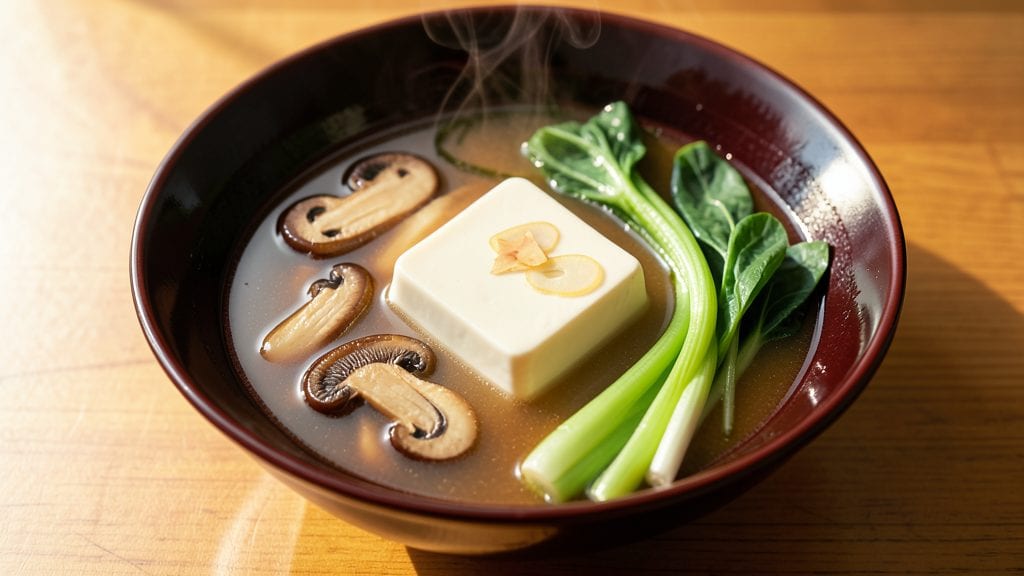
This miyabi soup recipe delivers the refined elegance of Japanese kaiseki cuisine right to your kitchen table, where silky miso-ginger broth meets tender tofu and seasonal vegetables. The secret lies in balancing umami-rich miso with fresh ginger and dashi, creating a broth so smooth it practically melts on your tongue.
I developed this version after years of studying traditional techniques, ensuring every spoonful captures that delicate harmony of flavors.
What sets this soup apart is its adaptability—whether you're serving it as a light summer starter or a hearty winter meal, the broth remains the star. The tofu is silken yet firm, absorbing the broth's depth without falling apart, while mushrooms and greens add layers of texture.
The preparation method emphasizes clarity: precise ingredient ratios, gentle simmering, and minimal handling to preserve the natural flavors.
By the time you serve this soup, you'll have achieved a dish that's both comforting and sophisticated—tender tofu floating in a golden broth that's rich yet never overpowering. The aroma alone will transform your kitchen into a tranquil Japanese dining space.
Perfect for special occasions or a quiet weeknight dinner, this recipe proves refined cuisine doesn't require complexity.
The beauty of miyabi soup lies in its versatility—swap seasonal vegetables, adjust the miso ratio for stronger or milder flavor, or garnish with delicate herbs for a modern touch.
Each bowl becomes a canvas for your culinary creativity while staying true to its traditional roots. Let's bring this masterpiece to life.
Ingredients for miyabi soup
Twelve ingredients, one bowl of pure elegance. Every element here transforms into silky perfection.
| Ingredient | Amount | Notes |
|---|---|---|
| Silken Tofu 🧀 | 14 oz | Block or package preferred |
| White Miso Paste 🍶 | ½ cup | High-quality, fermented |
| Fresh Ginger 🧄 | 2 tbsp | Finely grated, organic preferred |
| Dashi Stock 🍲 | 4 cups | Homemade or quality store-bought |
| Shiitake Mushrooms 🍄 | 8 whole | Fresh, stems removed |
| Baby Bok Choy 🥬 | 4 whole | Baby heads, halved lengthwise |
| Green Onion 🧅 | 1 whole | Thinly sliced, white and green |
| Sesame Oil 🫒 | 1 tbsp | Toasted, for finishing |
| Rice Vinegar 🍶 | 1 tbsp | For brightness, optional |
| Sea Salt 🧂 | ½ tsp | Fine grain, for seasoning |
| White Sesame Seeds 🌾 | 1 tbsp | Toasted, for garnish |
| Water 💧 | 4 cups | Filtered, for broth |
| Kombu Seaweed 🍃 | 1 piece | Dried, for dashi infusion |
The miso is your flavor anchor. Miyoko's Creamery or Hikari brands deliver that deep umami without bitterness—look for white miso labeled 'shiro' for this recipe. Fresh ginger? Organic or Japanese ginger from the produce section has the best zing. I always buy extra and freeze it in slices for future soups. The dashi stock is non-negotiable—homemade with kombu and bonito flakes gives you that authentic depth, but Marukome instant dashi works in a pinch. For shiitake mushrooms, Asian markets often have fresher, plumper ones than regular grocery stores.
No white miso? Miso paste in a tube (like Miso Master) works in a squeeze, though texture differs slightly. Short on ginger? Ginger paste at half the amount gets you close—just add a splash of water to thin it. The kombu seaweed? Any dried kombu works, but avoid pre-packaged dashi granules—they lack authenticity. Baby bok choy can be swapped for spinach or napa cabbage if needed, but keep the quantity similar. The sesame oil is purely for finishing—use the toasted variety for that nutty aroma, not the cheap salad oil kind.
This soup tastes even better reheated—3-4 days in the fridge, no problem. For freezing, portion into containers with a little broth on top to prevent drying. The tofu keeps 5 days in the fridge if stored in water, but use it within 2 days for best texture. I always make a double batch—one for dinner, one for lunch the next day. Garnishes like sesame seeds and green onions can be prepped ahead and stored in the fridge for 1 week. The broth alone keeps for 5 days if you want to make it ahead.
Why You'll Love This Recipe
- Five-Ingredient Magic: I swear, this soup comes together faster than I can boil water. Just slice the tofu, chop the ginger (two thin pieces, max), and let the miso and dashi do the heavy lifting. No measuring cups, no fuss—just honest, satisfying flavor with almost no effort.
- Umami Bomb: That first spoonful of miso-infused dashi with shiitake mushrooms? It’s like a warm hug for your taste buds. The ginger adds a bright kick, while the silken tofu soaks up all the goodness—creamy, rich, and impossible to resist. Honestly, it’s the kind of soup that makes you want to linger at the table.
- Weeknight Workhorse: I make this when I’m too tired to think but still need real food. It reheats beautifully, so I’ll whip up a big batch on Sunday and have nourishing bowls ready for days. Even my picky-eating partner asks for seconds—no small feat around here.
- Budget Meal Winner: Silken tofu and shiitake mushrooms stretch further than you’d think, and a little miso goes a long way. I’ve fed four people for under $10 with this, and the leftovers? Just as good the next day. Between us, it’s my go-to when groceries feel tight but I refuse to skimp on flavor.
Step-by-step instructions for silky miso-ginger broth with tender tofu
Here's how to craft this velvety soup where every ingredient shines together.
Infuse the Dashi Stock with Kombu and Water
In a clean pot, combine the 4 cups water with the 1 piece kombu seaweed. Bring to a gentle simmer over medium heat—you'll see small bubbles forming at the edges, but don't let it boil vigorously. Simmer uncovered for 10-15 minutes until the water takes on a delicate sea aroma and the kombu softens slightly.
Remove the kombu immediately after simmering—it's done when it's pliable but still holds its shape. Strain the liquid through a fine-mesh sieve into another pot, discarding the kombu. This infusion creates the aromatic foundation that makes traditional dashi so special. Keep the heat at a whisper-low setting for now—we'll build our broth gradually.
Build the Miso-Ginger Base
Add the 2 tablespoons finely grated fresh ginger to the warm kombu-infused water. Let it steep for 5 minutes while you prepare the next components—this gentle infusion will release the ginger's bright, warming notes without bitterness. Then, reduce the heat to low and whisk in the ½ cup white miso paste until completely dissolved.
Here's where the magic happens: the miso should melt smoothly into the broth, creating a rich, cloudy texture. If you notice any lumps, strain the broth through a fine sieve to achieve that signature silky consistency. Keep the broth at a gentle simmer—never boiling—as we add the remaining ingredients to preserve their delicate flavors.
Cook the Shiitake Mushrooms and Tofu
Clean the 8 whole shiitake mushrooms by wiping them with a damp cloth to remove any dirt, but don't soak them—they'll absorb too much water. Add them to the simmering broth and cook for 8-10 minutes until they're tender but still hold their shape. The mushrooms should absorb some of the broth, intensifying their umami flavor.
While the mushrooms cook, gently press the 14 oz silken tofu block between two sheets of parchment paper to remove excess water, then cut it into ½-inch cubes. Add the tofu to the broth during the last 5 minutes of mushroom cooking. The tofu will become tender and silky, absorbing the miso-ginger broth without falling apart—this is key to achieving that restaurant-quality texture.
Finish with Vegetables and Seasoning
Halve the 4 whole baby bok choy lengthwise and add them to the broth along with the 1 whole green onion (sliced). Simmer for 3-4 minutes until the bok choy is bright green and just tender—you want it to retain a slight crunch. The green onion should soften slightly but still have bite. Season with the ½ teaspoon sea salt, tasting as you go to balance the flavors.
Remove the soup from heat and let it rest for 5 minutes. This resting period allows all the flavors to meld together—you'll notice the aroma deepen as the miso and ginger infuse more completely. The broth should now be a beautiful, cloudy amber color with a velvety texture that coats the back of a spoon.
Serve with Finishing Touches
Ladle the soup into bowls, dividing the white sesame seeds and sesame oil among them. Drizzle each serving with 1 teaspoon sesame oil and sprinkle with ½ teaspoon white sesame seeds. For an extra brightness, add a few drops of 1 tablespoon rice vinegar to each bowl—this optional step cuts through the richness beautifully.
Serve immediately while the tofu is still warm and the broth maintains its silky texture. Each spoonful should deliver a perfect balance of umami from the miso, warmth from the ginger, and delicate sweetness from the shiitake mushrooms. The tender tofu and baby bok choy add satisfying texture contrasts, making this more than just a simple soup—it's a comforting, flavorful experience.
Pro Tips For Making Miyabi Soup
- Simmer Shiitake First: Toss those mushrooms into the pot before the dashi and ginger—about 5 minutes before adding miso. I learned this the hard way: skipping this step leaves them bland and waterlogged. The slow simmer lets them soak up the broth’s umami like a sponge.
- Cube Tofu Unevenly: Cut your silken tofu into irregular chunks, not perfect cubes. The jagged edges release flavor faster and soak up the broth better. (Yes, it’ll look messy—your soup won’t.)
- Temper the Miso: Mix the white miso paste with cool broth first, then slowly add the hot liquid. Dumping it in straight makes the soup curdle like a science experiment gone wrong. Stir vigorously for 30 seconds to wake up those flavors.
- Grate Ginger Thin: Use a microplane or the finest grater for ginger—no thick slices. The finer the texture, the faster it dissolves and the more it brightens the soup’s depth. (And skip the peeling; the skin’s got flavor too.)
Creative variations of this recipe
Summer Light Version
Swap the shiitake mushrooms for enoki mushrooms—their delicate, crisp stems add freshness without overpowering the broth. Use baby spinach instead of bok choy and reduce the miso to ¼ cup for a lighter flavor.
Add ½ cup thinly sliced cucumber and a splash of yuzu juice (or lemon) for brightness. Serve chilled or at room temperature for a refreshing summer starter. 🌿
Winter Hearty Version
Boost the umami by adding ½ cup thinly sliced daikon radish and 4 oz king oyster mushrooms for meaty texture. Increase the miso to ⅔ cup and add 1 tablespoon red miso paste for depth.
Include ½ cup cooked shiitake stems (finely chopped) and a sprinkle of toasted nori strips for garnish. The broth becomes richer and more warming for cold months. ❄️
Modern Fusion Twist
Infuse the broth with 1 teaspoon gochujang (Korean chili paste) and ½ teaspoon garlic powder for a subtle spicy kick. Replace bok choy with baby kale and add ¼ cup shredded purple cabbage for color.
Top each bowl with crumbled soft tofu skin (or crispy fried tofu bits) and a drizzle of chili oil. This version bridges Japanese and Korean flavors beautifully. 🌶️
Vegetarian Protein Boost
Add ½ cup cooked black beans or ½ cup chickpeas for extra protein and heartiness. For a smoky touch, include ½ cup grilled eggplant slices (pre-cooked and cooled).
The beans absorb the broth's flavors while adding a satisfying texture. This version works perfectly as a main dish for vegetarian meals. 💪
Regional Japanese Adaptations
For a Kyoto-style version, use yuba (tofu skin) instead of regular tofu and add thinly sliced lotus root for texture. In Osaka, locals might include tempura scraps (lightly fried) at the bottom of the bowl for crunch.
Each region adapts the dish to local ingredients while keeping the miso-ginger broth as the foundation. 🗺️
Garnish Creativity
Elevate presentation with microgreens or shiso leaves for a pop of color. Try pickled ginger slices (instead of fresh) for tangy contrast. For a smoky finish, sprinkle with toasted sesame seeds mixed with a pinch of smoked paprika. Garnishes should complement, not overpower—the key is balance. ✨
Nutrition facts
Frequently asked questions
What makes this miyabi broth different from regular miso soup?
The key lies in the ginger infusion and dashi kombu base—this version builds flavor gradually rather than relying on instant miso packets. The silken tofu cubes are pressed and cooked separately to maintain perfect texture, while the shiitake mushrooms add depth that regular miso soups often lack. The result is a velvety, layered umami experience rather than a simple salty broth.
Can I substitute ingredients if I can't find white miso?
Yes! Use red miso paste (½ cup) for richer flavor, or awase miso (mixed white/red) for balance. For a milder taste, blend ¼ cup white miso with ¼ cup plain yogurt or tofu yogurt. Avoid sweet miso—it alters the soup's delicate profile. The ginger and kombu will still provide the signature brightness and umami foundation.
How do I prevent the tofu from turning mushy?
Never boil the broth—keep it at a gentle simmer (tiny bubbles) and add tofu only in the last 5 minutes. Press the tofu between paper towels before cubing to remove excess moisture. For extra firmness, use extra-firm tofu instead of silken, or lightly pan-fry the cubes before adding them to the broth for 30 seconds per side.
Is this soup suitable for a kaiseki-style meal?
This recipe aligns perfectly with kaiseki principles—seasonal ingredients, minimal seasoning, and focus on natural flavors. For a traditional presentation, serve in lacquered bowls with wasabi on the side (optional) and garnish with edible flowers or thinly sliced scallions. The miso-ginger balance reflects winter kaiseki flavors, while the light summer version adapts beautifully for warmer months.
Can I make this soup ahead of time?
Yes, but with precautions: Prepare the broth base (without tofu) up to 2 days ahead and refrigerate. Reheat gently on low heat, then add fresh tofu and vegetables just before serving. For longer storage (3 months), freeze the broth in portions—thaw overnight in the fridge and finish with fresh ingredients. Never freeze tofu directly in the broth, as it absorbs water and loses texture.