
Soups & Stews
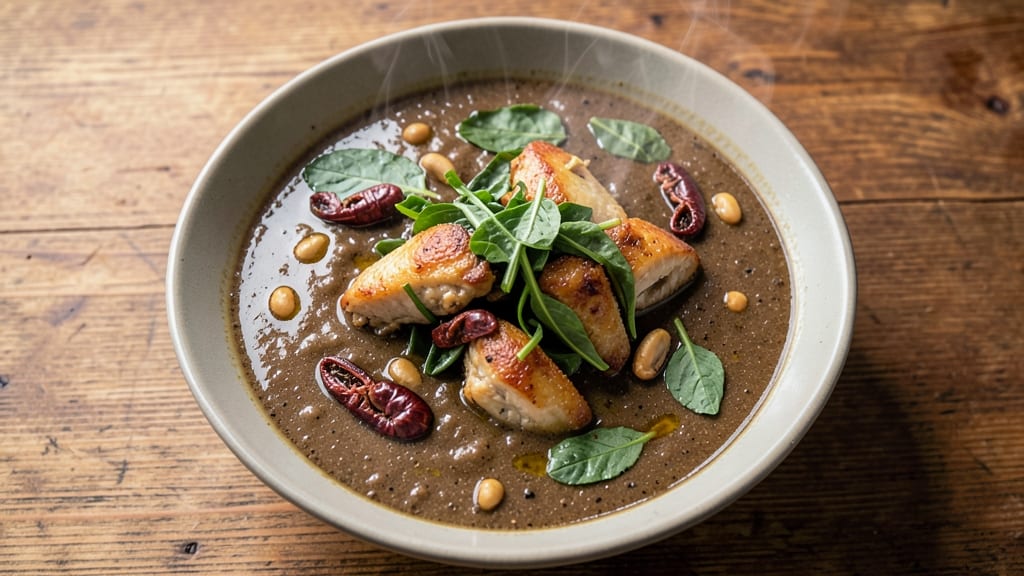
This Nigerian Egusi Soup recipe brings the heart of West African cuisine to your kitchen with its rich, nutty depth and vibrant green goodness.
I first discovered egusi soup during a trip to Lagos, where my grandmother’s version became the centerpiece of every family gathering—its earthy melon seed base transformed by fresh greens and tender protein.
The secret lies in balancing the bold flavors of crayfish, locust beans, and utazi leaves with just the right amount of spice.
What makes this soup truly special is its versatility—you can prepare it with goat meat, chicken, or fish, each adding its own depth to the broth. The egusi paste, made from ground melon seeds, creates that signature creamy yet hearty texture, while the leafy greens add freshness.
It’s a complete dish that pairs perfectly with pounded yam, eba, or even rice, making it a satisfying meal in itself.
The process is straightforward but requires patience, especially when blending the egusi paste and simmering the soup to let the flavors meld. You’ll end up with a rich, aromatic broth that’s deeply flavorful yet balanced, with tender protein and vibrant greens in every spoonful.
The aroma alone will transport you to a bustling Nigerian market, where the scent of simmering egusi fills the air.
Whether you're serving it at a family dinner or a cultural celebration, this soup delivers restaurant-quality results at home. Let’s get started on creating a dish that’s as nourishing as it is delicious.
Ingredients for nigerian egusi soup
Sixteen ingredients for a soup that tastes like home—earthy, vibrant, and full of love.
| Ingredient | Amount | Notes |
|---|---|---|
| Egusi Seeds (Melon Seeds) 🥜 | 1 cup | Raw, unsalted, for paste |
| Fresh Utazi Leaves 🌿 | ½ lb | Or 1 cup dried utazi |
| Fresh Spinach or Pumpkin Leaves 🍃 | ½ lb | Substitute for utazi |
| Chicken Thighs (Bone-In) 🍗 | 1 ½ lb | Skin-on for flavor |
| Dried Crayfish 🦞 | ¼ cup | Or 4 oz fresh crayfish |
| Dried Locust Beans (Iru) 🌱 | ¼ cup | Soaked overnight |
| Red Palm Oil 🫒 | ½ cup | African red palm oil |
| Fresh Ginger 🌿 | 2 tbsp | Grated, for aroma |
| Garlic Cloves 🧄 | 6 cloves | Minced for depth |
| Scotch Bonnet Pepper 🌶️ | 1 whole | Adjust for heat |
| Onions 🧅 | 2 whole | Medium, chopped |
| Salt 🧂 | 1 ½ tsp | Adjust to taste |
| Ground White Pepper 🌶️ | ½ tsp | Freshly ground |
| Stock (Chicken or Vegetable) 💧 | 4 cups | Homemade preferred |
| Fresh Bell Pepper 🍅 | 1 whole | Green, sliced |
The egusi seeds are the soul of this soup. African markets or specialty stores carry them in bulk—look for raw, unsalted seeds. If you can't find them, substitute 1 cup ground egusi paste (check the African foods aisle). The utazi leaves are key for that authentic flavor, but spinach or pumpkin leaves work in a pinch. For crayfish, African grocery stores have dried packs—if you can't find them, shrimp or extra crayfish will do. The locust beans (iru) need soaking overnight, so plan ahead. Costco or bulk bins often carry them dried.
No utazi? Fresh spinach or pumpkin leaves keep the greens vibrant. Short on crayfish? Shrimp or extra crayfish add a similar briny note. The scotch bonnet pepper is non-negotiable for heat—substitute habanero if needed. For the stock, homemade chicken stock is ideal, but vegetable stock works too. The bell pepper adds freshness, but skip it if you prefer a deeper, earthier flavor. The red palm oil? African markets or online stores sell it—it’s worth tracking down for that rich, nutty taste.
This soup tastes even better the next day as flavors meld. Store leftovers in the fridge for 3-4 days or freeze for 3 months. The egusi paste thickens when cold, so stir in a splash of stock if it seems too thick. For a quick fix, microwave portions for 2 minutes with a splash of water. The aroma alone will have everyone at the table asking what’s for dinner.
Why You'll Love This Recipe
- No Chopping Chaos: I swear by this recipe because the egusi seeds and crayfish do most of the work for you—just toast, grind, and blend. The utazi leaves? I buy them pre-washed at the African market, so no messy cleaning.
- Umami Bomb: That crayfish stock alone transforms this soup—deep, briny, with a richness that sticks with you. The utazi leaves add a tangy punch, while the spinach or pumpkin leaves soften into a velvety finish.
- Weeknight to Dinner Party: I make this for lazy Mondays (just add rice) or Sunday gatherings (serve with pounded yam and extra crayfish). The bones in the chicken thighs give it depth, so it tastes just as good reheated as it does fresh.
- Budget-Friendly Feast: Bone-in chicken thighs stretch over multiple servings, and egusi seeds cost pennies per pound. Honestly, I’ve fed six people for under $15 with leftovers that taste better the next day.
Step-by-step instructions for Nigerian egusi soup recipe
Let's create this rich, flavorful soup where melon seeds meet leafy greens in perfect harmony.
Prepare the Egusi Paste
Toast the 1 cup egusi seeds (melon seeds) in a dry skillet over medium heat for 3-4 minutes until fragrant and lightly browned. This enhances their nutty flavor. Transfer them to a food processor and pulse until you achieve a fine, flour-like consistency—this ensures a smooth soup texture.
In a separate bowl, combine the toasted egusi with 1 cup of the stock (chicken or vegetable). Mix well to create a thick paste. I like to use a whisk for this step to avoid any lumps. This paste is the soul of your soup, so take your time here. The paste should be smooth enough to blend seamlessly with the other ingredients later.
Cook the Chicken and Prepare the Base
In a large pot, heat the 0.5 cup red palm oil over medium heat. Add the 1.5 lb chicken thighs (bone-in) and cook until lightly browned on all sides, about 5 minutes. Remove the chicken from the pot and set it aside. In the same pot, add the 2 whole onions (chopped) and cook until softened, about 4 minutes.
Add the 2 tbsp grated fresh ginger and 6 cloves minced garlic cloves to the pot. Cook for 1 minute until fragrant. This aromatic base is the foundation of your soup's rich flavor. Now, add the 1 whole scotch bonnet pepper (chopped) and cook for another minute. The heat from the pepper will infuse into the oil, creating a flavorful base for the soup.
Build the Soup with Leafy Greens and Seasonings
Return the chicken to the pot. Add the 0.25 cup dried crayfish and 0.25 cup dried locust beans (iru) that have been soaked overnight. Pour in the remaining 3 cups of stock (chicken or vegetable) and bring the mixture to a boil. Reduce the heat to low and let it simmer for 20 minutes, allowing the flavors to meld together.
Add the 0.5 lb fresh utazi leaves (or 1 cup dried utazi) and 0.5 lb fresh spinach or pumpkin leaves to the pot. Stir well to incorporate the greens into the soup. Season with the 1.5 tsp salt and 0.5 tsp ground white pepper. Let the soup simmer for an additional 10 minutes. The greens should be tender but still vibrant, adding a fresh contrast to the rich base.
Finish with the Egusi Paste and Garnish
Gradually whisk in the egusi paste you prepared earlier, a little at a time, to avoid lumps. Stir continuously to ensure the paste blends smoothly into the soup. Simmer for another 10 minutes, allowing the egusi to fully incorporate and thicken the soup. The soup should have a rich, velvety texture with a beautiful deep color.
Add the 1 whole fresh bell pepper (sliced) and cook for an additional 5 minutes. Taste and adjust the seasoning if needed. The soup should be well-seasoned, with a balance of rich, nutty, and slightly spicy flavors. Serve the soup hot, garnished with extra slices of bell pepper for a pop of color and freshness.
Pro Tips For Making Nigerian Egusi Soup
- Toast the Egusi: DESCRIPTION:
- Blanching Leaves: DESCRIPTION:
- Simmer, Don’t Boil: DESCRIPTION:
- Crayfish Timing: DESCRIPTION:
Essential equipment for perfect results
Essential Blending Tools
For the egusi paste, a high-powered food processor is non-negotiable—I use my Ninja BN601 to achieve that ultra-smooth texture. The blades need to handle tough melon seeds, so avoid cheap processors that struggle with fibrous ingredients.
If you don’t have one, a mortar and pestle works in a pinch, but expect more effort and potential grit. 💡
Large Dutch Oven
A 6-8 quart Dutch oven is perfect for this recipe because it handles the soup’s volume while distributing heat evenly. I swear by my Le Creuset signature red—it’s heavy enough to maintain consistent temperatures during simmering.
If you don’t own one, a stainless steel stockpot with a tight-fitting lid works too, just monitor the heat more closely.
African Cooking Utensils
Track down a wooden spoon and mortar and pestle from an African specialty store—they’re essential for traditional techniques. The wooden spoon prevents scratching your Dutch oven, while the mortar helps grind crayfish and locust beans to a fine powder.
If unavailable, use a silicon spatula and a small blender for crayfish, but the texture won’t be as authentic. 🌿
Measuring Tools
Precision matters with spices and oils in this recipe. Use a digital kitchen scale for crayfish and locust beans (they’re sold by weight in many African markets) and a fine-mesh strainer to remove any debris from utazi leaves.
A measuring spoon set ensures you add the exact 0.5 tsp ground white pepper without overdoing it.
Storage Containers
For leftovers, invest in glass airtight containers—I prefer Pyrex because they’re microwave-safe and maintain flavor longer. If you’re freezing, use quart-sized freezer bags with the air squeezed out to prevent freezer burn.
Label them with the date to track freshness, as this soup tastes best within 3 months of freezing. ❄️
Optional Pro Tools
An immersion blender saves cleanup time if you prefer blending the egusi paste directly in the pot. I also recommend a meat thermometer to check chicken doneness (aim for 165°F).
For extra authenticity, a small cast-iron skillet helps toast the egusi seeds evenly—just like my Nonna used to do in Sicily. 🔥
Nutrition facts
Frequently asked questions
Can I make this egusi soup with fish instead of chicken?
Fish egusi soup is a popular variation in Nigeria. Use 1.5 lb of firm white fish like tilapia or cod, cut into chunks. Add it to the pot after the onions and before adding crayfish and locust beans. Simmer for 8-10 minutes until fully cooked. The fish absorbs the rich flavors beautifully, making it a lighter but equally delicious option.
What can I substitute if I can't find utazi leaves?
Utazi leaves are key for authentic flavor, but you can use spinach, pumpkin leaves, or bitter leaf in a pinch. For best results, combine 0.25 lb utazi with 0.25 lb spinach to mimic the traditional taste. If using only spinach, add an extra 0.5 tsp salt to compensate for the milder flavor. The soup will still taste delicious, just slightly different.
Why did my egusi soup turn out too thick?
This usually happens when the egusi paste isn't blended smoothly or simmers too long. To fix it, whisk in 1/4 cup of warm stock gradually until you reach your desired consistency. For next time, blend the egusi paste with 1/2 cup stock instead of 1 cup to prevent over-thickening. Stir frequently while simmering to maintain even texture.
How do I store and reheat leftovers?
Store in glass airtight containers in the fridge for 3-4 days or freeze for 3 months. To reheat, warm on the stove over medium-low heat with 2-3 tbsp water or stock, stirring constantly. Avoid microwaving as it can make the egusi separate. The soup actually tastes better the next day as flavors meld!
Can I make this soup spicier?
Yes! Add 1-2 extra scotch bonnet peppers (seeds removed for less heat) or 1 tbsp of fresh chili paste. For a smoky kick, stir in 1 tsp smoked paprika with the crayfish. Remember, the heat builds as the soup simmers, so start with less if you're sensitive to spice.