
Soups & Stews
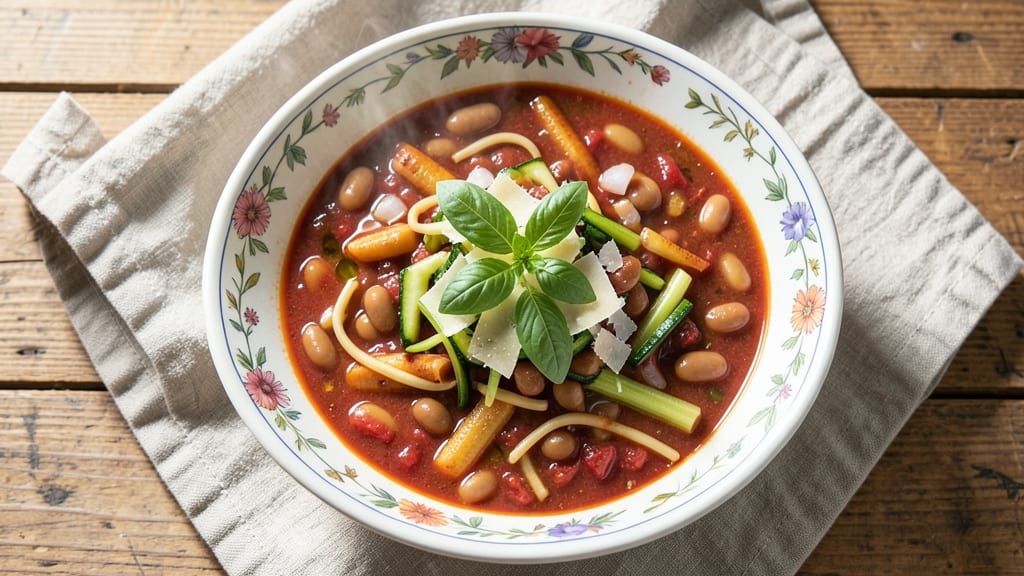
Nonna's minestrone soup recipe brings the warmth of Italian tradition to your kitchen with every hearty spoonful. This one-pot masterpiece combines tender beans, fresh vegetables, and aromatic herbs into a rich, tomato-basil broth that simmers into perfection.
I learned this recipe from my nonna, who insisted that the secret lies in slow cooking and love—both of which transform simple ingredients into something extraordinary.
The beauty of this dish is its adaptability while maintaining authenticity. You'll start with cannellini beans and ditalini pasta, but the vegetable medley—carrots, celery, zucchini, and tomatoes—can be adjusted based on what's fresh at your local market.
The broth develops deep, savory flavors as it simmers, while the basil and Parmesan add that unmistakable Italian touch. It's a vegetarian-friendly recipe that still delivers the satisfying depth of a classic Italian meal.
What makes this minestrone truly special is how it evolves as it cooks. The vegetables soften just enough to release their sweetness, the beans become tender but retain their shape, and the pasta absorbs the rich, herby broth.
Each spoonful is a balance of textures and flavors—creamy beans, crisp-tender vegetables, and the bright acidity of tomatoes. The aroma alone will fill your home with the comforting scent of an Italian nonna's kitchen.
This recipe serves six and can be made in a large pot or Dutch oven, making it perfect for family dinners or meal prep. The leftovers taste even better the next day as the flavors meld further.
Whether you're serving it with crusty bread or a sprinkle of fresh basil, you'll have a taste of tradition that feels like a warm embrace. Let's get started on creating this timeless dish.
Ingredients for nonna's minestrone soup
Six simple ingredients bring Nonna's minestrone to life—vegetables, beans, and love.
| Ingredient | Amount | Notes |
|---|---|---|
| Dried Cannellini Beans 🌾 | 1 ½ cups | Uncooked, soaked overnight |
| Ditalini Pasta 🍝 | 1 cup | Uncooked, small tubes |
| Carrots 🥕 | 3 medium | Peeled, sliced into rounds |
| Celery Stalks 🧅 | 3 whole | Trimmed, chopped |
| Zucchini 🥒 | 2 medium | Sliced into half-moons |
| Onion 🧅 | 1 medium | Yellow, diced |
| Garlic Cloves 🧄 | 4 cloves | Minced for depth |
| Canned Crushed Tomatoes 🍅 | 2 cups | San Marzano preferred |
| Vegetable Broth 💧 | 4 cups | Low-sodium preferred |
| Fresh Basil Leaves 🌿 | ½ cup | Chopped, for brightness |
| Fresh Parsley Leaves 🌿 | ¼ cup | Chopped, for garnish |
| Extra-Virgin Olive Oil 🫒 | ¼ cup | For richness |
| Parmesan Cheese 🧀 | ½ cup | Freshly grated |
| Salt 🧂 | 1 ½ tsp | Kosher or sea salt |
| Black Pepper 🌶️ | ½ tsp | Freshly ground |
The beans are the heart of this soup, soaking overnight is a must. Trader Joe's has the best cannellini beans in bulk, but any dried variety works. The carrots and celery should be fresh—vibrant orange and crisp stalks mean they'll hold up during the long simmer. I always grab a bunch of fresh basil from the market, but dried oregano in a pinch works too. The Parmesan? Grab a wedge from the deli counter—pre-grated gets clumpy and loses flavor fast. For the tomatoes, San Marzano cans are worth the splurge—they're sweeter and less acidic, which balances the dish perfectly.
No cannellini beans? Substitute white beans or chickpeas—they hold their shape just as well. Swap ditalini for any small pasta shape you have on hand—orzo or small shells both work beautifully. The vegetable broth can be homemade (simmer veggie scraps with herbs) or store-bought—just check the sodium. Fresh herbs are ideal, but dried basil or parsley at half the amount gets you close. The zucchini can be swapped for eggplant or bell peppers if you prefer. For extra richness, stir in a spoonful of nutritional yeast at the end—it adds a cheesy depth without dairy.
This soup tastes even better the next day as the flavors meld. Store in an airtight container in the fridge for up to 5 days. Freezes beautifully for 3 months—just thaw in the fridge overnight. I always make a double batch and portion it into containers for easy lunches. The pasta absorbs the broth, so if you're reheating, add a splash of water or broth to loosen it up. Serve with crusty bread or a sprinkle of fresh basil for that authentic Italian touch.
Why You'll Love This Recipe
- No-Chop Nightmare: I swear by the "mirepoix shortcut"—just dice carrots and celery together, toss in whole zucchini slices (peeled or not, no one cares), and let the pot do the work. The beans soften while you stir, and the ditalini cooks in the same broth—no separate boiling, no fuss. (Yes, even on a Tuesday night.)
- Umami Bomb: That first spoonful? Chef’s kiss. The cannellini beans break down into creamy pockets of flavor, while the ditalini soaks up the broth like a sponge. Honestly, the secret’s in the slow simmer—let those veggies caramelize just a little, and the soup transforms from "weeknight meal" to "I’d fly across town for this" in 30 minutes.
- Budget Magic: Dried beans, seasonal veggies, and pasta? This is the kind of recipe that stretches a grocery budget without stretching your patience. I’ll be real: the first time I made it, I used the last of my carrots and celery, but the soup still felt luxurious. That’s the power of a well-seasoned pot.
Step-by-step instructions for Nonna's minestrone soup
Here's the one-pot method that brings Nonna's kitchen to your stove—simple, hearty, and full of Italian tradition.
Sauté the Vegetable Base with Olive Oil
Heat the 0.25 cup extra-virgin olive oil in a large pot over medium heat. Add the 1 medium diced onion and cook for 3-4 minutes until softened and translucent. This step builds the flavor foundation—don't rush it.
Add the 3 whole chopped celery stalks and 3 medium sliced carrots, stirring occasionally for 5 minutes until the vegetables begin to soften. The colors should deepen slightly, and you'll smell that earthy, sweet aroma developing. This is where the soup's depth of flavor starts.
Stir in the 4 cloves minced garlic and cook for 30 seconds until fragrant—just until you can smell its pungent sweetness. Be careful not to let it brown, or it'll turn bitter. This quick step ensures the garlic infuses the oil without overpowering the dish.
Add Tomatoes and Broth for the Base
Pour in the 2 cups canned crushed tomatoes and stir to combine with the vegetables. Let it simmer for 5 minutes until the tomatoes break down slightly and the mixture thickens just a bit. This step mellows the acidity of the tomatoes and melds all the flavors together.
Add the 4 cups vegetable broth and bring the mixture to a gentle boil. Once boiling, reduce heat to medium-low and let it simmer uncovered for 10 minutes. This allows the flavors to meld and the vegetables to soften further. You'll notice the broth will reduce slightly, concentrating the flavors.
Add the Beans and Cook Until Tender
Gently stir in the 1.5 cups soaked dried cannellini beans (drained if soaked overnight). Return the heat to medium and bring the soup back to a simmer. Cook for 45-60 minutes, stirring occasionally, until the beans are fork-tender and easily mashable against the side of the pot.
Here's the thing—don't skip checking the beans early. They should soften but still hold some texture. If they're breaking down too quickly, reduce the heat slightly. The beans are the heart of this soup, and their texture makes all the difference in the final result.
Finish with Pasta and Fresh Herbs
About 15 minutes before the beans are done, add the 1 cup uncooked ditalini pasta to the pot. Stir gently to distribute the pasta evenly throughout the soup. The pasta will cook in the hot broth, absorbing all those rich flavors. Cook for 8-10 minutes until al dente—you want it to have a slight bite when you taste it.
Remove the pot from heat and stir in the 0.5 cup chopped fresh basil leaves and 0.25 cup chopped fresh parsley leaves. These herbs add brightness and freshness that cut through the richness of the tomatoes and beans. Let the soup sit off the heat for 5 minutes to allow the flavors to meld completely.
Season and Serve with Parmesan
Taste the soup and adjust seasoning with the 1.5 teaspoons salt and 0.5 teaspoon black pepper as needed. Nonna's minestrone should be well-seasoned but not overly salty—balance is key. Stir in the 0.5 cup freshly grated parmesan cheese just before serving to add a salty, umami richness that ties everything together.
Ladle the soup into bowls and serve immediately with extra grated parmesan on top. The aroma alone will make your kitchen feel like Nonna's table—warm, inviting, and full of love. This soup tastes even better the next day as the flavors continue to develop, so make extra if you can.
Pro Tips For Making Nonna'S Minestrone Soup
- SOAK BEANS OVERNIGHT: I learned this the hard way—skipping the overnight soak leaves cannellini beans tough and mealy, no matter how long you simmer. Toss them in cold water with a pinch of salt (yes, even if you’re impatient like me) and let them sit 8+ hours. They’ll thank you with a creamy texture that holds up in soup.
- CHOP VEGETABLES SMALL: Nonna’s minestrone isn’t a salad—aim for ¼-inch dice on carrots and celery, and slice zucchini into thin half-moons. Big chunks mean uneven cooking, and you’ll end up with a soup where some veggies are still crunchy while others turn to mush. (Your future self will thank you.)
- ADD PASTA LATE: Ditalini needs 10–12 minutes in boiling water, not the 2–3 minutes you might think. Toss it in the last 10 minutes of simmering—trust me, I’ve ruined batches by adding it too early. The pasta will absorb flavor from the broth instead of turning bland and gummy.
- SAVE TIME WITH PARBOILED BEANS: Short on soaking time? Parboil the cannellini beans for 30 minutes before adding them to the soup. Drain, then toss them back in—this cuts soaking time by half and guarantees they’ll break down smoothly. (Does it look weird? Yes. Does it work? Every single time.)
Wine and beer pairings for this nonna's minestrone soup
Italian Whites
For a true taste of Nonna's kitchen, reach for a crisp Vermentino from Sardinia—its bright citrus and mineral notes complement the tomato and basil beautifully.
I love a chilled bottle of Antinori's Vermentino from the Costa Smeralda region, which offers a perfect balance of acidity and saltiness that mirrors the soup's flavors. 🍷
If you prefer something lighter, a Pinot Grigio from Alto Adige provides a clean, refreshing contrast to the hearty soup. Look for bottles labeled "Classico" to ensure you're getting grapes from the traditional growing areas. The subtle almond notes in these wines pair wonderfully with the beans and herbs.
Medium-Bodied Reds
For those who prefer red wine, a Chianti Classico offers enough acidity and earthiness to stand up to the tomato base without overpowering it. I recommend a Castello di Volpaia Chianti Classico, which has a balanced tannin structure that won't clash with the soup's creaminess.
The cherry and herbal notes in Chianti enhance the basil and parsley flavors.
A Sangiovese from Tuscany is another excellent choice. Its medium body and bright acidity make it versatile enough to complement both the vegetable medley and the Parmesan cheese. Look for a bottle labeled "Superiore" for a slightly bolder flavor profile.
Beer Pairings
A crisp Italian lager like Peroni or Moretti is my go-to beer pairing—its light, effervescent quality cuts through the richness of the tomato and beans. The subtle malt sweetness balances the acidity of the crushed tomatoes, while the carbonation cleanses your palate between spoonfuls. 🍺
For craft beer lovers, a Belgian witbier with its citrusy and spicy notes provides an interesting contrast. Try Hoegaarden or Stella Artois—the coriander and orange peel flavors in these beers complement the fresh herbs in the soup beautifully. Avoid heavy IPAs or stouts, which can overpower the delicate flavors.
Seasonal Considerations
In warmer months, I opt for a dry Riesling from Germany or Italy—its crisp acidity and slight sweetness make it refreshing against the summer heat.
A Dr. Loosen Blue Slate Riesling from the Mosel region offers a perfect balance of fruit and minerality that pairs exceptionally well with the soup's fresh herbs.
During colder months, a Barbera d'Asti from Piedmont brings warmth and depth to the table. Its juicy dark fruit flavors and soft tannins make it a cozy companion to the hearty minestrone. Look for bottles labeled "Superiore" for a richer, more complex wine.
Nutrition facts
Frequently asked questions
Can I make this minestrone soup without soaking the beans overnight?
You can use quick-soak beans instead! Cover the dried cannellini beans with boiling water, remove from heat, cover, and let sit for 1 hour. Drain before adding to the pot. This cuts prep time but may require 5-10 extra minutes of simmering to reach perfect tenderness.
What vegetables can I substitute if I don't have carrots or celery?
Use whatever seasonal veggies you have! Swap carrots for sweet potatoes or butternut squash, and celery for leeks or fennel. Zucchini can be replaced with eggplant or bell peppers. The key is balancing sweet (carrots), earthy (celery), and mild (zucchini) flavors. Keep the total volume similar to maintain the soup's texture.
How do I make this recipe vegan?
Replace the Parmesan cheese with nutritional yeast (2 tablespoons) for a cheesy flavor, and use vegetable broth instead of chicken broth. For extra richness, stir in 1 tablespoon olive oil at the end. The flavor will be just as hearty—just skip the Parmesan topping or use vegan alternatives.
Why does my minestrone turn out too thin?
This usually happens if you didn't simmer the broth long enough to reduce. Let it cook uncovered for 15-20 extra minutes to thicken naturally. For an instant fix, mash some of the cooked beans against the pot's side to release starch, which will help thicken the soup. Stirring in a tablespoon of cornstarch mixed with water also works in a pinch.
Can I make this soup in an Instant Pot?
Sauté the onion, celery, carrots, and garlic as directed. Add tomatoes, broth, and beans, then cook on high pressure for 10 minutes. Quick-release the pressure, stir in pasta, and cook for 3 more minutes on high pressure. Finish with herbs and Parmesan. The Instant Pot version cooks 40% faster but requires close monitoring to avoid overcooking the pasta.