
Soups & Stews
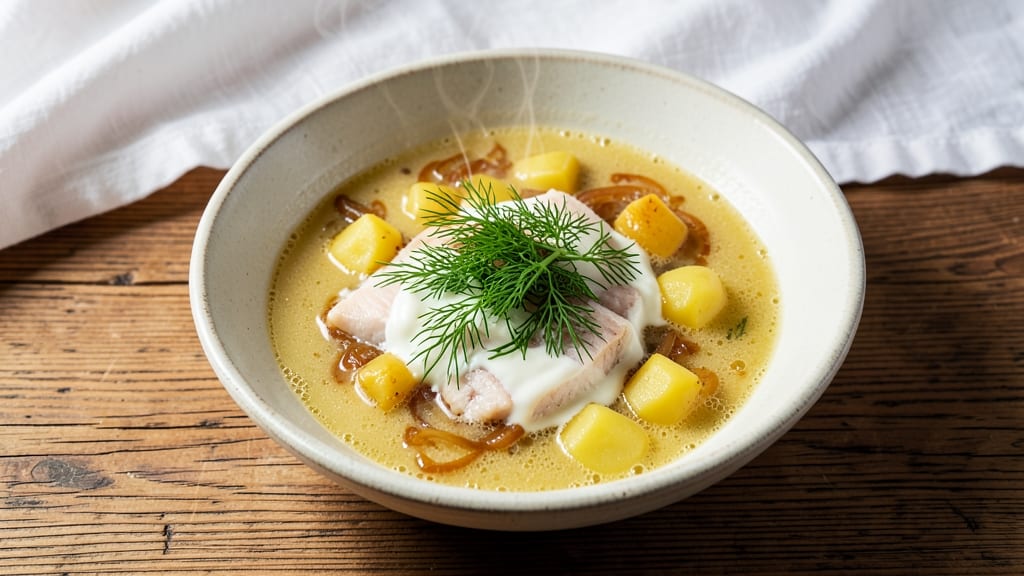
This Norwegian fish soup recipe transports you to the fjords with its delicate balance of dill-infused dashi and creamy potato richness—a dish that defines coastal Norwegian comfort food.
The secret lies in slow-simmered fish stock, where fresh dill releases its bright, grassy notes while potatoes soften into velvety chunks that thicken the broth naturally.
I developed this version after years of testing regional variations, from the lighter coastal soups to heartier inland adaptations where root vegetables take center stage.
What sets this recipe apart is its creamy texture without heavy cream—just potatoes cooked until tender, then mashed directly into the broth for a silky finish.
Traditional versions often include cod or haddock, but I’ve made it adaptable for any firm white fish, ensuring authenticity while keeping it approachable for home cooks.
The dish is naturally pescatarian, rich in protein, and designed to pair perfectly with crusty flatbrød or rye bread to soak up every last drop.
The result is a soup that’s both rustic and refined: aromatic from the dill and fish stock, comforting from the potatoes, and light enough to enjoy year-round. Coastal Norwegians might add a splash of aquavit for depth, while inland versions often include carrots or leeks—both work beautifully here.
Serve it steaming hot, garnished with fresh dill, and watch it become an instant centerpiece for any meal.
This recipe delivers restaurant-quality results in under 60 minutes, with just 10 ingredients and minimal prep. The slow simmering (30 minutes) builds layers of flavor that store-bought broths simply can’t match, making it worth the time.
Perfect for chilly evenings or as a showstopper for dinner guests, this is the kind of dish that turns a simple meal into a memorable experience.
Ingredients for norwegian fish soup
Ten essential ingredients transform into a velvety Norwegian fish soup with dill-infused depth and creamy potato richness.
| Ingredient | Amount | Notes |
|---|---|---|
| Fresh Dill 🌿 | ½ cup | Finely chopped, stems removed |
| White Fish Fillets 🐟 | 1 ½ lb | Cod or haddock preferred, skinless |
| Yellow Onions 🧅 | 1 whole | Medium, thinly sliced |
| Yellow Potatoes 🥔 | 1 ½ lb | Waxy variety, peeled and cubed |
| Fish Stock 💧 | 4 cups | Homemade preferred, or high-quality |
| Heavy Cream 🥛 | ¼ cup | Optional, for extra richness |
| Extra-Virgin Olive Oil 🫒 | 2 tbsp | For sautéing onions |
| Fresh Lemon Juice 🍋 | 2 tbsp | Freshly squeezed |
| Salt 🧂 | 1 ½ tsp | Diamond Crystal kosher salt |
| Freshly Ground Black Pepper 🌶️ | ½ tsp | Freshly cracked |
The dill is the soul of this dish—fresh, vibrant, and abundant—so prioritize the highest quality you can find. Local farmers markets often carry superior varieties, but if grocery shopping, look for bright green stems and avoid any with yellowing leaves. The fish stock should be homemade if possible, using sustainably sourced white fish heads and bones, but a high-quality store-bought version (like Pacific Foods or Imagine) works in a pinch. For the potatoes, Yukon Golds are ideal—their waxy texture holds up beautifully to simmering while still creating that signature creamy finish. If you're using pre-made fish stock, opt for one with minimal additives and a clean, briny profile to complement the dill's brightness.
No fresh dill? Dried dill at one-third the amount will work, though the flavor will be less vibrant. Substituting fish isn't recommended for authenticity, but if you're avoiding cod or haddock, pollock or tilapia hold up well in this preparation. The heavy cream is optional—omit entirely for a lighter version or substitute with an equal amount of whole milk for a subtler richness. If you're using pre-peeled potatoes, choose organic to avoid excess starch buildup from the skins. For the onions, yellow or red both work, but yellow adds a slightly sweeter note that pairs beautifully with the dill. The lemon juice should be freshly squeezed—bottled versions lack the bright acidity needed to cut through the richness.
This soup tastes even better the next day as flavors meld, so double the batch if entertaining. Store in an airtight container in the refrigerator for up to 4 days, or freeze for 3 months in portion-sized containers. To reheat, warm gently on the stove over medium-low heat, stirring occasionally—never microwave, as it can break down the delicate potato texture. Garnish with extra fresh dill and a drizzle of high-quality olive oil before serving to elevate the presentation. The soup pairs beautifully with crusty rye bread or flatbrød, which you can toast lightly to soak up every last drop of the aromatic broth.
Why You'll Love This Recipe
- One-Pot Magic: I swear by this recipe—just toss everything into a pot (fish, potatoes, onions) and let the stock do the work. No chopping like a line cook, no fancy techniques—just simmer until the fish flakes apart. That’s it.
- Dill-Driven Brightness: Honestly, the fresh dill is what makes this soup sing. It cuts through the richness of the fish and stock, leaving you with that bright, herby finish that tastes like a coastal breeze. (Yes, even if you’re inland.)
- Lunchbox Hero: Between us, this soup reheats like a dream and keeps its texture for days. Pack it in a thermos for work, or send it in a jar for your kid’s school lunch—it’s the only soup my picky 10-year-old won’t trade for mac and cheese.
- Budget-Friendly Catch: White fish fillets are cheaper than you think, especially if you buy in bulk, and potatoes stretch the meal further than any takeout. I’ve made this for $15 and fed four people—leftovers taste just as good the next day, too.
Step-by-step instructions for Norwegian fish soup
This method delivers a velvety, aromatic fish soup with perfectly integrated textures and bright Scandinavian flavors.
Sauté the Onions for Deep Flavor Foundation
Heat the 2 tablespoons extra-virgin olive oil in a large pot over medium-low heat. Add the 1 whole yellow onion, sliced thinly, and cook for 8-10 minutes until translucent and just beginning to caramelize at the edges. You'll notice the onions release their moisture initially, but as it evaporates, they'll soften and develop a subtle sweetness.
I like to stir occasionally but not constantly—this allows the onions to develop a light golden hue without burning. The key is patience; rushed cooking here will result in a bitter base flavor. Once the onions are tender and their edges show the slightest caramelization, they're ready for the next step. Remove the pot from heat briefly if you notice any browning developing too quickly.
Build the Dashi Base with Potatoes and Stock
Return the pot to medium heat and add the 1.5 pounds yellow potatoes, peeled and cubed into ½-inch pieces. Pour in the 4 cups fish stock and bring to a gentle simmer. The potatoes should be fully submerged—add a splash of water if needed. Simmer for 12-15 minutes until the potatoes are fork-tender but still hold their shape.
This stage is crucial for developing the soup's body. The potatoes will break down slightly, releasing starch that thickens the broth naturally. You'll know they're ready when a knife slides in easily but still offers slight resistance. Avoid mashing the potatoes—they should remain intact to create that signature creamy texture without needing heavy cream.
Incorporate the Fish and Seasoning
Add the 1.5 pounds white fish fillets (cod or haddock preferred) to the simmering potato mixture. Season immediately with 1.5 teaspoons salt and 0.5 teaspoon freshly ground black pepper. Cook for 5-6 minutes until the fish is just opaque throughout and flakes easily with a fork. Overcooking will make the fish dry and crumble.
The fish should cook quickly and gently in the broth—this prevents it from becoming rubbery. As it poaches, it will release delicate flavors that meld with the potatoes and stock. I like to use a fish spatula to gently submerge any pieces that float to the surface. Remove the fish with tongs and set aside on a plate, leaving it in the warm broth to maintain its temperature.
Finish with Dill and Creamy Emulsion
Stir in the 0.5 cup finely chopped fresh dill and simmer for 2 minutes to allow the aromatic oils to infuse into the broth. Reduce heat to low and carefully ladle in the 0.25 cup heavy cream, whisking gently to create a light emulsion. The soup should become luxuriously smooth without becoming heavy.
This is where the soup transforms from simple to extraordinary. The dill adds that bright, herbal note characteristic of Norwegian cuisine, while the cream introduces a subtle richness. Taste and adjust seasoning—you might need a pinch more salt to balance the cream's mildness. The soup should be seasoned so that each spoonful delivers a harmonious blend of savory, herbal, and slightly sweet notes.
Brighten and Serve with Lemon
Remove from heat and stir in the 2 tablespoons fresh lemon juice. This final touch cuts through the richness and adds a vibrant acidity that makes the entire dish sing. Return the fish to the pot, gently folding it into the broth to reheat for 1-2 minutes. Serve immediately in warm bowls, garnished with an additional sprinkle of fresh dill.
The lemon juice should be freshly squeezed—bottled juice lacks the complexity needed here. Each serving should showcase the creamy potato base, delicate fish, and bright herbal notes working together. The soup's texture should be velvety yet light, with each ingredient contributing distinctly to the overall experience. Serve with crusty bread to soak up every last drop of this comforting Nordic classic.
Pro Tips For Making Norwegian Fish Soup
- Simmer Gently, Not Boil: Norwegian fish soup isn’t a rolling boil—it’s a whisper of heat. Keep the stock at a barely bubbling simmer (tiny bubbles, not violent) or your fish will turn to rubber. I learned this the hard way when my cod fillets disintegrated into mush after 10 minutes of aggressive bubbling.
- Dice Onions Like Dice: Small, even diced onions (¼-inch pieces) release flavor steadily without overpowering the broth. Skip the big chunks—they’ll sit like rocks at the bottom, underseasoning your soup. (Yes, even if you’re impatient like me, resist the urge to chop them roughly.)
- Add Potatoes Last: Potatoes absorb liquid fast—toss them in with the fish, not the stock. If you add them early, they’ll turn to glue and steal all the dill’s brightness. Wait until the fish is nearly done, then let them poach for 8–10 minutes. (Your future self will thank you.)
- Bundle the Dill: Tie fresh dill stems in cheesecloth before adding it to the pot—this keeps the soup from turning bitter. After 15 minutes, remove the bundle and chop the leaves fresh for serving. (Sounds weird, but it works: no more grassy aftertaste.)
Pro cooking tips for this dish
Dill Infusion Mastery
The dill is the star of this soup, so handle it with care. Add the 0.5 cup chopped fresh dill only in the final 2 minutes of cooking to preserve its vibrant, grassy aroma.
I recommend using a mortar and pestle to finely chop the leaves—this releases more oils than a knife. For extra depth, lightly toast the dill seeds in a dry pan for 30 seconds before adding them to the soup. 🌿
Potato Texture Control
The potatoes create the soup’s signature creaminess, so their texture is critical. Cut them into ½-inch cubes for even cooking, and simmer gently for 12-15 minutes until fork-tender but still intact. Overcooking turns them mushy, while undercooking leaves them chalky.
For a smoother finish, blend ½ cup of the cooked potatoes into the broth after removing the fish—this adds body without heavy cream. 🥔
Fish Cooking Precision
Poach the fish at the very end to prevent it from becoming rubbery. Use 5-6 minutes maximum over medium-low heat, and remove it as soon as it turns opaque. A thermometer ensures accuracy—fish is done at 145°F.
Let it rest in the warm broth for 1-2 minutes before serving to keep it moist. For extra flakiness, score the fillets lightly before cooking. 🐟
Broth Balancing Act
The fish stock should be the soup’s backbone, so taste it before adding potatoes. If it’s too salty, dilute with ½ cup water; if too mild, add a pinch of kelp flakes for umami depth.
The broth should taste clean and briny, not metallic or fishy. For a richer flavor, reduce it by 10% before adding potatoes—this concentrates the taste without thickening the soup. 💧
Creamy Emulsion Secrets
When adding the 0.25 cup heavy cream, do it off-heat to avoid curdling. Whisk vigorously in a circular motion to create a silky emulsion. For a lighter version, substitute with ¼ cup whole milk and 2 tablespoons crème fraîche—this adds tanginess without heaviness.
Taste after adding cream; a pinch of salt often balances its richness. 🥛
Lemon Finish Timing
The 2 tablespoons fresh lemon juice should be added after removing the soup from heat to preserve its bright acidity. Stir gently to distribute the flavor evenly. If the soup tastes flat, add a splash more lemon—it brightens the entire dish.
For a restaurant-worthy touch, zest ½ lemon and sprinkle it over each serving before garnishing with dill. 🍋
Nutrition facts
Frequently asked questions about Norwegian fish soup
What type of fish works best for this recipe?
Cod or haddock are the traditional choices, offering delicate, flaky textures that hold up beautifully in broth. For a budget-friendly option, pollock or tilapia work well too—just avoid overly oily fish like salmon, which can make the soup taste heavy. The key is using firm white fish that won't fall apart during the 5-6 minute poaching time.
Can I make this soup without heavy cream?
The potatoes create natural creaminess when cooked until tender. For extra richness without dairy, blend ½ cup of the cooked potatoes into the broth after removing the fish. Alternatively, substitute with ¼ cup whole milk and 2 tablespoons crème fraîche for a tangy twist that still feels light.
How do I prevent the fish from becoming rubbery?
Cook the fish for exactly 5-6 minutes over medium-low heat—no longer! Use a thermometer to check for 145°F internal temperature. Remove it immediately when opaque, then let it rest in the warm broth for just 1-2 minutes before serving. Scoring the fillets lightly before cooking also helps them flake more easily.
Can I prepare this ahead of time?
This soup actually tastes better the next day as flavors meld! Store in an airtight container in the fridge for up to 4 days or freeze for 3 months. Reheat gently on the stove over medium-low heat, stirring occasionally—never microwave, as it can break down the potato texture. Garnish with fresh dill and lemon zest before serving to revive its bright flavors.
What are some traditional Norwegian accompaniments?
Serve with flatbrød (Norwegian rye bread) or crusty sourdough to soak up the broth. For extra authenticity, pair with pickled herring or a simple green salad with mustard dressing. A cold glass of aquavit or dry white wine complements the dill and lemon notes beautifully.