
Soups & Stews
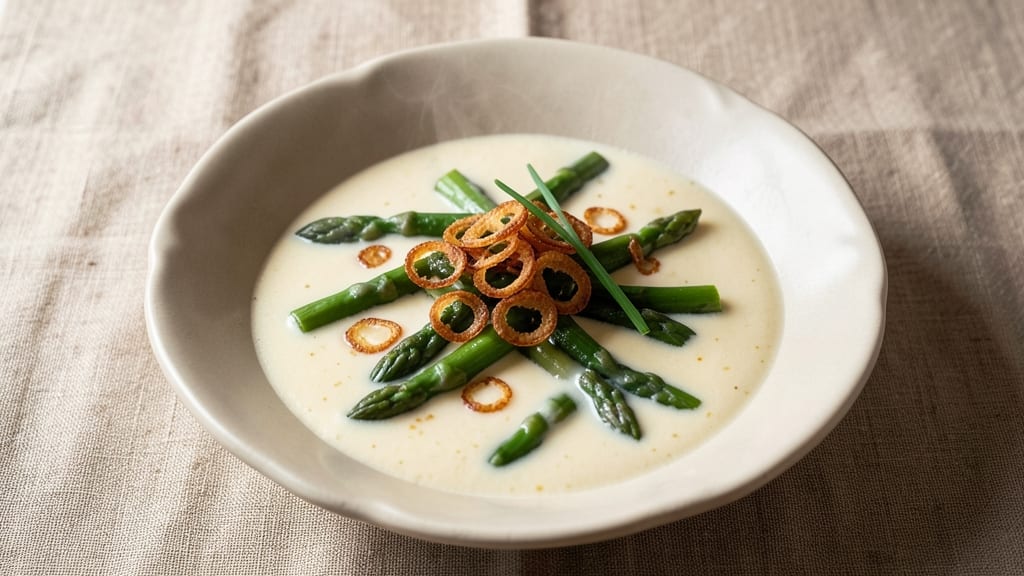
This old-fashioned cream of asparagus soup delivers the velvety green perfection that makes spring dinners feel like a celebration. The secret lies in building a rich velouté base from scratch—no shortcuts, just layers of flavor from roasted asparagus and aromatic herbs that transform simple ingredients into something truly special.
After years of perfecting this recipe, I’ve found the balance between silky texture and vibrant color that keeps everyone asking for seconds.
The foundation begins with a classic roux, where butter and flour cook until golden before being deglazed with white wine—a step that adds depth and prevents the soup from tasting flat.
Fresh asparagus, roasted until tender and caramelized, becomes the star, lending its natural sweetness and vibrant hue to the broth. Herbs like thyme and tarragon infuse subtle complexity, while a touch of cream at the end ensures that velvety finish we all crave.
What you’ll end up with is a soup so smooth it practically melts on the tongue, with just enough brightness from lemon zest to cut through the richness. The color is a stunning emerald green, proof that no artificial dyes were needed—just good technique and quality ingredients.
This isn’t just soup; it’s a showstopper that pairs beautifully with crusty bread or a simple green salad.
Whether you’re serving it as a light lunch or an elegant starter, this recipe delivers restaurant-quality results in under an hour. The best part? It tastes even better the next day, making it perfect for meal prep or entertaining. Let’s get cooking—your taste buds will thank you.
Ingredients for old fashioned cream of asparagus soup
Velvety green perfection starts with these simple but essential ingredients—no shortcuts here.
| Ingredient | Amount | Notes |
|---|---|---|
| Unsalted Butter 🧈 | ½ cup | Cold, cubed for roux |
| All-Purpose Flour 🌾 | ½ cup | White, for velouté base |
| Dry White Wine 🍷 | ½ cup | Sauvignon Blanc preferred |
| Fresh Asparagus 🌱 | 1 lb | Trimmed, woody ends removed |
| Vegetable Broth 💧 | 4 cups | Low-sodium preferred |
| Heavy Cream 🥛 | 1 cup | Full-fat for richness |
| Fresh Thyme 🌿 | 1 tbsp | Leaves only, chopped |
| Fresh Tarragon 🌿 | 1 tbsp | Chopped, stems removed |
| Shallot 🧅 | 1 small | Mince finely, about 1 tbsp |
| Lemon Zest 🍋 | 1 tsp | Bright yellow, finely grated |
| Salt 🧂 | 1 tsp | Kosher or sea salt |
| Ground Black Pepper 🌶️ | ½ tsp | Freshly ground preferred |
| Garlic Cloves 🧄 | 2 cloves | Peeled, minced |
The asparagus is the star, so grab the freshest you can find—Trader Joe's or Whole Foods often have the best spring selection. Look for bright green spears with tight tips; avoid anything woody or yellowing. For the herbs, fresh thyme and tarragon make all the difference—dried works in a pinch, but the flavor is worlds apart. The shallot? One small one is perfect—just mince it finely so it blends right into the soup. And that white wine? Save a cheap bottle—you won’t miss it from your regular glass.
No white wine? Substitute extra vegetable broth—just add an extra splash of lemon juice for brightness. Fresh herbs wilt fast? Dried thyme and marjoram at half the amount work too, but toast them first for deeper flavor. The butter must be cold for the roux—pull it from the fridge 10 minutes before—or it’ll turn greasy. Short on asparagus? Add a handful of frozen peas for color, but they’ll turn the soup gray instead of green. And if you’re watching calories, use half-and-half instead of heavy cream—it’ll still taste rich.
This soup tastes even better the next day, so make a double batch if you’re feeding a crowd. Store leftovers in the fridge for up to 5 days, or freeze for 3 months—just thaw overnight in the fridge. The color fades slightly when reheated, but the flavor only gets better. For serving, I like to garnish with a drizzle of cream and extra lemon zest—simple but impressive. Pair it with crusty bread or a crisp green salad for the full spring menu.
Why You'll Love This Recipe
- Five-Ingredient Magic: I swear by this recipe because it’s that simple—just butter, flour, wine, asparagus, and broth. No fancy gadgets, no stress, just a roux that’s foolproof even if you burn it slightly (we’ve all been there).
- Wine-Infused Luxury: That splash of dry white wine? It’s the secret weapon—brightens the soup without tasting boozy, and the asparagus soaks it up like a dream. Honestly, it makes me feel like I’m serving something restaurant-worthy, not just dinner.
- Leftovers That Shine: This soup tastes better the next day—thickens up perfectly, and the flavors meld into this rich, velvety goodness. I make a big batch on Sundays and freeze half; reheating it is my lazy-day hero move.
- Spring’s Best Friend: Asparagus is seasonal, but this recipe turns it into something you’ll crave year-round. Use it for potlucks (it’s crowd-pleaser approved), weeknight dinners (ready in 30 minutes), or even as a first course for fancy guests.
Step-by-step instructions for creamy asparagus soup
Here's how to craft a velvety asparagus soup with vibrant green color and layers of herb-infused flavor.
Build the Velouté Base
Melt the 0.5 cup unsalted butter in a large pot over medium heat. Once foaming subsides, whisk in the 0.5 cup all-purpose flour and cook for 1-2 minutes until the mixture turns golden and smells nutty. This creates your roux foundation—don't let it brown or it'll taste bitter.
Gradually whisk in the 4 cups vegetable broth, about ½ cup at a time, letting each addition fully incorporate before adding more. Bring to a gentle simmer and cook uncovered for 5 minutes until slightly thickened. The soup should coat the back of a spoon but still flow easily—this is your velouté base ready for transformation.
Infuse with Herbs and Aromatics
Add the minced shallot, 2 cloves garlic, 1 tbsp chopped thyme, and 1 tbsp chopped tarragon to the simmering soup. Cook for 3-4 minutes until the shallot softens and becomes translucent. The garlic should be fragrant but not browned—just enough to wake up the flavors without bitterness.
Here's where the magic happens: stir in the 0.5 cup dry white wine and 1 tsp lemon zest, letting it simmer for 2 minutes until the alcohol cooks off. The wine brightens the soup while the lemon zest adds a subtle citrus lift that cuts through the richness. Taste and adjust seasoning with 1 tsp salt and ½ tsp black pepper—this is your flavor baseline before adding the asparagus.
Blend the Asparagus for Vibrant Color
Trim the 1 lb fresh asparagus by snapping off the woody ends, then cut into 1-inch pieces. Add half to the pot and simmer for 5 minutes until tender. Remove with a slotted spoon and set aside.
Using an immersion blender, purée the cooked asparagus directly in the pot until completely smooth. If you prefer a chunkier texture, reserve some asparagus pieces before blending. Return the puréed asparagus to the pot and stir in the remaining raw asparagus pieces. Simmer for 3 more minutes until all asparagus is tender and the soup develops that signature vibrant green hue.
Finish with Cream and Rest
Lower the heat to medium-low and gradually whisk in the 1 cup heavy cream. Simmer gently for 3-4 minutes—just enough to warm through without curdling. The cream should blend seamlessly, creating that luxurious velvety texture we're after.
Taste one final time and adjust seasoning if needed. The soup should be rich but not heavy, with bright asparagus flavor and herbal depth. Let it rest for 5 minutes off the heat before serving—this allows the flavors to meld completely. The color will deepen slightly as it sits, giving you that perfect restaurant-quality appearance.
Pro Tips For Making Old Fashioned Cream Of Asparagus Soup
- Blanched Asparagus First: Trim the tough ends, then blanch the asparagus for 3 minutes in boiling salted water before using it in the soup. This removes bitterness and makes the final texture silky—no more chewy spears lurking in your creamy base.
- Deglaze with Wine: After browning the flour-butter roux, pour in the white wine immediately and let it bubble for 30 seconds. This cuts through any raw flour taste and adds depth—don’t rush it, or you’ll miss the flavor.
- Simmer, Don’t Boil: Once the broth is added, keep the soup at a gentle simmer (tiny bubbles, occasional swirls) for 15 minutes. Boiling makes the asparagus turn to mush and the cream separate—patience here makes all the difference.
- Strain for Smoothness: After cooking, force the soup through a fine-mesh sieve or food mill. This removes fibrous bits and gives you that old-school velvety texture—no one wants to bite into a speck of asparagus in their first spoonful.
Storing and reheating your leftovers
Refrigerator Storage
Transfer your soup to an airtight glass container—I love Pyrex with snap-on lids—and let it cool to room temperature before refrigerating. This soup keeps beautifully for up to 5 days at 40°F or below, with flavors deepening as the herbs infuse further.
The color may fade slightly, but the taste only improves. Always leave ½ inch of headspace to prevent spills when the liquid contracts. 💛
Freezer Preservation
For long-term storage, freeze in quart-sized freezer bags or glass containers with plastic wrap pressed directly on the surface to prevent ice crystals. Label with the date—this soup stays delicious for up to 3 months.
When ready to reheat, thaw overnight in the fridge for even texture. The cream may separate slightly, but a quick whisk brings it back together. 🧊
Stovetop Reheating
My preferred method is stovetop reheating over medium-low heat—never high, or the cream will curdle. Add 2-3 tablespoons of water or broth to restore creaminess, then stir constantly for 5-7 minutes until steaming.
Taste and adjust seasoning—soup often needs a pinch of salt and a squeeze of lemon juice after reheating. The texture should be velvety, not grainy. ✨
Microwave Revival
For quick reheating, transfer soup to a microwave-safe bowl and cover loosely with a damp paper towel. Heat on medium power (50%) for 2-3 minutes, stir, then continue in 30-second intervals until reaching 165°F.
Avoid overcooking—just until steaming hot. The immersion blender makes this easier: blend briefly after reheating to restore smoothness. 🔥
Garnish Refresh
Before serving reheated soup, brighten it with fresh garnishes. A drizzle of heavy cream, crispy fried shallots, or toasted breadcrumbs adds texture. I also like a sprinkle of fresh tarragon leaves or a pinch of lemon zest to restore that restaurant-quality finish.
These touches make reheated soup feel brand new. 🌿
Make-Ahead Tips
Double the recipe and freeze half for future meals—this soup is perfect for meal prep Sundays. When reheating, add 1 extra tablespoon of cream to compensate for any separation.
For serving, keep a small pot of warm soup on the stove and reheat portions as needed. The first batch always disappears fastest, so plan accordingly! 📅
Nutrition facts
Frequently asked questions
Why does my asparagus soup turn gray instead of green?
This happens when asparagus oxidizes during cooking. To prevent it, add a splash of lemon juice or white wine when blending, or use an immersion blender immediately after cooking. For extra vibrancy, roast half the asparagus first—it develops deeper color and sweeter flavor.
Can I make this soup without wine?
Replace the 0.5 cup white wine with an extra 0.5 cup vegetable broth and add 1 teaspoon lemon juice for brightness. The acidity helps balance the flavors just as well. The wine adds depth, but this substitution keeps the soup just as delicious.
How do I fix lumpy soup after blending?
If you see lumps after blending, don't panic. Use an immersion blender again for 10-15 seconds or transfer to a countertop blender and purée until completely smooth. For extra silkiness, strain the soup through a fine-mesh sieve before adding the cream.
What's the best way to serve this soup?
This elegant soup pairs beautifully with crusty bread, buttered croutons, or a simple green salad. For extra flair, garnish with a drizzle of cream, crispy fried shallots, or fresh tarragon leaves. Serve warm for the best flavor experience.
Can I use frozen asparagus instead of fresh?
Frozen asparagus works in a pinch, but fresh yields the best color and flavor. If using frozen, thaw and drain well first, then pat dry with a paper towel. The texture won't be as vibrant, but it will still taste delicious—just expect a slightly muted green hue.