Soups & Stews
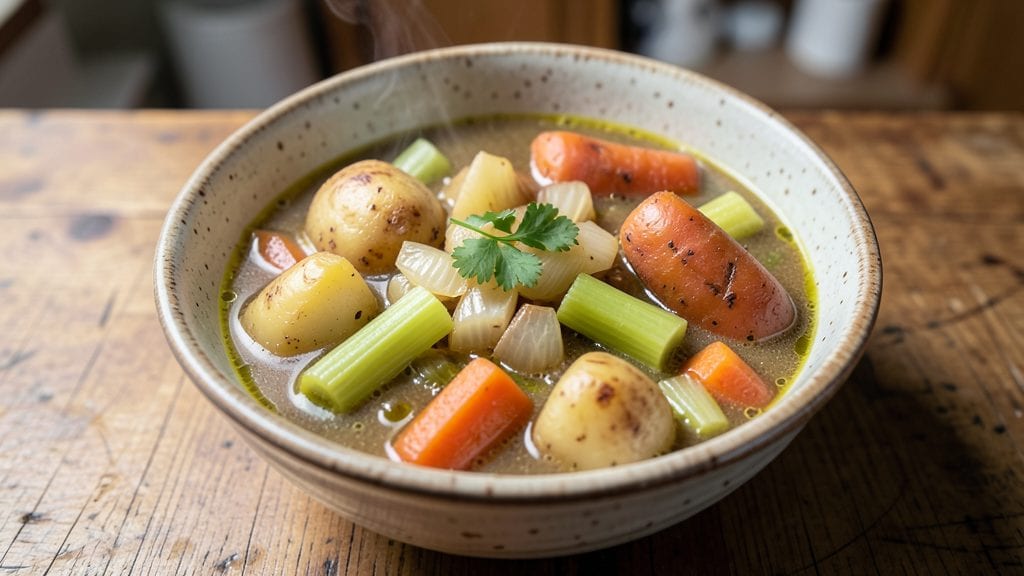
This old-fashioned veggie soup recipe brings back the comforting flavors of home-cooked meals that warm the soul and fill the kitchen with aromatic steam. The secret lies in caramelizing root vegetables until they're tender yet still hold their shape, creating a rich, velvety broth that's both hearty and nourishing.
I developed this recipe after years of testing variations, ensuring it delivers restaurant-quality depth without requiring fancy ingredients.
The beauty of this soup is in its simplicity—just a handful of seasonal vegetables, aromatic herbs, and a few pantry staples come together to create a dish that's as satisfying as it is wholesome.
The carrots, celery, and onions form the base, while potatoes and sweet potatoes add heartiness, all simmered in a broth that develops layers of flavor over time. This recipe is perfect for chilly evenings when you crave something warm and comforting.
What you'll end up with is a steaming bowl of soup that's packed with tender vegetables swimming in a golden, aromatic broth. The caramelized roots add natural sweetness that balances the savory notes, while fresh herbs at the end bring brightness and freshness.
It's the kind of soup that tastes even better the next day, making it ideal for meal prep or feeding a crowd.
Serve with crusty bread for dipping or a sprinkle of fresh parsley for added color. This recipe is versatile enough to adapt to your favorite vegetables while maintaining its classic appeal. Let's get started on creating this timeless comfort dish that's perfect for any season.
Ingredients for old fashioned veggie soup
Pantry staples and seasonal roots create this nostalgic veggie soup with restaurant-quality depth.
| Ingredient | Amount | Notes |
|---|---|---|
| Yellow Onions 🧅 | 1 ½ cups | Diced, medium size preferred |
| Carrots 🥕 | 3 cups | Peeled, cut into 1-inch chunks |
| Celery Stalks 🌿 | 3 cups | Chopped, tough strings removed |
| Russet Potatoes 🥔 | 2 lbs | Peeled, cut into 1-inch cubes |
| Sweet Potatoes 🍠 | 1 ½ lbs | Peeled, cut into 1-inch cubes |
| Vegetable Broth 💧 | 6 cups | Low-sodium preferred |
| Tomato Paste 🍅 | ½ cup | Smooth texture |
| Garlic Cloves 🧄 | 4 cloves | Minced, fresh preferred |
| Fresh Thyme 🌿 | 1 tbsp | Leaves only, chopped |
| Fresh Parsley 🌿 | ¼ cup | Chopped, for garnish |
| Olive Oil 🫒 | ¼ cup | Extra-virgin for richness |
| Salt 🧂 | 1 ½ tsp | Kosher or sea salt |
| Black Pepper 🌶️ | ½ tsp | Freshly ground preferred |
| Bay Leaves 🌿 | 2 whole | Dried, removed before serving |
The vegetables form the soul of this soup. Russet potatoes and sweet potatoes should be firm, not sprouting—check the produce section at Whole Foods or Trader Joe's for the freshest options. Carrots and celery should be crisp with vibrant color; organic varieties often have better flavor. Yellow onions add sweetness when caramelized, so grab medium-sized ones—they're more forgiving when diced. For the broth, low-sodium vegetable broth is essential; brands like Pacific Foods or Imagine are excellent choices. Fresh herbs make all the difference—thyme and parsley should be bright green, not wilted.
No fresh thyme? Dried thyme at one-third the amount works, but fresh is ideal. Substituting sweet potatoes? Butternut squash cubes add natural sweetness too. Short on carrots? Parsnips or turnips hold up well in soups. The tomato paste can be skipped if you prefer a lighter broth, but it deepens the flavor significantly. For extra richness, add 1 tbsp of nutritional yeast—it gives a cheesy note without dairy. If you're using a different vegetable, adjust cooking times accordingly; denser vegetables like butternut squash may need 10-15 minutes longer.
This soup tastes even better the next day as flavors meld. Store in an airtight container in the fridge for up to 5 days or freeze for 3 months. For meal prep, portion into individual containers—perfect for lunches. The broth can be made ahead and refrigerated separately for up to 4 days, then combined with cooked vegetables when ready to serve. Garnish with fresh parsley right before serving to maintain vibrant color and freshness.
Why You'll Love This Recipe
- No-Chop Shortcuts: I swear by the "soak-and-slice" trick for onions and carrots—just peel, soak in cold water for 10 minutes, and they glide through the knife. Celery? Toss the whole stalks in the pot; the flavor stays just as bright, and I save minutes.
- Sweet-Savory Balance: That first spoonful of sweet potatoes caramelizing with the onions? It’s like a hug in a bowl. The russets add hearty bite, while the celery keeps it fresh—no single ingredient overpowers, just layers of comfort.
- Leftovers That Beg: I make a double batch on Sundays because this soup only gets better the next day. The potatoes soften just right, the broth deepens, and I’m left with a fridge full of "just heat and eat" lunches that cost me pennies per serving.
- Pantry Staple Magic: Honestly, I’ve made this soup with whatever was in my bin—no fancy ingredients, just the basics. The onions, carrots, and celery form the perfect flavor backbone, and the potatoes? They’re the ultimate budget stretchers that turn cheap veggies into something extraordinary.
Step-by-step instructions for old fashioned veggie soup recipe
This method transforms simple vegetables into a rich, caramelized soup with deep flavor and satisfying texture.
Sauté the Vegetable Base for Depth of Flavor
Heat the 0.25 cup olive oil in a large Dutch oven over medium heat. Add the 1.5 cups diced yellow onions, 3 cups chopped celery stalks, and 3 cups peeled and chopped carrots. Cook for 8-10 minutes, stirring occasionally, until the vegetables soften and the onions become translucent.
Here's where the magic happens: the vegetables release moisture and begin to caramelize, building a rich foundation for your soup. You'll notice the mixture darkening slightly at the edges—that's the Maillard reaction creating complex flavors. Don't rush this step; patience ensures your soup develops that restaurant-quality depth.
After the vegetables have softened, add the 4 minced garlic cloves and 1 tbsp chopped fresh thyme. Cook for another 1-2 minutes until the garlic becomes fragrant. This aromatic trio forms the flavor backbone of your soup, so don't skip this step.
Develop the Rich Broth Base
Stir in the 0.5 cup tomato paste and cook for 2 minutes to deepen the flavor profile. This step intensifies the umami notes that will carry through your entire soup. Then add the 2 lbs cubed russet potatoes, 1.5 lbs cubed sweet potatoes, and 6 cups vegetable broth.
Bring the mixture to a gentle boil, then reduce heat to medium-low and add the 1.5 tsp salt, 0.5 tsp black pepper, and 2 whole bay leaves. The broth should bubble gently but not vigorously. This controlled simmer ensures even cooking and prevents the potatoes from breaking apart.
Cover the pot and let the soup simmer for 20 minutes, stirring occasionally. You'll see the potatoes softening and the broth becoming more opaque. This initial cooking phase builds the soup's structure while allowing flavors to meld together.
Finish with Tender Vegetables and Fresh Herbs
After the initial simmer, check the doneness of the potatoes by piercing them with a fork. They should be tender but not falling apart. If they need more time, continue cooking for another 5-10 minutes, covered, until fully tender. The sweet potatoes should be easily pierced with a fork.
Once the vegetables are tender, remove the 2 bay leaves and stir in the 0.25 cup chopped fresh parsley. This final herb addition brightens the soup with freshness while adding visual appeal. The parsley should be distributed evenly throughout the soup for consistent flavor in every spoonful.
Taste and adjust seasoning if needed. The soup should be well-seasoned but not overwhelmingly salty. If you prefer a thicker consistency, let it simmer uncovered for another 5-10 minutes to reduce slightly. For a thinner consistency, you can add a bit more vegetable broth as needed.
Serve Warm with Crusty Bread
Ladle the soup into bowls and serve immediately. The aroma alone will make your kitchen smell like a homey restaurant. Each spoonful should deliver the perfect balance of caramelized vegetables, rich broth, and fresh herbs.
This soup tastes even better the next day as the flavors continue to develop. Store any leftovers in the refrigerator for up to 4 days, or freeze for up to 3 months. The caramelized roots and tender vegetables make this soup a comforting meal any time of year, perfect for chilly evenings or as a light lunch.
Pro Tips For Making Old Fashioned Veggie Soup
- SOFTEN THE ONIONS FIRST: I learned this the hard way—if you toss chopped yellow onions straight into the pot with everything else, they’ll turn bitter before the soup even simmers. Sauté them in a little oil or butter for 5 minutes until translucent first; that sweet, mellow base makes the whole soup taste richer.
- CUT POTATOES UNIFORMLY: Unevenly sliced russets and sweet potatoes mean some chunks stay rock-hard while others turn to mush. Aim for 1-inch cubes—big enough to hold shape but small enough to cook through in 15-20 minutes of simmering. (Yes, even if you’re impatient like me.)
- SALT THE WATER LIKE THE SEA: Skip the half-teaspoon "just in case" approach. Use 1½ tablespoons of salt for 8 cups of water—enough to make the broth actually taste like soup, not watered-down vegetables. The potatoes and carrots will absorb the flavor as they cook.
- STIR THE POTATOES EARLY: After 10 minutes of simmering, give the potatoes a quick stir. I used to forget this, and half the batch would end up stuck to the bottom, burning while the rest stayed raw. A quick mix ensures even cooking and prevents a sad, crusty mess.
Storing and reheating this recipe
Refrigerator Storage
Let your soup cool to room temperature for no more than 2 hours before transferring to airtight containers. I use glass Pyrex containers with tight-sealing lids—they preserve flavor better than plastic and reheat evenly.
Store in the fridge at 40°F or below for up to 5 days. The broth will continue developing depth overnight, making the second day even more flavorful. 🥣
Freezer Prep Tips
For long-term storage, portion the soup into freezer-safe containers or heavy-duty freezer bags, leaving 1-inch headspace for expansion. Remove excess air to prevent freezer burn. This soup maintains quality for up to 3 months when frozen.
I recommend freezing in quart-sized portions—perfect for individual meals. Label each container with the date to track freshness. ❄️
Thawing Methods
For fridge thawing, transfer the container from freezer to fridge 24 hours before serving. For quicker thawing, place the sealed container in a cold water bath, changing the water every 30 minutes until fully thawed.
Never microwave frozen soup directly—this creates uneven heating and can make the broth watery. 💧
Reheating Perfection
Reheat soup on the stovetop over medium-low heat until steaming throughout (10-15 minutes). Stir occasionally and add 1-2 tablespoons of water or broth if it thickens too much. For microwave reheating, use 50% power in 2-minute intervals, stirring between each, until reaching 165°F internal temperature.
Always taste and adjust seasoning after reheating—soup often needs a pinch more salt. 🔥
Broth Separation Fix
If you notice broth separation after refrigeration, simply stir vigorously or gently reheat the soup. The natural starches from the vegetables will re-emulsify during warming. For extra insurance, add a splash of olive oil before storing—it helps maintain the broth's consistency.
This is completely normal and doesn't affect flavor or safety. 💡
Garnish Freshness
Always add fresh herbs like parsley or thyme right before serving to maintain vibrant color and bright flavor. If storing with garnishes, remove them before refrigerating or freezing.
For extra freshness, sprinkle a pinch of smoked paprika or nutritional yeast** on reheated soup—it adds depth without altering the original recipe. 🌿
Nutrition facts
Frequently asked questions
Why does caramelizing the vegetables matter in this soup?
The 8-10 minute caramelization transforms simple vegetables into flavor powerhouses. This step develops deep, complex flavors through the Maillard reaction, creating a rich base that makes the broth taste restaurant-quality. Skipping it results in a much milder, less satisfying soup.
Can I make this soup without a Dutch oven?
Use a large pot with a tight-fitting lid—just monitor the vegetables closely. A Dutch oven distributes heat evenly, but any heavy-bottomed pot works. For extra flavor, add 1 tsp tomato paste to the broth if you're concerned about color depth.
What if my soup tastes too thin after cooking?
Simmer uncovered for 5-10 minutes to reduce the broth naturally. For instant thickening, mash 1-2 cooked potatoes directly in the pot or stir in 1 tbsp cornstarch mixed with water. Never add flour directly—it can create lumps.
How can I add protein to this vegetarian soup?
Try adding 1 cup cooked lentils or ½ cup chickpeas during the final 10 minutes of simmering. For dairy, stir in ½ cup coconut milk at the end. These additions work beautifully with the caramelized roots while keeping the dish vegetarian.
Can I substitute sweet potatoes with butternut squash?
Yes! Use 2 cups cubed butternut squash instead of sweet potatoes. Since squash is denser, add it with the potatoes and simmer for 10-15 minutes longer until tender. The natural sweetness complements the carrots perfectly.