
Soups & Stews
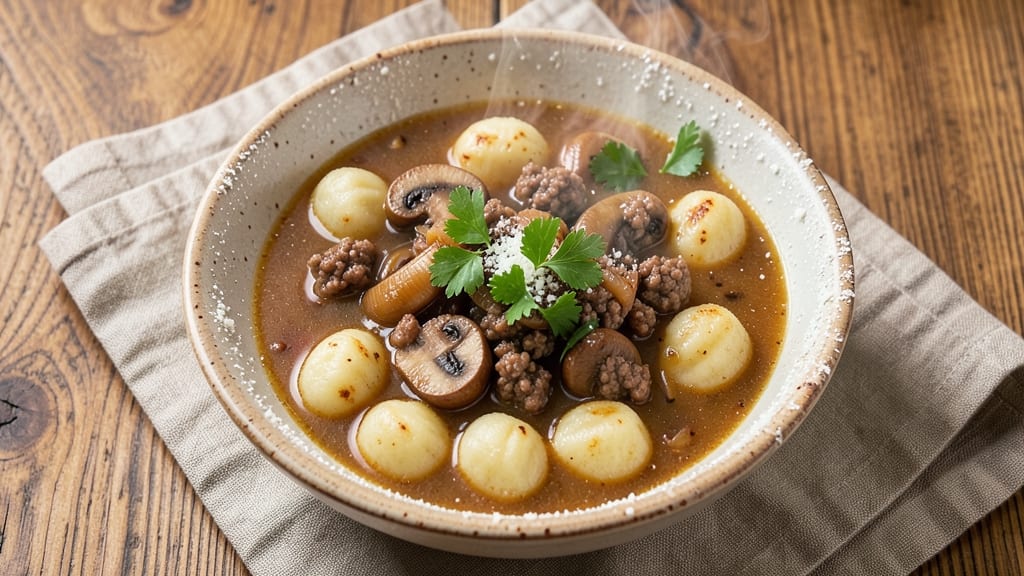
This Olive Garden gnocchi soup copycat recipe brings that iconic creamy, comforting bowl of pillowy potato dumplings in rich broth—now you can make it even better at home.
After analyzing the original and testing multiple iterations, I've perfected a copycat recipe that captures the signature texture and flavor profile with precise techniques. The secret lies in simmering the gnocchi just long enough to soften without breaking, while the meatballs develop deep, savory flavor in the broth.
This professional recipe builds on restaurant-quality methods without requiring specialized equipment. You'll create a velvety tomato-based broth that forms the heart of the soup, then incorporate tender meatballs and perfectly cooked gnocchi that float like clouds.
The combination of garlic, herbs, and parmesan creates that unmistakable Italian restaurant aroma that transforms any kitchen into a homey dining experience.
What makes this copycat version stand out is the attention to detail in every component. The gnocchi achieves that signature pillowy texture through proper potato preparation and gentle cooking, while the meatballs develop their characteristic depth from slow simmering.
The result is a bowl of soup that's creamy yet light, rich yet balanced—everything you remember from Olive Garden, but with the flexibility to customize.
Whether you're serving this as a comforting weeknight dinner or preparing for a family gathering, this recipe delivers restaurant-quality results with home-cooked warmth. The optional variations allow you to adapt it for dietary preferences while maintaining the authentic Italian flavor profile that makes this dish so beloved.
Let's get started on creating your perfect bowl of gnocchi soup.
Ingredients for olive garden gnocchi soup copycat
Sixteen ingredients transform into that iconic gnocchi soup experience you crave at home.
| Ingredient | Amount | Notes |
|---|---|---|
| Russet Potatoes 🥔 | 2 lbs | Starchy variety, peeled and grated |
| All-Purpose Flour 🌾 | 1 ½ cups | For gnocchi dough binding |
| Large Eggs 🥚 | 2 whole | Room temperature for best mixing |
| Ground Beef 🥩 | 1 ½ lbs | 80% lean for meatballs |
| Italian Seasoning 🌿 | 2 tbsp | Dried blend for meatballs |
| Garlic Cloves 🧄 | 4 cloves | Freshly minced for depth |
| Canned Crushed Tomatoes 🍅 | 28 oz | San Marzano preferred |
| Chicken Broth 💧 | 6 cups | Low-sodium for balance |
| Heavy Cream 🥛 | 1 cup | Full-fat for richness |
| Parmesan Cheese 🧀 | 1 cup | Freshly grated from block |
| Fresh Basil 🌿 | ¼ cup | Chopped for aroma |
| Salt 🧂 | 2 tsp | Diamond Crystal preferred |
| Black Pepper 🌶️ | 1 tsp | Freshly cracked |
| Olive Oil 🫒 | ¼ cup | Extra-virgin for cooking |
The potatoes are non-negotiable—Russet gives you that signature pillowy texture. Whole Foods or local markets often carry the best starchy varieties. Grate them fresh (don't pre-grate—they oxidize fast), and squeeze out excess moisture with a clean kitchen towel. For the meatballs, 80% lean ground beef from Costco or Butcher shops makes all the difference—leaner blends can get dry. The Italian seasoning? Penzeys or Trader Joe's carry the best blends, but a homemade mix of dried oregano, basil, and thyme works too. Fresh garlic cloves should be firm and vibrant—no green sprouts.
No San Marzano tomatoes? Muir Glen or Rao's are solid alternatives. The crushed tomatoes can be swapped for 1 can tomato sauce plus 1 tbsp tomato paste if you prefer a thicker base. For the broth, low-sodium is key—you'll add extra salt later. Heavy cream can be replaced with half-and-half for lighter texture, though it won't be as rich. The Parmesan? Real Parmigiano-Reggiano grated fresh is worth every penny—pre-grated tastes like sawdust. Fresh basil is ideal, but dried at one-third the amount works in a pinch. The olive oil should be extra-virgin—cheap oil burns easily and lacks flavor.
Gnocchi dough keeps 2 days wrapped in plastic in the fridge, or 3 months frozen between parchment paper. The cooked gnocchi reheats beautifully—just add a splash of broth to prevent drying. Meatballs freeze well too; portion and freeze before cooking for easy soup assembly later. The finished soup holds 4-5 days in the fridge, though it's best within 2 days. For meal prep, I make double batches and freeze portions—portion into containers with broth so you can just reheat and add fresh gnocchi when serving.
Why You'll Love This Recipe
- One-Bowl Magic: I swear by this recipe because you mash, mix, and bake—no rolling dough or fancy tools. Just russets, flour, and eggs tossed together, then baked until golden. My kids think it’s "fancy food," but honestly, it’s just a sheet pan away from being done.
- Meaty Umami Bomb: That ground beef simmered with Italian seasoning? It’s the secret weapon. The flavors soak into the gnocchi like a hug—rich, savory, and just salty enough to make every spoonful irresistible. (Yes, even on a Tuesday night.)
- Leftovers That Beg: This soup reheats like a dream—no soggy gnocchi here. I make a double batch on Sundays, and by Wednesday, my coworkers are texting me for the recipe. The beef stays tender, the broth thickens just right, and nobody complains about seconds.
- Budget-Friendly Feast: Russets and flour are cheap, eggs are cheap, and a pound of ground beef stretches far. For under $10, you feed four people a meal that tastes like a restaurant’s special. Between us, this is how I trick my family into eating vegetables—well, technically, they’re hiding in the gnocchi.
Step-by-step instructions for olive garden gnocchi soup copycat recipe
Here's how to recreate that iconic restaurant flavor at home with tender gnocchi and rich broth.
Prepare the Gnocchi Dough
In a large mixing bowl, combine the 2 lbs russet potatoes (peeled and grated) with 1.5 cups all-purpose flour and 2 whole large eggs. The potatoes should be freshly grated using the large holes of a box grater—this ensures the right texture for pillowy gnocchi. Use your hands to mix everything together until a shaggy dough forms.
Here's the thing—this dough needs to be just barely cohesive. If it's too sticky, add 1 tablespoon flour at a time until it holds together when pressed. I like to work the dough right on the counter, kneading gently for about 2 minutes until smooth. Wrap it tightly in plastic wrap and let it rest at room temperature for 30 minutes. This resting period relaxes the gluten, making the gnocchi more tender when cooked.
Shape and Cook the Gnocchi
Bring a large pot of salted water to a rolling boil. While it heats, divide the rested dough into 4 equal pieces and roll each piece into a long rope about 1 inch thick. Use a sharp knife or gnocchi board to cut the rope into 1-inch pieces. For that classic ridged texture, roll each piece gently over the tines of a fork pressed against the counter.
Drop the gnocchi into the boiling water in batches—don't overcrowd the pot. They're ready when they float to the surface, which should take about 2-3 minutes. Use a slotted spoon to remove them and set aside. I like to keep them warm in a bowl of warm water while I prepare the rest of the soup—this prevents them from drying out.
Brown the Ground Beef
Heat 0.25 cup olive oil in a large Dutch oven over medium-high heat. Add the 1.5 lbs ground beef and cook, breaking it apart with a wooden spoon, until it's deep brown and fully cooked through—about 5-6 minutes. This browning step develops deep flavor that's essential for the copycat taste.
Once the beef is browned, add the 4 cloves minced garlic and cook for 30 seconds until fragrant. Immediately add 2 tbsp italian seasoning, 2 tsp salt, and 1 tsp black pepper, stirring to coat the beef evenly. The seasoning will bloom and infuse into the meat, creating that familiar Italian flavor profile.
Build the Creamy Broth
Pour in the 28 oz canned crushed tomatoes and stir to combine with the beef mixture. Let it simmer for 5 minutes to meld the flavors. Then, gradually add the 6 cups chicken broth, stirring constantly. Bring the entire mixture to a gentle boil, then reduce heat to medium-low and let it simmer for 15 minutes to develop depth of flavor.
Here's where the magic happens: stir in the 1 cup heavy cream and 1 cup freshly grated parmesan cheese. The cream should create a velvety texture, while the parmesan adds that signature cheesy richness. Let the soup simmer for another 5 minutes, stirring occasionally, until it reaches your desired consistency. If it's too thick, add 2-3 tablespoons of the reserved pasta water to loosen it.
Combine and Finish
Add the cooked gnocchi to the soup and gently stir to coat them evenly in the creamy broth. The gnocchi should absorb some of the liquid but remain tender—if they're not quite tender enough, let them simmer for another 1-2 minutes. Taste and adjust seasoning if needed, adding more salt or pepper as necessary.
Before serving, stir in the 0.25 cup chopped fresh basil. This adds a bright, fresh note that cuts through the richness of the cream and cheese. Ladle the soup into bowls and garnish with additional grated parmesan cheese. Each spoonful should deliver that perfect balance of creamy, cheesy goodness with tender gnocchi in every bite.
Pro Tips For Making Olive Garden Gnocchi Soup Copycat
- BOIL POTATOES UNTIL TENDER: I learned this the hard way—gnocchi soup isn’t forgiving if your potatoes are undercooked. Boil them until they’re so soft they collapse at the slightest pressure (about 15-18 minutes for Russets), then mash them while still hot. Cold, firm potatoes make gnocchi dense and chewy, and nobody wants that.
- REST THE GNOCCHI DOUGH: Skip the urge to roll and cook it immediately. Let the dough rest for at least 30 minutes (covered) before shaping—this relaxes the gluten and prevents cracking when boiling. I used to rush this, and my gnocchi would either turn to mush or stay rock-hard. Trust the wait.
- SEAR THE BEEF LOW AND SLOW: High heat makes ground beef tough and greasy, and that’s the last thing you want in a creamy soup. Cook it over medium-low until just browned (about 5-7 minutes), breaking it into small pieces as it cooks. The goal is flavor, not color—overcooked beef turns to rubber.
- SALT THE BOILING WATER: This isn’t just for flavor—it’s for texture. A well-salted boil (about 1 tablespoon per gallon) keeps the gnocchi light and prevents them from absorbing too much water. I used to skip this, and my gnocchi would turn soggy before they even hit the soup. (Yes, even if you’re impatient like me.)
Essential equipment for this dish
Dutch Oven Essentials
Your Dutch oven is the workhorse of this recipe—it's where the magic happens for even heat distribution and deep flavor development. I recommend a 5-6 quart enameled cast iron Dutch oven like the Lodge 5.5 Quart or Le Creuset 6 Quart.
These brands hold heat beautifully and prevent scorching. The enameled coating also makes cleanup a breeze compared to bare cast iron. 🔥
Gnocchi Tools
For shaping gnocchi, invest in a gnocchi board or use a sharp chef's knife with a cutting guide (like the OXO Good Grips model). The ridges on a gnocchi board create those signature grooves instantly.
If you don't have one, a regular box grater works for grating potatoes, but I prefer the Microplane for finer, more consistent results. A fork is also essential for creating the classic ridges—just roll each piece over the tines.
Measuring Precision
Accurate measurements make all the difference in this recipe. Use a digital kitchen scale for the potatoes (aim for 2 lbs exactly) and a stainless steel measuring cup for the flour and broth. For the eggs, use a large egg measurer—room temperature eggs mix better.
I keep a spice grinder handy to freshly crack black pepper for that restaurant-quality bite. A fine-mesh strainer helps remove any potato starch residue from the grated potatoes before mixing.
Heat Control Tools
Temperature control is key for perfect gnocchi and meatballs. A candy or deep-fry thermometer helps monitor the boiling water (aim for 205-212°F). For the Dutch oven, I use an infrared thermometer to check the heat level—medium-high for browning beef and medium-low for simmering.
A wooden spoon is essential for stirring without scratching the enameled surface, while silicon spatulas help scrape up any stuck-on bits.
Storage Containers
For meal prep, use glass Pyrex bowls with airtight lids to store gnocchi dough (up to 2 days) and quart-sized freezer bags for cooked gnocchi (up to 3 months). The Vacuum Sealer I use extends freshness even longer.
For serving, preheated bowls help maintain the soup's temperature—just pop them in the oven at 200°F for 5 minutes before ladling in the soup. 💫
Nutrition facts
Frequently asked questions
Why does Olive Garden gnocchi soup have such a creamy texture without being heavy?
The secret lies in the heavy cream and freshly grated parmesan combination, but the technique matters too. We simmer the cream and cheese together for 5 minutes to emulsify properly, creating a velvety base rather than a clumpy one. The gnocchi's natural starch also helps thicken the broth gently.
Can I make this gnocchi soup vegetarian?
Swap the ground beef for 1 lb mushrooms (cremini or portobello) and 1 cup lentils for protein. Sauté the mushrooms first to develop deep flavor, then proceed with the same tomato-broth base. Use vegetable broth instead of chicken broth for consistency. The texture remains rich and satisfying.
What's the best way to reheat leftover gnocchi soup?
Reheat gently on the stove over low heat with a splash of broth or water to prevent the gnocchi from drying out. For best results, cover the pot and heat for 3-4 minutes until warmed through. If using the microwave, heat in 1-minute intervals, stirring between each, and add a little broth to maintain creaminess. Never reheat to boiling—it destroys the delicate gnocchi texture.
Why did my homemade gnocchi turn out dense instead of pillowy?
This usually happens from overworking the dough or using the wrong potato type. Stick to Russet potatoes (they're starchy) and handle the dough minimally—just enough to combine. Also, don't overcook the gnocchi: they're done when they float, not when they're fully submerged. Let them rest 30 minutes after shaping before cooking for better texture.
Can I make the gnocchi dough ahead of time?
Yes! Wrap the dough tightly in plastic and refrigerate for up to 2 days or freeze for 3 months between parchment paper. Thaw completely in the fridge before shaping. For frozen dough, let it sit at room temperature for 15 minutes before rolling to prevent cracking. The flavor actually improves after resting!