
Soups & Stews
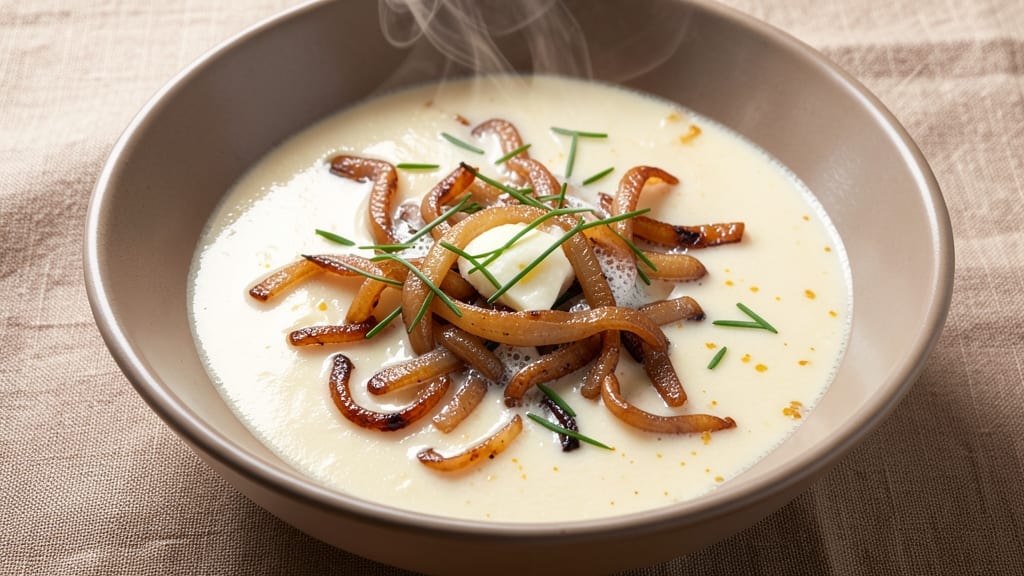
Cream of onion soup from Outback Steakhouse delivers that signature velvety smoothness with caramelized depth that makes every spoonful irresistible. I’ve recreated their restaurant-quality version at home, where the secret lies in slow-cooked onions and a perfect French roux that thickens the broth into luxurious silk.
The result is a soup so rich and comforting it feels like a warm hug in a bowl.
What sets this recipe apart is the balance of techniques—caramelizing onions until deep golden brown develops natural sweetness, then building layers of flavor with a classic roux before adding cream and broth. It’s a process that takes patience but rewards you with a soup that’s impossible to resist.
The texture is velvety, the aroma is intoxicating, and the depth of onion flavor is unmatched by any shortcut version.
This version stays true to the original while offering flexibility—whether you prefer a lighter broth or a richer finish with extra cream. The key is controlling the roux to avoid lumps while letting the onions develop their signature caramelized sweetness.
Every ingredient plays a role in creating that signature Outback taste, from the slow-cooked onions to the velvety finish.
Serve it as a starter to impress guests or as a cozy meal on a chilly evening. The instructions are straightforward, but the technique ensures professional results. Let’s make this restaurant-quality soup at home.
Ingredients for outback cream of onion soup
Slow-cooked onions and rich cream make this restaurant-style soup worth every minute.
| Ingredient | Amount | Notes |
|---|---|---|
| Yellow Onions 🧅 | 3 whole | Medium-sized, thinly sliced |
| Unsalted Butter 🧈 | ½ cup | Cold, cubed for roux |
| All-Purpose Flour 🌾 | ½ cup | For smooth roux |
| Heavy Cream 🥛 | 2 cups | Full-fat for richness |
| Chicken Broth 💧 | 4 cups | Low-sodium preferred |
| Milk 🥛 | 1 cup | Whole milk for creaminess |
| Salt 🧂 | 1 ½ tsp | Adjust to taste |
| Black Pepper 🌶️ | ½ tsp | Freshly ground preferred |
| Garlic Cloves 🧄 | 2 cloves | Minced for depth |
| Worcestershire Sauce 🍯 | 1 tbsp | For umami richness |
| Dijon Mustard 🍯 | 1 tbsp | For subtle tang |
| Dried Thyme 🌿 | ½ tsp | Or 1 tsp fresh |
| White Wine 🍷 | ½ cup | Dry variety optional |
| Parmesan Cheese 🧀 | ¼ cup | Freshly grated |
The onions are the soul of this soup—caramelizing them until deep golden brown unlocks their natural sweetness. Yellow onions work best for that signature Outback flavor. Grab a few medium-sized ones from the store's produce section (the ones with tight skins usually stay sweeter). If you're in a rush, Vidalia onions caramelize faster, but they're pricier. The butter needs to be cold and cubed when you start your roux—don't melt it first, or you'll end up with a greasy mess instead of that perfect golden paste. I always buy European-style butter from the store's specialty section if I'm feeling fancy, but regular unsalted works just fine.
No heavy cream? Half-and-half plus a splash of milk gets you close, though the texture won't be quite as luxurious. Running out of chicken broth? Vegetable broth works too, but you'll lose that meaty depth. The white wine is optional but adds a nice brightness—use whatever dry white you've got open, no need to splurge. Fresh thyme is ideal, but dried works at half the amount. For the Parmesan, grate it yourself—pre-grated gets clumpy and ruins the velvety texture. The Worcestershire and Dijon are non-negotiable for that signature Outback flavor, but if you're avoiding gluten, swap the Worcestershire for coconut aminos.
This soup tastes even better the next day once all the flavors meld. Store leftovers in an airtight container in the fridge for up to 5 days. For freezing, portion into single-serving containers—it reheats beautifully straight from frozen. The roux keeps for 1 week in the fridge if you make it ahead, so you can prep the onions and roux the night before. Just add the cream and broth when you're ready to serve. The caramelized onions? They're worth the effort—save the extra for sandwiches or quesadillas.
Why You'll Love This Recipe
- Five-Ingredient Magic: I swear, this soup only needs five things—and honestly, you might already have them all. Caramelized onions take no effort (just let them slow-cook while you stir), and that roux of butter and flour smooths out like a dream.
- Creamy Without Guilt: The heavy cream and chicken broth balance perfectly—rich but not heavy, velvety without being greasy. That golden onion depth? It’s the kind of flavor that makes you want to sip it straight from the pot.
- Lunch or Dinner Fix: Make a big batch on Sunday, and you’ve got weeknight dinners covered. Serve it with grilled cheese for a cozy night in, or toss in some leftover chicken for a hearty meal. It’s that adaptable.
- Leftovers That Taste Better: Between us, this soup actually improves the next day. The flavors meld, and reheating it is a breeze—just a quick stir on the stove. No sad, watery leftovers here.
Step-by-step instructions for cream of onion soup
Here's how to build rich, velvety onion soup with deep caramelized flavor—no shortcuts, just perfect technique.
Caramelize the Onions Slowly
Melt the 0.5 cup unsalted butter in a large pot over medium-low heat. Add the 3 whole yellow onions, sliced into ¼-inch strips, and stir to coat completely. The butter should foam gently—this is your signal to keep heat steady but not aggressive.
Cook the onions for 30-40 minutes, stirring occasionally, until they turn a deep golden brown. You're aiming for caramelization, not burning—this is where the soup gets its signature sweetness. If the onions start to stick, add a splash of water and scrape up the browned bits from the bottom. This process builds flavor layer by layer, so patience pays off.
Build the Roux and Deglaze
Once the onions are caramelized, sprinkle in the 0.5 cup all-purpose flour all at once. Stir vigorously for 2-3 minutes until the mixture turns a rich, nutty brown—this is your roux. The flour should fully incorporate and coat the onions evenly. If it clumps, use a wooden spoon to break it up.
Pour in the 0.5 cup white wine and scrape up any browned bits from the bottom of the pot. Let it simmer for 2-3 minutes until the alcohol smell dissipates. This deglazing step captures all that concentrated flavor you worked so hard to develop. The soup should smell like a mix of sweet onions and warm spices at this point.
Develop the Base with Broth and Cream
Gradually whisk in the 4 cups chicken broth and 1 cup milk, making sure to smooth out any lumps. Bring the mixture to a gentle simmer over medium heat, then reduce heat to low. Stir in the 2 cups heavy cream, 1 tbsp Worcestershire sauce, 1 tbsp Dijon mustard, 0.5 tsp dried thyme, 1.5 tsp salt, and 0.5 tsp black pepper. Let it simmer for 15-20 minutes, stirring occasionally, until the soup thickens slightly.
Here's where the magic happens: the cream should coat the back of a spoon but still move smoothly. If it thickens too much, whisk in a splash of warm water or milk. The soup should taste rich, slightly tangy from the mustard, and deeply savory from the Worcestershire. Taste and adjust seasoning—this is your last chance to balance flavors before finishing.
Finish with Garlic and Cheese
Stir in the 2 cloves minced garlic and cook for 30 seconds—just until fragrant, not browned. Remove the pot from heat and let it sit for 5 minutes to let the garlic mellow. This prevents a harsh bite that can overpower the delicate onion flavor.
Finally, fold in the 0.25 cup freshly grated Parmesan cheese until melted and smooth. The cheese adds a nutty depth that ties everything together. For extra richness, you can also stir in a pat of cold butter at the end. Ladle the soup into bowls and serve immediately with toasted bread on top—this is the moment it all comes together.
Pro Tips For Making Outback Cream Of Onion Soup
- Sweat the Onions Slow: I used to rush this step and ended up with bitter, watery onions instead of sweet, caramelized flavor. Take your time—cover the pot and let them cook on medium-low for 15-20 minutes, stirring occasionally, until they’re golden and nearly jammy. That’s when the soup’s depth starts.
- Use Cold Butter: Tossing in cold butter at the roux stage might seem counterintuitive, but it prevents burning. Cut the butter into small cubes and add it gradually as you cook the flour—this keeps the heat steady and gives you that silky, nutty base without the risk of scorching.
- Whisk Like Your Life Depends on It: When you add the chicken broth to the roux, stop stirring and let it boil hard for 30 seconds. Then, whisk aggressively to break up any lumps before adding the cream—this guarantees a smooth, velvety texture instead of a gluey mess.
- Temper the Cream: Pouring cold heavy cream straight into a hot roux will curdle it faster than you can say “disaster.” Warm the cream first by mixing it into a ladle of the hot soup, then slowly whisk it back into the pot. Your future self will thank you.
Essential equipment for great outback cream of onion soup
Heavy-Duty Pot
Your soup's foundation starts with a large, heavy-bottomed pot—I swear by my All-Clad 5-quart Dutch oven for even heat distribution and deep caramelization. The extra depth prevents spills when stirring onions, and the heavy base ensures consistent temperature control.
If you're on a budget, a Calphalon stainless steel pot works perfectly—just avoid thin, flimsy pans that can't handle the slow cook time. 🔥
Wooden Spoon
A long-handled wooden spoon (I use OXO Good Grips) is essential for stirring the roux and scraping up those flavorful browned bits from the pot's bottom. Wood won't react with acidic ingredients like metal might, and its flexibility helps break up any lumps in the flour.
Avoid plastic—it can't handle the heat and may melt when the butter gets hot.
Fine-Mesh Strainer
For an ultra-smooth texture, strain the finished soup through a fine-mesh sieve or China cap before serving. I keep a Heston Blumenthal-designed one in my kitchen—it catches even the tiniest onion particles while letting the velvety liquid through.
If you don't have one, a double-layered cheesecloth works in a pinch. This step elevates the soup from comforting to restaurant-quality. 💫
Immersion Blender
An immersion blender (like the Ninja 1200-watt) saves time and effort by blending the soup directly in the pot. After simmering, simply submerge the blender for 10-15 seconds to achieve that silky consistency without transferring hot liquid.
This tool is a game-changer for busy weeknights—just be cautious with the hot liquid and use oven mitts.
Cheese Grater
Freshly grated Parmesan cheese makes all the difference, so invest in a microplane or box grater for that fine, even texture. I prefer the Barbagroup microplane—it's durable and produces the perfect cheese snow.
Pre-grated cheese from the jar contains anti-caking agents that create clumps, ruining the soup's velvety finish. Grate the cheese just before adding it to the soup to preserve its sharp, nutty flavor. 🧀
Instant-Read Thermometer
While not strictly necessary, an instant-read thermometer (like the Thermoworks ThermoPop) helps monitor the soup's temperature during the roux stage. The ideal roux temperature hovers around 200-210°F—this ensures proper thickening without burning.
It's a pro trick that guarantees consistent results every time, especially when making the roux for the first time. 🌡️
Nutrition facts
Frequently asked questions
Can I make this soup without white wine?
Skip the wine and use ½ cup extra chicken broth or ½ cup apple cider for sweetness instead. The wine adds depth, but it's not essential. For a non-alcoholic version, ½ cup vegetable broth works well too. The key is maintaining the same liquid volume to balance the roux.
Why does my roux turn gray instead of brown?
Gray roux means you cooked it too long or at too high heat, burning the flour. Keep the heat at medium-low and stir constantly for just 2-3 minutes until nutty brown. If it starts smoking, remove from heat immediately. A properly cooked roux should smell toasty and nutty, not burnt.
How can I make this soup dairy-free?
Replace the heavy cream with coconut milk and the butter with vegetable oil. Use dairy-free Parmesan for the finish, and ensure your broth is also dairy-free. The texture will be slightly lighter but still rich. For extra creaminess, blend in 1 tbsp nutritional yeast at the end.
Can I prep this soup ahead of time?
Yes! Caramelize the onions and make the roux up to 2 days ahead, storing them in an airtight container in the fridge. When ready to serve, just add the broth, cream, and seasonings, then simmer for 15 minutes. For the best flavor, reheat gently on the stove—microwaving can make the cream separate.
What's the secret to making it taste like Outback?
The restaurant version relies on slow-cooked onions and a perfectly balanced roux. Don't rush the caramelization—30-40 minutes of gentle cooking develops that signature sweetness. The combo of Worcestershire sauce and Dijon mustard adds the umami depth, while freshly grated Parmesan gives that nutty finish.