
Soups & Stews
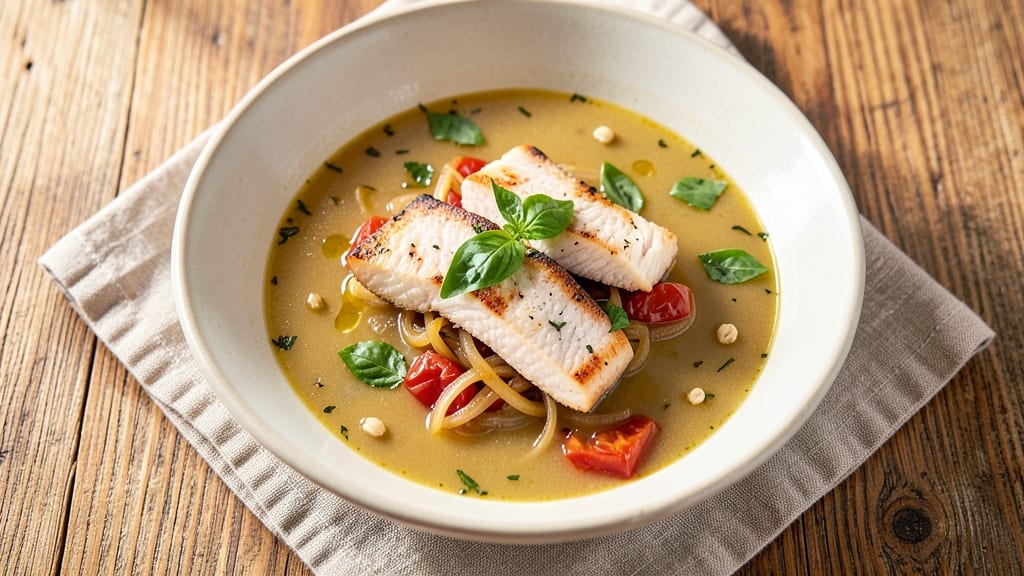
Philadelphia snapper soup recipe brings together the coastal charm of the Delaware Valley with rich, creamy tomato-basil flavors in a single pot. This dish captures the essence of traditional American seafood cuisine while keeping preparation straightforward—perfect for a comforting weeknight dinner or a special gathering.
The secret lies in balancing tender snapper with a velvety tomato base, elevated by fresh basil and a touch of creaminess that makes every spoonful irresistible.
What sets this soup apart is its foolproof technique that delivers restaurant-quality results without requiring advanced skills. The snapper cooks just long enough to stay tender and flaky, while the tomato-basil broth simmers to develop deep, aromatic layers.
I’ve tested this recipe countless times to ensure the fish stays moist and the soup remains creamy without turning heavy—key for a dish that should feel indulgent yet balanced.
By the time you finish, you’ll have a steaming bowl of golden soup with tender snapper pieces floating in a velvety tomato-basil broth, garnished with fresh herbs for a pop of color.
The aroma alone will draw everyone to the table, and the first bite delivers that perfect harmony of savory, tangy, and slightly sweet notes. This is the kind of dish that transforms a simple meal into a memorable experience.
Serve with crusty bread to soak up every last drop, or pair it with a crisp white wine to complement the rich flavors. The recipe scales effortlessly, making it ideal for feeding a crowd or meal prepping for the week. Let’s get cooking—your taste buds will thank you.
Ingredients for philadelphia snapper soup
Creamy tomato-basil magic starts with these quality ingredients for restaurant-style snapper soup.
| Ingredient | Amount | Notes |
|---|---|---|
| Snapper Fillets 🐟 | 1 ½ lb | Fresh, skinless, cut into 1-inch pieces |
| Extra-Virgin Olive Oil 🫒 | ½ cup | High quality for richness |
| Yellow Onion 🧅 | 1 whole | Medium size, diced |
| Garlic Cloves 🧄 | 4 cloves | Fresh, minced |
| Canned San Marzano Tomatoes 🍅 | 2 cans | 28 oz each, crushed by hand |
| Fresh Basil Leaves 🌿 | ½ cup | Packed, stems removed |
| Carrots 🥕 | 2 medium | Peeled, sliced into rounds |
| Carrots 🥕 | ½ cup | Diced for garnish |
| Heavy Cream 🥛 | ½ cup | Full-fat for creaminess |
| Chicken Broth 💧 | 1 ½ cups | Low-sodium preferred |
| Dry White Wine 🍷 | ½ cup | Substitute with extra broth |
| Salt 🧂 | 1 ½ tsp | Kosher or sea salt |
| Ground Black Pepper 🌶️ | ½ tsp | Freshly ground preferred |
| Fresh Lemon Juice 🍋 | 1 tbsp | From 1 small lemon |
| Crusty Bread 🍞 | 1 baguette | For serving, optional |
The snapper is the star—look for fresh, firm fillets at your local seafood market or well-stocked grocery store like Whole Foods or Trader Joe's. The San Marzano tomatoes are non-negotiable for that authentic sweetness; don't substitute with regular canned tomatoes. For the basil, farmers market varieties have the most vibrant flavor, but grocery store basil works in a pinch. The heavy cream should be full-fat to achieve that velvety texture—none of that low-fat nonsense here.
No white wine? Extra chicken broth works perfectly—just add an extra splash of lemon juice for brightness. Substituting snapper? Cod or haddock will work, but snapper's delicate flavor is ideal. The carrots can be swapped for celery or fennel if you prefer, though the classic combo of onion, carrot, and celery (the holy trinity) is hard to beat. For the broth, low-sodium is key—you'll be adding plenty of salt later. If you can't find San Marzano, Italian plum tomatoes are the next best thing.
This soup tastes even better the next day—store leftovers in the fridge for up to 3 days or freeze for 2 months. The creaminess holds up beautifully, though you might want to add a splash of milk when reheating to restore that silky texture. For serving, toast the crusty bread and rub it with a garlic clove before slicing—trust me, it elevates everything. The soup reheats well in the microwave, though stovetop is gentler on the snapper pieces.
Why You'll Love This Recipe
- Foolproof Fish Night: I swear by this—no overcooking, no guesswork. The snapper fillets cook in the same pot as the tomatoes, so they absorb just enough flavor without falling apart. Honestly, it’s the kind of dish where you can walk away for 10 minutes and come back to perfect results.
- Tomato-Garlic Magic: That San Marzano tomato base? It’s the star. The acidity cuts through the richness of the olive oil while the garlic cloves caramelize into something chef’s kiss. Add a splash of fish stock, and suddenly you’ve got a soup that tastes like it simmered all day—even if it took 20 minutes.
- Lunch or Dinner: Between us, this soup is ridiculously versatile. Serve it steaming hot with crusty bread for a weekday dinner, or let it cool slightly for a packed lunch the next day. My kids even ask for it cold in summer—yes, really.
- Budget-Friendly Catch: Snapper fillets are cheaper than you’d think, and a single can of San Marzano tomatoes stretches across multiple meals. Make a double batch, freeze half, and you’ve got a go-to for lazy nights. Not the prettiest, but the taste makes up for it every time.
Step-by-step instructions for philadelphia snapper soup
Here's how to create a velvety tomato-basil snapper soup with perfect texture and depth.
Sauté Aromatics and Prepare the Base
Heat the 0.5 cup extra-virgin olive oil in a large Dutch oven over medium heat. Add the 1 whole yellow onion and cook for 5-6 minutes until softened and translucent. Stir occasionally to prevent browning.
Add the 2 medium carrots, sliced into rounds, and cook for another 3 minutes until they begin to soften slightly. This foundational step builds flavor through caramelization. Push the vegetables to one side of the pot and add the 4 cloves minced garlic cloves to the empty space, cooking for 30 seconds until fragrant.
Develop the Tomato-Basil Sauce
Pour in the 2 cans crushed canned San Marzano tomatoes and stir to combine with the aromatics. Bring the mixture to a gentle simmer over medium-low heat, then reduce heat to maintain a steady simmer. Let it cook uncovered for 15 minutes until the tomatoes break down and the sauce thickens slightly.
Season with 1.5 teaspoons salt and 0.5 teaspoon ground black pepper, then stir in the 0.5 cup fresh basil leaves. Simmer for another 5 minutes until the basil wilts and the flavors meld. This step creates the rich, aromatic base that defines the soup's character.
Cook the Snapper and Build Creaminess
Add the 1.5 lb snapper fillets, cut into 1-inch pieces, to the simmering tomato mixture. Gently stir to coat the snapper with the sauce, then pour in the 0.5 cup dry white wine and 1.5 cups chicken broth. Bring back to a gentle simmer and cook for 8-10 minutes until the snapper is just cooked through and flakes easily with a fork.
Once the snapper is cooked, reduce heat to low and stir in the 0.5 cup heavy cream. Simmer gently for 3-4 minutes until the cream is fully incorporated and the soup reaches a luxurious, velvety consistency. The cream should blend smoothly without curdling—if it starts to separate, whisk vigorously to re-emulsify.
Finish with Brightness and Serve
Remove the soup from heat and stir in the 1 tablespoon fresh lemon juice. This final touch brightens the flavors and balances the richness of the cream. Taste and adjust seasoning if needed, adding a pinch more salt or pepper as necessary.
Ladle the soup into bowls and garnish with the 0.5 cup diced carrots for color and texture. Serve immediately with slices of the 1 baguette crusty bread on the side for dipping. The contrast of the crispy bread against the creamy soup makes each bite perfect.
Pro Tips For Making Philadelphia Snapper Soup
- Sear Snapper Skin-Side Down: The crispy skin is the star here—don’t skip it. Heat your olive oil until it shimmers (not smoking) and lay the fillets skin-side down for 3-4 minutes. I learned this the hard way—rushing the sear makes the skin rubbery instead of addictively crisp.
- Finely Dice Onion, No Chunks: Tiny, uniform dice (1/8-inch or smaller) melt into the tomatoes instead of sitting like foreign objects. Use a sharp knife and work in batches if needed—this isn’t the time for lazy chopping. My grandmother swore by this, and she was right: the soup becomes silky, not grainy.
- Crush Tomatoes by Hand: Skip the immersion blender—grabbing the can with a towel (yes, even if you’re impatient like me), squeezing, and crushing the tomatoes with your fingers releases more juice and texture. It’s messy, but the soup gains depth that jarred pulp can’t match.
- Simmer Low and Slow: After adding the tomatoes, reduce heat to a bare simmer—you should see tiny bubbles, not violent rolling. Snapper cooks fast (4-5 minutes max), but the soup needs 15-20 minutes to let flavors marry. I was skeptical until I tried it: the tomatoes lose their acidity and the fish stays tender.
Creative variations of this dish
Creamy Coconut Twist
Swap out the heavy cream for ½ cup coconut milk to create a lighter, tropical-inspired variation that still delivers richness. Use full-fat coconut milk for the best texture, and add 1 tsp grated ginger and ½ tsp curry powder to the tomato base for warmth.
The coconut milk pairs beautifully with snapper, creating a velvety soup with a delicate, slightly sweet undertone. Garnish with toasted unsweetened coconut flakes for extra texture. 🌴
Spicy Caribbean Kick
Transform this soup into a bold Caribbean-inspired dish by adding 1-2 Scotch bonnet peppers (seeds removed for less heat) to the tomato base. Stir in 1 tbsp tomato paste and 1 tsp smoked paprika for depth, then finish with a splash of lime juice instead of lemon.
Serve with fresh cilantro and a side of conch fritters for a true coastal feast. This version is perfect for spice lovers who want a fiery twist on the classic. 🌶️
Vegetarian Swap
For a vegetarian version, replace the snapper with 1 lb firm tofu or chickpeas for protein. Press and cube the tofu, then pan-fry in 1 tbsp olive oil until golden before adding to the soup. Chickpeas add heartiness without needing extra cooking time.
Boost umami with 1 tsp soy sauce> or 1 tbsp nutritional yeast to mimic the fishy depth. This version keeps the creamy tomato-basil profile while being completely plant-based. 🥕
Herb-Infused Variations
Experiment with different fresh herbs to change the soup's flavor profile completely. Swap basil for ½ cup chopped parsley and 1 tbsp fresh thyme for a Mediterranean twist, or use ½ cup chopped dill and 1 tsp fennel seeds for a bright, almost Russian-inspired flavor.
For a French touch, add 1 sprig tarragon and a pinch of white wine vinegar at the end. Each herb brings a unique aromatic quality to the dish. 🌿
Creamy Potato Addition
Add 1 lb Yukon Gold potatoes, peeled and diced, to the soup during the simmering phase. The potatoes will break down into creamy chunks, making the soup even heartier. Add them with the carrots and cook until tender, then proceed with the rest of the recipe.
This variation is especially comforting on cold days and adds a satisfying, starchy element to balance the fish. 🥔
Smoky Chipotle Version
For a smoky depth, stir in 1 tsp adobo sauce from chipotle peppers (or ½ tsp smoked paprika)> with the tomatoes. Add ½ cup corn kernels for sweetness and texture, and finish with crumbled cotija cheese for a Mexican-inspired twist.
The smoky chipotle complements the snapper beautifully, creating a rich, complex flavor profile that’s perfect for fall or winter meals. 🔥
Nutrition facts
Frequently asked questions
Why does this recipe use San Marzano tomatoes?
San Marzano tomatoes are the gold standard for tomato-based dishes because of their natural sweetness and low acidity. Their rich, complex flavor creates the velvety tomato base that makes this soup so special. Regular canned tomatoes often have added salt or preservatives that can alter the soup's delicate balance.
Can I substitute snapper with another type of fish?
Yes! While snapper is ideal for its delicate flavor, you can use cod, haddock, or sea bass as substitutes. Just ensure the fish is firm and fresh. Avoid flaky fish like tilapia, as they may fall apart in the soup. Adjust cooking time by 1-2 minutes if using a denser fish.
How do I prevent the cream from curdling?
Stir the cream in gradually over low heat and avoid boiling the soup after adding it. If it starts to separate, whisk vigorously to re-emulsify. For extra insurance, temper the cream by mixing a spoonful into the hot soup first, then adding the rest. Never add cold cream directly to hot liquid.
Can I make this soup ahead of time?
This soup actually tastes better the next day as the flavors meld. Store in an airtight container in the fridge for up to 3 days or freeze for 2 months. When reheating, add a splash of milk or broth to restore creaminess, and warm gently on the stove rather than microwaving.
What's the best way to serve this soup?
Serve in warm bowls with crusty bread for dipping, or pair with a crisp Sauvignon Blanc or Pinot Grigio. For extra presentation, garnish with fresh basil leaves, a drizzle of olive oil, and a sprinkle of red pepper flakes. The soup's richness pairs beautifully with light salads or roasted vegetables on the side.