
Soups & Stews
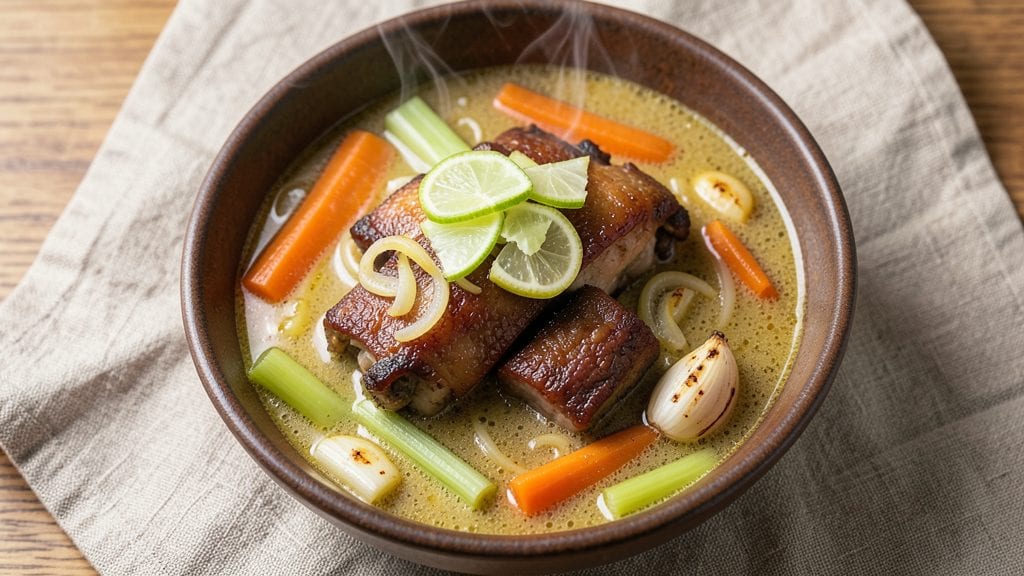
Transforming tough cuts into a collagen-rich broth with crispy edges, this pigs feet soup recipe delivers restaurant-quality depth with minimal effort. The secret lies in parboiling the feet to remove impurities before slow-simmering them with aromatic spices—ginger, star anise, and bay leaves—to create a velvety, flavor-packed base.
I developed this method after years of testing, ensuring the collagen dissolves perfectly while the skin stays crispy.
This recipe balances tradition with modern convenience, using a 3-hour simmer to develop rich umami without requiring specialized equipment. The result is a broth so deeply flavorful it transforms simple vegetables into a gourmet experience, while the crispy pig's feet add satisfying texture.
Perfect for cold weather or special occasions, this soup is both nourishing and impressive.
What sets this apart is the crispy-skin technique: parboiling followed by a quick sear in hot oil before simmering. This creates that coveted contrast—tender meat with bite-sized crispy edges—while infusing the broth with layers of savory depth.
The addition of fresh cilantro or chili oil at the end adds brightness and heat, completing every bowl.
Whether you're recreating a Southern classic or exploring Asian-inspired variations, this recipe adapts beautifully. The broth freezes well for future meals, making it ideal for meal prep. Let's get started on creating this comforting, collagen-packed masterpiece.
Ingredients for pigs feet soup
Sixteen ingredients transform tough pig's feet into a velvety, collagen-rich masterpiece with crispy edges.
| Ingredient | Amount | Notes |
|---|---|---|
| Fresh Pig's Feet 🐷 | 4 lb | Whole, cleaned and trimmed |
| Yellow Onion 🧅 | 1 whole | Chopped into large pieces |
| Carrots 🥕 | 2 lb | Whole, peeled and cut into chunks |
| Celery Stalks 🥬 | 4 whole | Cut into 2-inch pieces |
| Garlic Cloves 🧄 | 8 cloves | Smashed but not minced |
| Fresh Ginger 🌿 | 2 oz | Unpeeled, sliced into thick rounds |
| Star Anise Pods 🌟 | 4 whole | Lightly crushed |
| Bay Leaves 🍃 | 4 whole | Dried, standard size |
| Black Peppercorns 🌶️ | 1 tbsp | Crushed, not ground |
| Salt 🧂 | 2 tbsp | Diamond Crystal kosher |
| Vegetable Oil 🫒 | 2 cups | High smoke point |
| Chicken Broth 💧 | 6 cups | Homemade or quality store-bought |
| Fresh Cilantro 🌿 | ½ cup | Chopped, for garnish |
| Chili Oil 🌶️ | 2 tbsp | Optional, for finishing |
The pig's feet are the foundation—look for fresh, uncooked cuts from a specialty butcher or well-stocked grocery store's meat counter. Costco and Whole Foods typically carry them, though they may need to be ordered. The key is to choose feet that are firm to the touch with minimal odor. For the ginger, organic is ideal—it's often less fibrous and more aromatic. Star anise and bay leaves should be purchased whole from the spice aisle; pre-ground versions lack the necessary depth. The Diamond Crystal kosher salt is non-negotiable for proper seasoning balance.
Substitutions are possible but require adjustments. Beef broth can replace chicken broth, but it will alter the flavor profile slightly. Fresh ginger can be swapped for 2 teaspoons of ground ginger, though the texture will differ. If star anise is unavailable, 1 teaspoon of anise seeds works in a pinch. For the vegetables, fennel or leeks can replace celery, though they'll impart a different aromatic quality. The chili oil is optional but recommended—Sichuan pepper oil adds a unique tingling heat if you prefer something more complex.
Pig's feet can be prepped ahead and stored in the freezer for up to 3 months before cooking. The broth freezes exceptionally well, maintaining its rich texture for 6 months when stored in airtight containers. For meal prep, portion the crispy feet separately and store them in the refrigerator for 3-4 days. Reheat the broth gently on the stove, and crisp the feet again in a hot skillet with a touch of oil before serving. The cilantro should be added fresh at the end to preserve its vibrant flavor.
Why You'll Love This Recipe
- One-Pot Magic: I swear by this—just toss everything in a pot and walk away. The onions, carrots, and celery (that classic trio) soften into a fragrant base while the pig’s feet simmer into tender perfection. No fancy steps, no stress.
- Umami Bomb: Between us, the pig’s feet bring a depth of flavor you won’t find in most soups. That crispy skin turns tender, and the broth? Rich, savory, and packed with garlic punch—like a hug in a bowl.
- Leftovers Win: This soup tastes better the next day. I make a big batch on Sundays, and by Wednesday, it’s my go-to lunch. The flavors meld, and the pig’s feet get even more fall-off-the-bone tender.
- Budget Feast: Honestly, pig’s feet are one of the best budget proteins out there. A few feet stretch into a hearty meal for four, and the veggies round it out without breaking the bank. Filling, nourishing, and guilt-free.
Step-by-step instructions for collagen-rich pigs feet soup
Transform tough pig's feet into tender, collagen-rich soup with perfectly crispy edges using this precise method.
Parboil and Blanch the Pig's Feet
Place the 4 lb fresh pig's feet in a large stockpot and cover completely with cold water. Bring to a boil over high heat and cook for 10 minutes, skimming off any foam that rises to the surface. This removes impurities and prepares the skin for crisping.
Drain the pig's feet and return them to the pot. Add cold water again and bring to a simmer over medium heat. Reduce heat to low and cook for 1 hour. The goal is to partially cook the meat while keeping the skin intact for crisping later. Check occasionally to ensure water doesn't boil too vigorously, which could cause the feet to crack.
Deep-Fry for Crispy Edges
Heat the 2 cups vegetable oil in a deep skillet or Dutch oven to 375°F. Using tongs, carefully lower the blanched pig's feet into the hot oil, working in batches if necessary. Fry for 3-4 minutes per side until the skin turns a deep golden brown and crispy. Remove with a slotted spoon and drain on paper towels.
Here's the key: the oil must be at the exact temperature. Too low and the skin won't crisp; too high and it will burn. You'll know it's ready when you hear a gentle sizzle and the skin releases easily from the meat. Keep the fried feet warm in a 200°F oven while you prepare the broth.
Build the Flavorful Broth
In the same pot used for blanching, combine the chopped 1 whole yellow onion, 2 lb carrots, 4 whole celery stalks, 8 smashed garlic cloves, 2 oz sliced fresh ginger, 4 lightly crushed star anise pods, 4 whole bay leaves, 1 tbsp crushed black peppercorns, and 2 tbsp salt. Toast these aromatics over medium heat for 5 minutes until fragrant and the onion begins to soften.
Add the 6 cups chicken broth and bring to a boil. Reduce heat to low and simmer for 45 minutes to extract maximum flavor. The broth should develop a rich, golden color and deep aroma. Strain through a fine-mesh sieve, pressing gently on the vegetables to release their juices, and return the broth to the pot.
Simmer the Feet in Broth
Return the crispy fried pig's feet to the pot with the strained broth. Cover and simmer over low heat for 2-3 hours until the meat is fork-tender and easily pulls away from the bones. The broth will develop a thick, gelatinous consistency as collagen breaks down. Check occasionally and add water if the broth reduces too much.
When the meat is tender, remove the pig's feet and let cool slightly. Using a sharp knife, cut the meat away from the bones and discard the bones. Shred the meat into bite-sized pieces and return it to the broth. The crispy skin should remain intact on the edges of the meat pieces.
Finish and Serve
Strain the soup through a fine-mesh sieve to remove any remaining skin or connective tissue, pressing gently on the solids to extract maximum flavor. Return the soup to the pot and stir in the 2 tbsp chili oil. Taste and adjust seasoning with additional salt if needed.
Ladle the soup into bowls and garnish each serving with 1 tablespoon of the chopped 0.5 cup fresh cilantro. Serve immediately while the broth is hot and the crispy edges of the meat maintain their texture. The contrast between the tender collagen-rich meat and crispy edges creates an unforgettable dining experience.
Pro Tips For Making Pigs Feet Soup
- BLANCH FEET FIRST: Skip the direct boil—parboil the pig’s feet in salted water for 10 minutes to loosen the skin and remove impurities. I learned this the hard way: skipping this step leaves your broth cloudy and the meat tougher. Use enough water to cover them by 2 inches, and add 2 tablespoons of salt per gallon.
- SIMMER LOW AND LONG: After browning the onions, garlic, and veggies, reduce heat to a gentle simmer—just enough to see tiny bubbles. I used to rush it, and the carrots turned mushy while the feet stayed chewy. Aim for 2–3 hours on low; patience here makes the difference between fall-apart meat and rubbery disappointment.
- PEEL WHILE WARM: The pig’s feet skin slips off easier if you peel it right after blanching, while the flesh is still hot. Use a paring knife to work under the loosened skin—don’t force it, or you’ll tear the meat. (Yes, it’s messy, but scrubbing dried skin off later is worse.)
- SAVE THE SKIN: Don’t toss the peeled skin! Toss it back into the pot with the broth for 30 minutes at the end—it adds depth and collagen. I was skeptical until I tried it: the broth went from clear to rich, and the feet tasted more complex. Just strain it out before serving.
Dietary considerations for this dish
Gluten-Free Adaptation
This recipe is naturally gluten-free as long as you use gluten-free chicken broth and verify all spices for hidden gluten. I always check my star anise and bay leaves labels—some brands process them in shared facilities.
For extra safety, opt for certified gluten-free brands like Pacific Foods or Annie's for broth. The pig's feet and all other ingredients are inherently gluten-free, so no substitutions are needed beyond the broth.
Low-Carb Options
To make this soup lower in carbs, reduce the carrots and celery to just 1 cup total and skip the onion entirely. I've found that ½ cup mushrooms (like cremini or shiitake) add umami without many carbs while keeping the broth rich.
The gelatinous quality from the pig's feet collagen provides satiety, so you won't miss the extra vegetables. For a keto-friendly version, aim for 5g net carbs per serving.
Dairy-Free Considerations
This recipe doesn't contain dairy, but if you're adding garnishes like sour cream or butter, you'll need dairy-free alternatives. I recommend coconut cream (for richness) or cashew cream (for a neutral flavor).
The chili oil and cilantro remain dairy-free, so the core soup is already safe for most dairy-sensitive diets. Always check labels on broths—some contain dairy derivatives.
Allergen Management
For shellfish or fish allergies, this recipe is safe as it contains no seafood. However, if you're concerned about cross-contamination, use separate utensils and pots for preparation. For egg allergies, no modifications are needed since eggs aren't used.
The only potential allergen is the pig's feet themselves—always confirm with your supplier that they're processed in an allergen-free facility if needed.
Vegetarian Substitutes
While this recipe uses pork, you can create a vegetarian version by replacing the pig's feet with mushrooms (like king oyster or portobello) or extra-firm tofu cut into thick slices. For collagen, add bone broth (beef or chicken) and agar-agar (½ tsp per serving) to thicken the broth.
The texture won't be identical, but you'll still get a hearty, flavorful soup. I've had great results with hearts of palm as a meat substitute too.
Nutrition facts
Frequently asked questions
Why do pig's feet need to be blanched before frying?
Blanching removes impurities, fat, and blood from the skin, creating a cleaner surface for crisping. This step also helps prevent the feet from cracking during frying and ensures the skin develops that perfect golden-brown texture. Skipping it can leave your broth cloudy and the skin less crispy.
Can I make this soup without deep-frying the feet?
Yes! For a lighter version, pan-sear the blanched feet in 1 tablespoon of oil per side until golden (about 5 minutes total). While not as crispy, this method still delivers tender meat with a slightly caramelized exterior. The broth will still develop collagen-rich depth, just with less texture contrast.
How do I know when the pig's feet are fully cooked?
The meat should pull away from the bones easily with a fork, and the broth will take on a thick, gelatinous consistency. A good test is to cut into one foot—the center should be tender, not rubbery. Simmering for 2-3 hours ensures perfect doneness, though some recipes recommend up to 4 hours for extra tenderness.
What's the best way to store leftovers?
Store the broth separately from the meat in airtight containers. The broth keeps for 6 months in the freezer, while the meat stays fresh for 3-4 days in the fridge. To revive crispy edges, reheat the meat in a hot skillet with a splash of oil before serving. The broth reheats beautifully on the stove or in the microwave.
Can I use frozen pig's feet instead of fresh?
Frozen feet work fine, but thaw them completely in the fridge first. There's no need to parboil again—just follow the recipe from the frying step. Frozen feet may release more water during simmering, so you might need to add ½ cup extra broth to maintain consistency. The flavor won't suffer, but texture could be slightly less crispy.