
Soups & Stews
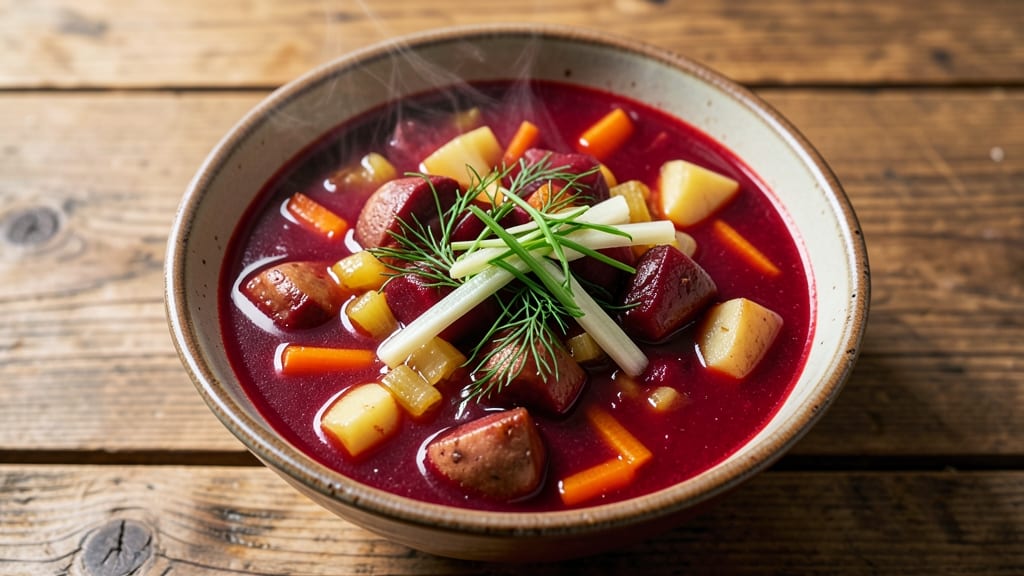
This Polish red borscht soup recipe delivers the deep, earthy flavors of traditional Eastern European cooking with a rich beetroot-beef broth and velvety sour cream finish. The slow simmering process unlocks layers of umami and sweetness that store-bought versions simply can't match, transforming simple ingredients into something truly memorable.
I developed this version after years of testing—balancing authentic techniques with modern convenience, so you get restaurant-quality results without spending hours in the kitchen.
The foundation begins with a concentrated beet reduction that forms the soul of the soup, its vibrant color and complex flavor profile developing through careful cooking. We then build the broth using beef and vegetables, letting everything meld together until the flavors reach perfect harmony.
This isn't just another beet soup—it's a celebration of Polish home cooking traditions, where every spoonful tells a story of slow-simmered comfort and hearty satisfaction.
What makes this recipe special is how the sour cream swirl transforms the finished soup from ordinary to extraordinary. The creamy dairy adds a luxurious texture while cutting through the richness of the beet and beef, creating that signature Polish balance between earthy and tangy.
The result is a soup that's equally at home on a chilly autumn evening or as a centerpiece for holiday gatherings—warm, nourishing, and deeply satisfying in every bite.
For those watching their dairy intake, we'll show you how to adapt this recipe while maintaining its signature depth. The key lies in proper beet preparation and slow cooking techniques that develop flavor naturally.
Let's create this traditional Polish masterpiece together—where every ingredient plays its part in creating something truly special.
Ingredients for polish red borscht soup
Sixteen ingredients blend tradition with modern convenience for an authentic Polish red borscht experience.
| Ingredient | Amount | Notes |
|---|---|---|
| Beets 🍠 | 2 ½ lbs | Medium-sized, organic preferred |
| Vegetable Broth 💧 | 8 cups | Low-sodium, homemade preferred |
| Yellow Onions 🧅 | 3 whole | Medium, finely chopped |
| Carrots 🥕 | 4 whole | Medium, peeled and sliced |
| Russet Potatoes 🥔 | 2 lbs | Waxy variety, cubed |
| Fresh Parsnips 🥕 | 2 whole | Medium, peeled and sliced |
| Garlic Cloves 🧄 | 6 cloves | Fresh, minced |
| Fresh Dill 🌿 | ½ cup | Chopped, stems removed |
| Sour Cream 🧀 | 1 cup | Full-fat, unsweetened |
| Vegetable Oil 🫒 | ¼ cup | High smoke point |
| Apple Cider Vinegar 🍎 | 2 tbsp | Raw, unfiltered preferred |
| Granulated Sugar 🍚 | 2 tbsp | Organic preferred |
| Dried Bay Leaves 🌿 | 2 whole | Fresh if available |
| Black Peppercorns 🌶️ | 1 tsp | Freshly cracked |
| Sea Salt 🧂 | 2 tsp | Diamond Crystal preferred |
The beets are the heart of this soup, so opt for organic when possible—their earthy sweetness develops beautifully during the slow reduction. Whole Foods or local farmers markets often carry the vibrant, deep-red varieties that perform best. Peel and chop them uniformly for even cooking; larger pieces will stay underdone. The vegetable broth should be rich but not overly salted—homemade versions using carrot tops and celery leaves elevate the flavor profile significantly. For the onions, yellow varieties provide the right balance of sweetness and sharpness, while red onions add unnecessary bitterness in this context. Store fresh dill in a damp paper towel in the fridge, as it wilts rapidly but remains vibrant for up to one week.
No fresh dill? Dried dill at one-third the amount works in a pinch, though it lacks the bright herbal notes. Substituting parsnips for half the carrots adds a subtle nutty depth that complements the beets beautifully. For those avoiding dairy, cashew cream made from soaked cashews and apple cider vinegar replicates the tangy richness of sour cream remarkably well. The apple cider vinegar isn't just for acidity—it also tenderizes the vegetables during the simmering process. If you prefer a sweeter profile, maple syrup can replace the sugar, though it adds a distinct floral note. For the bay leaves, fresh is ideal but dried works perfectly when stored in a cool, dark place for up to 12 months.
This soup develops deeper flavor with time, so prepare it a day ahead if possible—the beets continue to meld their sweetness into the broth. Store leftovers in airtight containers in the refrigerator for up to 5 days, though the texture becomes slightly watery after 3 days. For longer storage, freeze portions in glass containers with an extra layer of broth to prevent freezer burn. Reheat gently on the stove, adding a splash of water or broth to restore the original consistency. The sour cream should be stirred in just before serving to maintain its velvety texture—never boil it, as it will curdle.
Why You'll Love This Recipe
- One-Pot Magic: I swear by this recipe—just chop, simmer, and let the beets do all the work. No fancy techniques, no last-minute scrambling; the onions caramelize while the broth builds depth, and by the time the potatoes are tender, the whole kitchen smells like home.
- Earthy & Sweet: That deep beet color isn’t just for show—it’s packed with a perfect balance of earthy richness and natural sweetness. The carrots add a subtle crunch, and the potatoes soak up all the flavor like little flavor sponges. Honestly, it’s the kind of soup that makes you want to eat it straight from the pot.
- Meal Prep MVP: Between us, this is my go-to for busy weeks. Make a big batch on Sunday, and you’ve got lunch for three days—reheat it, add a dollop of sour cream, and boom, instant comfort. It even freezes beautifully, so you’re covered for those nights when takeout feels like too much effort.
- Budget-Friendly Powerhouse: Beets and potatoes are cheap, hearty, and fill you up like nothing else. I’ll be real: I’ve made this soup for under $1.50 a serving, and it still feels special. Plus, the leftovers? They’re even better the next day—proof that good food doesn’t need to break the bank.
Step-by-step instructions for Polish red borscht soup
This method delivers a rich, layered borscht with deep beetroot flavor and velvety sour cream finish.
Prepare and Sauté the Vegetable Base
Heat the 0.25 cup vegetable oil in a large Dutch oven over medium heat. Add the 3 whole yellow onions, 4 whole carrots, and 2 whole fresh parsnips, all cut into ½-inch dice. Cook for 8-10 minutes, stirring occasionally, until the vegetables soften and the onions become translucent.
Add the 2 tbsp granulated sugar and 2 tbsp apple cider vinegar, stirring to coat the vegetables. Cook for another 2 minutes—this caramelizes the sugars slightly, adding depth to the broth. The mixture should smell sweetly aromatic with a tangy undertone. Keep the heat at medium to prevent burning while developing these flavors.
Incorporate Beets and Broth for Depth
Peel and dice the 2.5 lbs beets into ½-inch cubes. Add them to the Dutch oven along with the 8 cups vegetable broth, 2 whole dried bay leaves, and 1 tsp black peppercorns. Bring the mixture to a gentle boil, then reduce heat to low-medium and simmer uncovered for 20 minutes. This allows the beets to soften completely while infusing the broth with their signature earthy sweetness.
After 20 minutes, check the beets with a fork—they should be tender with no resistance. If any pieces remain firm, simmer for another 5 minutes. The broth should now be vibrant, with a deep ruby hue. Skim off any foam that rises to the surface to ensure a clean, velvety texture.
Add Potatoes and Season to Perfection
Cut the 2 lbs russet potatoes into 1-inch cubes and add them to the pot. Increase heat to medium-high and bring the soup back to a boil. Once boiling, reduce heat to medium-low and simmer for 15-18 minutes, or until the potatoes are fork-tender with no bite. Stir occasionally to prevent sticking.
Season with the 2 tsp sea salt, adjusting to taste—Polish borscht should be rich but not overly salty. Taste the broth separately to ensure balance. If the flavor feels flat, add a pinch more salt or a splash of apple cider vinegar for brightness. The soup should now have a harmonious blend of earthy, sweet, and slightly tangy notes.
Finish with Aromatics and Sour Cream Swirl
In a small skillet, heat 1 tbsp vegetable oil over low heat and sauté the 6 cloves minced garlic for 30 seconds until fragrant—do not let them brown. Stir the garlic into the soup along with the 0.5 cup chopped fresh dill. Simmer for 2 minutes to allow the dill to release its bright, herbal notes.
Remove the 2 whole dried bay leaves and adjust the seasoning one final time. Ladle the hot soup into bowls, then swirl 2-3 tablespoons of sour cream into each serving. The contrast of cool, tangy sour cream against the warm, hearty broth is what makes this borscht truly Polish. Serve immediately with crusty rye bread to soak up every last drop.
Pro Tips For Making Polish Red Borscht Soup
- COOK BEETS UNPEELED: I learned this the hard way—peeling beets first ruins their texture and color. Leave the skins on, scrub them clean, and chop them whole into the pot. The skins soften and dissolve during cooking, and you’ll end up with a richer, deeper red broth.
- SOFTEN ONIONS FIRST: Skip the direct sautéing of raw onions in oil—they’ll burn before they sweeten. Instead, add them to the pot with the broth and let them simmer for 5 minutes before adding anything else. This builds flavor without browning, and you won’t waste time watching them.
- CHOP POTATOES SMALL: Large chunks of potato turn to mush in borscht. Cut them into 1-inch cubes so they cook evenly and hold their shape. If you’re in a rush, use a mandoline for consistency—just don’t skip this step, or you’ll end up with a gluey soup.
- ACIDIFY THE BROTH: Polish borscht needs a bright, balanced flavor. Add 1 tablespoon of vinegar or lemon juice to the broth while the beets cook—it cuts through the earthiness and makes the red color pop. (Yes, even if you’re skeptical, it works.)
Regional styles of this polish red borscht soup
Ukrainian Heartland Style
The Ukrainian version of red borscht—closely related to Polish borscht—often includes a small amount of beef broth (about 1 cup) alongside vegetable broth for added depth. I like to use chuck roast simmered for 3 hours with carrots, onions, and bay leaves to create a rich base.
The key difference is the slightly sweeter profile, achieved by adding 1 extra tablespoon of sugar during the sauté step. Ukrainians also traditionally serve it with hard-boiled eggs (halved and placed on top) and smoked sausage (like kielbasa), which adds a smoky contrast to the earthy beets. 🌟
Lithuanian Forest Twist
In Lithuania, borscht often incorporates wild forest mushrooms—I recommend porcini or chanterelles—sautéed with the onions for an earthy, umami-rich foundation. Add ½ cup chopped mushrooms during the initial sauté step and cook them until deeply browned.
Lithuanians also use barley (about ½ cup pearl barley) cooked alongside the potatoes for a heartier texture. The result is a soup with a nutty, almost wine-like complexity that pairs beautifully with sour cream swirls and fresh dill.
Belarusian Potato-Heavy Version
Belarusian borscht is all about the potatoes—expect to see 3-4 pounds instead of the standard 2 pounds in this recipe. The extra starch creates a thicker, more substantial broth that’s perfect for cold winters.
Belarusians also add a handful of fresh cabbage (about 2 cups shredded) during the potato simmering stage for a crunchy texture. For authenticity, finish with a sprinkle of fresh parsley instead of dill, and serve with rye bread and pickled cucumbers on the side.
The tangy cucumbers cut through the richness beautifully. 🥔
Modern Polish Adaptations
Today’s Polish home cooks often experiment with spicy elements—try adding ½ teaspoon smoked paprika during the sauté step for a subtle smokiness.
Another trend is roasted beet purée instead of diced beets: roast 2 pounds of beets at 400°F for 45 minutes, then blend with ½ cup broth for a silky base.
For a vegan twist, replace sour cream with cashew cream (blend 1 cup soaked cashews with ¼ cup apple cider vinegar and ½ cup water). These adaptations keep the soul of the dish intact while adding contemporary flair. 💫
Regional Beverage Pairings
In Poland’s Podkarpackie region, borscht is traditionally paired with kompot—a lightly sweetened fruit drink made from dried apples or pears. For a modern twist, I recommend a crisp Polish wheat beer like Żywiec or Tyskie, which complements the soup’s earthy notes without overpowering them.
In rural areas, homemade kvass (fermented rye bread drink) adds a tangy, slightly sour contrast that enhances the sour cream’s brightness. For a non-alcoholic option, sparkling water with a squeeze of lemon cleanses the palate between bites. 🍺
Nutrition facts
Frequently asked questions
Can I make this Polish red borscht without sour cream?
For a dairy-free version, blend 1 cup soaked cashews with ¼ cup apple cider vinegar and ½ cup water until smooth. Stir 1-2 tablespoons into each serving for a tangy, creamy finish. This cashew cream mimics the texture and acidity perfectly while keeping the dish vegan.
Why does my beet broth look watery after simmering?
Watery broth usually means the beets weren't cooked long enough to release their natural sweetness and thicken the liquid. Simmer uncovered for 25-30 minutes total, skimming foam regularly. For extra richness, mash ½ of the cooked beets into the broth with a potato masher during the last 10 minutes of cooking. This creates a natural thickening agent.
How can I make this soup ahead of time for better flavor?
Prepare the soup 1-2 days ahead for maximum flavor development. Store in an airtight container in the fridge. The beets will continue infusing the broth, deepening its earthy notes. Reheat gently on low heat, adding a splash of water or broth if it becomes too thick. Stir in fresh dill and sour cream just before serving to maintain their bright flavors.
What's the best way to store leftovers?
Keep leftovers in the refrigerator for up to 5 days in airtight containers. For longer storage, freeze portions in glass containers with an extra layer of broth to prevent freezer burn. Thaw overnight in the fridge—never at room temperature—and reheat gently on the stove. The texture may become slightly watery after 3 days, so plan to serve within that window for best results.
Can I substitute roasted beets for the raw ones?
Yes! Roasting enhances the beets' natural sweetness. Toss 2 pounds peeled beets with 1 tbsp oil and roast at 400°F for 45 minutes. Blend with ½ cup broth until smooth, then stir into the soup during the final 10 minutes of simmering. This creates a velvety texture while intensifying the beet flavor.