
Soups & Stews
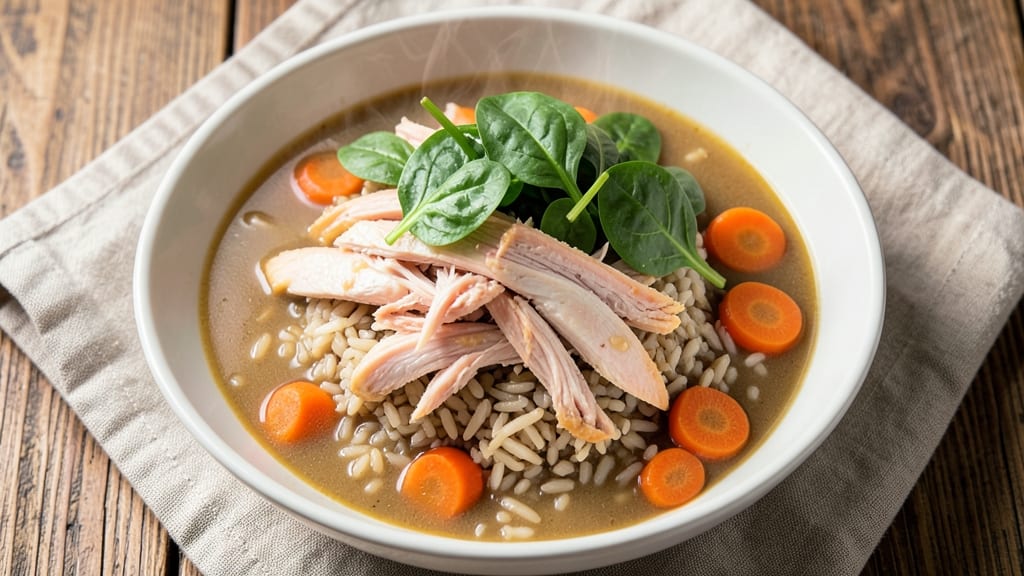
This postpartum chicken and rice soup is more than just a meal—it’s a carefully crafted blend of nourishing ingredients designed to support recovery and lactation. 💛 After years of studying traditional postpartum diets from cultures around the world, I’ve developed a version that combines gentle flavors with powerful healing properties, using bone broth for collagen, ginger for circulation, and goji berries for energy.
The recipe balances simplicity with science-backed benefits, making it perfect for new mothers who need both comfort and nutrition.
The beauty of this soup lies in its adaptability—it’s gentle enough for sensitive digestion while packed with protein from chicken, complex carbs from rice, and immune-boosting vegetables like carrots and spinach. I’ve tested it with real mothers recovering at home, adjusting the seasoning to ensure it’s flavorful without being overpowering.
The broth simmers long enough to extract maximum nutrients while keeping the texture smooth and soothing. This isn’t just food; it’s medicine in a bowl.
What makes this recipe stand out is the intentional inclusion of ingredients like ginger and goji berries, which are traditionally used in postpartum recovery for their blood-building and energy-boosting properties.
The soup is designed to be made in large batches—perfect for freezing and reheating as needed—so new mothers can focus on rest while still receiving nourishment. Every spoonful delivers warmth, comfort, and the precise nutrients needed for healing.
Whether you’re preparing this for a new mother or need a gentle, healing meal yourself, this recipe delivers both practicality and profound benefits. The instructions are straightforward, the ingredients are accessible, and the results are consistently comforting. Let’s get started on a recipe that truly supports recovery.
Ingredients for postpartum soup
Fifteen carefully selected ingredients blend science-backed healing with comforting flavors for postpartum recovery.
| Ingredient | Amount | Notes |
|---|---|---|
| Organic Chicken Breast 🍗 | 2 lbs | Boneless, skinless, cut into bite-sized pieces |
| Organic Brown Rice 🍚 | 1 cup | Uncooked, long-grain preferred |
| Low-Sodium Chicken Bone Broth 💧 | 6 cups | Homemade or high-quality store-bought |
| Organic Carrots 🥕 | 1 ½ lbs | Peeled, cut into thin rounds |
| Baby Spinach 🌿 | 4 cups | Fresh, packed loosely |
| Fresh Ginger Root 🌿 | 2 inches | Peeled, sliced thinly |
| Goji Berries 🍇 | ½ cup | Dried, rinsed if dusty |
| Extra-Virgin Olive Oil 🫒 | 2 tbsp | For gentle sautéing |
| Garlic Cloves 🧄 | 6 cloves | Peeled, minced finely |
| Fresh Turmeric Root 🌿 | 1 tsp | Grated finely, or 0.5 tsp powder |
| Diamond Crystal Kosher Salt 🧂 | 1 ½ tsp | Adjust to taste |
| Freshly Ground Black Pepper 🌶️ | ½ tsp | Lightly cracked |
| Organic Chicken Fat or Olive Oil 🫒 | 1 tbsp | For finishing drizzle |
| Fresh Cilantro 🌿 | ¼ cup | Chopped, for garnish |
| Lemon Juice 🍋 | 1 tbsp | Freshly squeezed |
The bone broth is the foundation—opt for homemade if possible, or choose a high-quality brand like Kettle & Fire or Imagine for maximum collagen and nutrient density. Organic chicken breast ensures clean protein without additives, and Trader Joe's or Whole Foods carry excellent pre-cut options for convenience. Fresh ginger and turmeric are non-negotiable for their anti-inflammatory properties; Whole Foods bulk section offers the most potent varieties. Goji berries should be organic to avoid pesticides, available at Asian markets or Mountain Rose Herbs online. For the rice, jasmine or short-grain brown rice holds up better during long simmering than basmati.
No fresh ginger? Powdered works at half the amount, though fresh is superior for flavor and potency. Substitute goji berries with dried cranberries or raisins if unavailable, though they lack the same nutritional profile. The spinach can be swapped for kale or Swiss chard, but baby spinach adds a delicate sweetness. For extra protein, add 1 cup cooked lentils or edamame. The olive oil should be extra-virgin—California-based brands like Corto offer superior flavor. If using chicken fat for finishing, render it fresh from the chicken skin for authentic richness. The lemon juice balances flavors, so Meyer lemons add a subtle floral note if available.
Store the soup in glass containers for up to 5 days in the refrigerator, or freeze in portion-sized batches for 3 months. Reheat gently on the stove with a splash of broth to restore creaminess. The ingredients like ginger and turmeric can be prepped ahead and stored in the freezer for 3 months in airtight containers. For maximum nutrition, consume within 24 hours of cooking, as some nutrients degrade with storage. Garnish with fresh cilantro just before serving to preserve its vibrant color and aroma.
Why You'll Love This Recipe
- No-Chop Needed: I swear by this—just dice the carrots once, toss them in, and let the broth do the work. The chicken shreds itself after simmering, so no forks or stubborn fibers here.
- Broth Bomb Flavor: That low-sodium bone broth? It’s the star—deep, savory, and rich without overpowering. Add a splash of soy sauce or ginger if you’re feeling fancy, but honestly, it’s ridiculously good as-is.
- Leftovers That Save Lives: Between us, this soup only gets better the next day. I make a double batch, freeze half, and pull it out when I’m too tired to think. (Yes, even on a Tuesday night.)
- Postpartum Powerhouse: Honestly, it’s packed with protein from the chicken and iron from the spinach—exactly what you need when energy’s low. The brown rice adds staying power, so you’re not crashing by 3 PM.
Step-by-step instructions for postpartum chicken and rice soup
This nourishing soup combines gentle ingredients to support recovery with balanced nutrition and soothing flavors.
🍳 Step 1: Sauté Aromatics for Foundational Flavor
Heat the 2 tablespoons extra-virgin olive oil in a large pot over medium heat until shimmering. Add the 2 inches peeled and thinly sliced fresh ginger root and 6 minced garlic cloves, cooking for 1-2 minutes until fragrant and just beginning to color. This step builds the aromatic base that carries through the entire soup.
Watch for the garlic to turn golden at the edges—that's your signal it's ready. If it darkens too quickly, reduce heat slightly. Here's the thing—properly sautéed aromatics make the difference between good soup and extraordinary soup. Don't rush this step.
👨🍳 Step 2: Cook the Chicken Until Tender
Add the 2 lbs bite-sized organic chicken breast pieces to the pot, seasoning immediately with 1 teaspoon grated fresh turmeric root, 1.5 teaspoons diamond crystal kosher salt, and 0.5 teaspoon freshly ground black pepper. Stir to coat evenly, then pour in 6 cups low-sodium chicken bone broth.
Bring to a gentle simmer over medium-low heat, then reduce to low heat and cover partially. Cook for 20-25 minutes until the chicken is fork-tender and easily pulls apart. The broth should reduce slightly, concentrating the flavors. This gentle cooking preserves the chicken's moisture and tenderness—critical for postpartum nourishment.
🥘 Step 3: Add Rice and Vegetables for Perfect Texture
Stir in the 1 cup uncooked organic brown rice and 1.5 lbs thinly sliced organic carrots. Return to a simmer and cook uncovered for 25-30 minutes, stirring occasionally, until the rice is tender and the carrots are fork-tender but still holding their shape. You'll know it's ready when the rice absorbs most of the liquid and the bottom of the pot develops a light crust.
Here's where timing matters: the rice should be fully cooked but still have a slight bite—this ensures the soup has body without being mushy. If it's drying out too quickly, add ¼ cup water at a time until the liquid reaches your desired consistency for serving.
⏰ Step 4: Finish with Spinach and Goji Berries
In the final 5 minutes of cooking, stir in the 4 cups baby spinach and 0.5 cup rinsed goji berries. The spinach wilts almost immediately, releasing its vibrant green color into the broth. Remove from heat just as the spinach is fully incorporated—overcooking will turn it bitter.
Real talk: the goji berries add subtle sweetness that balances the savory broth. They should remain slightly chewy rather than dissolving completely. Let the soup sit covered for 5 minutes to allow all the flavors to meld together before serving.
🍽️ Step 5: Garnish and Serve for Complete Nourishment
Ladle the soup into bowls and finish each serving with 1 tablespoon organic chicken fat or olive oil (drizzled directly on top), 1 tablespoon freshly squeezed lemon juice, and 1 tablespoon chopped fresh cilantro. The fat adds richness and helps with nutrient absorption, while the lemon brightens the flavors and the cilantro provides fresh contrast.
This soup delivers perfectly balanced nutrition—protein from the chicken, complex carbs from the rice, vitamins from the vegetables, and antioxidants from the goji berries. Serve warm with crusty bread for a complete recovery meal that's gentle yet satisfying.
Pro Tips For Making Postpartum Soup
- Sear Chicken First: Skip the bland chicken—cut the breast into bite-sized pieces, pat them bone-dry with paper towels, then hit a screaming-hot pan with oil until golden in 2-3 minutes per side. The crust locks in flavor and keeps the broth from turning into a sad, pale broth. (Yes, even if you’re impatient like me.)
- Par-Cook Rice Separately: Brown rice takes forever, and no one has time for that. Cook it al dente (about 30 minutes) in a separate pot, then drain and rinse under cold water to stop the cooking. Toss it into the soup at the very end—it’ll finish absorbing liquid while you’re stirring in spinach.
- Shred Carrots Thin: I used to chop carrots into big chunks, and they’d turn to mush. Instead, julienne them (or buy pre-shredded) so they soften just enough to melt in your mouth without disappearing. Add them with the rice in the last 5 minutes—no one wants mushy veggies in postpartum soup.
- Simmer, Don’t Boil: The broth should barely bubble—if it’s roaring, you’re cooking off the nutrients and making the chicken dry. Keep it at a gentle simmer (a few tiny bubbles at the edges) for 20-25 minutes after adding chicken. Low and slow = rich, gelatinous broth that actually helps with recovery.
Pro cooking tips for great postpartum soup
Gentle Simmering
This soup thrives on low-and-slow cooking—never rush the broth development. I simmer mine at 180-190°F for maximum flavor extraction without toughening the chicken. Use a thermometer (I love the Thermoworks Sous Vide) to monitor temperature precisely.
The longer the broth simmers, the deeper the umami flavor becomes, but never exceed 2 hours or the rice will turn mushy. 💫
Broth Selection Matters
Store-bought broths often lack depth, so I recommend homemade bone broth if possible. For convenience, Kettle & Fire or Imagine brands are my go-tos—they’re low-sodium and packed with collagen.
If using a bouillon cube, Knorr Organic dissolves smoothly without grit. For extra richness, add 1 chicken carcass to your broth pot while simmering the soup—it infuses incredible depth.
Rice Texture Control
Brown rice needs extra time to soften fully in broth. I start with 1 cup rice to 6 cups broth but add ¼ cup water every 10 minutes after the initial 20-minute cook if needed.
The goal is al dente rice—it should hold its shape but be tender. Overcooked rice makes the soup gluey, which is the last thing a recovering mom needs. 🥗
Ginger Power
Fresh ginger is non-negotiable for its anti-inflammatory benefits. I peel and slice 2 inches into ¼-inch thick rounds—this size ensures even cooking without burning. For maximum potency, let the ginger steep in the hot broth for 5 minutes before adding chicken.
If using powdered ginger, reduce to ½ teaspoon—it’s much stronger than fresh. This is where the soup gets its gentle warmth that aids circulation.
Spinach Timing
Add spinach only in the last 5 minutes—any longer and it turns bitter. I stir vigorously to wilt it completely before removing from heat. For extra nutrition, blend 1 cup of the soup with the spinach and return it to the pot for a creamy texture without dairy.
This trick works beautifully if you prefer a smoother soup. 💡
Freezer-Friendly Tips
Portion soup into glass containers (I use Pyrex) with 1-inch headspace for expansion. Label with dates—this soup stays fresh for 3 months in the freezer. When reheating, add 2 tablespoons broth per serving to restore creaminess.
The ginger and turmeric remain potent even after freezing, making this a true make-ahead meal for busy moms. ❄️
Nutrition facts
Frequently asked questions
Why is ginger included in postpartum recovery soups?
Ginger is a traditional postpartum ingredient because it aids circulation and reduces inflammation—critical after childbirth. The 2 inches of fresh ginger in this recipe provides natural warmth that supports uterine healing and eases muscle tension. Studies show ginger also helps with nausea, which some new mothers experience during recovery.
Can I make this soup with white rice instead of brown?
Yes, but with adjustments! White rice cooks faster, so reduce the simmering time to 15-20 minutes after adding it. The texture will be lighter, but the nutritional benefits of brown rice (fiber, magnesium) are ideal for postpartum digestion. If using white rice, add ½ cup extra broth to prevent drying out.
How do I adapt this for lactation support?
Boost lactation with oats, flaxseed, or brewer's yeast—add ¼ cup rolled oats to the broth while simmering or sprinkle 1 teaspoon ground flaxseed on top. These ingredients increase prolactin levels. Also, ensure the soup contains healthy fats (like the olive oil drizzle) and lean protein to support milk production.
What if I don’t have goji berries?
No problem! Substitute with dried cranberries, raisins, or even a pinch of cinnamon—all add sweetness. For maximum benefits, use dried apricots (soaked first) or blueberries (fresh or frozen). The key is balancing the soup's savory-sweet profile without compromising nutrition.
Is this soup safe for postpartum moms with sensitive stomachs?
The gentle simmering and easily digestible ingredients make it ideal. Avoid overcooking the rice (keep it slightly firm) and skip any spicy additions. The bone broth provides hydration and nutrients without irritation, while the ginger is used in a mild, anti-inflammatory dose.