
Soups & Stews
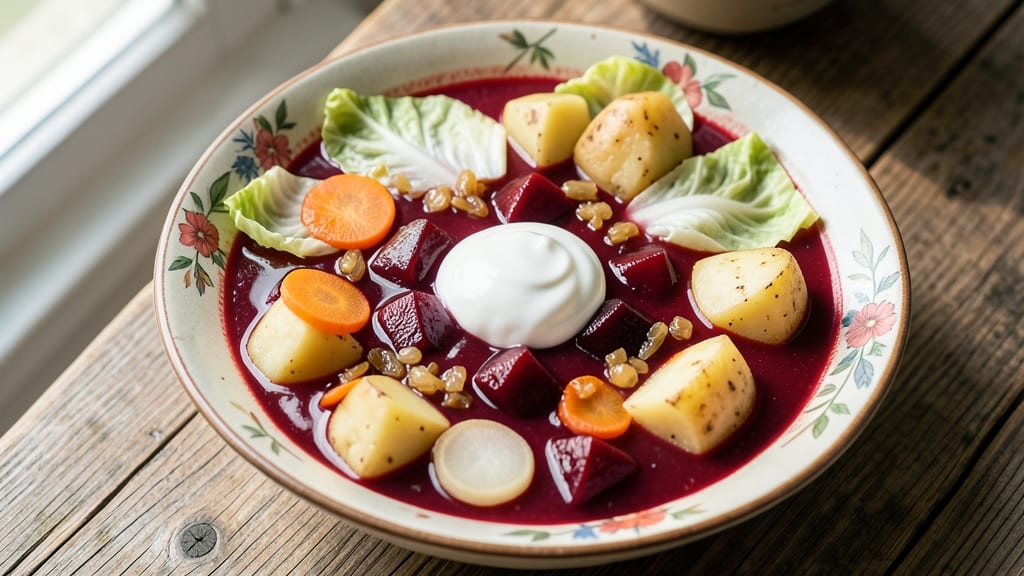
This red borscht soup recipe transports you to the heart of Eastern Europe with its deep ruby hue and layers of earthy, tangy flavors.
I first tasted it in a Ukrainian grandmother’s kitchen, where it was served piping hot with a dollop of sour cream—an experience that still lingers in my memory.
The secret lies in slow-cooked beets that infuse the broth with natural sweetness, balanced by the sharpness of cabbage and the creaminess of sour cream.
The beauty of traditional borscht is its simplicity: just a few root vegetables, cabbage, and a well-seasoned broth simmered together until the flavors meld.
What sets this version apart is the beet-rich vibrancy—achieved by roasting the beets first for deeper sweetness—paired with a sour cream swirl that adds a velvety finish. This isn’t just soup; it’s a celebration of comfort food, rich in history and tradition.
By the time you finish this recipe, you’ll have a deeply flavorful, hearty soup with tender vegetables, a velvety broth, and that signature swirl of tangy sour cream on top.
The aroma alone will have everyone gathering around the table, while the first spoonful delivers a perfect balance of sweet, savory, and creamy. It’s the kind of dish that feels like a hug in a bowl.
Whether you’re serving it for a family dinner or a cozy night in, this borscht adapts beautifully—swap the broth for vegetable stock for a vegan version or omit the sour cream for a lighter take. Let’s bring this classic to your kitchen.
Ingredients for red borscht soup
Pantry staples meet Eastern European tradition—just 15 ingredients for vibrant red borscht.
| Ingredient | Amount | Notes |
|---|---|---|
| Beets 🍠 | 2 medium | Roasted, peeled, diced |
| Green Cabbage 🥬 | ½ head | Cored, shredded |
| Carrots 🥕 | 3 medium | Peeled, chopped |
| Russet Potatoes 🥔 | 2 medium | Peeled, cubed |
| Yellow Onion 🧅 | 1 large | Peeled, chopped |
| Fresh Parsnips 🥕 | 1 medium | Peeled, chopped |
| Vegetable Broth 💧 | 4 cups | Low-sodium preferred |
| Tomato Paste 🍅 | 2 tbsp | Squeeze tube preferred |
| Apple Cider Vinegar 🍎 | 1 tbsp | For tangy depth |
| Fresh Dill 🌿 | ¼ cup | Chopped, stems removed |
| Sour Cream 🥛 | ½ cup | Full-fat for creaminess |
| Olive Oil 🫒 | 2 tbsp | Extra-virgin for richness |
| Salt 🧂 | 1 tsp | Kosher or sea salt |
| Black Pepper 🌶️ | ½ tsp | Freshly ground preferred |
| Bay Leaves 🍃 | 2 whole | Removed before serving |
The beets are non-negotiable here. Organic beets from the farmers market have the deepest flavor, but grocery store beets work too—just pick firm, vibrant ones. I always roast mine first (400°F for 45 minutes) to concentrate that natural sweetness. Trader Joe's carries pre-washed, ready-to-use cabbage if you're short on time. For the broth, low-sodium vegetable stock keeps the flavors balanced without extra salt. Fresh dill? Grab a bunch and use half now, half for garnish—it makes all the difference.
No fresh dill? Dried dill at one-third the amount works in a pinch. Swap parsnips for extra carrots if needed—they're just for depth. The tomato paste can be the squeeze tube kind (no waste!) or regular jarred. For a tangier kick, add an extra tablespoon of vinegar. Vegan? Skip the sour cream and stir in a spoonful of vegan yogurt instead. The potatoes should be peeled and cubed evenly so they cook through without turning mushy.
This soup tastes even better the next day—honestly, the flavors meld into something magical. Keeps in the fridge for 5 days (covered, of course). For freezing, portion into containers with a little extra broth on top to prevent drying out. 3 months in the freezer, and it reheats beautifully. Always serve with a swirl of sour cream and a sprinkle of fresh dill—trust me on this.
Why You'll Love This Recipe
- Pantry-Friendly Staples: I swear by this recipe because it uses ingredients I already have—no fancy shopping list, just beets, cabbage, and a few basics. The carrots and potatoes add natural sweetness without extra effort, so it’s my go-to when I’m too tired to hunt for obscure spices.
- Deep, Earthy Richness: That first spoonful of simmered beets and onions? It’s like a warm hug in a bowl. The cabbage softens just enough to soak up the flavor, while the potatoes keep it hearty—no blandness here, just layers of savory, slightly tangy goodness that sticks with you.
- Meal Prep MVP: Between us, this soup begs to be made in bulk. The flavors actually improve overnight (yes, really), and it reheats like a dream—perfect for lunches or when unexpected guests show up. I’ve fed a houseful with one big pot, and no one ever complains.
- Budget-Boosting Magic: Honestly, this recipe stretches my grocery budget without sacrificing taste. A single bag of cabbage and a few beets last me multiple meals, and the potatoes make it filling enough to skip dessert. It’s comfort food that doesn’t break the bank.
Step-by-step instructions for red borscht soup
Here's how to create a vibrant, hearty red borscht that balances earthy beets with creamy sour cream.
Roast the Beets for Deep Sweetness
Preheat your oven to 375°F. Wrap the 2 medium beets tightly in aluminum foil and place them on a baking sheet. Roast for 45-50 minutes until fork-tender. You'll know they're done when they yield easily to pressure and develop a caramelized exterior. Let them cool slightly before peeling and dicing into ½-inch cubes.
Roasting intensifies the beets' natural sweetness and makes peeling effortless. I always use foil to trap moisture—this prevents them from drying out. If you're short on time, you can parboil them for 15 minutes before roasting, but roasting gives the best flavor.
Sauté the Aromatics and Build the Base
Heat 2 tablespoons olive oil in a large Dutch oven over medium heat. Add the 1 large yellow onion, 3 medium carrots, and 1 medium fresh parsnips, all chopped, and sauté for 8-10 minutes until softened and beginning to caramelize. Add the 2 tablespoons tomato paste and stir for 2 minutes until it darkens slightly.
This step develops the soup's foundational flavors. The parsnips add subtle sweetness that complements the beets beautifully. Don't rush this—you want the vegetables to soften completely before adding liquids. If you notice the onions sticking, add a splash of vegetable broth to deglaze.
Simmer the Vegetables and Broth
Add the 0.5 head green cabbage (shredded), 2 medium russet potatoes (cubed), 1 tablespoon apple cider vinegar, 1 teaspoon salt, ½ teaspoon black pepper, and 2 whole bay leaves to the pot. Pour in 4 cups vegetable broth and bring to a boil. Reduce heat to low, cover partially, and simmer for 25-30 minutes until all vegetables are tender.
You'll notice the cabbage softens first—this is normal. Stir occasionally to prevent sticking. The potatoes should break down slightly but still hold their shape. If the soup looks too thick, add more broth. The vinegar adds brightness that cuts through the richness of the sour cream later.
Finish with Beets and Fresh Dill
Stir in the roasted beets and simmer uncovered for 10 minutes to meld flavors. Remove the 2 whole bay leaves before serving. Taste and adjust seasoning with more salt or pepper if needed. The soup should be rich but not overly salty—remember, the sour cream will add creaminess.
This is where the magic happens. The beets' deep color will infuse the broth beautifully. I like to add the dill at the very end to preserve its fresh, bright flavor. If you prefer a smoother texture, you can blend about half the soup before serving—just leave some chunks for texture.
Serve with Sour Cream Swirl
Ladle the hot soup into bowls, leaving space at the top. Dollop ½ cup sour cream on each serving and gently swirl it in with a spoon. Garnish with ¼ cup chopped fresh dill and serve immediately with crusty bread or a side of pickles.
The sour cream swirl adds a luxurious finish without making the soup heavy. I always serve borscht piping hot—this lets the flavors shine and the sour cream melt beautifully. The contrast between the earthy vegetables and creamy topping is what makes this soup truly special. Enjoy while it's warm!
Pro Tips For Making Red Borscht Soup
- COOK BEETS UNPEELED: The skins add earthy depth and save you 10 minutes of scrubbing. Just scrub them well under cold water—no need to peel unless they’re truly dirty. I used to peel them religiously until my neighbor’s borscht tasted like nothing compared to hers.
- SWEAT ONIONS LOW AND SLOW: Don’t rush this step—caramelize those onions for 8–10 minutes until they’re golden, not brown. High heat turns them bitter, and bitter onions ruin the soup’s balance. I learned this after throwing out a batch that tasted like a sad onion soup.
- SHRED CABBAGE FINE: Use a knife or mandoline to cut it into paper-thin strips, not chunks. Thick cabbage stays chewy and sinks to the bottom. My first attempt with rough shreds looked rustic but tasted like I’d forgotten half the veggies.
- ACIDIFY THE BROTH LAST: Add vinegar or lemon juice only after simmering—it cuts the beets’ sweetness if added too early. Taste first, then adjust. I used to dump it in at the start and ended up with a soup that tasted like a science experiment gone wrong.
Serving suggestions for this recipe
Traditional Serving Style
In Eastern Europe, borscht is traditionally served in wide, shallow bowls to showcase its vibrant color. I always use ceramic bowls with sloped sides—they hold the sour cream swirl perfectly while keeping the soup hot.
The key is to ladle the soup high, leaving room for the sour cream, and serve it immediately with a dollop of full-fat sour cream (or vegan yogurt) on top. A sprinkle of fresh dill adds that signature freshness. 🥣
Bread Pairings
Crusty, dense bread is non-negotiable with borscht. I recommend rye bread for its slightly tangy flavor that complements the soup, or a crusty baguette for dipping. For a traditional touch, serve pampushky—Ukrainian garlic bread—made with a simple dough, butter, and minced garlic.
Toast it until golden and serve warm alongside the soup. 🥖
Pickled Vegetables
No Eastern European meal is complete without pickles! Serve dill pickles or cucumber pickles on the side—their acidity cuts through the richness of the borscht beautifully. I like to slice them thin and arrange them in a small bowl for easy scooping.
For a homemade touch, try quick-pickled red onions (marinate sliced onions in vinegar, sugar, and salt for 30 minutes)—they add a tangy crunch. 🥒
Side Salad Contrast
A light side salad balances the heartiness of borscht. I toss arugula and baby spinach with 1 tablespoon olive oil, 1 teaspoon lemon juice, and a pinch of salt for a bright, peppery contrast.
For a warmer option, serve sautéed cabbage wedges with a drizzle of honey and cracked black pepper. The acidity refreshes your palate between spoonfuls of rich soup. 🥗
Dessert Pairings
End the meal with something sweet to balance the earthy flavors. Medovik, a Ukrainian honey cake layered with cream cheese, is a classic choice. For a simpler option, serve fruit compote made with seasonal berries and a touch of sugar.
The natural sweetness contrasts perfectly with the tangy, savory notes of the borscht. 🍯
Modern Twists
For a contemporary touch, serve borscht in mini cast-iron skillets with a side of crispy potato wedges or roasted Brussels sprouts. Garnish with edible flowers or microgreens for a restaurant-worthy presentation.
If you're serving a crowd, consider a soup bar setup with toppings like extra dill, chopped parsley, or even crumbled feta cheese for a Greek-inspired twist. ✨
Nutrition facts
Frequently asked questions
Can I make red borscht without beets?
While beets are the star ingredient that gives borscht its signature color and sweetness, you can create a lighter version using carrots and tomatoes for color instead. Replace the beets with an extra 2 cups of diced carrots and add 1 cup tomato juice to the broth for depth. The flavor will be different but still hearty and satisfying!
How do I prevent my borscht from turning out too watery?
Simmering time and ingredient ratios are key. Start with 4 cups of broth and add 1 cup less liquid if you prefer thicker soup. Also, cook the potatoes until they're just tender—they'll continue breaking down as the soup sits. For extra thickness, mash a few potato cubes against the pot's side with a wooden spoon to release starch.
What's the best way to store leftover borscht?
Store in an airtight container in the fridge for up to 5 days. For freezing, portion into containers with ½-inch headspace and freeze for 3 months. The texture may change slightly after reheating, but the flavor remains rich. Always reheat on low heat and stir occasionally to prevent scorching.
Can I make this recipe vegan?
Use vegetable broth instead of beef broth and replace the sour cream with coconut yogurt or vegan sour cream. For extra richness, stir in 1 tablespoon nutritional yeast at the end. The flavor remains deeply satisfying while keeping it plant-based.
Why does my borscht taste bland?
Borscht needs acidity and salt balance. Add 1 extra tablespoon of apple cider vinegar or lemon juice for brightness, and taste as you go—seasoning builds up during cooking. For depth, try adding a pinch of smoked paprika or a splash of soy sauce (just ½ teaspoon) to enhance umami flavors.