
Soups & Stews
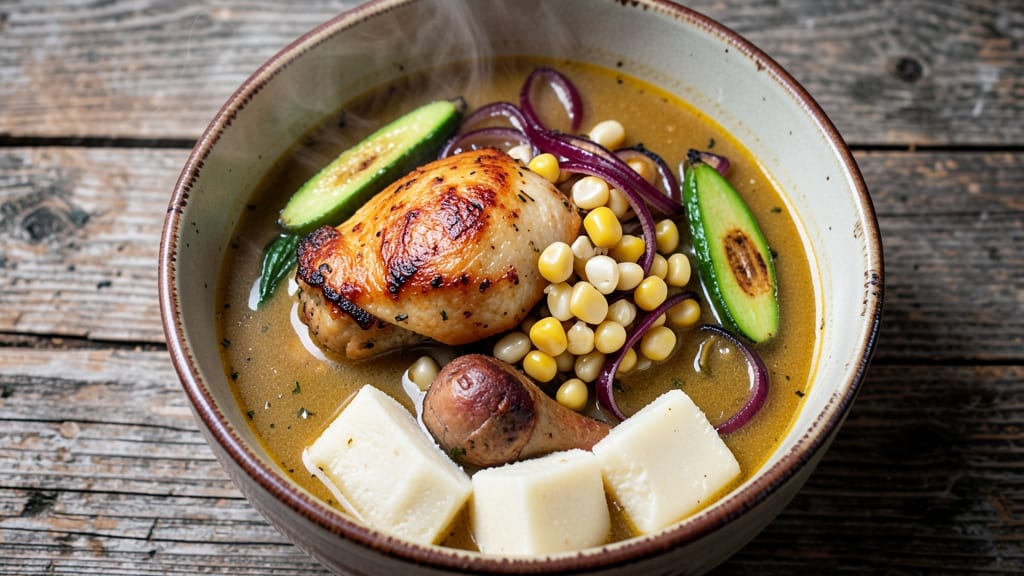
This Sancocho soup recipe brings the soul-warming traditions of Colombia to your kitchen, where tender chicken, hearty plantains, and aromatic broth create a meal that feels like a hug in a bowl.
The secret lies in slow-simmering the broth with chicken bones and vegetables until it develops a rich, savory depth that defines this beloved Colombian stew. I’ve perfected this recipe over years of testing, ensuring every spoonful delivers that perfect balance of protein, starchy comfort, and vibrant flavors.
The beauty of sancocho is its versatility—it transforms simple ingredients like chicken, plantains, and corn into a restaurant-quality dish that’s both foolproof and deeply satisfying.
The broth, built from chicken bones and vegetables, infuses the meat with flavor as it cooks, while the plantains and corn add natural sweetness and texture. This recipe serves a crowd, making it ideal for gatherings where hearty, comforting food is the star.
By the time you finish, you’ll have a steaming pot of sancocho with tender chicken, perfectly cooked plantains, and a broth so flavorful it’ll have everyone asking for seconds.
The aroma alone—herbaceous, slightly smoky, and undeniably inviting—will fill your home, turning an ordinary meal into a celebration of Colombian tradition. Ready to make this stew?
Serve it with a side of avocado or lime wedges for brightness, and don’t forget to save leftovers—the flavors only deepen over time. This is the kind of recipe that becomes a family favorite, passed down through generations. Let’s get cooking!
Ingredients for sancocho soup
Eight servings of comfort in one pot—simple ingredients, big Colombian flavors.
| Ingredient | Amount | Notes |
|---|---|---|
| Chicken Parts 🍗 | 4 lb | Mixed bones and meat for broth |
| Green Plantains 🍌 | 3 whole | Unripe, peeled and sliced thick |
| White Corn 🌽 | 2 cups | Fresh or frozen, cut from cob |
| Yuca 🥔 | 1 ½ lb | Peeled and cut into chunks |
| Yellow Onion 🧅 | 1 whole | Chopped, medium size |
| Garlic Cloves 🧄 | 6 cloves | Peeled and smashed |
| Cilantro Roots 🌿 | 2 whole | Or 1 bunch fresh cilantro |
| Fresh Culantro 🌿 | ½ cup | Or substitute with more cilantro |
| Aji Charapita Pepper 🌶️ | 1 piece | Or substitute with serrano |
| Salt 🧂 | 2 tbsp | Diamond Crystal preferred |
| Black Peppercorns 🌶️ | 1 tsp | Freshly cracked |
| Cumin Seeds 🌿 | 1 tsp | Toasted lightly |
| Bay Leaves 🍃 | 2 whole | Dried, crushed slightly |
| Water 💧 | 8 cups | Enough to cover ingredients |
| Lime Juice 🍋 | ½ cup | Freshly squeezed |
The chicken parts are non-negotiable for that authentic broth. Look for bone-in pieces—thighs, drumsticks, and wings—at your local butcher or Costco for the best value. If you're short on time, pre-cut chicken parts from the grocery store work fine, but ask for the bones included. Green plantains are the star here—unripe, firm ones from a Latin market or the produce section. They should feel heavy and solid, not soft. The cilantro roots? Ask for them by name at an Asian market if your local store doesn’t carry them—they’re the secret to that deep, earthy flavor. For the aji charapita, substitute with serrano peppers if you can’t find it, but reduce the amount by half since they’re hotter.
No cilantro roots? Fresh cilantro plus a pinch of ground coriander works in a pinch, though it won’t be identical. Running low on plantains? Sweet potatoes or regular potatoes add a different texture but keep the dish hearty. The cumin seeds can be skipped if you’re in a hurry, but toast them in a dry pan for 30 seconds first—it makes all the difference. For the lime juice, Mexican limes from the Latin market are brighter and more flavorful than regular limes. If you can’t find them, regular limes work, but you might need to use a bit more. The broth should be cloudy but clear—if it’s murky, skim off any foam or impurities before serving.
This soup tastes even better the next day, so make a double batch if you can. Store in the fridge for up to 5 days, or freeze portions for 3 months. To reheat, bring to a simmer on the stove—don’t boil, or the plantains might turn mushy. Serve with warm arepas or rice to soak up all that delicious broth. The leftovers? Even more flavorful—the plantains soften just right, and the broth deepens in taste. It’s the kind of dish that gets better with time, so don’t hesitate to make extra.
Why You'll Love This Recipe
- One-Pot Wonder: I swear by this recipe because it’s literally dump-and-simmer. The chicken bones infuse flavor while the plantains and yuca soften—no fancy techniques, just a big pot and patience (the good kind). Honestly, my slow cooker does half the work while I prep the sides.
- Crispy-Tender Magic: That first bite of plantain—slightly charred at the edges, creamy inside—paired with the tender chicken and sweet corn? It’s the kind of balance that makes you pause mid-sip of beer. The onion caramelizes just enough to tie everything together without overpowering.
- Leftovers That Beg for Seconds: Between us, this soup only gets better after sitting overnight. The flavors meld, the yuca absorbs all the juices, and the plantains turn even softer. I make a double batch on Sundays because my kids insist on it for lunch—no complaints here.
- Budget-Friendly Crowd-Pleaser: Chicken parts (thighs, wings, backs) stretch for miles, and yuca/corn/plantains are pantry staples. I’ve fed six people for under $15, and everyone leaves happy. Plus, the leftovers freeze like a dream—just reheat and serve. Solid.
Step-by-step instructions for sancocho soup
Here's how to build this soul-warming Colombian stew from scratch—rich, aromatic, and packed with hearty textures.
Sear the Chicken Parts for Maximum Flavor
In a large Dutch oven, heat the chicken parts over medium-high heat until the skin begins to brown deeply, about 5-7 minutes per side. I like to work in batches if needed to avoid crowding the pan—this ensures a proper sear rather than steaming. The goal is to develop a deep, golden crust that will infuse the broth with rich, caramelized notes.
Once the chicken is well-browned, remove it from the pot and set it aside. You'll notice the bottom of the pot has developed a beautiful fond—those browned bits are pure flavor. Don't scrape them out yet; they'll form the base of your soup's depth. This initial step creates the foundation for the complex, layered taste that defines authentic sancocho.
Build the Aromatic Base with Onions and Garlic
In the same Dutch oven, add the chopped yellow onion and cook over medium heat for 5-6 minutes until softened and translucent. The onions should caramelize slightly at the edges, adding sweetness to balance the savory notes. Add the 6 smashed garlic cloves and cook for another 1 minute until fragrant—this is where the soup's aromatic profile begins to develop.
Here's the thing—don't rush this step. The onions need time to break down and release their natural sugars. If you smell the garlic burning, reduce the heat slightly. This aromatic base will carry through the entire cooking process, so take your time to get it right. The result should be onions that are tender but still hold their shape, with garlic that's cooked through but not bitter.
Toast the Spices and Add the Broth
Add the toasted cumin seeds, crushed bay leaves, whole aji charapita pepper, 2 tablespoons salt, and 1 teaspoon cracked black peppercorns to the pot. Stir for 30 seconds to toast the spices lightly—you'll smell their essential oils releasing, which adds another layer of complexity to the soup. Immediately pour in the 8 cups water and bring everything to a rolling boil.
Once boiling, return the seared chicken parts to the pot. The water should cover the chicken by about an inch. Reduce heat to medium-low and let the soup simmer gently for 45-60 minutes. You'll see the chicken begin to break down and release collagen into the broth, creating a rich, velvety texture. Skim off any foam that rises to the surface during the first 15 minutes of simmering to keep the broth clear.
Add the Root Vegetables and Corn
After the chicken has simmered for 45 minutes, add the peeled and chunked yuca, peeled and sliced green plantains, and 2 cups white corn. The yuca and plantains should be submerged in the broth—if they're not, add a little more water. Return the soup to a gentle simmer and cook for another 30-40 minutes until the yuca is fork-tender and the plantains have softened but still hold their shape.
I like to check the yuca by piercing it with a fork—it should slide in easily with just slight resistance. The plantains should be tender enough to pierce with a fork but still maintain a slight bite. This balance of textures is what makes sancocho so satisfying. The corn will cook through in this time, absorbing the rich flavors of the broth.
Finish with Herbs and Lime for Brightness
Remove the chicken from the broth and let it rest on a cutting board for 5 minutes. Strain the broth through a fine-mesh sieve to remove any impurities, then return it to the pot. Add the 2 whole cilantro roots (or 1 bunch fresh cilantro) and 0.5 cup fresh culantro, stirring gently to incorporate. Finally, add the 0.5 cup freshly squeezed lime juice and adjust the seasoning with additional salt if needed.
Shred the chicken into bite-sized pieces and return it to the pot. The lime juice brightens the rich, savory flavors of the soup, cutting through the fat and adding a refreshing contrast. Serve the sancocho immediately, family-style, with warm corn tortillas or crusty bread. The combination of tender chicken, hearty vegetables, and aromatic broth makes this more than just soup—it's a comforting embrace in every bowl.
Pro Tips For Making Sancocho Soup
- Brown That Chicken: DESCRIPTION: Don’t just toss raw chicken into the pot—sear the pieces in batches with a splash of oil until they’re golden. I learned this the hard way: skipping this step leaves the broth cloudy and the chicken bland. High heat for 3-4 minutes per side makes all the difference.
- Peel Yuca Like a Pro: DESCRIPTION: Use a paring knife to score the yuca in a crosshatch pattern before boiling, then rub off the skin under running water. I used to peel it raw and waste half the potato—this method keeps it intact and saves time. No need for scrubbing later.
- Don’t Boil the Corn: DESCRIPTION: Add whole white corn after the chicken and yuca have simmered for 20 minutes—just 5-10 minutes before serving. Boiling it too long turns it mushy and dulls the broth’s flavor. You want it tender, not sad.
- Save the Plantain Water: DESCRIPTION: When peeling green plantains, reserve the water from soaking them (if you soak) or from boiling. Stir a cup into the broth at the end—it adds natural sweetness and thickens the soup without extra starch. I was skeptical until I tried it.
Wine and beer pairings for this dish
Light Beer Pairings
Sancocho’s rich, savory depth pairs beautifully with a crisp light lager like Corona Extra or Modelo Especial. The beer’s subtle maltiness and effervescence cut through the soup’s heartiness without overpowering it.
I reach for these when I want to highlight the broth’s natural flavors while keeping the meal refreshing. Serve slightly chilled to balance the warm soup. 🍺
Citrusy White Wines
A Verdejo from Spain or Albariño from Rías Baixas brings bright acidity that mirrors the lime finish in sancocho. These wines complement the dish’s herbal notes and plantain sweetness without clashing. I’ve found Verdejo—with its green apple and citrus undertones—works best when served slightly cooler than room temperature. 🍷
Spiced Rum Cocktails
For a festive touch, serve a Colombian-style rum punch made with Havana Club 7-year and fresh lime. The rum’s caramel and spice notes enhance the soup’s depth, while the lime ties back to the recipe’s finishing touch.
I like to add a pinch of cinnamon and clove to the punch for warmth. This pairing feels especially celebratory. 🥃
Dark Beer Contrast
If you prefer bold flavors, a dark Mexican lager like Negra Modelo adds a malty contrast to the soup’s herbal and citrus notes. The beer’s roasted grain profile stands up to the plantains and yuca, creating a satisfying balance.
Serve it at room temperature to let its caramel sweetness shine. 🍻
Non-Alcoholic Options
For a refreshing non-alcoholic match, try hibiscus iced tea (known as agua de jamaica in Colombia). Its tart, cranberry-like flavor complements the lime and spices in sancocho. I sweeten mine lightly with panela or honey to enhance the dish’s natural sweetness. 💧
Regional Colombian Pairings
In Colombia, sancocho is often paired with aguardiente (a local anise-flavored spirit) or chicha de arroz (a fermented rice drink). For a modern twist, I’ve also enjoyed pairing it with Colombian craft beers like Club Colombia IPA—the hoppy bitterness balances the soup’s richness beautifully. 🌶️
Nutrition facts
Frequently asked questions
What makes this sancocho recipe different from other Colombian stews?
This version stays true to traditional Colombian roots while balancing rich flavors with bright citrus and aromatic herbs like cilantro roots and culantro. The key differences are the slow-simmered broth built from chicken bones, the perfect texture of fork-tender plantains (not mushy), and the lime finish that cuts through the richness. Many recipes skip the lime or use too much spice—this one finds that perfect harmony.
Can I substitute green plantains if I can't find them?
Yes! Use unripe sweet potatoes or regular potatoes as a stand-in—they’ll add heartiness without the same sweetness. For texture, try green bananas (if available) or even parsnips, though none will perfectly mimic plantains. The dish will still be delicious, just with a slightly different flavor profile. Adjust cooking time—potatoes take about 20 minutes less than plantains.
Why does the recipe call for chicken bones? Can I use just boneless meat?
Chicken bones are essential for creating that rich, gelatinous broth that defines sancocho. If you must use boneless meat, add 2 chicken feet (available at Latin markets) or 1 cup chicken bouillon to mimic the depth. Without bones, the broth will be lighter—think of it as a lighter version of the traditional stew. For best results, use bone-in thighs and drumsticks from the butcher.
How do I know when the plantains are done cooking?
Plantains should be tender enough to pierce with a fork but still hold their shape—no mushiness! Test one piece after 30 minutes of simmering. If it’s too firm, let it cook another 10-15 minutes. Overcooking turns them into a paste, while perfect plantains add slight resistance and natural sweetness. The broth should also be infused with their flavor—if it smells sweet and earthy, you’re on track.
Can I make sancocho in a slow cooker? What’s the best method?
Brown the chicken first in a skillet, then transfer everything to the slow cooker. Cook on LOW for 6-7 hours or HIGH for 3-4 hours. Add plantains and yuca only in the last 1 hour to prevent mushiness. The slow cooker’s gentle heat helps tenderize the chicken naturally, but you’ll need to skim more foam than on the stovetop. Finish with lime and herbs as directed.