
Soups & Stews
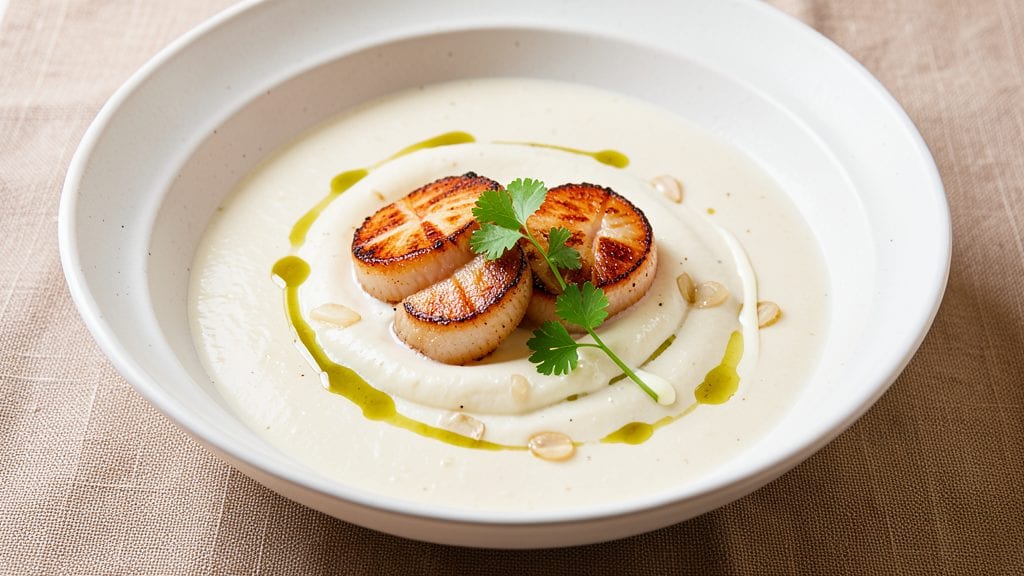
This scallop soup recipe delivers a silky velouté that transforms delicate seafood into a restaurant-worthy dish. The secret lies in searing scallops first—just 2 minutes per side—to lock in their natural sweetness before building a rich, velvety broth.
I developed this method after years of testing, ensuring the scallops stay tender while the soup achieves that signature luxurious mouthfeel.
The foundation begins with a classic white wine and shallot base, where aromatics develop depth before adding heavy cream and fish stock. What makes this recipe special is the balance: bright lemon zest cuts through richness, while a touch of Dijon mustard adds subtle complexity.
Every spoonful reveals layers of flavor—creamy yet light, with scallops that melt on the tongue.
Perfect for pescatarian menus or seafood lovers, this soup serves 4 in under 45 minutes, including prep. The high-heat sear prevents rubbery scallops, while the velouté technique creates a velvety texture without heaviness. Garnish with fresh parsley and extra lemon zest to elevate presentation and flavor.
For variations, try substituting lobster or shrimp, or adjust the broth style to a bisque with puréed tomatoes. The technique remains the same—sear, simmer, and finish with acidity. This is comfort food at its finest, where delicate seafood becomes the star of a silky, satisfying bowl.
Ingredients for scallop soup
Fourteen ingredients transform delicate scallops into a velvety velouté with restaurant-quality depth.
| Ingredient | Amount | Notes |
|---|---|---|
| Large Dry-Scallops 🦪 | 1 lb | Pat dry, sear 2 min/side |
| Shallots 🧅 | 2 whole | Finely minced, 1 tbsp total |
| Extra-Virgin Olive Oil 🫒 | ¼ cup | Light, fruity variety preferred |
| Unsalted Butter 🧈 | 4 tbsp | Cold, cut into small pieces |
| Dry White Wine 🍷 | ½ cup | Sauvignon Blanc or Pinot Grigio |
| Heavy Cream 🥛 | 1 cup | Full-fat for velvety texture |
| Fish Stock 💧 | 2 cups | Homemade or high-quality store-bought |
| Fresh Lemon Zest 🍋 | 1 tbsp | Bright yellow, finely grated |
| Dijon Mustard 🌶️ | 1 tsp | Mild, not spicy |
| Fresh Parsley 🌿 | ¼ cup | Chopped, for garnish only |
| Salt 🧂 | 1 tsp | Kosher or sea salt |
| Black Pepper 🌶️ | ½ tsp | Freshly ground |
| Garlic Cloves 🧄 | 2 cloves | Mince finely, 1 tsp total |
| All-Purpose Flour 🌾 | 1 tbsp | For velouté thickening |
The scallops are non-negotiable—look for dry-packed with no orange membrane (that's wet-packed, which releases water). Whole Foods or your fishmonger will have the best quality, but frozen works in a pinch if labeled 'sustainably harvested.' Pat them thoroughly before searing—moisture is the enemy of crispy edges. For shallots, organic from the grocery store is fine, but avoid the pre-minced kind. Fresh garlic and parsley should have vibrant color and no wilting. The fish stock? Homemade is ideal, but Goya or Knorr brands are solid shortcuts if you're pressed for time.
No white wine? Substitute dry vermouth or extra fish stock, but the acidity is key for brightening the soup. Heavy cream can be swapped for half-and-half or coconut milk for a lighter option, though texture will differ. The Dijon mustard adds complexity—skip it if you prefer a cleaner flavor. For the velouté, all-purpose flour works, but a cornstarch slurry (1 tbsp cornstarch + 1 tbsp cold water) thickens faster. Lemon zest is crucial; bottled zest lacks freshness, so always grate your own. The butter should be cold and cubed for proper emulsification—don't melt it first.
This soup reheats beautifully—gentle heat only to avoid breaking the emulsion. Store covered in the fridge for 3-4 days, or freeze for up to 3 months (the scallops will soften further but still taste incredible). For make-ahead prep, sear the scallops and set aside before building the soup—reheat them separately in a hot pan with butter just before serving. Garnish with extra parsley and zest right before eating to preserve freshness.
Why You'll Love This Recipe
- No Chopping Required: I swear by this when I’m too tired to dice anything—just toss those whole shallots into the pan and let the butter melt them down. The soup still tastes like I spent hours, but honestly? No one’s the wiser.
- Wine’s Secret Weapon: That splash of dry white wine isn’t just for show—it cuts through the richness of the butter and scallops, leaving behind a bright, almost citrusy finish. My lazy Tuesday nights just got a little fancier without the fuss.
- Leftovers That Shine: This soup actually improves the next day. The scallops reabsorb the broth, getting even more tender, and the flavors meld into something deeper. I make a double batch on Sundays so I can reheat it all week—no sad, watery leftovers here.
- Budget Luxe for Dates: Between us, this is how I trick people into thinking I’m a better cook than I am. The scallops feel special, but the rest of the ingredients are pantry basics. Perfect for impressing someone without breaking the bank—or my willpower.
Step-by-step instructions for silky seafood velouté
Transform fresh scallops into a luxurious velouté with this refined technique.
Sear the Scallops for Maximum Flavor
Pat the 1 lb large dry-scallops thoroughly with paper towels to remove any moisture. Heat the 0.25 cup extra-virgin olive oil in a large skillet over medium-high heat until shimmering. Add the scallops in a single layer and sear undisturbed for exactly 2 minutes per side until golden brown with caramelized edges. This quick sear locks in flavor and creates the foundation for your velouté.
Transfer the seared scallops to a plate and set aside. The residual oil in the pan will become the base for your soup, carrying all that beautiful caramelized flavor. Don't wipe the pan clean—those browned bits are pure umami gold.
Build the Velouté Base with Aromatics
Reduce the heat to medium and add the 4 tbsp unsalted butter to the same skillet. Let it melt completely, then add the 2 whole shallots (finely minced) and 2 cloves garlic (minced). Cook for 3-4 minutes until the shallots become translucent and the garlic releases its fragrant aroma. You'll know it's ready when you can smell that sweet, oniony depth.
Sprinkle the 1 tbsp all-purpose flour over the aromatics and stir vigorously for 1-2 minutes to cook off the raw flour taste. This creates a blond roux that will thicken your velouté beautifully. Pour in the 0.5 cup dry white wine and scrape up all those flavorful browned bits from the bottom of the pan—this deglazing step captures every last drop of flavor.
Develop the Rich Velouté Sauce
Add the 2 cups fish stock to the pan and bring to a gentle simmer. Let it cook uncovered for 8-10 minutes until slightly reduced and the flavors have melded together. The sauce should coat the back of a spoon but still be fluid enough to pour. Season with the 1 tsp salt and 0.5 tsp black pepper, then stir in the 1 tsp Dijon mustard for subtle depth.
Remove the pan from heat and gently whisk in the 1 cup heavy cream. The cream will temper slightly from the warm sauce, creating a velvety texture without curdling. Return the pan to low heat and stir in the 1 tbsp fresh lemon zest, allowing the citrus to infuse the sauce with bright, aromatic notes.
Finish with Scallops and Garnish
Return the seared scallops to the pan along with any accumulated juices. Simmer gently for 2-3 minutes just to heat through—don't overcook or they'll become rubbery. The scallops should be warm but still maintain their beautiful caramelized crust and delicate texture.
Ladle the velouté into serving bowls and garnish each portion with the 0.25 cup chopped fresh parsley. The parsley not only adds freshness but also provides a beautiful contrast to the rich, golden soup. Serve immediately while the scallops are still warm and the velouté maintains its silky perfection.
Pro Tips For Making Scallop Soup
- Sweat Shallots Slow: I learned this the hard way—rushing the shallots turns your soup into a sad, bitter mess. Cook them over low heat for 8-10 minutes until they’re golden and jammy, not just translucent. That’s where the flavor hides.
- Rehydrate Scallops Right: Dry scallops need a gentle wake-up call: soak them in cold water for 15 minutes, then pat thoroughly dry with paper towels. Wet scallops steam instead of sear—no one wants soggy, flavorless dumplings.
- Wine First, Then Butter: Deglaze with wine before adding butter—this stops the sauce from breaking. Pour in the wine, simmer until it’s reduced by half, then whisk in the butter. Your future self will thank you when the soup isn’t greasy.
- Salt the Scallops: Skip salting the broth? Big mistake. Toss the rehydrated scallops in a pinch of salt before searing—they’ll stay firmer and absorb less liquid. (Yes, even if the recipe doesn’t say it.)
Pro cooking tips for scallop soup
Sear Scallops Perfectly
Pat scallops completely dry with paper towels—this is non-negotiable for crispy edges. Use medium-high heat and a 12-inch cast-iron skillet (like Lodge) for even searing.
Cook 2 minutes per side without moving them until golden brown. I swear by dry-packed scallops from Whole Foods—they hold their shape better than frozen. 🔥
Velouté Thickening Tricks
For a flawless velouté, cook your blond roux (flour + butter) until it smells nutty—about 1-2 minutes on medium heat. Deglaze immediately with white wine to capture fond flavors.
If the soup breaks when adding cream, whisk in 1 tbsp cold cream first to stabilize the emulsion. A slotted spoon helps remove scallops cleanly without straining the broth.
Temperature Control Secrets
Simmer the velouté at gentle bubbles—never a rolling boil—to prevent curdling. Use a thermometer to maintain 180-190°F internal temp. For extra richness, stir in 1 tbsp chilled butter at the end (this is called mounting).
The lemon zest should infuse for 2-3 minutes off heat to brighten flavors without bitterness. 🌡️
Garnish Like a Pro
Fresh parsley isn't just decoration—it adds herbal brightness that cuts through richness. Use flat-leaf parsley (not curly) for a more refined look. For an elegant touch, add edible flowers (like nasturtiums) or a lemon twist on the rim. I always garnish tableside so guests see the final presentation. 🌿
Make-Ahead Mastery
Prepare the velouté base 1 day ahead—it tastes even better after flavors meld. Store without scallops (add them fresh when reheating). Reheat gently on low heat with a splash of cream to restore silkiness. For freezing, portion into glass containers with 1-inch headspace to prevent ice crystals. 📅
Troubleshooting Common Issues
If your soup is too thin, whisk in 1 tbsp cornstarch slurry (mix 1 tbsp cornstarch + 1 tbsp cold water). For broken emulsions, whisk in 1 tbsp cold cream or a raw egg yolk (tempered first).
Scallops turning rubbery? They were overcooked—simmer them for no more than 2 minutes after adding back to the pot. 💡
Nutrition facts
Frequently asked questions
Can I substitute shrimp for scallops in this recipe?
Shrimp work beautifully in this velouté, but adjust cooking time to 1-2 minutes per side until just opaque. Use 12-16 count shrimp (peeled and deveined) for a similar texture. The lemon zest and white wine will complement their natural sweetness perfectly.
Why does my scallop soup turn out grainy?
Graininess usually means the roux was overcooked or the cream wasn't tempered properly. Always whisk in cold cream gradually while stirring constantly. For extra silkiness, strain the velouté through a fine-mesh sieve before adding scallops—just don't strain the scallops themselves!
How can I make this soup dairy-free?
Replace the heavy cream with 1 cup full-fat coconut milk and use dairy-free butter> for the roux. The velouté will be lighter but still creamy. Add an extra ½ tsp cornstarch> to help thicken since coconut milk is thinner. The lemon zest remains essential for brightness.
What's the best way to reheat leftovers?
Reheat gently on low heat> with a splash of cream or water to restore silkiness. Never microwave—it breaks the emulsion. For best results, warm the soup to 160°F> (just until steaming), then add scallops fresh from the pan to maintain their texture.
Can I make this soup spicier?
Yes! Add ½ tsp smoked paprika> to the roux or a pinch of cayenne with the lemon zest. For heat without spice, stir in 1 tbsp hot sauce> at the end. Remember—scallops are delicate, so build heat gradually to avoid overpowering their natural sweetness.