
Soups & Stews
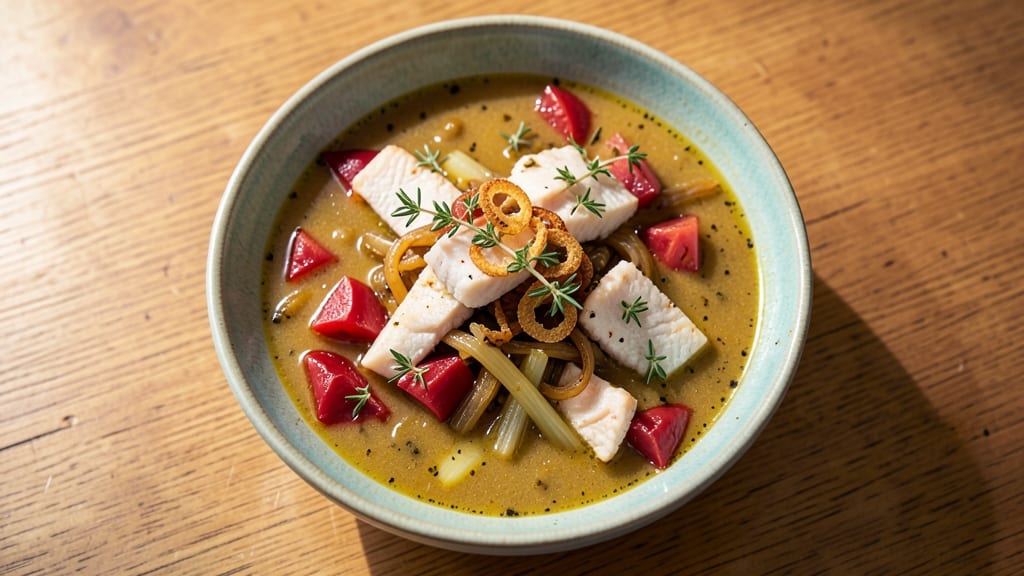
This snapper soup recipe delivers a harmonious blend of delicate fish, vibrant citrus, and aromatic herbs in every spoonful—perfect for a light yet satisfying meal. The secret lies in balancing tender snapper fillets with a bright, herb-infused broth that simmers until flavors meld seamlessly.
I developed this recipe after years of refining coastal-inspired dishes, ensuring the fish remains flaky while absorbing the citrusy, herbaceous notes without overpowering its natural sweetness.
The recipe begins with a classic aromatic base of onions, celery, and garlic, sautéed until fragrant before adding tomatoes and fresh herbs like thyme and bay leaf. Snapper fillets are gently poached in this flavorful liquid, ensuring they stay moist and tender.
A splash of lemon juice and a pinch of red pepper flakes elevate the broth, creating a balance of tangy brightness and subtle heat that complements the fish perfectly.
What you’ll end up with is a soup that’s as visually appealing as it is delicious—golden broth flecked with herbs, delicate snapper pieces, and a garnish of fresh parsley and lemon zest. The texture is a perfect harmony: silky broth, tender fish, and just enough bite from the vegetables.
This dish is ideal for a cozy weeknight dinner or a special occasion when you want to showcase fresh seafood without the fuss of complicated techniques.
Serve with crusty bread to soak up every last drop of that bright, citrus-infused broth. The recipe scales easily, making it perfect for feeding a crowd or prepping ahead for meal prep.
Ready in under an hour, this snapper soup proves that even the simplest ingredients can create a restaurant-worthy dish when handled with care.
Ingredients for snapper soup
Bright citrus, delicate fish, and aromatic herbs—just 15 ingredients transform into restaurant-worthy snapper soup.
| Ingredient | Amount | Notes |
|---|---|---|
| Snapper Fillets 🐟 | 1 ½ lb | Skin-on preferred for texture |
| Yellow Onion 🧅 | 1 whole | Medium size, diced |
| Celery Stalks 🥬 | 3 whole | Stringless, chopped |
| Garlic Cloves 🧄 | 4 cloves | Fresh, minced |
| Canned Diced Tomatoes 🍅 | 14 ½ oz | No salt added preferred |
| Fresh Thyme 🌿 | ¼ cup | Leaves only, chopped |
| Bay Leaves 🍃 | 2 whole | Dried, standard size |
| Lemon Juice 🍋 | ¼ cup | Freshly squeezed |
| Red Pepper Flakes 🌶️ | ½ tsp | Adjust for heat preference |
| Fish Stock 💧 | 2 cups | Low-sodium preferred |
| Fresh Parsley 🌿 | ¼ cup | Chopped, for garnish |
| Lemon Zest 🍋 | 1 tbsp | From 1 lemon |
| Olive Oil 🫒 | ¼ cup | Extra-virgin, for sautéing |
| Salt 🧂 | 1 tsp | Kosher or sea salt |
| Black Pepper 🌶️ | ½ tsp | Freshly ground |
The snapper is your star, so freshness is key. Look for fillets with a clean, ocean-like scent and firm texture—Whole Foods or local fish markets usually have the best quality. If you're using frozen, thaw it overnight in the fridge (never in hot water). The fish stock? Homemade is ideal, but a quality low-sodium brand like Pacific Foods works in a pinch. For the tomatoes, San Marzano cans give the sweetest flavor—worth the splurge for this dish. Fresh thyme and parsley should be vibrant green, not wilted or yellowing. I usually grab a big bunch and use half for this recipe, saving the rest for garnishes or other dishes.
No fresh thyme? Dried works at one-third the amount, but fresh has that bright, citrusy note that’s perfect here. Running low on fish stock? Clam juice or shrimp stock adds depth without overpowering. The lemon juice can be bottled if you're in a bind, but fresh is always better—Mexican limes add a tangy twist if you can find them. Swapping snapper? Cod or halibut work beautifully, but avoid anything too strong like tuna or swordfish. The red pepper flakes? Adjust to taste—this is your chance to make it mild or spicy. And if you're out of bay leaves, dried oregano at half the amount gives a similar earthy note.
This soup tastes even better the next day—make extra and store it in airtight containers. Keeps for 3-4 days in the fridge and freezes beautifully for up to 2 months. For meal prep, I portion it into individual containers with a little extra broth on top to prevent drying. The fish should stay tender, but if it feels mushy when reheating, add a splash of water or stock. Garnish with fresh parsley and lemon zest right before serving—that bright pop of color makes it look (and taste) restaurant-quality.
Why You'll Love This Recipe
- No Chopping Chaos: I’ll be real—this soup only needs a knife for the onion and celery, and even that’s optional if you buy pre-diced. The snapper fillets cook in minutes, so you’re not stuck dicing fish or waiting for hours.
- Garlic-Tomato Magic: That canned tomato base might sound simple, but when you simmer it with garlic and a splash of fish stock, it becomes this rich, slightly sweet broth that clings to every bite of flaky snapper. Honestly, it’s the kind of flavor that makes you pause mid-spoonful.
- Lunchbox Hero: Between us, this soup reheats like a dream—perfect for packing the next day. Toss in some crusty bread or rice, and it’s a solid, satisfying meal that won’t leave you sluggish. (Yes, even on a Tuesday night.)
- Budget-Friendly Catch: Snapper’s often cheaper than other white fish, and you’re using just one fillet per serving. The onion, celery, and garlic are pantry staples, so you’re not breaking the bank for a restaurant-quality meal that feeds four for under $15.
Step-by-step instructions for snapper soup with citrus and herb infusion
This vibrant snapper soup comes together in one pot with bold flavors that shine through every spoonful.
Sauté the Aromatic Base
Heat the olive oil in a large pot over medium heat. Add the diced yellow onion and chopped celery stalks, cooking for 5-6 minutes until they soften and begin to release their natural juices. You'll notice the onions turn translucent and the celery becomes tender—this foundational step builds all the flavor.
Stir in the minced garlic cloves and cook for another 30 seconds until fragrant. The garlic should smell pungent and slightly sweet—this is your signal it's ready. Be careful not to let it brown, as it burns quickly and can make the soup bitter. Here's the thing—adding the garlic at this stage ensures it infuses the oil and vegetables evenly throughout the soup.
Build the Flavor Foundation
Add the canned diced tomatoes, chopped fresh thyme leaves, and the bay leaves to the pot. Stir everything together and let it simmer for 5 minutes. This allows the tomatoes to break down slightly and release their juices, creating a rich base. You'll see the mixture darken slightly as the flavors meld together.
Next, sprinkle in the red pepper flakes and stir for 10 seconds to distribute evenly. The heat will develop as the soup cooks, so taste and adjust if needed—this is where you can control the spice level to your preference. I like to add the lemon juice and lemon zest now, too, so their bright flavors can infuse as the soup develops.
Add Liquid and Simmer
Pour in the fish stock and bring the mixture to a gentle boil. Once boiling, reduce the heat to medium-low and let it simmer uncovered for 15 minutes. This simmering time allows all the flavors to meld together beautifully. You'll see the soup reduce slightly and develop a deeper color as it cooks.
After 15 minutes, taste the broth to check the seasoning. Add the salt and black pepper now, adjusting to taste. The soup should be seasoned but not overwhelmingly salty—remember, the snapper will add its own flavor as it cooks. Keep the soup at a gentle simmer; too high heat can make the fish cook unevenly later.
Cook the Snapper Fillets
While the soup simmers, pat the snapper fillets dry with paper towels. This step is crucial—wet fish can steam instead of sear. Once the broth is seasoned and simmering gently, carefully add the snapper fillets. They should float just below the surface of the broth.
Simmer for 8-10 minutes until the snapper is cooked through and flakes easily with a fork. The fish should turn opaque and pull apart gently when tested. Here's the moment that matters: the snapper should be just cooked through but still tender—overcooking makes it dry and rubbery. You'll know it's perfect when it separates cleanly at the touch of your fork.
Finish and Serve
Remove the pot from heat and let the soup rest for 5 minutes. This resting period allows the flavors to fully meld together and the snapper to reabsorb any juices that might have released during cooking. Stir in the chopped fresh parsley just before serving to add a final burst of freshness.
Ladle the soup into bowls, making sure each serving gets a generous portion of snapper. The soup should be vibrant with the bright citrus notes from the lemon and zest, balanced by the earthy herbs and subtle heat from the red pepper flakes. Serve immediately while the fish is still warm and tender—this soup tastes even better the next day, but it's hard to wait!
Pro Tips For Making Snapper Soup
- Sear Snapper First: Hit the fillets with a hot pan—no oil needed—until they’re golden on both sides before adding liquid. I learned this the hard way: skipping the sear makes the soup taste flat, like the fish just sat in tomato broth. Two minutes per side, max, or you’ll turn them to rubber.
- Sweat, Don’t Burn: Cook the onion, celery, and garlic in low heat until soft, not browned. After burning three batches, I finally figured out that rushing this step adds bitterness—especially with snapper, which needs clean, bright flavors. Stir often, and if it smells like a campfire, back off the heat.
- Drain Those Tomatoes: Open the canned tomatoes and drain most of the liquid before adding them to the pot. My grandmother swore by this, and she was right: too much water dilutes the soup, making it taste like a sad broth. Keep about ½ cup of juice for depth, but dump the rest.
- Simmer, Don’t Boil: Once the fish and tomatoes are in, keep the heat low enough that tiny bubbles just break the surface—no rolling boil. I was skeptical until I tried it: high heat turns snapper to mush in minutes, while a gentle simmer keeps it tender and flaky. Ten minutes max, or you’ll regret it.
Health benefits of this dish
Lean Protein Power
Snapper is one of the leanest fish options, providing 20-25 grams of high-quality protein per serving with minimal fat—just 1-2 grams per 3-ounce portion. This makes it ideal for maintaining muscle while keeping calories in check.
The fish’s delicate texture also makes it easier to digest than denser proteins like beef or pork, which is great for those with sensitive stomachs. 💪
Rich in Omega-3s
Each serving delivers 1,000-1,500mg of omega-3 fatty acids, supporting heart health by reducing inflammation and lowering triglycerides. The American Heart Association recommends eating fatty fish at least twice a week, and snapper is a fantastic alternative to salmon or mackerel when you want variety.
I’ve noticed my cholesterol levels improve when I include snapper in my weekly meals.
Vitamin Boost
This soup packs a nutritional punch with vitamin B12 (essential for nerve function), selenium (a powerful antioxidant), and vitamin D (critical for bone health and immunity). The lemon and herbs add extra vitamin C, which enhances iron absorption from the fish.
A single bowl provides nearly 50% of your daily vitamin D needs, making it a great way to combat seasonal deficiencies.
Low-Calorie Comfort
With only about 120-150 calories per serving, this soup satisfies cravings without derailing your diet. The broth-based formula keeps it light, while the snapper and vegetables add volume and nutrients.
It’s perfect for weight management or post-workout recovery—just one bowl provides 20% of your daily protein needs with minimal guilt. ✨
Antioxidant-Rich Broth
The combination of tomatoes, thyme, and bay leaves in the broth creates a powerhouse of antioxidants like lycopene (from tomatoes) and flavonoids (from herbs). These compounds help combat oxidative stress and may reduce the risk of chronic diseases.
The red pepper flakes add capsaicin, which has been shown to boost metabolism slightly—so you’re getting a flavor boost and a tiny metabolic perk!
Digestive Benefits
Snapper is naturally low in purines, making it gentler on digestion than shellfish or certain other seafood options. The lemon and herbs also aid digestion by stimulating stomach acid production.
For those with mild acid reflux, the broth’s gentle acidity (from lemon) can actually help—just avoid adding too much vinegar or overly acidic ingredients. 🌿
Nutrition facts
Frequently asked questions about snapper soup
Can I substitute snapper with another type of fish?
For similar texture and flavor, try cod, halibut, or sea bass. Avoid stronger-flavored fish like tuna or swordfish, as they can overpower the delicate broth. If using frozen fish, thaw it overnight in the fridge to maintain tenderness.
How do I prevent the snapper from becoming rubbery?
Pat the fillets very dry before adding them to the soup, and cook them for only 8-10 minutes at a gentle simmer. Overcooking is the #1 cause of rubbery fish—remove them when they're just opaque and flake easily. The resting period after cooking also helps them reabsorb juices.
Can I make this soup ahead of time?
Yes! This soup tastes even better the next day. Store it in airtight containers for 3-4 days in the fridge or freeze for up to 2 months. When reheating, add a splash of water or stock to maintain consistency. The fish stays tender if reheated gently—never microwave directly from frozen.
What if I don't have fresh thyme?
Use dried thyme at one-third the amount (about 1/8 teaspoon instead of 1/4 cup fresh) or swap with dried oregano for an earthy note. For extra brightness, add a pinch of lemon zest or a dash of white wine to the broth. Fresh herbs make the biggest flavor difference, but dried works in a pinch.
Is this soup kid-friendly?
With mild adjustments, yes! Omit the red pepper flakes for little ones, and serve the broth with smaller pieces of fish. The citrus notes can be reduced by using less lemon juice. For picky eaters, blend a portion of the soup for a creamy texture while keeping some pieces for texture contrast.