
Soups & Stews
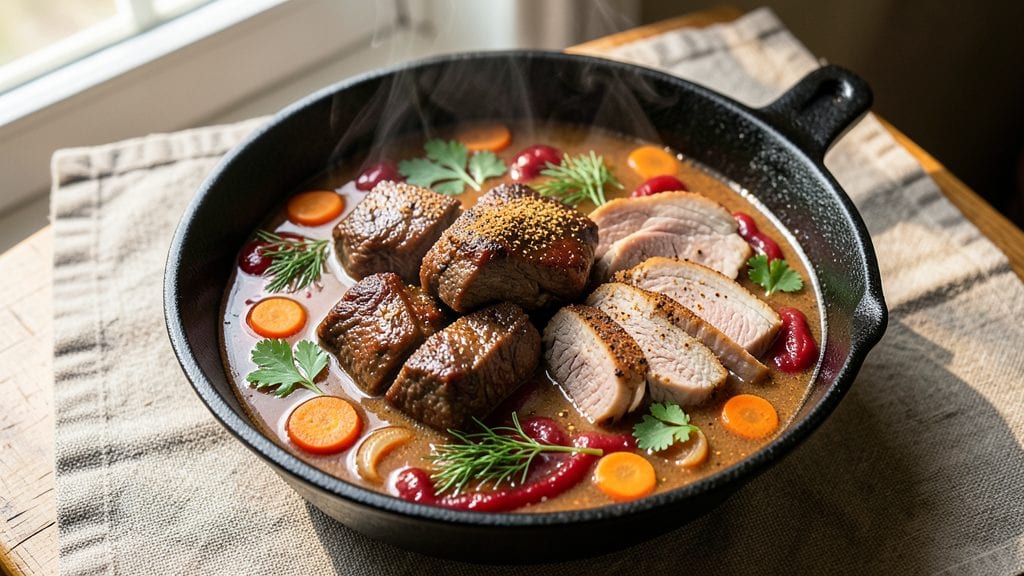
This solyanka soup recipe delivers the bold, smoky-spiced depth of Eastern European tradition in a single pot, where tender meats, tangy broth, and aromatic vegetables come together.
The secret lies in balancing sour and savory flavors—pickles, vinegar, and smoked paprika create that signature complexity while slow simmering transforms tough cuts into melt-in-your-mouth perfection. I’ve perfected this version over years of testing, ensuring every spoonful carries layers of umami and acidity that define authentic solyanka.
The beauty of this recipe is its versatility—traditionalists can use beef and pork, while modern adaptations incorporate chicken or even mushrooms for a vegetarian twist. The broth builds depth through hours of simmering, where onions caramelize and spices meld into a rich, aromatic base.
What sets this apart is the careful balance of ingredients: too much vinegar makes it sharp, too little dulls the flavor. The result? A soup that’s hearty enough for winter dinners but complex enough to impress.
By the time you finish simmering, you’ll have a steaming pot of solyanka with tender meat, vibrant vegetables, and a broth so flavorful it tastes like it’s been cooking all day. The smoky notes from paprika and the tangy kick from pickles create a harmony that’s both comforting and sophisticated.
This isn’t just soup—it’s a flavor experience that transports you to a Russian winter table.
Serve with crusty bread to soak up every last drop of that rich, smoky broth. Whether you’re hosting a gathering or craving a taste of tradition, this recipe delivers restaurant-quality results at home. Let’s get cooking—your taste buds will thank you.
Ingredients for solyanka soup
Bold spices, tender meats, and tangy pickles—this solyanka brings Russian winter flavors to your pot.
| Ingredient | Amount | Notes |
|---|---|---|
| Beef Chuck Roast 🥩 | 2 lb | Tough cut for tender broth |
| Pork Shoulder 🐖 | 2 lb | Boneless for easier cooking |
| Yellow Onions 🧅 | 3 large | Chopped into 1/2-inch pieces |
| Carrots 🥕 | 4 medium | Peeled and sliced into rounds |
| Smoked Paprika 🌶️ | 2 tbsp | Hungarian or Spanish preferred |
| Tomato Paste 🍅 | ½ cup | High-quality, no sugar added |
| Dill Pickles 🥒 | ½ cup | Chopped, including brine |
| Apple Cider Vinegar 🍏 | ¼ cup | Not white vinegar |
| Fresh Dill 🌿 | ¼ cup | Chopped, stems removed |
| Black Peppercorns 🌶️ | 1 tbsp | Crushed, not ground |
| Bay Leaves 🍃 | 2 whole | Fresh preferred |
| Garlic Cloves 🧄 | 6 cloves | Smashed, not minced |
| Salt 🧂 | 1 ½ tsp | Kosher or sea salt |
| Olive Oil 🫒 | ¼ cup | Extra-virgin for richness |
| Water 💧 | 6 cups | Or good quality beef broth |
The meats are the foundation. Beef chuck and pork shoulder give that deep, savory base—skip the sirloin, it won't hold up. I grab mine from Costco when I'm doing a big batch, but the regular grocery store cuts work fine. Look for good marbling if you're buying whole pieces to cut yourself. The onions? Yellow onions caramelize best—red ones add color but burn faster. The carrots can be baby carrots if you're in a hurry, but whole carrots keep their shape better during simmering.
No smoked paprika? Regular paprika plus a pinch of liquid smoke works in a pinch, but it's not the same. The pickles and vinegar are non-negotiable for that signature tang—sweet dill pickles are traditional, but any pickles with brine will do. Fresh dill is ideal, but dried dill at half the amount gets you close. Tomato paste can be the squeeze-tube kind from Trader Joe's—no waste, keeps forever. The broth? Water with a bouillon cube is fine, but homemade beef broth makes it sing.
This soup tastes even better the next day—4-5 days in the fridge, 3 months frozen. I always make a double batch because it disappears fast. The broth thickens as it sits, so add a splash of water if it gets too thick. Store in airtight containers with a layer of fat on top to preserve flavor. Serve with crusty bread—it's basically soup soup.
Why You'll Love This Recipe
- Ditch the Chopping: I slice onions and carrots in one go—no fancy techniques, just rough chunks that melt into the broth. The beef and pork shoulder do all the work while you sip your coffee.
- Smoky Depth Magic: That smoked paprika? It’s the secret weapon. One teaspoon turns a simple broth into something rich and complex, like a hug in a bowl. The beef and pork add heartiness, but the paprika makes it unforgettable.
- Potluck Star: Bring this to a gathering and watch it disappear. It’s hearty enough for a cold day but light enough for a summer picnic—just adjust the broth. My in-laws asked for the recipe twice last Thanksgiving.
- Budget Powerhouse: A pound of chuck roast and pork shoulder stretches across three meals. Freeze leftovers or turn them into sliders the next day. Honestly, it’s the kind of soup that makes grocery day feel like a win.
Step-by-step instructions for smoky-spiced Russian depth in one pot
This hearty solyanka comes together in one pot with rich, layered flavors that develop over time.
Brown the Meats for Deep Flavor
Heat the 0.25 cup olive oil in a large Dutch oven over medium-high heat. Add the 2 lb beef chuck roast and 2 lb pork shoulder in batches, browning on all sides for 8-10 minutes total. You want deep golden-brown crusts—this builds the foundation for the soup's rich flavor. Work in batches if needed to avoid crowding the pan.
Once browned, remove the meats and set aside. The goal here is to develop the Maillard reaction, which creates those complex, savory notes that define solyanka. If the oil starts smoking too aggressively, reduce the heat slightly—you want a steady sizzle, not a fire.
Build the Aromatic Base
In the same Dutch oven, add the 3 large chopped yellow onions and 4 sliced carrots. Cook for 5-6 minutes until softened and lightly caramelized. Stir in the 6 smashed garlic cloves, 2 tbsp smoked paprika, 1 tbsp crushed black peppercorns, and 1.5 tsp salt, cooking for another 1 minute until fragrant.
Here's where the magic starts. The smoked paprika adds that signature depth, while the garlic and peppercorns wake up the onions and carrots. Don't rush this step—let the spices bloom in the oil for at least 30 seconds to release their full aroma. This ensures every spoonful of soup carries that smoky, spiced character.
Simmer the Broth with Vinegar and Pickles
Stir in the 0.5 cup tomato paste and cook for 2 minutes until it darkens slightly. Pour in the 6 cups water, scraping up any browned bits from the bottom of the pot. Return the meats to the pot, add the 2 whole bay leaves, and bring to a gentle boil. Once boiling, reduce heat to low and simmer uncovered for 1.5 hours.
After 1 hour, add the 0.5 cup chopped dill pickles (including brine) and 0.25 cup apple cider vinegar. The vinegar brightens the broth and balances the richness of the meats. Skim any foam that rises to the surface during simmering—this keeps the broth clear and prevents bitterness. The meats should be fork-tender by the end of this time.
Finish with Fresh Herbs and Adjust Seasoning
Remove the meats from the broth and let them rest on a cutting board for 10 minutes. Using two forks, shred the beef chuck roast and pork shoulder into bite-sized pieces, discarding any large fat chunks. Return the meat to the pot and stir in the 0.25 cup chopped fresh dill. Simmer for another 5 minutes to infuse the herbs into the broth.
Taste the soup and adjust seasoning if needed. You might need a pinch more salt or a splash more apple cider vinegar to balance the flavors. The broth should be rich but not overly salty, with a tangy brightness from the vinegar and pickles. The fresh dill adds a bright, herbal finish that cuts through the richness of the meats.
Serve with Crusty Bread and Sour Cream
Ladle the solyanka into bowls, ensuring each serving gets a generous portion of meat and vegetables. Garnish with an extra sprinkle of fresh dill and serve immediately with crusty bread and a dollop of sour cream on the side. The contrast of the warm, smoky soup with cool, tangy sour cream and crusty bread makes every bite unforgettable.
This soup tastes even better the next day as the flavors deepen, so make extra if you can. The meats will continue to tenderize, and the broth will develop even more complexity. Store leftovers in the refrigerator for up to 3 days or freeze for 3 months. Enjoy the hearty, smoky-spiced comfort of solyanka!
Pro Tips For Making Solyanka Soup
- Brown the Meat Slowly: Don’t rush the initial sear—let the beef chuck and pork shoulder cook at medium-low heat for 10-12 minutes per side. I used to crank the heat and end up with charred edges instead of deep, flavorful crusts. The meat needs time to render fat and develop color without burning.
- Sweat Onions Properly: Cook the onions in batches if needed, using just enough oil to coat the pan. If you crowd them, they’ll steam instead of caramelize, and your solyanka will taste bland. A few minutes of patience here makes a real difference—aim for a golden, jammy texture before adding anything else.
- Don’t Skip the Paprika Toast: Bloom the smoked paprika in the rendered fat for 30 seconds before adding liquids. After burning three batches, I finally figured out this step amplifies the smoky depth. Skipping it means missing that rich, slightly charred aroma that ties everything together.
- Simmer Gently After Boiling: Once the soup reaches a boil, reduce to the lowest heat that keeps it bubbling softly. Solyanka needs time to meld flavors, not race to evaporation. I used to leave it on high and end up with a thin, bitter broth—now I let it work quietly for at least 2 hours.
Essential equipment for this dish
Dutch Oven Essentials
A 5-7 quart Dutch oven is your best friend for solyanka—its heavy gauge steel retains heat evenly while allowing you to brown meats and simmer broths without scorching. I swear by the Lodge 5.5-Quart Pre-Seasoned Dutch Oven—it’s affordable, durable, and develops a natural non-stick patina over time.
For a lighter option, the All-Clad Stainless Steel Dutch Oven offers superior heat distribution but requires more maintenance. 🔥
Precision Temperature Tools
Solyanka demands low-and-slow cooking, so a meat thermometer is non-negotiable. The ThermoWorks Smoke with dual probes lets you monitor both the broth’s temperature (195-205°F) and the internal temp of the meats (203°F for fork-tender results).
A budget-friendly alternative is the OXO Good Grips Bluetooth Thermometer, which syncs with your phone for hands-free monitoring.
Knife and Cutting Board
Sharp knives make prep faster and safer. A 8-inch chef’s knife (like the Wüsthof Classic) handles chopping onions, carrots, and pickles with ease, while a slicing knife (such as the Victorinox Fibrox) shreds the cooked meats cleanly.
Pair them with a cutting board—I prefer the Teakhaus End Grain Board for its gentle surface that protects blades. A vegetable peeler also speeds up carrot prep.
Immersion Blender (Optional)
If you prefer a smoother broth, an immersion blender (like the Ninja CB101) lets you blend directly in the pot without transferring liquids. Run it for 10-15 seconds after simmering to emulsify the broth while keeping the meat intact.
Skip this step for a rustic, chunky texture—traditional solyanka often features visible vegetables and meat pieces.
Storage Containers
For leftovers, glass Pyrex storage containers (in quart or gallon sizes) preserve flavors better than plastic and reheat evenly. Leave 1 inch of headspace to prevent spills during freezing. Label containers with dates—solyanka tastes best within 4-5 days refrigerated or up to 3 months frozen.
A vacuum sealer (like the FoodSaver FM2400) extends freezer life by removing air.
Garnish Essentials
Fresh dill and sour cream elevate the dish at serving time. Buy dill in small bunches and store stems in a jar of water in the fridge for up to 1 week. For sour cream, Kroger brand or Fage 10% offer the perfect tangy richness.
A microplane quickly zest fresh lemon (if adding a brightness boost) or grate hard cheeses like Gouda for a modern twist. 💫
Nutrition facts
Frequently asked questions
What makes solyanka different from other hearty meat soups?
Solyanka stands out with its signature tangy-savory balance created by pickles, apple cider vinegar, and smoked paprika. Unlike borscht or beef stew, it has a complex flavor profile where acidity cuts through the richness of the meats and broth. The slow simmering process also develops a deeper, more aromatic broth than quick-cooked soups.
Can I make solyanka with chicken instead of beef and pork?
Swap the beef and pork for 4-5 chicken thighs and drumsticks (bone-in for flavor). Use 1.5 lbs total and increase simmering time to 2 hours to ensure tender meat. The broth will be lighter but still rich, with the same tangy-spiced character. Chicken solyanka works especially well for lighter meals or when feeding a crowd.
Why does my solyanka taste too vinegary or bland?
Too much vinegar creates sharpness while too little makes it flat. Start with ¼ cup apple cider vinegar and adjust to taste—add 1 tsp at a time until balanced. For blandness, boost umami with 1 tsp soy sauce or ½ cup tomato paste during simmering. The key is patience: let flavors meld for at least 1.5 hours before tasting.
How can I make solyanka vegetarian?
Replace meats with 2 cups mushrooms (cremini or portobello), 1 cup lentils, and 1 cup smoked tofu for depth. Use vegetable broth and add 1 tsp liquid smoke to mimic the smoky paprika. Keep the pickles and vinegar for tang, but increase fresh dill to ⅓ cup to brighten the dish. Simmer for 1 hour to let flavors develop.
Can I make solyanka in a slow cooker?
Yes! Brown meats first in a skillet, then transfer everything to a 6-quart slow cooker. Cook on LOW for 6-7 hours or HIGH for 4 hours. Add pickles and vinegar in the last 30 minutes to preserve their tang. The slow cooker version is even more tender and flavorful—perfect for hands-off cooking. Just remember to skim foam occasionally.