
Soups & Stews
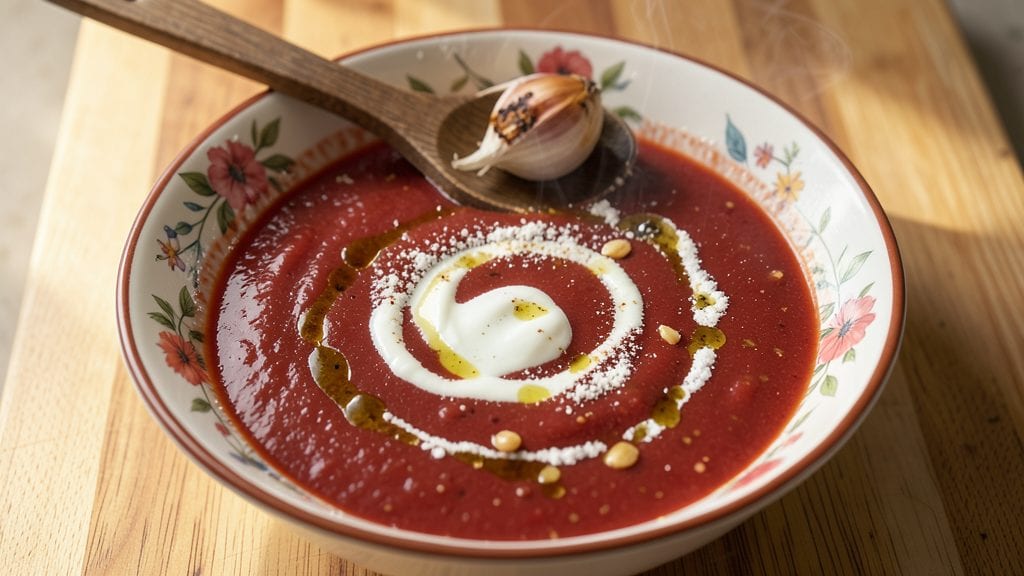
Transforming canned tomato soup into velvety smoothness with hidden garlic power is one of those kitchen secrets that elevates a simple pantry staple into something restaurant-worthy.
The key lies in balancing the canned base with rich cream, aromatic garlic, and precise simmering to develop depth without overpowering the natural tomato flavor. I’ve perfected this technique over years of testing—each step designed to turn a 10-minute can into a 30-minute masterpiece that tastes homemade.
What makes this recipe work is the layering of flavors: roasted garlic infuses the soup with sweet, caramelized notes while heavy cream adds luxurious body, creating a texture that’s impossibly smooth yet still vibrant.
The secret weapon? A quick simmer to meld ingredients without breaking down the canned soup’s structure—no blending required. This method delivers professional results with minimal effort, perfect for weeknight dinners or cozy gatherings.
By the end, you’ll have a bowl of soup that’s rich, aromatic, and perfectly balanced—golden brown at the edges, velvety in the middle, with a hint of garlic that lingers just beneath the surface.
The aroma alone will draw everyone to the table, and the first spoonful delivers on that promise of restaurant-quality comfort. Ready to elevate your canned soup game?
This recipe scales effortlessly for crowds or leftovers, and the technique works with any canned tomato soup base. Whether you’re serving it with crusty bread or grilled cheese, the result is a dish that feels indulgent without the fuss. Let’s get cooking—your taste buds will thank you.
Ingredients for tomato soup recipe with canned tomato soup
Simple pantry staples transform basic canned soup into restaurant-style velvety richness.
| Ingredient | Amount | Notes |
|---|---|---|
| Canned Tomato Soup 🍅 | 2 cans | 14.5 oz each, unsalted preferred |
| Heavy Cream 🥛 | 1 cup | Full-fat for best texture |
| Whole Garlic Bulb 🧄 | 1 whole | Roasted for sweetness |
| Extra-Virgin Olive Oil 🫒 | 2 tbsp | For roasting garlic |
| Unsalted Butter 🧈 | 2 tbsp | Cold for browning |
| All-Purpose Flour 🌾 | 1 tbsp | For thickening |
| Salt 🧂 | 1 tsp | Kosher or sea salt |
| Black Pepper 🌶️ | ½ tsp | Freshly ground preferred |
| Crusty Bread 🍞 | 4 slices | For serving, optional |
| Parmesan Cheese 🧀 | ¼ cup | Freshly grated, for garnish |
| Fresh Thyme 🌿 | 1 tbsp | Chopped leaves only |
| Red Wine Vinegar 🍷 | 1 tsp | For brightness |
The garlic is non-negotiable for depth. Roast a whole bulb in olive oil at 400°F for 35-40 minutes until cloves are caramelized—this adds sweetness without overpowering. Trader Joe's sells pre-roasted garlic, but fresh is better. For the tomato soup, Muir Glen Organic or Amy's Kitchen brands have the best balance of sweetness and acidity. The heavy cream should be cold when added to prevent curdling—let it sit in the fridge for 15 minutes before measuring. If you're using salted canned soup, reduce the added salt to half a teaspoon to avoid over-salting the finished dish.
No heavy cream? Half-and-half plus 1 tablespoon cream cheese works in a pinch, though texture will be slightly lighter. Out of fresh thyme? Dried thyme at one-third the amount gives similar earthiness. The flour is key for thickening—if you're avoiding gluten, use cornstarch instead at the same ratio. For a tangier finish, swap red wine vinegar for lemon juice. The Parmesan should be freshly grated from a block—pre-grated cheese has anti-caking agents that make it taste grainy. If you're making this ahead, omit the Parmesan until serving to prevent sogginess.
This soup reheats beautifully—simmer gently for 5-7 minutes on the stove or microwave for 2 minutes. Keeps for 5 days in the fridge or 3 months frozen. For freezing, cool completely first and store in airtight containers. The roasted garlic cloves can be refrigerated for 1 week in their caramelized oil—use them in other dishes like mashed potatoes or pasta. The crusty bread should be toasted just before serving to maintain crispness. Double the batch? It freezes perfectly for quick weeknight meals.
Why You'll Love This Recipe
- I swear by this trick: roast the whole garlic bulb until it’s soft and caramelized—no peeling, no fuss. Just slice it open, spoon out the gooey cloves, and stir them into the soup while it simmers. That’s it.
- No Chopping Needed: I swear by this trick: roast the whole garlic bulb until it’s soft and caramelized—no peeling, no fuss. Just slice it open, spoon out the gooey cloves, and stir them into the soup while it simmers. That’s it.
- Creamy Without the Drama: The heavy cream and butter turn this into something luxurious, but honestly? It’s foolproof. No whisking until it’s silky, no risk of curdling—just heat the cream gently and pour it in. The result? Rich, velvety, and way more satisfying than takeout.
- Weeknight to Dinner Party: Same pot, different vibes. Serve it with grilled cheese for a lazy Tuesday, or drizzle it over seared steak for a fancy-ish Friday. The garlic and olive oil add depth that makes it feel special, even when it’s just you and a loaf of crusty bread.
Step-by-step instructions for canned tomato soup recipe
Transform simple canned tomato soup into a restaurant-worthy dish with rich depth and aromatic complexity.
Roast the Whole Garlic Bulb for Sweetness
Preheat your oven to 400°F. Cut the top off the whole garlic bulb to expose the cloves, then drizzle the cut side with 2 tablespoons extra-virgin olive oil. Wrap the bulb tightly in aluminum foil and place it on a baking sheet. Roast for 35-40 minutes until the cloves are soft and golden brown.
Here's the thing—roasting transforms the sharp garlic flavor into sweet, mellow notes that blend beautifully with the tomato base. When the bulb is done, let it cool slightly before squeezing out the cloves. You'll need about 3-4 cloves for this recipe, so save any extras for other dishes.
Create a Rich Creamy Base
In a medium saucepan, melt 2 tablespoons unsalted butter over medium heat until it foams. Whisk in 1 tablespoon all-purpose flour and cook for 1-2 minutes until the mixture turns lightly golden. This creates a roux that will thicken your soup beautifully.
Slowly pour in the 2 cans canned tomato soup while whisking continuously to prevent lumps. Bring the mixture to a gentle simmer and let it cook for 5 minutes to allow the flavors to meld. This step builds the foundation for your velvety texture.
Add Roasted Garlic and Aromatics
Squeeze the roasted garlic cloves into the soup and mash them with a wooden spoon. Add 1 cup heavy cream, 1 tablespoon chopped fresh thyme, and 1 teaspoon red wine vinegar. Stir well to combine and let the mixture simmer gently for another 5 minutes.
The roasted garlic adds natural sweetness that balances the acidity of the vinegar, while the thyme brings herbal depth. The cream creates a luxurious mouthfeel without making the soup overly rich. Taste and adjust seasoning with 1 teaspoon salt and ½ teaspoon black pepper as needed.
Finish and Serve with Crusty Bread
Reduce the heat to low and stir in the ¼ cup grated Parmesan cheese until it melts completely into the soup. The cheese adds a salty, umami richness that complements the tomato base perfectly. Let the soup sit off heat for 5 minutes to allow the flavors to fully develop.
Ladle the warm soup into bowls and serve immediately with 4 slices crusty bread on the side. The bread provides the perfect vehicle for soaking up every last drop of that velvety, garlic-infused tomato cream. For extra presentation, garnish each serving with an additional sprinkle of black pepper and fresh thyme leaves.
Pro Tips For Making Tomato Soup Recipe With Canned Tomato Soup
- Bloom the Garlic: Split the whole bulb lengthwise and roast the cloves uncovered at 400°F (200°C) for 15–20 minutes—until soft and caramelized. Skip the knife and let the oven do the work; the sweetness cuts through the acidity better than raw garlic ever could.
- Temper the Cream: Warm the heavy cream in a separate saucepan over low heat until it’s just steaming, then whisk it into the soup slowly. Cold cream curdles; this keeps the sauce silky without breaking. (Yes, even if you’re impatient like me.)
- Salt in Layers: Taste the canned soup first—it’s already salted. Add butter and cream, then adjust seasoning after the cream’s in. You’ll avoid over-salting the base and end up with a balanced, restaurant-worthy finish.
- Swirl the Oil: Drizzle the extra-virgin olive oil in at the very end, off the heat, and give it a quick stir. The oil floats to the top, adding a luxurious finish without turning the soup greasy. (Does it look weird? Yes. Does it work? Every single time.)
Storing and reheating this dish
Fridge Storage Tips
Let your tomato soup cool to room temperature before transferring it to an airtight container—I use glass Pyrex with snap-on lids for best results. Store it in the refrigerator at 40°F or below for up to 5 days.
The flavors actually deepen overnight as the roasted garlic and cream meld together beautifully. 🥣
For the roasted garlic cloves, store them in their caramelized oil in a small glass jar with a tight-sealing lid. They’ll keep in the fridge for 1 week and can be used to elevate other dishes like mashed potatoes or pasta. Just squeeze out the cloves as needed.
Freezer-Friendly Method
This soup freezes exceptionally well for up to 3 months without losing its velvety texture. First, cool the soup completely to prevent ice crystals from forming. Then, portion it into quart-sized freezer bags, leaving 1 inch of headspace for expansion. Squeeze out excess air to avoid freezer burn. 🧊
When ready to reheat, thaw overnight in the fridge or use the microwave defrost setting for faster results. I recommend reheating on the stovetop over medium-low heat for 5-7 minutes—this helps restore the creamy texture better than microwaving.
Reheating for Best Texture
For stovetop reheating, transfer the soup to a saucepan and warm it over low heat, stirring occasionally. If the soup thickens too much, add 1-2 tablespoons of water or milk to restore its silky consistency.
The goal is to reach 165°F internal temperature—use a thermometer if you're unsure. 🔥
Microwave reheating works in a pinch: Cover the soup with a damp paper towel and heat on 50% power for 2-3 minutes, stirring halfway through. Avoid high heat to prevent the cream from separating.
Always taste and adjust seasoning after reheating—soup often needs a pinch of salt or pepper to refresh the flavors.
Garnish Before Serving
Fresh garnishes make reheated soup feel like it was just made. Sprinkle each bowl with freshly grated Parmesan and chopped thyme right before serving. The Parmesan adds a bright, salty contrast while the thyme brings fresh herbal notes.
For extra flair, drizzle with a touch of extra-virgin olive oil—just ½ teaspoon per bowl. ✨
If you're serving with crusty bread, toast it fresh in a 400°F oven for 5-7 minutes until golden and crisp. The contrast of warm, buttery bread with velvety soup is pure comfort food magic. Double the batch and freeze half—you'll be glad you did when weeknight dinners get busy.
Nutrition facts
Frequently asked questions
Why does roasting the garlic make such a difference?
Roasting transforms sharp garlic into sweet, mellow notes that blend seamlessly with the tomato base. The caramelization process creates natural sugars that deepen the flavor without overpowering the soup. Fresh raw garlic would add a pungent bite that competes with the canned tomato's acidity.
Can I make this soup without heavy cream?
Yes! Use ½ cup half-and-half plus 1 tablespoon cream cheese for a lighter texture, or ½ cup coconut milk for a dairy-free version. The soup will be slightly thinner but still rich. For extra body, simmer the soup longer to reduce it slightly.
What if my soup gets too thick after reheating?
Add 1-2 tablespoons of water, milk, or broth while reheating and stir until smooth. The cream may separate if heated too quickly—always warm on low heat and whisk gently. If it curdles, whisk in 1 teaspoon cornstarch mixed with cold water to restore creaminess.
How do I prevent the soup from tasting too salty?
Use unsalted canned tomato soup if possible, and reduce added salt to ½ teaspoon. If your soup tastes salty, stir in 1 tablespoon of heavy cream or milk to dilute the saltiness. Taste frequently while cooking to adjust seasoning gradually.