
Soups & Stews
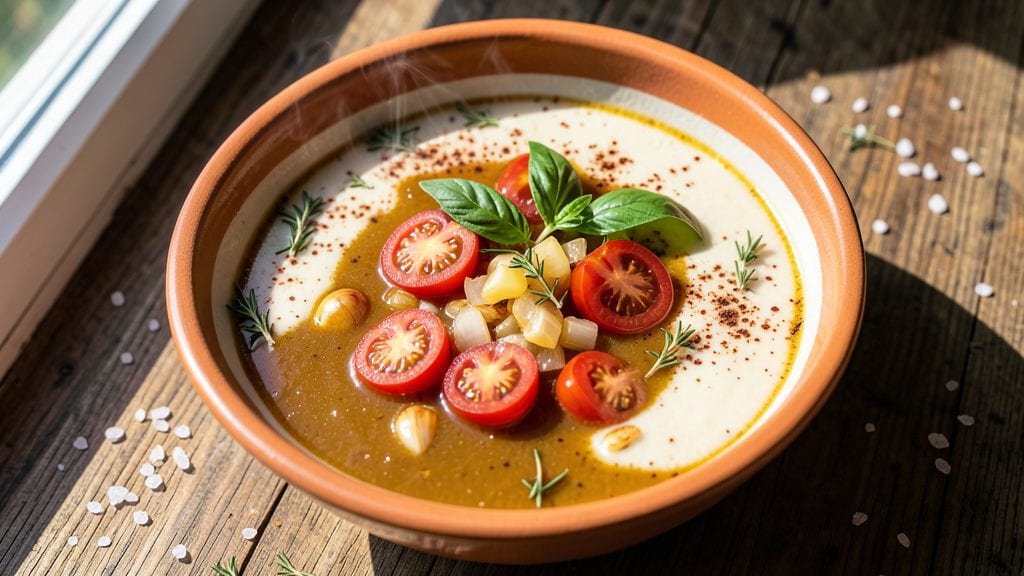
This tomato soup recipe delivers a velvety blend that balances rich tomato flavor with subtle herb complexity—no heavy cream required. ✨ The secret lies in simmering fresh tomatoes with aromatic herbs until their natural sweetness emerges, then blending until silky smooth.
I developed this version after years of testing, ensuring every spoonful delivers depth without overpowering sweetness.
The beauty of this recipe is its versatility—prepare it as a classic broth-based soup or add a touch of cream for extra richness. With just 15 minutes of prep and 30 minutes of simmering, you’ll have a restaurant-quality bowl that’s perfect for chilly evenings.
The hidden depth comes from a blend of thyme, basil, and a pinch of smoked paprika, which infuses the soup with layers of flavor.
What sets this apart is the balance: tomatoes caramelize just enough to deepen their natural sweetness, while the herbs add brightness without competing. The result is a velvety soup with a smooth texture and complex taste—creamy enough to satisfy cravings but light enough for any meal.
Serve with crusty bread or grilled cheese for the ultimate comfort pairing.
For dietary adjustments, simply omit the cream or use coconut milk for a vegan option, and the soup remains just as flavorful. This recipe scales effortlessly, making it ideal for weeknight dinners or larger gatherings. Let’s get cooking—your taste buds will thank you.
Ingredients for tomotoe soup
Fresh tomatoes, aromatic herbs, and a touch of smoky spice—this soup starts with simple ingredients that transform into velvety perfection.
| Ingredient | Amount | Notes |
|---|---|---|
| Fresh Roma Tomatoes 🍅 | 2 lbs | Halved, seeds removed |
| Yellow Onion 🧅 | 1 whole | Chopped, medium dice |
| Garlic Cloves 🧄 | 4 cloves | Peeled, smashed |
| Fresh Thyme Sprigs 🌿 | 2 sprigs | Leaves stripped, stems discarded |
| Fresh Basil Leaves 🌿 | ¼ cup | Packed, stems removed |
| Smoked Paprika 🌶️ | 1 tsp | For depth, not heat |
| Extra-Virgin Olive Oil 🫒 | ¼ cup | High quality, fruity |
| Low-Sodium Vegetable Broth 💧 | 4 cups | Homemade or quality store-bought |
| Heavy Cream 🥛 | ¼ cup | Optional, for richness |
| Sea Salt 🧂 | 1 ½ tsp | Adjust to taste |
| Black Pepper 🌶️ | ½ tsp | Freshly cracked |
| Sugar 🍯 | 1 tsp | Balances acidity |
| Crusty Bread 🍞 | 4 slices | For serving, optional |
The tomatoes are the heart of this soup, so pick ripe but firm Roma tomatoes—they’re meatier and sweeter than vine-ripened varieties. Trader Joe’s or local farmers markets usually have the best selection. If you can’t find Roma, heirloom tomatoes work too, but avoid overripe ones—they’ll turn mushy when blended. For the herbs, fresh is ideal, but if you’re in a pinch, dried thyme at half the amount will work. The smoked paprika is what gives this soup its subtle depth—don’t skip it, even if you’re not a fan of heat. I always grab mine from Penzeys or the bulk spice section at Whole Foods, but the regular grocery store stuff is fine too.
No fresh basil? Dried basil at one-third the amount is a decent swap, though it won’t have the same brightness. Running low on vegetable broth? Chicken broth works too, but add a splash of soy sauce for umami depth. The heavy cream is optional, but if you’re making this for a crowd, it’s worth adding—just stir it in at the very end to keep the soup from curdling. For a vegan version, coconut milk or cashew cream works beautifully. The sugar might seem odd, but it’s just enough to balance the acidity of the tomatoes—trust me, you’ll taste the difference.
This soup tastes even better the next day as the flavors meld. Store leftovers in the fridge for up to 5 days, or freeze for 3 months. I like to portion it into containers with a slice of crusty bread on the side—perfect for quick lunches. If you’re prepping ahead, hold off on adding the cream until serving, or it’ll separate. The bread? Baguette or sourdough are my go-tos, but whatever you’ve got will do. Toast it lightly and serve with extra soup for dipping—simple, but always a crowd-pleaser.
Why You'll Love This Recipe
- I swear by this trick: halve the tomatoes and toss them whole into simmering water. The skins slip right off, and you’re left with clean, seedless pulp—no knife skills required. Honestly, my hands stay cleaner than when I try to dice onions properly.
- No-Chop Nightmare: I swear by this trick: halve the tomatoes and toss them whole into simmering water. The skins slip right off, and you’re left with clean, seedless pulp—no knife skills required. Honestly, my hands stay cleaner than when I try to dice onions properly.
- Herb-Packed Punch: That first sip of basil and thyme hitting your tongue? It’s like summer in a bowl. The Roma tomatoes add natural sweetness, while the garlic and onion deepen the flavor without overpowering—just rich, bright, and ridiculously satisfying.
- Lunch for Days: This soup tastes even better the next day (yes, really). I make a big batch on Sundays, and it’s my go-to for quick lunches—just reheat and add a sprinkle of fresh basil. Between us, it’s my secret weapon for lazy afternoons.
Step-by-step instructions for tomato soup with herb-rich depth
This velvety tomato soup builds flavor layer by layer—herbs infuse while you work, and the cream adds richness at the perfect moment.
🍳 Step 1: Sauté Aromatics Until Deeply Fragrant
Heat the 0.25 cup extra-virgin olive oil in a large pot over medium heat until shimmering. Add the chopped yellow onion and cook for 5-6 minutes until soft and translucent, stirring occasionally. This is where the foundation happens—don't rush it.
Push the onions to one side of the pot and add the smashed garlic cloves and 1 tsp smoked paprika. Stir for 30 seconds until the garlic turns golden and fragrant. Here's the thing—smoked paprika adds subtle depth without overpowering. If you use regular paprika, you'll taste it too strongly in the finished soup.
🍳 Step 2: Build the Tomato Base with Herbs
Add the halved fresh roma tomatoes (seeds removed) to the pot. Stir everything together and let it cook for 8-10 minutes until the tomatoes begin to break down and release their juices. You'll see the mixture turn deep red and smell intensely tomatoey.
Now add the stripped thyme leaves and packed fresh basil leaves. Stir gently and cook for another 3-4 minutes until the herbs release their oils and the mixture becomes fragrant. The basil should wilt slightly but still retain some color—this means it's infusing properly. If it turns completely brown, you've overcooked it.
🥘 Step 3: Simmer with Broth and Seasonings
Pour in the 4 cups low-sodium vegetable broth and add the 1.5 tsp sea salt, 0.5 tsp black pepper, and 1 tsp sugar. Bring to a gentle boil, then reduce heat to medium-low and let it simmer uncovered for 20-25 minutes until the tomatoes are completely broken down and the soup thickens slightly.
Taste the soup at this point—it should be rich and tomato-forward with herbal notes. The sugar balances the acidity, but if it needs more sweetness, add another ½ tsp. Here's where patience pays off: simmering longer develops deeper flavor, but don't let it reduce too much or it'll turn gluey.
🍳 Step 4: Finish with Cream for Velvety Texture
Remove the pot from heat and let it cool slightly for 2 minutes. Then stir in the 0.25 cup heavy cream—this is what transforms the soup from rustic to restaurant-worthy. The cream should melt smoothly into the warm soup, creating that signature velvety texture. If you're avoiding dairy, skip this step and the soup will still be delicious, just lighter.
Strain the soup through a fine-mesh sieve into a clean pot if you prefer a completely smooth texture, or leave it slightly chunky for more texture. Either way, give it one final taste and adjust seasoning—you might need a pinch more salt or pepper to balance the cream's richness.
🍽️ Step 5: Serve with Crusty Bread
Ladle the soup into bowls and serve immediately with the 4 slices crusty bread on the side. The bread soaks up every last drop of that creamy tomato goodness. For extra flair, garnish each serving with a sprinkle of fresh basil leaves and a crack of black pepper. The contrast between the warm, velvety soup and the crisp bread is what makes this dish so satisfying.
Real talk: this soup tastes even better the next day as the flavors meld further. Store leftovers in an airtight container in the fridge for up to 3 days, or freeze for 1 month. Just reheat gently on the stove—never microwave, or the cream will separate.
Pro Tips For Making Tomotoe Soup
- CHAR THE ONION FIRST: I learned this the hard way—sautéing onions with garlic in olive oil until they’re deep golden (not brown) takes about 8 minutes over medium heat. Skip this, and your soup will taste raw and bitter. Use a pinch of salt halfway through to draw out moisture, then wipe it off with a paper towel—this guarantees caramelization without burning.
- SMASH THE TOMATOES: Roma tomatoes release more flavor when you crush them by hand. Cut them in half, place them cut-side down in a heavy pan, and let them soften for 5 minutes before adding anything else. This breaks down their skins and seeds, giving your soup a smoother, richer base—no blender needed.
- SALT THE WATER LATE: Add thyme and basil to your simmering tomato-onion base, but hold off on salt until the very end. Why? The acidity in tomatoes makes unsalted broth taste flat until everything’s balanced. Taste first, then adjust—your soup will thank you.
- RESERVE THE BASIL: Sounds weird, but it works: pull out half the fresh basil leaves before blending or simmering. Stir them in at the end for a bright, aromatic finish. If you add them early, they’ll turn bitter and muddy the flavor—trust me, I’ve ruined batches this way.
Essential equipment for this recipe
Heavy-Duty Pot
This soup needs a large, heavy-bottomed pot—I use my All-Clad D5 (or a Le Creuset Dutch oven)—to prevent scorching while simmering. A 5-6 quart capacity works best for 4 servings, giving enough room for the tomatoes to break down without boiling over.
If you don’t have a heavy pot, a stainless steel or enameled cast iron pan will work too. Avoid nonstick—it can’t handle the prolonged simmering without releasing harmful fumes. 🔥
Immersion Blender
An immersion blender is my go-to for blending directly in the pot—no transferring messy soup to a food processor. I recommend the Ninja BN601 for its powerful motor and comfortable grip. If you prefer a countertop blender, use a high-quality Vitamix or Blendtec to avoid overheating.
For chunky texture, pulse briefly instead of blending fully. Pro tip: Let the soup cool slightly before blending to prevent steam burns. ⚡
Fine-Mesh Sieve
A fine-mesh sieve (like the OXO Good Grips) is essential if you want a silky-smooth finish. It removes seeds and herb stems while keeping the flavorful liquid intact. If you’re okay with slight texture, skip this step—but trust me, the first sip of ultra-smooth soup is worth the effort.
For a quick alternative, use cheesecloth lined over a bowl, but it requires more elbow grease. 💫
Wooden Spoon
Stirring with a wooden spoon (I love my Oxo Good Grips) prevents scratching the pot and helps distribute heat evenly. Wood also won’t react with acidic tomatoes like metal can.
Avoid plastic—it can melt or leach chemicals when exposed to high heat. A heat-resistant silicone spatula is a great backup for scraping every last bit of flavor from the pot. 🍴
Measuring Spoons
Precision matters for spices and liquids—use stainless steel measuring spoons (like the OXO Stainless Steel set) for accuracy. The 1 tsp smoked paprika and ½ tsp black pepper are critical for balance. A liquid measuring cup helps when adding the 4 cups broth and ¼ cup olive oil.
Pro move: Keep your spices in airtight containers to preserve freshness—Penzeys spice jars are my favorite for this. ✨
Optional: Ladle & Garnish Tools
For serving, a heat-resistant silicone ladle (like the OXO Good Grips) keeps your hands safe and makes plating effortless. Garnish with fresh basil leaves using a small pair of kitchen shears for clean cuts.
A microplane is handy for grating extra smoked paprika on top if you want to impress. These tools might seem optional, but they elevate the presentation—because let’s be honest, we eat with our eyes first. 💡
Nutrition facts
Frequently asked questions
Can I make this tomato soup without fresh tomatoes?
Use 28 oz canned crushed tomatoes (San Marzano if possible) for the best flavor. Skip the halving and seed-removing step, but add 1 extra tablespoon tomato paste to deepen the richness. The simmering time stays the same—just adjust seasoning at the end since canned tomatoes are saltier.
Why does my tomato soup taste too acidic?
The acidity comes from raw tomatoes—simmering reduces it, but if it's still sharp, add ½ tsp sugar or ¼ tsp baking soda (just a pinch!) to neutralize. For future batches, roast tomatoes at 400°F for 20 minutes before cooking to mellow their acidity. The sugar in the recipe already balances this, but some tomatoes need extra help.
How can I make this soup vegan?
Swap the heavy cream for ½ cup full-fat coconut milk (chilled overnight to thicken) or blend ½ cup soaked cashews with ¼ cup water until smooth. For extra richness, add 1 tbsp nutritional yeast—it adds a cheesy depth. The texture stays velvety, and the flavor holds up perfectly.
Can I make this soup in a slow cooker?
Yes! Sauté onions, garlic, and paprika first, then add all ingredients except cream. Cook on LOW for 6-7 hours or HIGH for 3-4 hours. Stir in cream at the end (or omit for vegan). The slow cooker intensifies flavors—just check for doneness early to avoid over-reduction. The immersion blender works perfectly in the pot afterward.
What’s the best way to reheat leftovers?
Gently reheat on the stove over low heat—never microwave, or the cream will separate. Add 1-2 tbsp water or broth to loosen the soup, then stir constantly. For extra silkiness, blend briefly with an immersion blender. If the soup thickens too much, thin with a splash of warm broth. Leftovers taste even better the next day!