
Soups & Stews
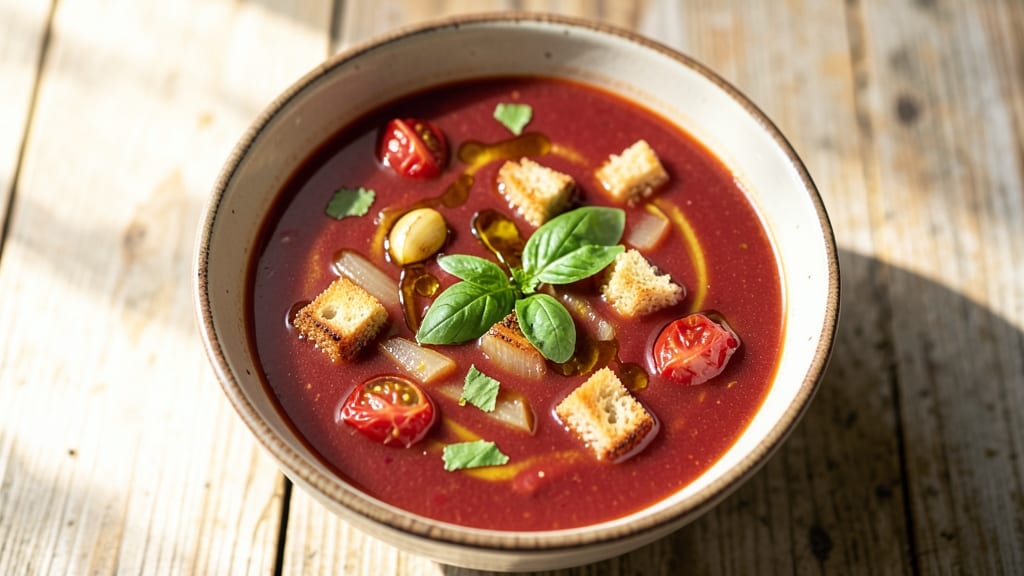
This traditional tomato soup recipe brings the rustic Italian flavors you crave straight to your kitchen—rich, velvety, and perfected with fresh basil. The secret lies in slow-sautéed onions and garlic, which form the aromatic base before simmering with ripe tomatoes until deeply flavorful.
My version keeps the classic techniques while adding a bright basil twist that elevates every spoonful.
What makes this recipe truly special is its balance of simplicity and depth—just six core ingredients transform into a soup that tastes like a trip to a Tuscan countryside.
The key is letting the tomatoes simmer until their natural sweetness develops, while the basil adds that signature freshness at the end. It’s the kind of soup that warms both body and soul, especially on chilly evenings.
By the time you’re done, you’ll have a velvety, golden-hued soup with just the right amount of acidity from the tomatoes and brightness from the basil. The texture is silky yet substantial, with no need for heavy cream—just pure, traditional Italian flavor.
Serve it with crusty bread for dipping, and you’ve got a meal that feels like a restaurant-worthy experience.
This recipe adapts beautifully to modern kitchens while staying true to its roots. Whether you’re making it for a cozy family dinner or a dinner party, the method is foolproof and delivers restaurant-quality results every time. Let’s get started on creating your perfect bowl of tomato soup.
Ingredients for traditional tomato soup
Six core ingredients transform into rustic Italian tomato soup with velvety texture and bright basil notes.
| Ingredient | Amount | Notes |
|---|---|---|
| Yellow Onions 🧅 | 2 whole | Medium-sized, thinly sliced |
| Garlic Cloves 🧄 | 4 cloves | Freshly minced for aroma |
| Extra-Virgin Olive Oil 🫒 | ½ cup | High-quality, fruity variety |
| Ripe Tomatoes 🍅 | 3 lb | San Marzano if available |
| Fresh Basil Leaves 🌿 | ½ cup | Packed, torn by hand |
| Vegetable Broth 💧 | 4 cups | Low-sodium preferred |
| Salt 🧂 | 1 ½ tsp | Kosher or sea salt |
| Black Pepper 🌶️ | ½ tsp | Freshly ground |
| Red Wine Vinegar 🍷 | 1 tbsp | For brightness |
| Sugar 🍚 | 1 tsp | Balances acidity |
| Crusty Bread 🍞 | 6 slices | For serving |
The tomatoes are everything here. San Marzano from Italy has that perfect balance of sweetness and acidity, but any ripe, vine-ripened tomatoes work—just avoid those mealy grocery store ones. I grab mine at Whole Foods or the farmers market when they're in season, but the canned variety (like Mutti) is a solid backup. The onions and garlic? They need time to caramelize—don't rush this step. Yellow onions are classic, but red onions add a subtle sweetness if you're feeling adventurous. Fresh basil is non-negotiable for that signature Italian flavor, so grab a big bunch and use half for the soup, half for garnish.
No fresh basil? Dried oregano at half the amount works in a pinch, but it won't have that same bright punch. Short on tomatoes? Tomato paste plus extra broth gets you close—just add it at the end to avoid thickening too much. The red wine vinegar might seem like overkill, but trust me on this: it cuts through the richness and makes the whole soup sing. Want to make it vegan? Skip the crusty bread with butter and serve with toasted baguette slices. The sugar might seem odd, but it balances the acidity beautifully—don't skip it if your tomatoes are particularly tart.
This soup tastes even better the next day as the flavors meld together. Store it in an airtight container in the fridge for up to 5 days. For a quick lunch, reheat portions in a saucepan over medium heat, stirring occasionally. Freezes beautifully too—just thaw overnight in the fridge before reheating. I always make a double batch because it disappears faster than you'd think. The crusty bread? Toast it fresh before serving—it makes all the difference.
Why You'll Love This Recipe
- Pantry-Friendly Staples: I swear by this recipe because it uses things I always have—onions, garlic, olive oil—and turns them into something magical. No fancy shopping lists, just the basics that somehow taste like a restaurant dish.
- Garlic-Basil Magic: That slow-simmered garlic and fresh basil at the end? It’s the secret weapon. The basil brightens the whole bowl, and the garlic? Oh, it’s just caramelized enough to make you want seconds (or thirds).
- Weeknight & Potlucks: Make a double batch on Sunday—it reheats beautifully for quick lunches all week. Or bring it to a gathering; it’s the one dish that always gets emptied first, no matter who’s there.
- Budget Meal, Big Payoff: Ripe tomatoes at the store? Use them all. A single jar of basil in the freezer stretches this recipe for months. It’s cheap to make but feels like a treat—honestly, my wallet thanks me every time.
Step-by-step instructions for rustic Italian tomato soup
This classic Italian tomato soup delivers deep, rustic flavor with a bright basil finish—just like Nonna used to make.
🍳 Step 1: Sauté the Aromatics Until Golden
Heat the 0.5 cup extra-virgin olive oil in a large Dutch oven over medium heat. Add the 2 whole yellow onions, sliced into thin half-moons, and cook for 8-10 minutes until they soften and turn a beautiful golden color. You'll know they're ready when they smell sweet and the edges begin to caramelize slightly.
Add the 4 cloves garlic cloves, freshly minced, and cook for just 30 seconds—garlic burns quickly, so keep an eye on it. The garlic should smell fragrant but not bitter. This aromatic base forms the flavor foundation for the entire soup, so don't rush this step. If the onions start to brown too quickly, reduce the heat slightly to medium-low and let them cook gently.
🍳 Step 2: Build the Tomato Base
Add the 3 lb ripe tomatoes, roughly chopped if they're large, to the Dutch oven. If using canned tomatoes, crush them by hand with your fingers for a rustic texture. Stir everything together and bring the mixture to a gentle simmer over medium heat. Let it cook uncovered for 15-20 minutes, stirring occasionally, until the tomatoes break down and the mixture thickens slightly.
Here's where the magic happens: the tomatoes should reduce enough to coat the back of a spoon but still maintain a velvety texture. If the mixture looks too thick, add ¼ cup water or vegetable broth to loosen it. The key is balancing depth of flavor with a smooth, saucy consistency—this is what makes traditional tomato soup so satisfying.
🥘 Step 3: Season and Simmer the Soup
Stir in the 4 cups vegetable broth, 1.5 tsp salt, 0.5 tsp black pepper, 1 tbsp red wine vinegar, and 1 tsp sugar. The vinegar brightens the tomatoes while the sugar just slightly balances their natural acidity. Bring the soup back to a gentle simmer and let it cook uncovered for 20-25 minutes, stirring occasionally. The soup should thicken gradually as the flavors meld together.
Taste the soup and adjust the seasoning if needed—traditional Italian tomato soup should be rich but not overly salty, with a perfect balance of sweetness and acidity. If it needs more depth, a pinch of salt or a splash of vinegar can help. The soup is ready when it's smooth, flavorful, and has a beautiful deep red color with no raw tomato chunks remaining.
👨🍳 Step 4: Finish with Fresh Basil
Remove the soup from heat and stir in the 0.5 cup fresh basil leaves, torn by hand. Let the basil steep in the warm soup for 5 minutes—this allows the aromatic oils to infuse the broth without overpowering it. The basil should brighten the soup with its fresh, herbal notes while keeping the dish true to its rustic roots.
For a silky texture, use an immersion blender to puree the soup until smooth. If you prefer a chunkier texture, simply stir well and leave some tomato pieces intact. The choice is yours, but traditional Italian tomato soup often has a velvety consistency. Taste again and adjust seasoning if needed—this is your final chance to perfect the balance of flavors.
🍽️ Step 5: Serve with Crusty Bread
Ladle the warm tomato soup into bowls and serve immediately with the 6 slices crusty bread. The bread should be fresh from the oven—its crispy crust contrasts beautifully with the smooth, warm soup. For extra rustic appeal, drizzle a little more extra-virgin olive oil on top or sprinkle with freshly cracked black pepper.
This soup tastes best when served right away, while the basil is still fragrant and the bread is at its crispiest. The combination of the rich tomato base, bright basil, and crusty bread creates a truly comforting, traditional Italian meal that's perfect for any occasion. Enjoy it as a light lunch or a hearty starter for dinner—just like Nonna would have made it.
Pro Tips For Making Traditional Tomato Soup
- Sweat the Onions Low: I used to rush this step and end up with bitter onions—don’t. Keep the heat at a steady simmer (not sizzling) for 8-10 minutes until they’re translucent and just starting to caramelize. That’s when their sweetness comes out, and your soup won’t taste like raw onion punch.
- Smash the Tomatoes: Skip the blender if you’re short on time—just grab a ripe tomato, tear off a chunk, and smash it against the side of your pot with a wooden spoon. You’ll still get that chunky texture and natural juices released, plus you avoid the cleanup. (Yes, it looks messy, but it works.)
- Salt the Garlic: Toss your minced garlic into the pot with a pinch of salt before cooking. It keeps the cloves from burning and sticks them to the onions better—no more floating garlic bits that taste like they’ve been sitting in olive oil for days.
- Finish with Whole Basil: Tear the basil leaves (don’t chop) and add them at the very end, just before serving. They’ll wilt slightly but stay vibrant, and you’ll get that fresh, bright flavor without the bitterness that comes from overcooking. (Trust me, I’ve burned basil leaves—it’s not pretty.)
Storing and reheating this dish
Refrigerator Storage
Let your tomato soup cool to room temperature (about 30-45 minutes) before transferring it to an airtight container. I use glass Pyrex containers with tight-sealing lids to preserve flavor and texture.
Store in the refrigerator at 40°F or below for up to 5 days. The flavors actually deepen overnight as the basil oils infuse further—this is when the soup becomes truly magical. 💫
Freezer Prep Tips
For longer storage, portion the soup into freezer-safe containers or heavy-duty freezer bags, leaving 1-inch headspace for expansion. I recommend quart-sized containers for easy single-serving portions. Seal tightly to prevent freezer burn, which can dull the vibrant tomato flavor.
Label with the date—this soup freezes beautifully for up to 3 months while maintaining its velvety texture. 🧊
Stovetop Reheating
My preferred method is reheating on the stovetop to maintain that restaurant-quality consistency. Transfer the desired portion to a saucepan and heat over medium-low heat for 8-10 minutes, stirring occasionally. Add 1-2 tablespoons of water or broth if the soup appears too thick.
Taste and adjust seasoning—it often needs a pinch more salt after reheating. The gentle heat preserves the basil's freshness and prevents the soup from becoming gluey. 🔥
Microwave Revival
For quick meals, transfer a portion to a microwave-safe bowl and cover loosely with a microwave-safe lid or damp paper towel. Heat on medium power (50%) for 2-3 minutes, stirring halfway through.
If the soup looks separated, whisk vigorously to restore its silky texture. Avoid high power settings—they can make the soup watery or break down the basil's delicate oils. 💡
Bread Pairing Refresh
Revive your crusty bread by toasting it fresh before serving reheated soup. I use a cast-iron skillet over medium heat for 2-3 minutes per side until golden and crisp. The contrast of warm, toasted bread with the velvety soup is what makes this meal truly special.
For extra flavor, brush the toasted bread with garlic-infused olive oil before serving. 🍞
Flavor Boost Tricks
Need to revive flat flavors? A splash of lemon juice or red wine vinegar brightens the tomato base instantly. For richness, stir in 1 tablespoon of heavy cream or olive oil at the end.
If the texture has thickened too much, thin with a little warm broth. The key is restoring balance—just like when you first made it. ✨
Nutrition facts
Frequently asked questions
Can I substitute canned tomatoes for fresh in this recipe?
For the best results, use 28 oz canned San Marzano tomatoes (about 4 cans) and crush them by hand for a rustic texture. Drain most of the liquid first to prevent a watery soup. The canned version works especially well when fresh tomatoes aren't in season.
Why does my tomato soup taste bland after simmering?
Blandness usually means the tomatoes weren't cooked long enough or the seasoning needs balancing. Let the soup simmer uncovered for 30-40 minutes total to develop depth. Add a splash of red wine vinegar or 1 tsp sugar to brighten flavors, then taste and adjust salt and pepper. The onions should be caramelized for maximum sweetness.
How can I make this soup creamier without dairy?
For a velvety texture without cream, blend 1/2 cup cooked soup with 1/4 cup aquafaba (chickpea brine) or mashed white beans, then stir back in. Alternatively, whisk in 2 tbsp olive oil or 1 tbsp cornstarch mixed with water at the end. The traditional method relies on proper simmering to achieve natural creaminess.
What's the best way to reheat leftover tomato soup?
Gently reheat on the stovetop over medium-low heat for 8-10 minutes, stirring occasionally. Add 1-2 tbsp broth or water if too thick. Microwave on 50% power for 2-3 minutes with a splash of water, then whisk vigorously. Never boil—it can break down the basil's delicate oils and make the soup gluey.
Can I make this soup ahead of time for a dinner party?
Yes! Prepare it up to 2 days ahead and store in the fridge. The flavors actually improve as the basil oils infuse. Reheat gently before serving. For a dinner party, make it morning-of and keep warm in a slow cooker on low heat. Serve with freshly toasted bread and grated Parmesan for an impressive appetizer.