
Soups & Stews
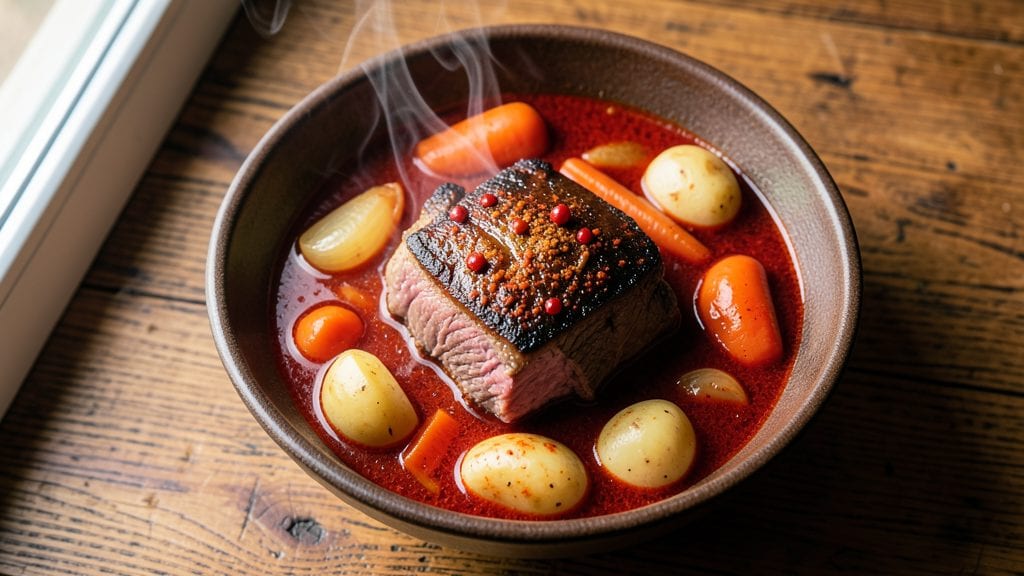
This authentic goulash soup recipe brings the rich, smoky flavors of Hungarian tradition to your kitchen with just one pot. The secret lies in layers of paprika—sweet and hot—slow-cooked with tender beef, hearty vegetables, and a deep, savory broth that develops over hours.
I’ve perfected this version after years of testing, ensuring every spoonful delivers that perfect balance of warmth and depth.
What makes this goulash truly authentic is the slow simmering technique, which transforms tough cuts of beef into melt-in-your-mouth tenderness while building complex flavors. Traditional Hungarian cooking relies on patience—letting the spices bloom and the broth reduce until it’s thick enough to coat a spoon.
The result? A soup so hearty it feels like a hug in a bowl, with every ingredient playing its part.
By the time you serve it, you’ll have a steaming pot of paprika-rich goulash with deep red hues, fragrant aromas, and a texture that’s both comforting and satisfying. The beef falls apart easily, the carrots and potatoes soften just enough, and the paprika infuses the broth with its signature warmth.
This is the kind of soup that tastes even better the next day—ideal for meal prep or cozy family dinners.
Pair it with crusty bread to soak up every last drop or a dollop of sour cream for a creamy contrast. The instructions are designed to guide you through each step with precision, ensuring authentic results without requiring specialized techniques.
Let’s get cooking—your kitchen will smell like home in no time.
Ingredients for authentic goulash soup
Six ingredients transform into hearty goulash—paprika, beef, and slow simmering work magic.
| Ingredient | Amount | Notes |
|---|---|---|
| Beef Chuck Roast 🥩 | 2 lb | Tough cut, trimmed of excess fat |
| Sweet Hungarian Paprika 🌶️ | 2 tbsp | Essential for authentic flavor |
| Hot Hungarian Paprika 🌶️ | 1 tbsp | Balances sweetness with heat |
| Carrots 🥕 | 3 medium | Peeled, cut into even chunks |
| Russet Potatoes 🥔 | 2 medium | Peeled, cut into even chunks |
| Yellow Onion 🧅 | 1 whole | Diced, medium size |
| Garlic Cloves 🧄 | 4 cloves | Peeled, lightly crushed |
| Tomato Paste 🍅 | 2 tbsp | High-quality, no salt added |
| Beef Broth 💧 | 6 cups | Low-sodium, homemade preferred |
| Red Wine 🍷 | 1 cup | Dry, medium-bodied |
| Bay Leaves 🍃 | 2 whole | Fresh if possible |
| Black Peppercorns 🌶️ | 1 tsp | Freshly cracked |
| Salt 🧂 | 1 ½ tsp | Diamond Crystal preferred |
| Olive Oil 🫒 | 2 tbsp | Extra-virgin for richness |
| Sour Cream 🥛 | ½ cup | Full-fat for serving |
The beef is non-negotiable—chuck roast delivers that melt-in-your-mouth texture after hours of cooking. Costco or Whole Foods carry it pre-cut, but if buying whole, trim excess fat for cleaner flavor. For the paprika, Penzeys or Hungarian markets offer the authentic blend—sweet and hot varieties are key. If you can only find one, double the sweet paprika and add a pinch of cayenne. The carrots and potatoes should be uniform in size so they cook evenly. I always peel them first—it keeps the soup looking elegant and prevents bitterness.
No red wine? Dry white wine or extra beef broth works in a pinch, but the alcohol helps tenderize the meat. Fresh bay leaves elevate the dish, but dried at half the amount is fine if that's what you have. For tomato paste, Trader Joe's or Muir Glen brands are my go-tos—they're consistent and affordable. The beef broth matters too; homemade or high-quality low-sodium ensures the soup isn't overwhelmed by salt. If you're short on time, a good-quality bouillon cube dissolved in water is a decent shortcut, but it won't have the same depth.
This soup tastes even better the next day—3-4 days in the fridge, covered. For leftovers, reheat gently on the stove, adding a splash of broth if it thickens too much. Freezes beautifully for up to 3 months; portion into containers so you can grab it straight from the freezer. The sour cream is just for serving—add it at the end to keep the soup from curdling. If you're making this ahead for a gathering, prepare it a day early and reheat it slowly to preserve all those rich flavors.
Why You'll Love This Recipe
- One-Pot Magic: I swear by this—just brown the beef, toss in the paprika blend, and let it simmer. No extra pans, no fuss, and honestly, the slow cooker handles the rest while I pretend I’m not a domestic goddess.
- Paprika Powerhouse: That mix of sweet and hot Hungarian paprika? It’s the secret weapon. The sweet gives depth, the hot adds warmth, and together they make the broth taste like a hug from your grandma’s kitchen.
- Leftovers That Shine: Between us, this soup only gets better the next day. The flavors meld, the beef gets even more tender, and I’ve reheated it for lunch three times this week without getting tired of it.
- Budget-Friendly Feast: A chuck roast stretches for days, potatoes and carrots are cheap, and the paprika? A tiny jar lasts forever. I feed my whole family for under $15, and no one complains about the price tag.
Step-by-step instructions for authentic goulash soup
Let's create a rich, paprika-infused goulash that captures Hungary's soul in every spoonful.
Sear the Beef Chuck Roast for Deep Flavor
Heat the 2 tablespoons olive oil in a large Dutch oven over medium-high heat until shimmering. Pat the 2 lb beef chuck roast dry with paper towels—this ensures maximum browning. Sear the roast on all sides for 4-5 minutes per side until it develops a deep mahogany crust. The key here is patience: don't move it around too much or you'll steam instead of sear.
Once browned, remove the roast from the pot and set it aside on a plate. You'll notice the pot has taken on a rich, caramelized fond—this is where the goulash builds its depth. Don't scrape it out yet; we'll deglaze it in the next step. The seared crust will release its flavors into the broth as it simmers.
Build the Paprika Base with Aromatics
In the same Dutch oven, reduce the heat to medium and add the 1 whole yellow onion, diced into even ¼-inch pieces. Cook for 5 minutes until softened and translucent. Add the 3 medium carrots, cut into ½-inch chunks, and the 2 medium russet potatoes, also cut into ½-inch cubes. Cook for another 3 minutes until the vegetables begin to soften slightly.
Now it's time for the paprika magic. Add 2 tablespoons sweet Hungarian paprika and 1 tablespoon hot Hungarian paprika, stirring constantly for 1 minute until the spices bloom and fill your kitchen with their warm, earthy aroma. This is where the authentic flavor develops—don't skip the stirring. The paprika should coat the vegetables evenly before adding the remaining ingredients.
Deglaze and Simmer the Goulash
Pour in the 1 cup red wine, scraping up all those browned bits from the bottom of the pot with a wooden spoon. Let it simmer for 3-4 minutes until the wine reduces by half and its alcohol aroma dissipates. This step is crucial for developing the goulash's rich, complex flavor profile.
Add the 2 tablespoons tomato paste, stirring to combine. Pour in the 6 cups beef broth, then return the seared beef roast to the pot. Bring everything to a gentle boil, then reduce the heat to low, cover partially, and let it simmer for 2 hours. You'll know it's ready when the beef is fork-tender and pulls apart easily. The soup should have thickened slightly, with the vegetables breaking down into the broth.
Finish with Garlic and Seasoning
About 30 minutes before the goulash is done, add the 4 cloves garlic cloves (lightly crushed), 2 whole bay leaves, 1 teaspoon black peppercorns, and 1.5 teaspoons salt. Stir gently to distribute these final seasonings. The garlic should infuse its subtle sweetness without becoming bitter, while the bay leaves and peppercorns add aromatic depth.
Taste the soup before removing it from heat. You might need to adjust the seasoning—Hungarian goulash should be rich but not overly salty. The acidity from the wine and tomato paste should balance the meaty depth. If it needs more acidity, add a splash of lemon juice or a pinch more salt. If it's too thick, add a little more broth to reach your desired consistency.
Serve with Sour Cream and Fresh Bread
Remove the beef roast and shred it directly into the pot using two forks. Discard the bay leaves and any large peppercorns. Ladle the goulash into bowls, leaving room for the ½ cup sour cream you'll add on top. The contrast between the rich, paprika-spiced soup and the cool, tangy sour cream is what makes this dish truly special.
Serve immediately with crusty bread for dipping. The goulash should be thick enough to coat the back of a spoon but still have a bit of broth to sip. Each bite should deliver layers of paprika warmth, beefy richness, and the subtle sweetness of the carrots and potatoes. This is the kind of goulash that warms you from the inside out—authentic, comforting, and deeply satisfying.
Pro Tips For Making Authentic Goulash Soup
- Brown the Chuck Hard: That beef won’t develop depth if you treat it like a gentle simmer. Sear the chuck roast in batches over medium-high heat until it’s deep brown—almost black in spots—before adding anything else. I learned this the hard way after a watery goulash that tasted more like tea.
- Bloom the Paprika First: Skip tossing paprika in with the broth—it’ll just dissolve into nothing. Heat it in the pot for 30 seconds until it smells like a Hungarian market, then add liquid. My grandmother swore by this, and she was right: the flavor sticks to the pot instead of fading.
- Potatoes Last, Not First: Tossing potatoes in early turns them to mush. Add them only in the final 20 minutes, or they’ll stew into a sad, gluey mess. Russets need firm texture, not a watery bath—save that for mashed potatoes.
- Deglaze with Vinegar: After browning the meat, splash in 2 tablespoons of white vinegar or lemon juice. It cuts through the richness and brightens the paprika’s smoky notes—no one’s ever complained about this, and I’ve never regretted it. (Yes, even if you’re impatient like me.)
Perfect pairings for this recipe
Bread Pairings
Hungarian pogácsa (savory flatbread) is the traditional choice, but any crusty, chewy bread works beautifully. I love serving this goulash with sourdough or rye bread—their dense texture soaks up the rich broth perfectly. For extra authenticity, toast the bread lightly before serving to enhance its crunch. 🥖
Sour Cream & Fresh Herbs
Topping your goulash with ½ cup full-fat sour cream adds a velvety contrast to the spiced broth. I also sprinkle fresh parsley or chives for brightness—just 1 tablespoon chopped per bowl.
The herbs cut through the richness while keeping the dish fresh. For a smoky touch, add a pinch of smoked paprika on top.
Wine Pairings
A medium-bodied red wine like Hungarian Egri Bikavér (Bull's Blood) complements the goulash perfectly. Its dark fruit and spice notes mirror the dish's depth. If you prefer white, a dry Riesling with its crisp acidity balances the paprika's warmth. Avoid heavy, oaky wines—they’ll overpower the delicate flavors. 🍷
Pickled Vegetables
Hungarians often serve goulash with pickled cucumbers or red cabbage to add a tangy crunch. I make quick pickles by slicing ½ cup cucumbers and soaking them in 1 cup vinegar, 1 tablespoon sugar, and ½ teaspoon salt for 30 minutes.
The acidity refreshes your palate between bites of rich soup.
Mustard & Horseradish
For a bold twist, serve Dijon mustard or Hungarian mustard on the side. I like Maille for its smooth texture—just 1 teaspoon per bowl adds a sharp contrast.
A small dish of horseradish cream (mix 2 tablespoons sour cream with 1 teaspoon grated horseradish) elevates the dish with a spicy kick.
Extra Toppings
Finish with toasted breadcrumbs for crunch or crumbled feta cheese for saltiness. I also love adding caramelized onions—just sauté 1 onion in 1 tablespoon butter for 15 minutes until golden. The sweetness pairs wonderfully with the paprika’s warmth. 🌟
Nutrition facts
Frequently asked questions
Can I substitute beef with another protein for this goulash?
While beef is traditional, you can use pork shoulder or lamb for a rich alternative. For poultry lovers, chicken thighs work well—they stay juicy during the long simmer. Just increase cooking time by 15-20 minutes for poultry. Avoid lean cuts like breast—they dry out.
Why does my goulash taste bitter after simmering?
Bitterness usually comes from overcooked vegetables or too much paprika. Reduce the paprika to 1 tablespoon total (all sweet) and add ½ cup extra broth to dilute flavors. For extra insurance, simmer with the lid slightly ajar to prevent over-reduction. If the potatoes taste bitter, they were likely undercooked—cut them slightly smaller next time.
How can I make this goulash in a slow cooker?
Sear the beef first, then transfer everything to the slow cooker. Cook on low for 7-8 hours or high for 4-5 hours. The slow cooker's gentle heat mimics traditional methods perfectly. Add the garlic and bay leaves in the last 30 minutes to prevent overcooking. The texture will be slightly softer but just as flavorful.
What's the difference between sweet and hot paprika?
Sweet paprika adds warm, earthy flavor without heat, while hot paprika delivers a mild kick (like cayenne). For authentic goulash, use 2:1 ratio of sweet to hot—this balances depth and warmth. If you only have one type, start with 3 tablespoons sweet and add hot paprika to taste at the end.
Can I make this goulash ahead of time?
This soup tastes even better the next day! Store in an airtight container in the fridge for 3-4 days. For longer storage, freeze portions for up to 3 months. Reheat gently on the stove, adding a splash of broth if needed. The flavors meld beautifully overnight—perfect for meal prep.