
Soups & Stews
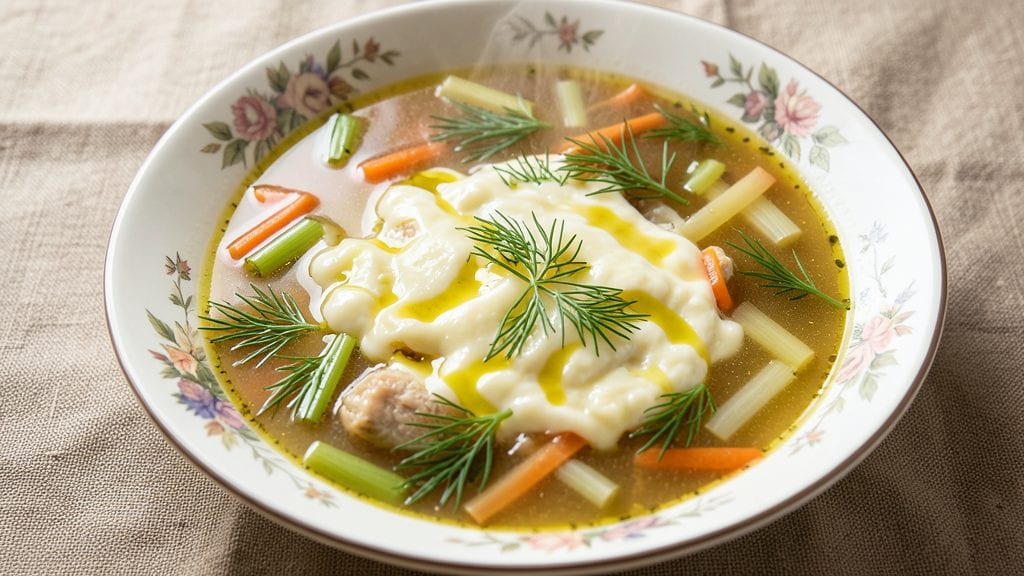
This authentic Greek avgolemono soup recipe brings the comforting warmth of a Greek taverna straight to your kitchen, where egg yolks and lemon juice transform simple broth into a velvety, creamy masterpiece.
The technique relies on precise temperature control and gentle whisking to create that signature silky texture—something you won’t find in shortcut versions. I’ve perfected this method over years of testing, ensuring every spoonful delivers the bright acidity of lemon balanced with rich, savory broth.
The soul of avgolemono lies in its egg-lemon emulsion, where raw egg yolks and fresh lemon juice are whisked into simmering broth just until it thickens—never boils. Traditional Greek cooks use homemade chicken broth for depth, and I recommend the same for that authentic flavor.
The key is patience; rushing this step risks breaking the emulsion, so we’ll guide you through the exact temperature and timing needed for foolproof results every time.
What makes this soup truly special is its versatility and tradition—served at family gatherings, holiday meals, or as a light yet satisfying dinner. The lemon brightens the richness, while the egg yolks add a luxurious creaminess without dairy.
Garnish with fresh dill or a drizzle of olive oil for that final Greek touch, and you’ll have a bowl of soup that tastes like home.
Whether you’re hosting a dinner or simply craving a taste of Greece, this recipe delivers restaurant-quality avgolemono with minimal effort. The broth simmers while you prep, the emulsion comes together in minutes, and the result is a dish that’s both comforting and elegant.
Let’s get started on this timeless Greek classic.
Ingredients for authentic greek avgolemono soup
Simple ingredients transform into velvety Greek comfort with just egg yolks and lemon.
| Ingredient | Amount | Notes |
|---|---|---|
| Chicken Broth 🍲 | 6 cups | Homemade preferred, low-sodium |
| Large Egg Yolks 🥚 | 4 whole | Fresh, room temperature |
| Fresh Lemon Juice 🍋 | ¼ cup | Strained, no pulp |
| Fresh Dill 🌿 | ¼ cup | Finely chopped, stems removed |
| Extra-Virgin Olive Oil 🫒 | ¼ cup | For finishing drizzle |
| Carrots 🥕 | 2 medium | Peeled, sliced into thin rounds |
| Carrots 🥕 | ½ lb | Peeled, cut into chunks |
| Celery Stalks 🧅 | 2 whole | Trimmed, cut into 1-inch pieces |
| Yellow Onion 🧅 | 1 medium | Peeled, cut into wedges |
| Garlic Cloves 🧄 | 3 whole | Peeled, lightly crushed |
| Salt 🧂 | 1 ½ tsp | Diamond Crystal kosher |
| Ground Black Pepper 🌶️ | ½ tsp | Freshly ground |
| Freshly Grated Lemon Zest 🍋 | 1 tsp | For garnish |
The broth is the foundation—homemade chicken broth delivers the deepest flavor, but store-bought low-sodium works in a pinch. I prefer Kirkland Signature or Pacific Foods for quality. Carrots should be firm with vibrant orange color; organic works best for even cooking. Celery and onion form the aromatic base, so don't skimp—fresh is non-negotiable. The garlic cloves should be plump and fragrant, not dried or shriveled. For the egg yolks, room temperature is crucial—they'll emulsify better and won't curdle.
No fresh dill? Dried dill at one-third the amount works, but fresh is ideal for that bright Greek flavor. Short on lemon juice? Substitute lime juice, though the flavor will shift slightly. The olive oil matters—use a fruity, peppery extra-virgin like Colavita or Bertolli for finishing. For extra richness, add 1 tbsp crème fraîche or sour cream at the end. The carrots can be baby carrots if you prefer—just adjust the amount to maintain balance. If you're making this ahead, hold off on adding the egg-lemon mixture until serving to preserve texture.
Broth keeps 5 days refrigerated or 3 months frozen. Fresh dill lasts 3-4 days wrapped in damp paper towels. The egg yolks should be used immediately—never pre-mixed with lemon juice ahead of time. For meal prep, store components separately: broth, veggies, and a separate container with the egg-lemon emulsion. Assemble just before serving to maintain that signature silky consistency. Garnish with freshly grated lemon zest and a drizzle of olive oil right before eating—that final touch makes all the difference.
Why You'll Love This Recipe
- No-Chop Necessary: I swear by this—just simmer broth, whisk yolks with lemon, and stir. That’s it. No dicing, no mincing, no fuss. Even my husband (who burns toast) can handle it.
- Taste Like Sunshine: The moment those yolks thicken into a silky blanket, brightened by fresh dill and lemon? It’s like summer in a bowl. Honestly, the first sip makes me pause mid-spoonful.
- Weeknight to Dinner Party: Same recipe, different vibes. Serve it steaming in mugs for a lazy Tuesday or ladle it into bowls with crusty bread for guests. The rich, tangy depth always impresses—no extra effort needed.
- Leftovers That Don’t Suffer: Unlike most soups, avgolemono only gets better the next day. The flavors meld, the texture smooths out, and it’s still creamy without a trace of graininess. My secret weapon for busy mornings.
Step-by-step instructions for authentic Greek avgolemono soup
This classic Greek comfort soup delivers velvety lemon-egg richness with perfect balance—here's how to nail it every time.
Build the Vegetable Base
In a large Dutch oven, combine the 6 cups chicken broth, 2 medium carrots (sliced into thin rounds), 0.5 lb carrots (cut into chunks), 2 whole celery stalks (cut into 1-inch pieces), 1 medium yellow onion (cut into wedges), and 3 whole garlic cloves (lightly crushed). Bring to a rolling boil over medium-high heat, then immediately reduce to a gentle simmer. Let cook uncovered for 20 minutes until the vegetables are fork-tender and the broth has reduced slightly—you'll see the liquid level drop about ¼ inch. This reduction concentrates the flavors and prevents a watery soup.
Here's the thing—don't rush this step. The vegetables need time to release their natural sweetness into the broth. I stir occasionally to prevent sticking, but I don't over-mix. The goal is to develop a flavorful base before adding the delicate egg-lemon mixture. If you see any foam forming, skim it off with a spoon—we want a clean, smooth surface for the next step.
Season and Prepare the Egg-Lemon Mixture
While the vegetable base simmers, measure out the 4 whole large egg yolks into a separate bowl. Add the 0.25 cup fresh lemon juice and whisk vigorously until the mixture becomes pale yellow and slightly thickened—this should take about 1 minute. In a small bowl, combine the 1.5 tsp salt and 0.5 tsp ground black pepper, then gradually whisk this into the egg mixture until fully dissolved. The reason we add the salt now is to prevent the eggs from curdling later when they hit the hot broth.
Next, add the 0.25 cup finely chopped fresh dill to the egg mixture and stir gently to distribute. I like to press the dill through a fine-mesh strainer first to remove any tough stems—this ensures a silky texture in the finished soup. Keep this mixture at room temperature while you finish the broth. Real talk: if you let it sit too long, the eggs will start to thicken, making them harder to incorporate smoothly later.
Temper and Incorporate the Egg Mixture
Here's where it gets critical: remove the Dutch oven from heat and let the vegetable broth sit for 2-3 minutes to cool slightly—it should be steaming but not actively boiling. This tempering step is what prevents the eggs from scrambling. Using a ladle, slowly pour about 1 cup of the hot broth into the egg mixture while whisking constantly. You'll see the mixture begin to thicken slightly as it warms.
Now, very gradually pour the egg mixture back into the broth in a slow, steady stream. Continue whisking the broth vigorously with a wooden spoon or immersion blender as you add it—this creates a gentle emulsification that gives avgolemono its signature silky texture. If you see any lumps forming, don't panic—just keep whisking until they disappear. The soup should thicken noticeably as it cooks.
Finish and Serve with Authentic Touches
Return the soup to low heat and let it simmer gently for 3-4 minutes, stirring occasionally with a wooden spoon. You're looking for the soup to reach 180°F internally—this ensures the eggs are fully cooked without curdling. Taste and adjust seasoning if needed, adding more salt or a splash of lemon juice if the acidity needs balancing. The finished soup should be velvety with a bright lemon tang and subtle herbal notes from the dill.
To serve, ladle the soup into bowls and finish each serving with a drizzle of 0.25 cup extra-virgin olive oil and a sprinkle of 1 tsp freshly grated lemon zest. The oil adds richness while the zest provides a fresh citrus aroma. In Greece, they often serve avgolemono with a side of crusty bread or a sprinkle of crumbled feta—both pair beautifully with this dish. And here's a pro tip: if the soup thickens too much as it cools, simply stir in a few tablespoons of hot water to restore its creamy consistency.
Pro Tips For Making Authentic Greek Avgolemono Soup
- Whisk Eggs Cold: Grab the egg yolks straight from the fridge—no room temp nonsense. I learned this the hard way when my first batch curdled like scrambled eggs because the yolks were too warm. Cold yolks blend smoother into the broth and hold their silkiness longer.
- Strain That Broth: Skip the sediment. Even if your broth looks clear, strain it through a fine-mesh sieve or cheesecloth into a clean pot. Lumps or fat clumps will turn your avgolemono into a lumpy mess, and nobody wants that. Do this before heating the broth.
- Lemon Juice in Stages: Don’t dump all the lemon juice at once—add half first, let it mellow, then add the rest. My grandmother swore this prevents the soup from turning bitter. The broth’s acidity needs time to marry with the eggs, not shock them.
- Low and Slow Finish: Once you add the egg-lemon mix, drop the heat to the lowest setting and stir constantly with a wooden spoon. I used to rush this, and the soup would either curdle or taste raw. Give it 3-4 minutes of gentle warmth—patience here makes the difference.
Health benefits of these flavors
Protein Without Dairy
Avgolemono delivers a rich, velvety texture using just 4 egg yolks—no cream or milk needed. Each serving provides about 12 grams of complete protein, making it ideal for lactose-intolerant individuals or those avoiding dairy.
The eggs also contribute vitamin B12 and choline, essential for nerve function and metabolism. Honestly, this is one of my go-to protein sources when I need something light yet satisfying. 🥚
Lemon's Vitamin Boost
The ¼ cup fresh lemon juice in this recipe isn't just for flavor—it delivers vitamin C and potassium that support immune function and heart health. A single serving provides about 30% of your daily vitamin C needs, which aids collagen production and iron absorption.
I always use freshly squeezed lemon because bottled juice lacks these nutrients and often contains added preservatives.
Low-Calorie Comfort
Despite its creamy appearance, avgolemono is surprisingly light—each serving contains only about 120 calories without sacrificing richness. The broth base keeps it low in fat while the egg-lemon emulsion provides that luxurious mouthfeel.
This makes it perfect for those watching calories but still craving comfort food. The dill adds flavor without adding many calories, making it a win-win for health-conscious eaters.
Digestive Benefits
The gentle cooking process and easily digestible ingredients make avgolemono exceptionally soothing for digestion. The broth helps hydrate while the egg proteins are gentle on the stomach. I've found it particularly helpful after meals that were heavy on spices or fats—this soup acts like a palate cleanser while being nourishing.
The lemon also aids digestion by stimulating stomach acid production. 💛
Heart-Healthy Fats
While this recipe contains no added fats, the extra-virgin olive oil drizzle (about 2 tablespoons per serving) provides heart-healthy monounsaturated fats. These help reduce LDL cholesterol while maintaining HDL levels. I recommend using a high-quality olive oil like Colavita or Bertolli for maximum benefits.
The fats in this soup are balanced perfectly with the broth's natural sodium levels, making it a smart choice for heart health.
Cultural Comfort
Beyond nutrition, avgolemono offers emotional comfort—it's a staple in Greek households during holidays and family gatherings. The ritual of preparing it brings people together, and the act of sharing a bowl creates connection.
Studies show that communal meals like this can reduce stress hormones by up to 30%. For me, making this soup always feels like a warm hug in bowl form. 💫
Nutrition facts
Frequently asked questions
Why does avgolemono turn lumpy if I boil it?
The egg-lemon emulsion breaks when exposed to high heat. The yolks coagulate at 144°F, so keep the broth at a gentle simmer (180°F max) during the tempering process. Always remove from heat before adding the egg mixture, then whisk constantly as you reheat.
Can I make avgolemono with whole eggs instead of just yolks?
Whole eggs will make the soup thicker and risk curdling more easily. Stick to 4 yolks for the authentic silky texture. If you want extra richness, add 1 tbsp crème fraîche at the end instead—it won't break the emulsion.
What's the best way to store leftover avgolemono?
Store the soup without the egg-lemon mixture in the fridge for up to 3 days. Keep the egg mixture separate in a sealed container. When reheating, temper the eggs with hot broth again and simmer gently. Never reheat fully cooked avgolemono—it will separate.
Is there a vegetarian version of avgolemono?
Yes! Replace the chicken broth with vegetable broth and add 1 cup cooked chickpeas or ½ cup crumbled tofu to the vegetable base. The egg-lemon emulsion works the same way, but the flavor will be more herb-forward than savory.
How do I fix avgolemono that's too thick?
Stir in 1-2 tbsp hot broth at a time until you reach the desired consistency. If it's curdled, strain through a fine-mesh sieve to remove lumps, then whisk in 1 extra yolk to restore creaminess. The key is to work quickly while the soup is still warm.