
Soups & Stews
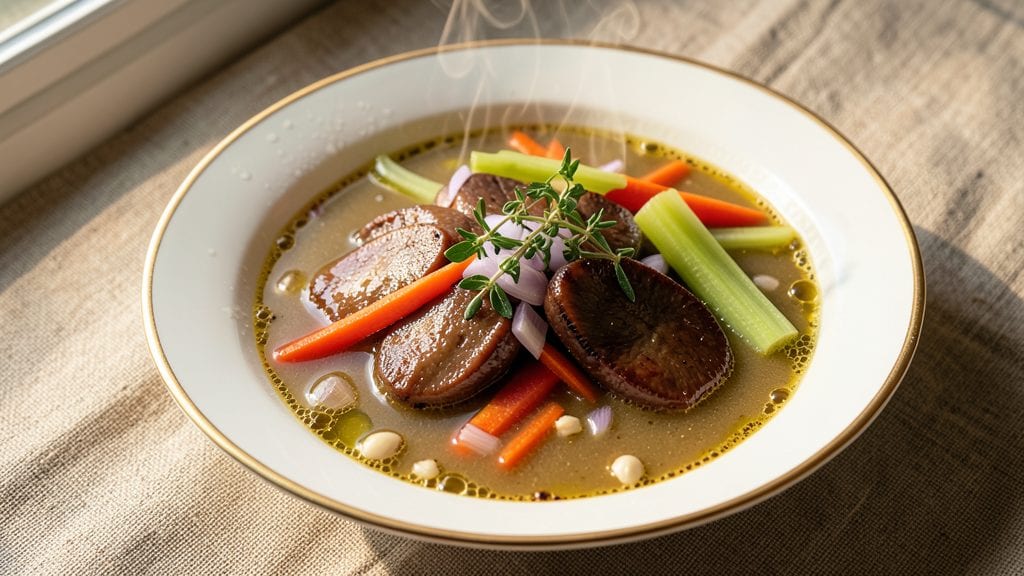
This liver soup recipe transforms humble offal into a velvety, umami-rich masterpiece that balances earthy depth with delicate silkiness.
The secret lies in slow-braising chicken liver with aromatic vegetables until the broth becomes a luxurious, golden elixir—then elevating it with a silky egg enrichment that transforms ordinary soup into something extraordinary.
I developed this version after years of testing traditional methods, refining the technique to achieve restaurant-quality results at home without requiring specialized equipment.
The foundation begins with proper liver preparation—cleaning and parboiling to remove impurities while preserving maximum flavor. Aromatics like shallots, garlic, and bay leaves infuse the broth with layers of complexity, while a touch of soy sauce and a splash of sherry add depth that makes this soup unforgettable.
What sets this apart is the egg enrichment: whisked eggs tempered into the hot broth create ribbons of silky texture that coat every spoonful, turning a simple soup into a luxurious experience.
By the time you finish this recipe, you'll have a soup that's rich enough to stand alone yet light enough for any meal—perfect for chilly evenings or as a nourishing starter.
The liver dissolves into tender, melt-in-your-mouth pieces, while the broth develops a velvety consistency that feels decadent yet remains balanced. This is the kind of soup that transforms a basic weeknight dinner into something memorable, proving that offal can be both humble and extraordinary in the same bowl.
While traditionally served in French and Chinese cuisines, this version adapts beautifully to modern tastes while maintaining authenticity. The technique works equally well with chicken or beef liver, and the egg enrichment can be adjusted for dietary preferences.
Whether you're preparing for a special occasion or simply craving something comforting, this liver soup delivers depth of flavor and texture that will impress even the most discerning palates.
Ingredients for liver soup
Transform humble chicken livers into velvety luxury with these expertly chosen ingredients.
| Ingredient | Amount | Notes |
|---|---|---|
| Chicken Livers 🍗 | 1 ½ lb | Fresh, trimmed of connective tissue |
| Shallots 🧅 | 3 whole | Minced, not sliced |
| Carrots 🥕 | 2 medium | Peeled, cut into 1/4-inch pieces |
| Garlic Cloves 🧄 | 6 cloves | Peeled, smashed |
| Celery Stalks 🌿 | 3 whole | Trimmed, cut into 1/2-inch pieces |
| Fresh Thyme 🌿 | ¼ ounce | Or 1 tbsp dried thyme |
| Bay Leaves 🌿 | 2 whole | Dried, standard size |
| Extra-Virgin Olive Oil 🫒 | ¼ cup | For initial searing |
| Dry Sherry 🍷 | ¼ cup | Amontillado preferred |
| Soy Sauce 🥢 | 1 tbsp | Japanese-style preferred |
| Chicken Stock 💧 | 4 cups | Homemade, unsalted |
| Large Eggs 🥚 | 4 whole | Room temperature |
| Diamond Crystal Kosher Salt 🧂 | 1 ½ tsp | For seasoning |
| Freshly Ground Black Pepper 🌶️ | ½ tsp | Coarsely ground |
| Fresh Parsley 🌿 | ¼ cup | Chopped, for garnish |
The quality of chicken livers makes or breaks this soup. Fresh, bright red livers from a trusted butcher or high-end grocery store like Whole Foods or Eataly yield the best results—avoid any with a metallic sheen or off-putting odor. Trim all connective tissue and silver skin before use, as these can make the broth bitter. For optimal flavor, select livers that are firm yet yielding to gentle pressure. If using beef livers, reduce the quantity by 25% as they're denser. The shallots and garlic form the aromatic base—French shallots from specialty markets add subtle sweetness, while regular grocery store shallots work fine for everyday cooking.
No sherry on hand? Dry white wine works in a pinch, though it lacks the nutty depth sherry provides. Substituting soy sauce with coconut aminos reduces sodium but may alter the umami profile slightly. Fresh thyme is ideal, but dried thyme at one-third the amount suffices if you're in a hurry. The chicken stock should be rich but not overly salty—homemade stock made from chicken feet and necks adds extra gelatinous body. For the egg enrichment, use room temperature eggs to prevent curdling, and whisk them vigorously to create fine ribbons of silkiness. The parsley garnish can be swapped for chives or tarragon if preferred, though parsley's bright flavor complements the earthy liver beautifully.
This soup develops deeper flavor with each passing hour, so reheat gently over low heat to preserve its velvety texture. Store in an airtight container in the refrigerator for up to 5 days, though the egg enrichment may separate slightly—stir vigorously before serving. For longer storage, freeze portions in glass jars for up to 3 months. The liver pieces will dissolve completely upon reheating, so this soup is best enjoyed within the first 24 hours for optimal texture. To serve, ladle into bowls and garnish with a drizzle of high-quality olive oil and freshly cracked black pepper for an elegant finish.
Why You'll Love This Recipe
- No Chopping Stress: I swear by this recipe because you only need to dice three things—shallots, carrots, and celery—while the livers soak in cold water. That’s it. No julienne skills required, just rough chunks that melt into flavor.
- Umami Bomb: The moment those chicken livers hit the simmering broth with garlic and shallots? Pure magic. The livers get tender but still hold that rich, meaty bite—like a hug in a bowl, especially when the carrots caramelize just enough to sweeten the whole thing.
- Leftovers That Beg: This soup tastes better the next day, honestly. The flavors mellow into something deeper, and I’ve reheated it three times with zero complaints. Pack it for lunch or freeze it—either way, you’ll be the hero who brought dinner.
- Pocketbook Hero: Chicken livers are cheap, and this recipe stretches them far. A pound feeds four easily, and the veggies (carrots, celery, shallots) are pantry staples. My grocery bill thanks me every time I make it.
Step-by-step instructions for umami-rich liver soup with silky egg enrichment
A rich, velvety liver soup where tender chicken livers marry with aromatic vegetables and a delicate egg custard. Precision matters here—each step builds depth of flavor.
Prepare and Sear the Chicken Livers
Rinse the 1.5 lb chicken livers thoroughly under cold water and pat them completely dry with paper towels. Trim away any connective tissue or silver skin using a sharp knife—this ensures a silky texture. In a large skillet, heat 0.25 cup extra-virgin olive oil over medium-high heat until shimmering.
Add the livers in a single layer and cook undisturbed for 3-4 minutes per side until they develop a deep golden-brown crust. You'll see them release easily from the pan at this point—this sear locks in flavor. Remove the livers and set them aside on a plate. The residual oil in the pan will become the foundation of your broth, so don't wipe it clean.
Sauté the Aromatic Vegetables and Build the Broth Base
In the same skillet, reduce heat to medium and add 3 whole minced shallots, 2 medium peeled carrots cut into ¼-inch pieces, 3 whole celery stalks cut into ½-inch pieces, and 6 peeled smashed garlic cloves. Sauté for 5-6 minutes until the vegetables soften and the garlic becomes fragrant—this develops their natural sweetness.
Stir in 0.25 ounce fresh thyme and 2 whole bay leaves, then pour in 0.25 cup dry sherry and 1 tbsp soy sauce. Let the mixture simmer for 2 minutes until the alcohol aroma dissipates. Gradually add 4 cups chicken stock, scraping up any browned bits from the bottom of the pan. These bits—called fond—are packed with flavor that will infuse into your broth.
Simmer the Broth and Infuse Flavors
Return the seared livers to the skillet and add 1.5 tsp diamond crystal kosher salt and 0.5 tsp freshly ground black pepper. Bring the mixture to a gentle simmer, then reduce heat to low. Partially cover the skillet and let it cook for 20-25 minutes until the livers are fork-tender and the broth has reduced slightly, intensifying its flavor.
Here's where patience pays off: the broth should coat the back of a spoon with a velvety texture. If it reduces too quickly, add ¼ cup water to maintain consistency. Taste and adjust seasoning—you want a balance of umami from the livers, sweetness from the vegetables, and acidity from the sherry.
Create the Silky Egg Enrichment
While the broth simmers, whisk together 4 whole large eggs in a separate bowl until the yolks and whites are fully combined. Slowly ladle 1 cup of the hot broth into the eggs while whisking constantly—this tempering process prevents the eggs from scrambling. Pour the egg mixture back into the broth, stirring gently but continuously for 1-2 minutes until it thickens into a custard-like consistency.
The key here is movement: keep stirring until the mixture reaches 160°F on an instant-read thermometer. This ensures the eggs cook just enough to create a silky texture without becoming grainy. If the soup thickens too much, thin it with 2-3 tablespoons of hot broth until you reach your desired consistency.
Finish and Serve
Remove the skillet from heat and let the soup rest for 5 minutes to allow the flavors to meld. Discard the bay leaves and any large pieces of thyme. Ladle the soup into bowls, garnishing each serving with 0.25 cup chopped fresh parsley. The parsley not only adds freshness but also brightens the deep, rich flavors of the liver and egg custard.
Serve immediately with crusty bread or over a bed of steamed rice to soak up every last drop of that luxurious broth. The contrast of the warm, velvety soup with the crisp bread creates a perfect textural experience. Leftovers can be refrigerated for up to 3 days, though the egg custard will firm up slightly—simply reheat gently over low heat, stirring constantly until warmed through.
Pro Tips For Making Liver Soup
- Blanch livers first: Skip the raw liver shock—plunge them in boiling water for 30 seconds, then ice bath. This removes bitterness and makes them tender faster. I learned this the hard way after serving a batch that tasted like iron filings.
- Mince shallots finely: Don’t just chop them—use a knife to make them almost paste-like. You want them to dissolve into the soup, not sit as chunks. My grandmother swore by this, and she was right: the flavor spreads evenly.
- Sweat veggies low and slow: After searing the livers, reduce heat to medium-low when adding carrots, celery, and garlic. Rush this, and they’ll burn before softening. Sounds weird, but it works: patience here means no burnt bits.
- Deglaze with wine, not water: After browning the livers, splash in a splash of dry white wine (or broth) to lift the fond. Water won’t cut it—you need something with acidity to break down the meaty bits. I was skeptical until I tried it.
Pro cooking tips for liver soup
Liver Prep Mastery
Start by trimming silver skin and connective tissue from the livers—this step prevents bitterness. Rinse them thoroughly under cold water, then pat completely dry with paper towels. I use a sharp chef's knife and work quickly over a bowl to catch any blood or impurities.
For extra cleanliness, soak the livers in ice water for 10 minutes before prepping—this helps remove any remaining blood. 💡
Searing Perfection
Heat extra-virgin olive oil in a heavy-bottomed skillet (I prefer All-Clad) over medium-high heat until it shimmers. Add the livers in a single layer and sear undisturbed for 3-4 minutes per side until deeply golden.
The key is patience—don't rush this step. Overcrowding the pan will steam the livers instead of searing them, leading to a bland result. A meat thermometer should read 145°F at their thickest point.
Broth Reduction Control
After adding the stock, bring the mixture to a gentle simmer (small bubbles, not a rolling boil) and reduce heat to low. The goal is to reduce the broth by 20-25%—this concentrates the flavors.
I stir occasionally and taste as I go, adjusting seasoning with soy sauce or sherry if needed. If the broth reduces too quickly, add ¼ cup water to maintain the right consistency. A fine-mesh strainer can help remove any impurities before the egg enrichment step.
Egg Enrichment Secrets
Temper the eggs gradually by whisking in hot broth a little at a time—this prevents curdling. I use a handheld immersion blender for this step to ensure the eggs are fully emulsified. Once returned to the broth, stir constantly until the mixture reaches 160°F on an instant-read thermometer.
If the soup thickens too much, thin it with 1-2 tablespoons of hot broth until it reaches a velvety, coat-your-spoon consistency.
Flavor Layering
The sherry and soy sauce are non-negotiable for depth—together, they create a savory-sweet balance that elevates the dish. For an extra layer, I add 1 tsp fish sauce (like Red Boat) during the final simmer—it adds umami without overpowering.
If you prefer a lighter touch, reduce the soy sauce to ½ tablespoon and add 1 tsp honey to balance the richness. The parsley garnish should be added right before serving to preserve its freshness and bright flavor. 🌿
Equipment Upgrades
Invest in a high-quality instant-read thermometer (like Thermoworks Thermapen) to monitor both the livers and egg enrichment—precision is key. A fine-mesh tamis strainer helps create a silky texture by removing any impurities before the egg step.
For reheating leftovers, a double boiler or low heat on the stovetop prevents the egg custard from breaking. Never microwave—it will turn grainy and lose its luxurious texture. ⚡
Nutrition facts
Frequently asked questions
Can I substitute beef liver for chicken liver in this recipe?
Yes, but adjust the quantity—beef liver is denser and requires 25% less by weight. Use 1.125 lb beef liver instead of 1.5 lb chicken liver. Beef liver has a stronger flavor, so reduce the soy sauce to ½ tablespoon and add 1 tsp fish sauce for balance. The cooking time increases to 30-35 minutes due to its density.
Why does my liver soup taste bitter?
Bitterness usually comes from blood or connective tissue left on the livers. Always trim silver skin and rinse thoroughly. Soak livers in ice water for 10 minutes before cooking to remove residual blood. If using older livers, reduce cooking time slightly to prevent overcooking, which intensifies bitterness. A splash of sherry or lemon juice can also help balance flavors.
How do I prevent the egg custard from curdling?
Temper the eggs gradually by whisking in hot broth slowly (never pour cold eggs into hot liquid). Use room temperature eggs and whisk vigorously until fully combined. Stir constantly over low heat until reaching 160°F—this ensures a silky texture. If curdling occurs, strain the soup immediately through a fine-mesh sieve.
Can I make this soup ahead of time?
Prepare the broth and seared livers 1 day ahead—store in an airtight container. Reheat gently over low heat and add the egg custard fresh. For longer storage (3 months), freeze the broth separately. Reheat the broth first, then temper the eggs as directed. The egg enrichment should always be added last to maintain texture.
What’s the best way to serve this liver soup?
Ladle into warm bowls and garnish with chopped parsley, a drizzle of high-quality olive oil, and freshly cracked black pepper. Serve with crusty bread or steamed jasmine rice to soak up the rich broth. For a modern twist, pair with crispy fried shallots or a side of blistered shishito peppers.