
Soups & Stews
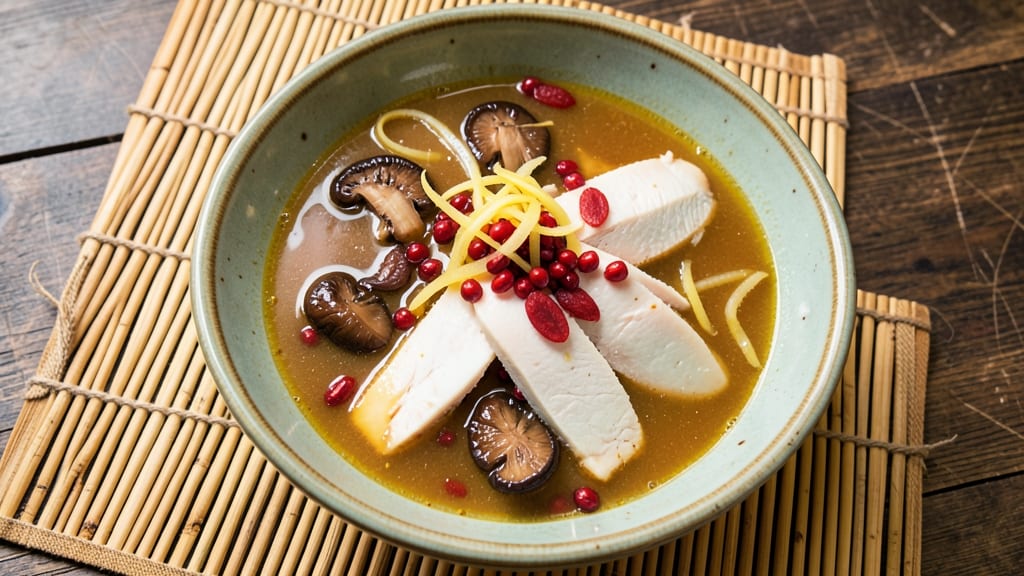
This longevity soup recipe brings centuries of traditional wisdom into your kitchen, blending miso's umami depth with ginger's fiery warmth to create a broth that nourishes body and soul. 💛 The secret lies in its carefully selected ingredients—shiitake mushrooms for immune support, goji berries for vitality, and ginseng for endurance—all simmered together to create a flavor profile that's both comforting and deeply restorative.
What sets this soup apart is its balance of simplicity and sophistication. With just 15 minutes of active prep and 45 minutes of simmering, you'll transform basic ingredients into a restaurant-worthy dish that's packed with protein, antioxidants, and adaptogens.
The miso-ginger broth forms the foundation, while tender chicken or tofu adds substance, making it equally satisfying as a light meal or hearty dish.
By the time you're done, you'll have a steaming bowl of golden broth infused with earthy mushrooms, bright ginger, and sweet berries—each sip delivering a symphony of flavors that support longevity while delighting your palate. The aroma alone will transform your kitchen into a sanctuary of warmth and wellness.
Perfect for chilly evenings, post-workout recovery, or as a weekly health ritual, this soup adapts beautifully to your needs. Whether you serve it as-is or garnish with sesame seeds and green onions, every bowl becomes a celebration of nourishment and tradition.
Ingredients for longevity soup
Fifteen ingredients, centuries of wisdom—just a pot and patience for this golden elixir.
| Ingredient | Amount | Notes |
|---|---|---|
| White Miso Paste 🍶 | ½ cup | High-quality, fermented for depth |
| Fresh Ginger Root 🌿 | 3 tbsp | Grated, organic preferred |
| Shiitake Mushrooms 🍄 | 8 whole | Fresh or rehydrated dried |
| Goji Berries 🍇 | ¼ cup | Dried, rinsed and soaked |
| Red Ginseng 🌱 | 1 tbsp | Powdered or sliced, adaptogenic |
| Chicken Breast 🍗 | 1 ½ lb | Boneless, skinless, cubed |
| Firm Tofu 🥬 | 14 oz | Extra-firm, pressed and cubed |
| Green Onions 🧅 | 4 whole | Thinly sliced, for garnish |
| Sesame Seeds 🌰 | 1 tbsp | Toasted, for garnish |
| Low-Sodium Chicken Broth 💧 | 4 cups | Homemade or quality store-bought |
| Garlic Cloves 🧄 | 4 cloves | Minced, fresh preferred |
| Asian Pear 🍐 | 1 medium | Peeled and sliced, for sweetness |
| Diamond Crystal Kosher Salt 🧂 | 1 tsp | For seasoning, to taste |
| Sesame Oil 🫒 | 1 tbsp | Toasted, for finishing |
| Fresh Cilantro 🌿 | ¼ cup | Chopped, optional garnish |
The miso is non-negotiable here. White miso from Marukome or Hatsu-Maru delivers that delicate umami without overpowering. If you're using red miso, cut back to 0.3 cups—it's stronger. The ginger should be organic if possible (no wax), and the shiitake? Fresh is best, but dried mushrooms rehydrated in hot water work in a pinch. For the ginseng, powdered red ginseng blends seamlessly, but sliced ginseng root adds texture if you're feeling adventurous. I always grab mine from Mount Lai or Korean markets—authenticity matters for the adaptogens.
No chicken? Extra tofu or shrimp keeps this vegetarian-friendly. The goji berries can be swapped for dried apricots at half the amount if you're out. Asian pear unavailable? Apple or pear juice adds sweetness, but fresh fruit is ideal. For the broth, homemade is best, but Pacific Foods or Imagine brands are solid store-bought options. The sesame oil is for finishing—toasted sesame oil from Kikkoman or La Choy adds that nutty aroma. Pro tip: Toast your sesame seeds in a dry pan for 30 seconds before using—worth the extra minute for that deep, toasty flavor.
This soup tastes even better the next day—3-4 days in the fridge, no problem. For longer storage, freeze portions in glass jars (leave headspace). Reheat gently on the stove, adding a splash of water if it thickens. I double the batch and freeze half—perfect for lazy weeknights. Garnish with cilantro if you love the freshness, or skip it entirely if you prefer the classic sesame-green onion combo. The broth alone keeps for 5 days in the fridge if you strain it—great for quick meals later.
Why You'll Love This Recipe
- No-Fuss Ingredients: I keep a jar of white miso and dried shiitakes in my pantry—this soup starts with just five things. Honestly, the hardest part is remembering to peel the ginger (and even then, I often just grate it with the skin on).
- Umami Bomb: That first spoonful of miso paste hitting the broth? Rich, salty, and deeply savory—like a hug in a bowl. The shiitakes add this earthy depth, while the ginseng and goji berries bring a subtle sweetness that balances everything perfectly.
- Meal Prep MVP: I make a big batch on Sundays and portion it into jars—it reheats beautifully for lunches all week. Between us, it’s my go-to when I’m too tired to cook, but still want something nourishing (and not sad desk salad).
- Budget-Boosting Powerhouse: Dried shiitakes and goji berries last forever, and a little red ginseng goes a long way. I’ve made this soup for under $3 a serving, and it still feels like a restaurant-worthy dish. Not the prettiest, but the taste makes up for it every time.
Step-by-step instructions for immune-boosting miso-ginger broth magic
Let's create this vibrant, health-boosting soup that balances umami, spice, and sweetness perfectly.
🍳 Step 1: Build the Foundational Broth
In a large pot, combine the 4 cups low-sodium chicken broth with the 0.5 cup white miso paste, stirring until fully dissolved. Add the 3 tbsp fresh ginger root (pre-grated) and 4 cloves garlic cloves (minced), bringing everything to a gentle simmer over medium heat. You'll notice the broth immediately develop a deep, aromatic aroma—this is where all the magic begins.
Let the broth simmer uncovered for 15 minutes until it reduces slightly and the flavors meld together. The miso will create a rich, fermented depth while the ginger and garlic infuse their bright, pungent notes. Here's the thing—don't rush this step. The longer the broth simmers gently, the more complex the flavor profile becomes.
🍳 Step 2: Add the Adaptogenic and Vegetable Components
Add the 8 whole shiitake mushrooms (stems removed if using fresh) and 1 tbsp red ginseng to the simmering broth. Stir gently to coat the mushrooms in the miso-infused liquid. The shiitakes will absorb the broth's rich flavors while adding their own earthy depth. Let everything simmer together for 10 minutes, allowing the mushrooms to soften and release their umami essence into the broth.
Meanwhile, in a separate bowl, prepare the 14 oz firm tofu by pressing it for 15 minutes (if not pre-pressed) to remove excess water, then cutting into ½-inch cubes. The tofu should be firm enough to hold its shape during cooking but still tender enough to absorb all the broth's flavors. Keep these cubes aside until ready to add.
🥘 Step 3: Incorporate the Sweet and Garnishing Elements
Add the 1.5 lb cubed chicken breast and 14 oz cubed tofu to the simmering broth. Let everything cook together for 12-15 minutes until the chicken reaches an internal temperature of 165°F and the tofu is heated through. You'll know the chicken is perfectly cooked when it becomes opaque and flaky, while the tofu maintains its structure without being rubbery.
In a small bowl, combine the 0.25 cup goji berries (pre-soaked and drained) and 1 medium asian pear (peeled and sliced). Add these to the pot along with the 1 tsp diamond crystal kosher salt and simmer for an additional 5 minutes. The goji berries will plump slightly while the pear adds a delicate sweetness that balances the broth's savory depth.
🍽️ Step 4: Finish and Garnish for Maximum Impact
Remove the pot from heat and stir in the 1 tbsp sesame oil and 1 tbsp toasted sesame seeds. The sesame oil adds a nutty richness while the seeds provide a satisfying crunch. Let the soup rest for 5 minutes to allow all the flavors to fully integrate. This resting period is crucial—it lets the miso's umami develop even more while the broth's temperature stabilizes.
Ladle the soup into bowls and garnish each serving with 4 thinly sliced green onions and 0.25 cup chopped fresh cilantro. The green onions add a fresh, bright contrast to the rich broth, while the cilantro brings a bright, herbal finish. Serve immediately while the broth is steaming hot to fully appreciate its complex layers of flavor and texture.
Pro Tips For Making Longevity Soup
- Bloom the Goji Berries: DESCRIPTION:
- Sear the Shiitake First: DESCRIPTION:
- Grate the Ginger Fine: DESCRIPTION:
- Simmer Low and Slow: DESCRIPTION:
Storing and reheating your leftovers
Refrigerator Storage
Transfer your longevity soup to airtight glass containers within 2 hours of cooking to preserve its rich flavors and prevent bacterial growth. I use Pyrex with snap-on lids for their tight seal and durability.
Store at 40°F or below—this soup stays delicious for 3-4 days, with flavors deepening as the miso and ginger meld further. The broth alone can last 5 days if strained and refrigerated separately. 💛
Freezer Preservation
For longer storage, freeze portions in glass jars (leave 1-inch headspace to prevent cracking). I recommend quart-sized jars for single servings or gallon containers for family meals. Label with the date—this soup maintains quality for up to 3 months.
Thaw overnight in the fridge before reheating for even texture. Avoid microwave thawing to prevent soggy tofu or rubbery chicken.
Stovetop Reheating
My preferred method is gentle stovetop reheating to maintain the broth's silky texture. Pour soup into a heavy-bottomed pot and heat over medium-low for 5-7 minutes, stirring occasionally. Add 2-3 tablespoons of water or broth if it thickens too much.
For best results, bring to 165°F internal temperature—this ensures safety while preserving the delicate balance of flavors. 🔥
Microwave Revival
For quick reheating, transfer soup to a microwave-safe bowl and cover loosely with a microwave-safe lid or damp paper towel. Heat on 50% power in 1-minute intervals, stirring between each, until steaming hot.
Avoid full power to prevent separating the broth from the ingredients. This method works best for single servings—never reheat the entire pot at once.
Broth-Only Storage
Strain and store the broth separately if you want to use it as a base for other dishes. It keeps 5 days refrigerated or 3 months frozen in ice cube trays. Freeze in 1-cup portions for easy use in future recipes.
The miso-ginger base makes an excellent foundation for noodle dishes or as a quick broth for stir-fries. Just remember to reheat gently to preserve its complex flavor profile.
Garnish Refresh
Before serving reheated soup, always add fresh garnishes to brighten the presentation. Toast 1 teaspoon sesame seeds in a dry pan for 30 seconds and sprinkle on top. Thinly slice green onions and cilantro just before serving—these add vibrant color and freshness that reheating can't replicate.
A drizzle of toasted sesame oil (just ½ teaspoon per bowl) adds that final nutty aroma that makes it taste freshly made. ✨
Nutrition facts
Frequently asked questions
What makes this longevity soup different from regular miso soup?
This recipe elevates traditional miso soup with adaptogens like ginseng and superfood ingredients such as shiitake mushrooms and goji berries. The miso-ginger broth base creates depth, while the Asian pear and sesame oil add sweetness and nutty richness—transforming it from a simple comfort food to a health-boosting elixir packed with antioxidants and umami.
Can I make this soup vegetarian or vegan?
Swap the chicken for extra-firm tofu or tempeh and use vegetable broth instead of chicken broth. For vegan miso, check labels—some brands contain fish-based additives. The tofu absorbs the broth beautifully, making it just as satisfying without animal products.
Why do you soak the goji berries before adding them?
Soaking goji berries for 10-15 minutes prevents them from turning bitter in the broth. The short soak plumps them up slightly while maintaining their natural sweetness. If you forget, just add them dried—they'll still soften during simmering, but the texture may be slightly firmer.
How can I adjust the spice level if ginger is too strong?
Reduce the ginger to 1.5 tbsp or replace half with fresh lemongrass for a citrusy alternative. For a milder flavor, simmer the broth longer (up to 20 minutes
Is it safe to use dried shiitake mushrooms instead of fresh?
Yes! Rehydrate dried shiitake in hot water for 20 minutes before adding to the soup. They'll contribute the same earthy flavor and umami richness. Just remove stems before using—dried mushrooms often retain sand or debris. For best results, use 1 cup dried mushrooms (about 8 oz) to match the fresh amount.