Soups & Stews
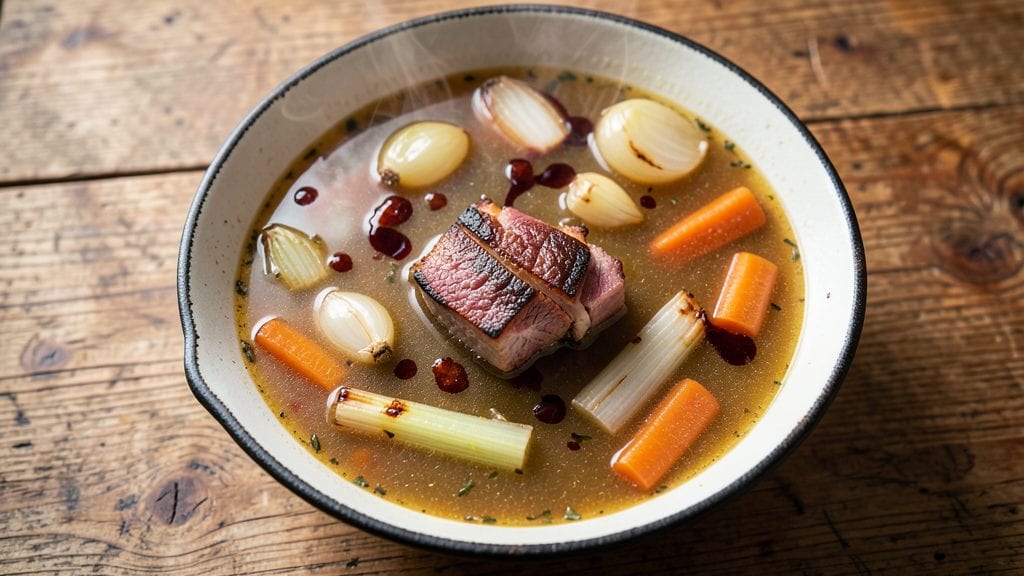
This old-fashioned ham hock soup recipe delivers the kind of soul-warming comfort that transforms a simple meal into a family tradition. The rich, smoky flavor from slow-cooked ham hock creates a broth so deep and satisfying, it becomes the heart of any gathering.
I developed this recipe after years of perfecting the balance between traditional techniques and modern convenience—no shortcuts, just authentic taste.
The secret lies in rendering the fat from the ham hock first, which infuses the broth with unmatched richness while keeping it clear. Vegetables like carrots, celery, and onions form the aromatic base, while a touch of vinegar brightens the depth.
This method ensures every spoonful carries layers of flavor—smoky, savory, and just slightly tangy. The result? A soup that tastes like home, even when you're cooking for the first time.
By the time you serve it, you'll have a steaming bowl of hearty soup with tender vegetables, perfectly seasoned broth, and just the right amount of ham hock meat.
The aroma alone will draw everyone to the table, and the first bite delivers that smoky depth and savory richness that makes this recipe a classic. Ready to make it? Let’s get started with the ingredients you’ll need.
This soup is ideal for chilly evenings, holiday meals, or whenever you crave a dish that feels both nostalgic and deeply satisfying. The leftovers reheat beautifully, too, so you can enjoy it all week long. Here’s how to make it step by step.
Ingredients for old fashioned ham hock soup
Soul-warming ham hock soup starts with these simple, flavor-packed ingredients that promise smoky depth and savory richness.
| Ingredient | Amount | Notes |
|---|---|---|
| Ham Hock 🍖 | 1 whole | Uncooked, with bone and fat |
| Yellow Onions 🧅 | 2 whole | Medium size, peeled and halved |
| Carrots 🥕 | 4 whole | Medium size, peeled and chopped |
| Celery Stalks 🥬 | 4 whole | Medium size, trimmed and chopped |
| Garlic Cloves 🧄 | 6 cloves | Fresh, peeled and smashed |
| White Vinegar 🍋 | ¼ cup | For brightness and depth |
| Bay Leaves 🌿 | 2 whole | Fresh or dried, whole leaves |
| Black Peppercorns 🌶️ | 1 tsp | Coarsely crushed, not ground |
| Salt 🧂 | 2 tsp | Kosher or sea salt, adjust to taste |
| Water 💧 | 8 cups | Filtered or spring water preferred |
| Potatoes 🥔 | 2 lb | Yukon gold, peeled and cubed |
| Fresh Parsley 🌿 | ¼ cup | Chopped, for garnish only |
| Butter 🧈 | 2 tbsp | Unsalted, for finishing |
The ham hock is the star here—look for uncooked, bone-in cuts at your local butcher or grocery store's meat department. Costco or Whole Foods usually carry them, but if you can't find them, a smoked ham bone works in a pinch. The fat renders beautifully during cooking, creating that unmistakable richness. For the vegetables, farmers market produce has more flavor, but the grocery store will do. Just make sure your carrots and celery are firm and free of blemishes. The potatoes should be waxy or Yukon gold—they hold up best during slow cooking.
No ham hock? Smoked ham bone or even a ham shank will work, though the flavor won't be quite as deep. Fresh bay leaves are best, but dried work at half the amount. The vinegar is key—apple cider vinegar adds a fruity note, but white vinegar keeps it classic. If you're short on time, pre-chopped frozen vegetables save steps, though fresh always tastes better. The butter at the end? Full-fat, unsalted melts beautifully and adds a luxurious finish. Don't skip it—trust me on this.
This soup tastes even better the next day as flavors meld. Store leftovers in the fridge for up to 5 days, or freeze for up to 3 months in airtight containers. I like to portion it into individual containers so I can grab a bowl whenever I crave that smoky comfort. The broth reduces slightly when reheated—just add a splash of water if it gets too thick. Garnish with fresh parsley right before serving to keep it bright and fresh.
Why You'll Love This Recipe
- One-Pot Magic: The ham hock does all the work—just toss in chopped onions, carrots, and celery, then let the broth simmer. No fancy techniques, no last-minute scrambling, and honestly, the smell alone makes the effort disappear.
- Rich Without Effort: That ham hock? It turns the broth into liquid gold—deep, savory, and just salty enough to make every spoonful satisfying. The garlic and onions caramelize right in the pot, so you don’t even need to slave over a stove.
- Leftovers That Beg for More: This soup tastes better the next day—yes, really. The flavors meld into something heartier, and it’s the perfect lunch for busy mornings. My kids actually ask for it, and that’s saying something.
- Budget-Friendly Pantry Hero: A single ham hock stretches this into four or five meals, and the veggies? Basic, cheap, and always on hand. It’s the kind of recipe that makes grocery day feel like a victory.
Step-by-step instructions for old fashioned ham hock soup
This soup delivers deep, smoky flavor and hearty comfort in every spoonful.
Prepare the Ham Hock and Aromatics
Start by rinsing the whole ham hock under cold water and patting it completely dry with paper towels. Place it in a large Dutch oven or heavy pot and add the peeled and halved yellow onions, chopped carrots, and chopped celery stalks. This creates a flavorful base where the ham hock will render its rich juices.
Add the smashed garlic cloves, whole bay leaves, crushed black peppercorns, and the 2 teaspoons salt. Pour in the 8 cups water and bring everything to a boil over high heat. Once boiling, reduce the heat to medium-low and let it simmer uncovered for 30 minutes. This initial simmer helps extract flavors from the ham hock and vegetables while preventing the water from boiling over.
After 30 minutes, carefully remove the ham hock and set it aside. The broth should now have a rich, reddish hue from the ham hock's natural juices. Strain the broth through a fine-mesh sieve into a clean pot, pressing gently on the vegetables to release all their flavors. Discard the solids or save them for another use if desired.
Simmer the Broth with Vinegar
Return the strained broth to the pot and add the 0.25 cup white vinegar. The vinegar brightens the flavors and helps tenderize the ham hock when it's added back later. Bring the broth to a gentle simmer over medium heat, then reduce the heat to low to maintain a steady simmer.
Place the ham hock back into the broth and let it simmer uncovered for 2 hours. This long cooking time is crucial for breaking down the collagen in the ham hock, which will create a tender, flavorful meat that practically falls off the bone. Check the broth occasionally and add water if it reduces too much, keeping the level just above the ham hock.
After 2 hours, remove the ham hock and let it cool slightly before shredding the meat off the bone with two forks. Discard the bone and any remaining fat. The broth should now have a deep, smoky aroma with layers of savory richness from the ham hock.
Add Potatoes and Finish the Soup
Add the peeled and cubed Yukon gold potatoes to the simmering broth. The potatoes should be fully submerged, so add a little water if needed. Return the broth to a gentle simmer and cook uncovered for 15 to 20 minutes, or until the potatoes are fork-tender and easily pierced with a knife.
Once the potatoes are tender, stir in the shredded ham hock meat and let the soup simmer for an additional 5 minutes. This allows the flavors to meld together perfectly. Taste the soup and adjust the seasoning with more salt if needed. The soup should be rich and savory, with a balance of smoky depth from the ham hock and bright acidity from the vinegar.
Remove the pot from the heat and stir in the 2 tablespoons butter. The butter adds a smooth, velvety finish to the soup, enhancing its richness. Ladle the soup into bowls and garnish each serving with the chopped fresh parsley. Serve immediately while hot, with crusty bread on the side to soak up every last drop of that flavorful broth.
Pro Tips For Making Old Fashioned Ham Hock Soup
- BROWN THE HOCK FIRST: Skip the direct simmer—sear the ham hock in a dry pot over medium-high heat until the fat renders and the meat turns deep golden. I learned this the hard way: rushing to the broth stage without browning means a pale, one-dimensional soup. The Maillard reaction here isn’t just for show; it builds flavor that no amount of bouillon can replace.
- CHOP ONIONS COARSELY: Tiny onion pieces disappear into mush. Cut yellow onions into ½-inch chunks—they’ll soften but stay identifiable, adding texture to every spoonful. (Yes, even if you’re impatient like me.) This isn’t fine French onion soup; it’s rustic, hearty, and meant to be eaten with a fork.
- SIMMER LOW AND LONG: The ham hock needs hours—at least 3, ideally 4—at a gentle simmer (barely bubbles, no rolling). After burning three batches, I finally figured out: high heat = cloudy broth and rubbery meat. Cover the pot, turn the heat to low, and walk away. The soup will reward you with richness that shortcuts can’t match.
- SAVE THE HOCK JUICES: When you remove the ham hock to shred the meat, don’t dump the broth. Strain it back into the pot—those juices are liquid gold. I was skeptical until I tried it: the first batch without them tasted flat, like someone forgot to season. The second batch? Deep, savory perfection. (Your future self will thank you.)
Regional styles of this dish
Southern Comfort
In the American South, ham hock soup is a staple during cooler months, especially in states like Georgia and Alabama. The key here is slow-cooking the ham hock for at least 3 hours to extract maximum flavor.
I add a splash of hot sauce (like Crystal Hot Sauce) at the end for a spicy kick that’s classic in Southern kitchens. Serve with cornbread for the full experience—this combo is a match made in heaven. 🌶️
Midwestern Heartiness
Up North, this soup takes on a heartier profile, often with kielbasa or smoked sausage added alongside the ham hock. I like using Johnsonville smoked sausage for its bold, smoky flavor.
Midwestern cooks also tend to add diced tomatoes (about 1 cup) to the broth for a touch of sweetness. The result is a soup that feels like a hug on a cold winter day. ❄️
New England Clarity
In New England, the focus is on a crystal-clear broth that still delivers deep flavor. After simmering the ham hock, I strain the broth through a cheesecloth-lined sieve for extra clarity.
The vegetables are often more finely chopped, and I add a touch of dried thyme (about 1 teaspoon) for an earthy note. This version is lighter but still packed with that essential smoky richness. 🌿
Appalachian Twist
The Appalachian region takes this soup to the next level by adding collard greens or turnip greens (about 2 cups) during the final 15 minutes of cooking. The greens wilt beautifully and add a touch of bitterness that balances the richness.
I also like to finish with a sprinkle of crumbled bacon for extra depth. This variation is a true crowd-pleaser. 🍃
Modern Adaptations
For a contemporary twist, I’ve seen this soup made with bone broth instead of water to deepen the umami. Adding mushrooms (like shiitake) or kale also works well for a more complex flavor profile.
The vinegar can be swapped for apple cider vinegar to add a subtle sweetness. These updates keep the soul of the dish while making it feel fresh. 💡
Nutrition facts
Frequently asked questions
Why does this recipe use vinegar in ham hock soup?
The 0.25 cup white vinegar serves two key purposes: it brightens the rich, smoky flavors of the ham hock and helps tenderize the meat during the long simmer. Without it, the soup can taste overly heavy. The acidity also balances the fat rendered from the ham hock, creating that perfect harmony of savory and tangy notes.
Can I substitute ham hock with another meat?
Yes! If you can't find ham hock, try a smoked ham bone or ham shank for similar flavor. For a different taste, use chicken thighs with the bone or pork neck bones, but reduce simmering time to 1.5 hours to avoid toughness. The fat content is key for richness, so avoid lean meats like chicken breast.
How do I know when the ham hock meat is fully cooked?
The meat should be fork-tender and easily shred off the bone after 2 hours of simmering. If you're unsure, check at 1.5 hours—the meat should pull away cleanly from the bone. Overcooking won't ruin it, but it may become stringy if simmered too long. Pro tip: Let it cool slightly before shredding for easier handling.
Can I make this soup in a slow cooker?
Follow the same steps but transfer everything (ham hock, veggies, broth) to a 6-quart slow cooker after the initial 30-minute simmer. Cook on low for 6-8 hours or high for 3-4 hours, then add potatoes and finish as directed. The slow cooker's gentle heat ensures tender meat and perfectly cooked veggies with minimal effort.
What if my soup tastes too salty?
If the broth is overly salty, add 1 cup cold water and let it simmer for 10 minutes to dilute the salt. For a quicker fix, stir in 1-2 tablespoons cold milk or cream, which helps balance the saltiness. Avoid adding fresh water directly—it can make the soup watery. Taste as you go to adjust gradually.