
Soups & Stews
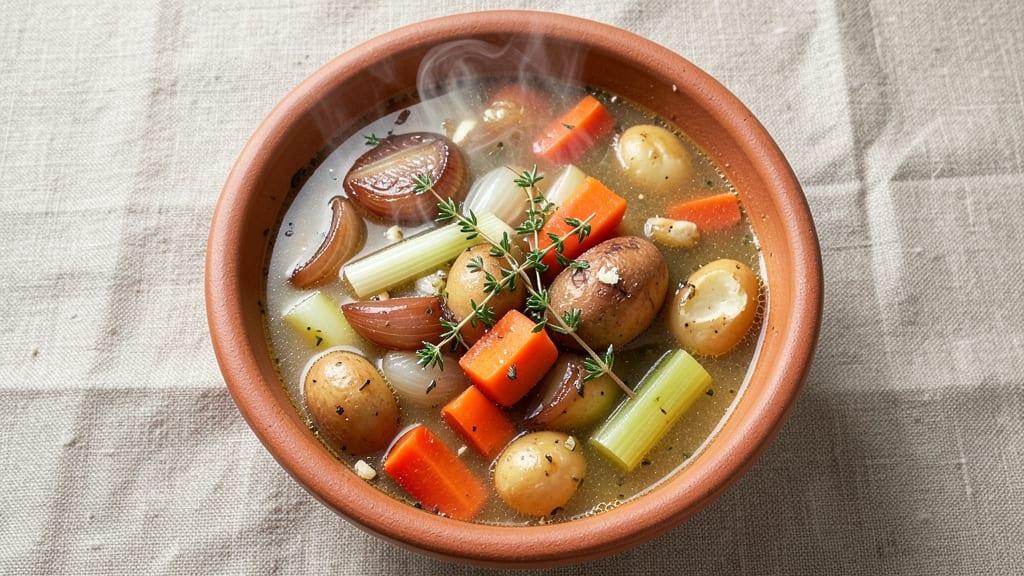
This peasant soup recipe brings hearty tradition to your kitchen with its rustic vegetable stew and herbed bread crust—perfect for cozy evenings or family gatherings. The dish traces back to European peasant cuisine, where simple ingredients created nourishing meals.
What makes it special is the foolproof technique that transforms humble vegetables into a rich, flavorful stew with minimal effort.
The beauty of peasant soup lies in its adaptability—use whatever seasonal vegetables you have on hand, from carrots and potatoes to cabbage and onions. The herbed bread crust adds a satisfying crunch and depth of flavor, turning this into a complete meal.
It’s designed to be simple yet impressive, requiring just a few hours of simmering time for maximum flavor development.
By the time you serve this soup, you’ll have a warm, comforting bowl filled with tender vegetables, aromatic herbs, and a golden bread crust that adds texture. The broth is rich and savory, while the crust provides a delightful contrast.
This recipe is ideal for those who appreciate rustic charm without sacrificing ease—perfect for modern kitchens with a touch of historical warmth.
The best part? Leftovers taste even better the next day, making it a great meal prep option. Whether you're feeding a crowd or enjoying a quiet dinner, this soup delivers satisfying, homey comfort with every spoonful. Let’s get started on creating this classic dish with a modern twist.
Ingredients for peasant soup
Simple vegetables, bold flavors, and a golden bread crust—this peasant soup delivers rustic comfort with minimal fuss.
| Ingredient | Amount | Notes |
|---|---|---|
| Yellow Onions 🧅 | 2 whole | Medium size, roughly chopped |
| Carrots 🥕 | 4 whole | Medium size, peeled and chopped |
| Russet Potatoes 🥔 | 3 lb | Unpeeled, cut into 1-inch cubes |
| Celery Stalks 🥬 | 3 whole | Trimmed, chopped into 1-inch pieces |
| Garlic Cloves 🧄 | 6 cloves | Peeled, lightly crushed |
| Fresh Thyme Sprigs 🌿 | 2 whole | Leaves stripped from stems |
| Fresh Parsley Sprigs 🌿 | 1 whole | Leaves chopped, for garnish |
| Bay Leaves 🍃 | 2 whole | Dried, for simmering |
| Chicken Broth 💧 | 6 cups | Low-sodium preferred, homemade or quality store-bought |
| Stale Baguette 🍞 | 1 whole | Day-old, crust removed, torn into chunks |
| Extra-Virgin Olive Oil 🫒 | ¼ cup | For crust topping |
| Dried Oregano 🌿 | 1 tbsp | For bread crust seasoning |
| Salt 🧂 | 2 tsp | Diamond Crystal kosher salt |
| Black Pepper 🌶️ | 1 tsp | Freshly ground |
| Butter 🧈 | 2 tbsp | Unsalted, for crust richness |
The vegetables are the heart of this soup, so choose them fresh—carrots with vibrant orange color and onions with crisp texture make all the difference. I always hit the local farmers market when in season for the sweetest carrots and potatoes, but grocery store produce works perfectly fine. The baguette for the crust should be day-old (or intentionally dried out)—this gives it that perfect crunch. If you can't find a stale baguette, toast a fresh one lightly and let it cool completely before tearing it into chunks. Fresh thyme and parsley add that aromatic touch that makes this soup feel special, so don't skip them if you've got them—dried works at one-third the amount in a pinch.
No fresh herbs? Dried thyme and parsley will still work beautifully, though the flavor won't be as vibrant. Running low on chicken broth? Vegetable broth plus a splash of lemon juice keeps it flavorful. The bread crust can be made with any stale bread—sourdough, rye, or even a baguette from the day before. For extra richness, add a splash of white wine to the broth while simmering. The butter in the crust is non-negotiable—unsalted gives you control over seasoning, and it makes the crust irresistibly golden. If you're watching fat content, you can reduce it to 1 tbsp, but trust me, the full amount is worth it.
This soup tastes even better the next day as the flavors meld together—make a double batch if you can. Store leftovers in the fridge for up to 5 days or freeze for 3 months. The bread crust stays crispy for about 2 hours at room temperature, so serve it fresh with the soup. For meal prep, assemble the soup without the crust, refrigerate, and add the crust when reheating—just broil for 3-5 minutes to crisp it up again. The crust can also be made ahead and stored separately for up to 3 days in an airtight container.
Why You'll Love This Recipe
- One-Pot Magic: I swear by the simplicity of this—just chop, simmer, and let the onions and garlic caramelize into something rich without lifting a pot more than once. The potatoes and carrots soften perfectly while the celery adds that earthy backbone, all in one pot.
- Garlic Kiss: That moment when you crush fresh garlic into the simmering broth? Pure flavor payoff. The onions and celery mellow into sweetness, but the garlic hits like a warm hug—especially when you let it toast just until it’s golden but not burnt.
- Lunchbox Hero: Between us, this soup is my secret weapon for meal prep. It reheats beautifully, keeps for days in the fridge, and I’ll pack it cold in jars for work lunches—tastes even better the next day, honestly. The potatoes stay hearty, the carrots hold their bite, and no one complains.
- Pantry Staple: Honestly, this recipe uses ingredients you already own. No fancy swaps, no last-minute grocery runs—just what’s lurking in your crisper drawer. And because it’s so budget-friendly, I make it when I’m pinching pennies, but my family still begs for seconds.
Step-by-step instructions for rustic vegetable stew with herbed bread crust
Transform simple ingredients into a hearty, comforting peasant soup with rich layers of flavor and a crispy bread topping.
Sauté the Vegetable Base
Heat the 2 tablespoons butter in a large Dutch oven over medium heat. Add the 2 whole yellow onions, 4 whole carrots, and 3 whole celery stalks, all chopped into 1-inch pieces. Cook for 8-10 minutes, stirring occasionally, until the vegetables soften and the onions turn translucent. This foundational step builds depth of flavor through caramelization.
Add the 6 cloves garlic cloves and cook for another 30 seconds until fragrant—this prevents the garlic from burning, which would make the soup bitter. Stir in the 2 whole fresh thyme sprigs and 2 whole bay leaves to infuse the vegetables with aromatic herbs. You'll notice the kitchen filling with an earthy, inviting scent—this is your cue that the base is ready for the next stage.
Build the Stew with Potatoes and Broth
Add the 3 lb russet potatoes, cut into 1-inch cubes, to the Dutch oven. Pour in the 6 cups chicken broth, ensuring all the vegetables are submerged. Bring the mixture to a gentle boil over high heat, then reduce to a simmer and cover partially. Let it cook for 20-25 minutes until the potatoes are tender when pierced with a fork.
While the soup simmers, taste and adjust seasoning with the 2 teaspoons salt and 1 teaspoon black pepper. The broth should be well-seasoned but not overly salty—this is your chance to balance flavors before the bread topping adds complexity. Stir occasionally to prevent the potatoes from sticking to the bottom of the pot.
Prepare the Herbed Bread Crust
Preheat your oven to 375°F. In a small bowl, combine the 1 whole stale baguette, torn into chunks, with the 0.25 cup extra-virgin olive oil, 1 tablespoon dried oregano, 1 teaspoon salt, and ½ teaspoon black pepper. Mix until the bread is evenly coated and slightly moistened—this ensures a crispy, flavorful crust.
Spread the herbed bread mixture evenly over the simmering soup, pressing down gently to create an even layer. The bread will absorb some of the broth, creating a golden, crispy topping that contrasts beautifully with the creamy stew. Bake for 15-20 minutes until the bread is golden brown and crispy on top.
Finish and Serve with Fresh Herbs
Remove the soup from the oven and let it rest for 5 minutes to allow the bread topping to set. Discard the 2 whole thyme sprigs and 2 whole bay leaves—they’ve done their job infusing flavor into the broth. Stir the soup gently to redistribute any settled ingredients at the bottom of the pot.
Garnish with the 1 whole fresh parsley sprigs, chopped, and serve immediately. The contrast of the warm, hearty stew with the crispy bread topping makes this peasant soup truly extraordinary. Each spoonful delivers layers of savory, herby, and slightly sweet flavors that define rustic comfort food.
Pro Tips For Making Peasant Soup
- SOFTEN THE ONIONS FIRST: I used to toss everything raw into the pot, but onions burn faster than you’d think—especially when you’re distracted by chopping potatoes. Sauté them in 1 tablespoon of oil over medium heat for 5 minutes until they’re just translucent (not brown). This keeps the soup from turning bitter later, and the flavor melds better with the carrots and celery.
- CUT POTATOES UNIFORM: Russet potatoes take forever to cook if they’re lumpy. Cut them into 1-inch chunks—same size as the carrots and celery—and they’ll all soften at the same time. No one wants mushy potatoes floating next to still-crunchy carrots. (Yes, even if you’re impatient like me.)
- SALT THE WATER LIBERALLY: Peasant soup needs bold flavor, and the broth is the soul of the dish. Salt the water before adding the veggies—about 1½ teaspoons per quart—and taste it after 10 minutes of simmering. If it’s bland, add more. You can’t fix underseasoned soup later; it’ll just taste like boiled water.
- STIR THE POT ONCE: After the initial boil, resist the urge to poke and prod the soup. Stirring constantly keeps the potatoes from developing that creamy, buttery texture they’re supposed to have. Let it simmer uncovered for 20 minutes, then stir once to check doneness. Less fuss, better results.
Common mistakes when making great peasant soup
Over-Salting the Broth
Peasant soup relies on a balanced broth, so adding too much salt early on can ruin the delicate flavor harmony. I’ve learned the hard way—taste your broth as it simmers, especially after adding potatoes. If it’s already salty, you can’t fix it by adding more vegetables later.
Instead, adjust seasoning gradually, adding salt in small increments. Remember, you can always add more herbs or a splash of lemon juice to brighten flavors if needed. 🧂
Skipping the Sauté
Rushing through the sauté step is a common mistake that weakens flavor development. Caramelizing onions and vegetables for 8-10 minutes builds depth—this is where the Maillard reaction happens, creating rich, savory notes. If you skip this or rush it, your soup will taste flat.
I always set a timer and resist the urge to speed things up. Patience here makes all the difference in the final result. 🔥
Using Fresh Bread for Crust
The bread crust is the star of this dish, and fresh bread won’t give you that perfect crunch. Stale or intentionally dried-out bread is key—it absorbs the broth while staying crispy. If you’re short on time, lightly toast a fresh baguette and let it cool completely before using.
I’ve tried this trick more times than I can count, and it works like a charm every time. Fresh bread just won’t hold up to the moisture from the soup. 🍞
Ignoring the Resting Time
After baking, letting the soup rest for 5 minutes allows the bread crust to set properly. Skipping this step means a soggy, uneven topping. I’ve seen beginners rush to serve immediately, only to end up with a mushy crust.
Trust the process—those few minutes make a world of difference in texture and presentation. 💫
Not Adjusting Vegetable Ratios
Every batch of vegetables varies in size and moisture content. If you use oversized potatoes, they’ll take longer to cook and might not soften evenly. I recommend cutting them into 1-inch cubes for consistent cooking.
Also, if your carrots are particularly watery, reduce the broth slightly to avoid a watery soup. Always taste as you go—this is where home cooks can truly personalize the dish. 🥕
Burning the Garlic
Garlic burns faster than you think, and once it turns bitter, there’s no saving it. Cook it for only 30 seconds after adding it to the pot. If your kitchen runs hot, reduce the heat slightly or pull the pot off the burner for a moment.
I’ve had to start over more than once because of this—don’t let it happen to you! A little caution goes a long way. 🧄
Nutrition facts
Frequently asked questions
Can I make this peasant soup vegetarian?
Replace the chicken broth with 6 cups vegetable broth and add 1 cup dried white beans (soaked overnight) or 2 cups cooked lentils to the vegetable base. For extra richness, stir in 2 tablespoons tomato paste with the sautéed vegetables. The bread crust remains the same, adding that satisfying crunch.
How long can I store leftovers?
This soup tastes even better the next day! Store it in an airtight container in the fridge for up to 5 days. For longer storage, freeze for 3 months. Reheat gently on the stove, then broil the bread crust for 3-5 minutes to restore crispiness. The flavors deepen over time, making it perfect for meal prep.
What if I don't have a Dutch oven?
Use a large, heavy-bottomed pot with a lid—it should hold at least 8 quarts. If your pot is light, reduce the heat slightly to prevent burning. The key is maintaining a gentle simmer while cooking the potatoes. A heavy pot distributes heat better, mimicking a Dutch oven's performance.
Can I make the bread crust ahead of time?
Yes! Prepare the herbed bread mixture up to 24 hours ahead and store it in an airtight container at room temperature. When ready to use, spread it over the hot soup and bake as directed. The bread will crisp up beautifully during baking. For extra flavor, sprinkle with grated Parmesan before baking.
What vegetables can I substitute?
This recipe is flexible—swap carrots for turnips or parsnips, or add cabbage, kale, or mushrooms for extra heartiness. If you love potatoes, increase to 4 lb total but reduce simmering time to 20 minutes to avoid mushiness. Seasonal produce works best, but frozen veggies (thawed) are fine in a pinch.