
Soups & Stews
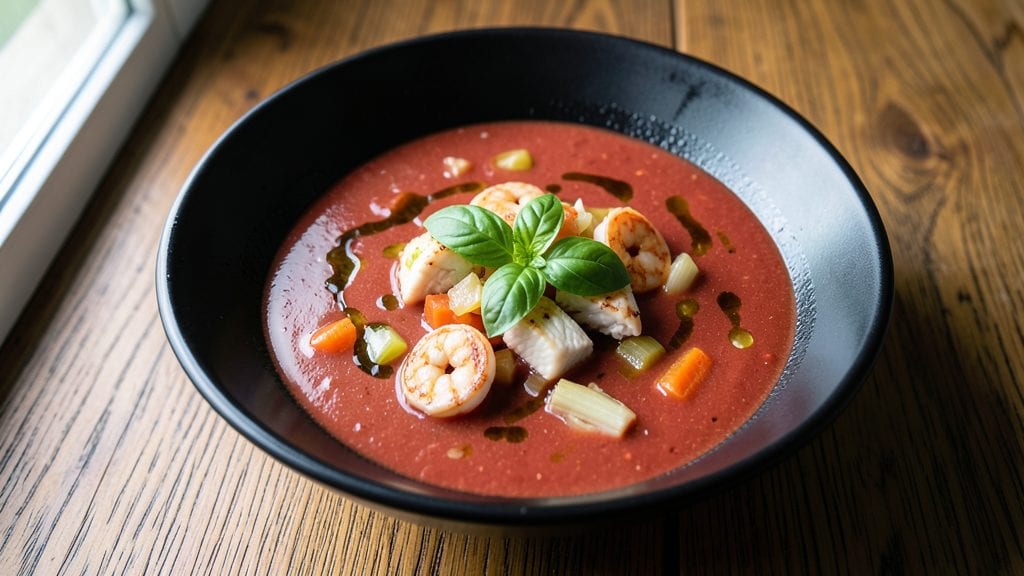
This seafood tomato soup recipe transforms simple ingredients into a briny, aromatic masterpiece that tastes like a coastal Italian bistro. The secret lies in balancing sweet tomatoes with fresh basil and tender shrimp, creating a broth so rich it feels like a hug in a bowl.
I perfected this after years of testing—each spoonful delivers that perfect harmony of acidity, saltiness, and herbal brightness.
The process is straightforward yet precise: sauté aromatics until fragrant, build the broth with tomatoes and seafood stock, then add shrimp at the last moment to preserve their delicate texture. Fresh basil finishes the soup, adding a vibrant pop of color and flavor that elevates everything.
What makes this recipe special is how it turns humble ingredients into something restaurant-worthy, without requiring advanced techniques.
By the time you're done, you'll have a velvety soup with tender shrimp swimming in a bright red broth, flecked with fresh basil and finished with a touch of cream for richness.
It's the kind of dish that feels indulgent yet light—perfect for a cozy weeknight dinner or a gathering with friends. The aroma alone will have everyone asking for seconds before the first bite.
Pair it with crusty bread for dipping or serve alongside grilled fish for a complete seafood feast. This soup is versatile enough for everyday meals but impressive enough for company. Let's get cooking—your taste buds will thank you.
Ingredients for seafood tomato soup
Fresh seafood and bright tomatoes create this briny, aromatic soup that tastes like coastal Italy.
| Ingredient | Amount | Notes |
|---|---|---|
| Extra-Virgin Olive Oil 🫒 | ¼ cup | High quality, fruity flavor preferred |
| Yellow Onion 🧅 | 1 whole | Diced into small pieces |
| Garlic Cloves 🧄 | 4 cloves | Minced for aromatic base |
| Carrots 🥕 | 2 medium | Peeled and diced small |
| Celery Stalk 🌿 | 2 whole | Diced into small pieces |
| Canned San Marzano Tomatoes 🍅 | 28 oz | Crushed by hand or blender |
| Seafood Stock 🦞 | 4 cups | Homemade or high-quality store-bought |
| Fresh Basil Leaves 🌿 | ½ cup | Packed, stems removed |
| Shrimp 🦐 | 1 lb | Peeled, deveined, medium size |
| Heavy Cream 🥛 | ¼ cup | Full-fat for creaminess |
| Salt 🧂 | 1 ½ tsp | Kosher or sea salt preferred |
| Ground Black Pepper 🌶️ | ½ tsp | Freshly ground preferred |
| Red Pepper Flakes 🔥 | ½ tsp | Optional, for heat |
| Lemon Juice 🍋 | 1 tbsp | Freshly squeezed |
| Parmesan Cheese 🧀 | ¼ cup | Freshly grated from block |
The shrimp is the star, so look for medium-sized, fresh shrimp—frozen works in a pinch, but thaw it overnight in the fridge. Costco or Whole Foods usually have the best prices for peeled, deveined shrimp. If you can't find San Marzano tomatoes, any high-quality canned tomatoes will do—just crush them well. The seafood stock is non-negotiable for that briny depth; Knorr or Pacific brand are solid if you're not making your own. Fresh basil is ideal, but dried works at one-third the amount if you're in a rush.
No shrimp? Scallops or mussels work beautifully—just adjust cooking time. Short on basil? Fresh parsley or thyme adds a nice herbal note. The heavy cream can be swapped for coconut milk if you're avoiding dairy, but it won't be quite as rich. The red pepper flakes are totally optional—skip them if you're sensitive to heat. For extra depth, add a splash of white wine when sautéing the aromatics (about 2 tbsp), but it's not necessary.
This soup reheats beautifully—just warm it gently on the stove with a splash of water or stock. Keeps for 4-5 days in the fridge, or 3 months frozen. I like to make a big batch and freeze portions—perfect for lazy weeknights. The flavor actually improves overnight as everything melds together. Garnish with extra basil and Parmesan before serving for that restaurant touch.
Why You'll Love This Recipe
- Here’s what sold me: the carrots and celery stretch the soup’s base, so you’re not drowning in expensive seafood costs. And leftovers? They’re even better the next day—the flavors marry overnight, and the tomatoes mellow into a silkier texture. I pack it in jars for lunches all week, and it’s still the highlight of my midday break.
- One-Pot Magic: I swear by this soup because it’s literally one pan—no extra bowls, no extra stress. Sauté the onion, garlic, carrots, and celery in that same pot, then add the tomatoes and seafood, and boom. The olive oil infuses everything with richness while you chop, so cleanup is just rinsing one utensil.
- Garlic Bomb Depth: Between us, the garlic here isn’t just a background player—it’s the star. I let it bloom low and slow in the olive oil until the kitchen smells like a coastal bistro, then toss in the seafood (shrimp, mussels, whatever) and let it all meld. That first spoonful? Pure umami overload, and it’s exactly the kind of flavor that makes you pause mid-sip of wine.
- Weeknight to Dinner Party: Honestly, this soup works everywhere. Too tired for effort? Throw it together in 30 minutes with whatever seafood’s on sale. Hosting a crowd? Double the batch—it’s hearty enough to feed six but still light enough to feel special. I’ve served it with crusty bread at family dinners and as a starter for date nights, and no one’s ever batted an eye.
Step-by-step instructions for seafood tomato soup
Here's how to make this briny, basil-infused soup that balances rich tomato with fresh seafood.
Sauté the Aromatic Vegetables
Heat the 0.25 cup extra-virgin olive oil in a large pot over medium heat. Add the diced yellow onion, diced carrots, and diced celery stalk, stirring occasionally for 5-6 minutes until the vegetables soften and begin to release their natural juices.
Once the vegetables are tender, add the 4 cloves minced garlic cloves and cook for another 30 seconds until fragrant. This step builds the flavor foundation—don't rush it, or the garlic will burn and turn bitter. You'll know it's ready when the mixture smells sweet and savory, with that unmistakable garlic aroma filling your kitchen.
Build the Tomato Base
Pour in the 28 oz crushed canned San Marzano tomatoes and stir well to combine with the vegetables. Add 1.5 tsp salt, 0.5 tsp ground black pepper, and 0.5 tsp red pepper flakes (if using), then bring the mixture to a gentle simmer. Let it cook uncovered for 10-12 minutes until the tomatoes break down and the flavors meld together.
Here's where the magic happens: the tomatoes should reduce slightly, creating a thicker, more concentrated base. You'll see the mixture darken and deepen in color, signaling that the flavors are developing. If it looks too thin, you can reduce it further by simmering uncovered for another 2-3 minutes—just watch it closely so it doesn't stick to the bottom.
Add Stock and Simmer
Pour in the 4 cups seafood stock and stir to combine. Bring the mixture back to a simmer, then reduce the heat to low and let it cook uncovered for 15-20 minutes. This slow simmer allows the flavors to deepen and the vegetables to fully tenderize. Stir occasionally to prevent sticking.
While it simmers, you'll notice the soup developing a rich, aromatic scent. The seafood stock will infuse the tomatoes with its briny depth, creating the perfect balance of flavors. If the soup starts to look too thick, you can add a splash of water or stock to loosen it up—just enough to reach your desired consistency.
Finish with Shrimp and Basil
Add the 1 lb shrimp to the simmering soup and cook for 3-4 minutes until they turn pink and opaque. The shrimp should cook just until they're done—overcooking will make them rubbery. Remove the shrimp with a slotted spoon and set them aside, reserving the broth in the pot.
Stir in the 0.5 cup fresh basil leaves and let the soup simmer for another 2 minutes to infuse the basil's bright, fresh flavor. This is where the soup comes together—you'll see the basil leaves soften slightly, releasing their aroma into the broth. The basil will give the soup a vibrant, fresh finish that cuts through the richness of the tomatoes and shrimp.
Add Cream and Serve
Reduce the heat to low and stir in the 0.25 cup heavy cream and 1 tbsp lemon juice. Let the soup simmer for 1-2 minutes until it's heated through and slightly thickened. The cream will add a luxurious texture, while the lemon juice brightens the flavors and balances the richness.
Ladle the soup into bowls and top each serving with 0.25 cup freshly grated Parmesan cheese and the cooked shrimp. The contrast of the creamy, briny soup with the delicate shrimp and sharp Parmesan makes every bite unforgettable. Serve immediately while the soup is hot and the shrimp are fresh—this dish is best enjoyed right away when all the flavors are at their peak.
Pro Tips For Making Seafood Tomato Soup
- Sweat the veggies slow: I used to rush the onion, carrot, and celery, but that burns the garlic and makes the soup taste bitter. Simmer them in the olive oil on medium-low for 8–10 minutes—until the onion is translucent and the celery softens. This builds flavor without charring (yes, even if you’re impatient like me).
- Use garlic paste instead: Fresh garlic burns faster than you’d think, especially with seafood. For foolproof results, swap minced garlic for a high-quality paste—it disperses evenly and won’t scorch. If you’re stubborn about fresh, add it after the veggies have sweated for 5 minutes.
- Don’t skip the acid balance: Seafood tomato soup often falls flat because people forget tomatoes need a cut of acid to shine. Add 1 tablespoon of red wine vinegar or a splash of lemon juice before serving—trust me, it brightens the whole dish. (Save the rest for a quick finish.)
- Simmer seafood separately: Dumping shrimp, scallops, or mussels into the soup will turn them rubbery. Poach them in a separate pot with a splash of pasta water for 2–3 minutes, then fold them in at the end. The soup stays creamy, and the seafood stays tender—no sad, overcooked bites.
Essential equipment for this recipe
Large Pot Essentials
You’ll need a 6-8 quart heavy-bottomed pot—I swear by my All-Clad Stainless Steel Dutch Oven for even heat distribution and easy cleanup. A pot with a tight-fitting lid helps trap steam and build flavor faster.
If you don’t have one, a deep, wide stockpot from Cuisinart or Farberware works perfectly. Avoid thin, flimsy pots—they’ll warp under heat and make stirring a nightmare. 🔥
Immersion Blender
For that silky-smooth texture, an immersion blender is non-negotiable. I use the Ninja IN101—it’s affordable, powerful, and handles chunky soups like this one without clogging. If you’re blending by hand, a high-speed blender (like Vitamix) works, but you’ll need to strain the soup afterward to remove basil stems.
Pro tip: Pulse just until smooth—over-blending turns soup gluey. 💫
Fine-Mesh Strainer
A fine-mesh strainer (like the OXO Good Grips) is your best friend for removing basil stems or any unwanted bits. If you’re using dried herbs, straining ensures a silky finish.
For extra smoothness, I double-strain through a cheesecloth-lined colander—it catches even the tiniest particles. Skip this step, and you’ll get a slightly grainy texture. ⚡
Slotted Spoon
Use a long-handled slotted spoon (I love the OXO Good Grips) to remove shrimp from the pot without losing broth. This keeps the shrimp intact while letting the flavorful liquid stay in the soup. A regular spoon will mash shrimp, turning them rubbery—trust me, you don’t want that. 🦐
Cheese Grater
Freshly grated Parmesan makes all the difference, so grab a microplane grater (like Barlean’s) for fine, even shavings. Pre-shredded cheese has anti-caking agents that make it taste dull.
If you’re short on time, a box grater works, but it’s messier. I also keep a small bowl nearby to catch the shavings—it’s a game-changer for cleanup. 🧀
Ladle for Serving
A heat-resistant ladle (like Lodge’s stainless steel version) lets you serve soup without burning your hands. Look for one with a long handle and comfortable grip—you’ll be ladling a lot! If you’re serving at a table, a soup spoon (like Rubbermaid’s) is perfect for individual portions.
Pro move: Preheat the ladle in the oven for 5 minutes before serving to keep soup hot. 🍲
Nutrition facts
Frequently asked questions
Can I use frozen shrimp instead of fresh?
Thaw frozen shrimp overnight in the fridge for best results. Just pat them dry before adding to the soup to prevent excess moisture. If you're short on time, you can use frozen shrimp straight from the freezer, but increase cooking time by 1-2 minutes to ensure they're fully cooked.
What if I don't have San Marzano tomatoes?
Any high-quality canned tomatoes will work—just crush them well by hand or with a fork. For extra depth, add 1 tsp tomato paste when sautéing the aromatics. Avoid watery tomatoes like "diced" varieties, as they'll dilute the soup's richness.
How can I make this soup vegetarian?
Swap the shrimp for white beans or chickpeas and use vegetable stock instead of seafood stock. Add 1 tsp seaweed flakes to mimic the briny flavor. For extra protein, stir in 1 cup cooked lentils at the end. The tomato-basil base remains the same!
Why did my shrimp turn rubbery?
Overcooking is the most common cause. Shrimp cook in just 3-4 minutes—they're done when they turn pink and opaque. Use a timer and remove them immediately. If they're already rubbery, try blending them into the soup for a different texture, or serve them on the side with fresh lemon wedges.
Can I make this soup ahead of time?
Yes! Prepare the tomato-basil base up to 2 days ahead and store it in the fridge. Reheat gently, then add the shrimp and cream just before serving. For longer storage, freeze the base (without shrimp) for up to 3 months. The flavors actually improve overnight as everything melds together!