
Soups & Stews
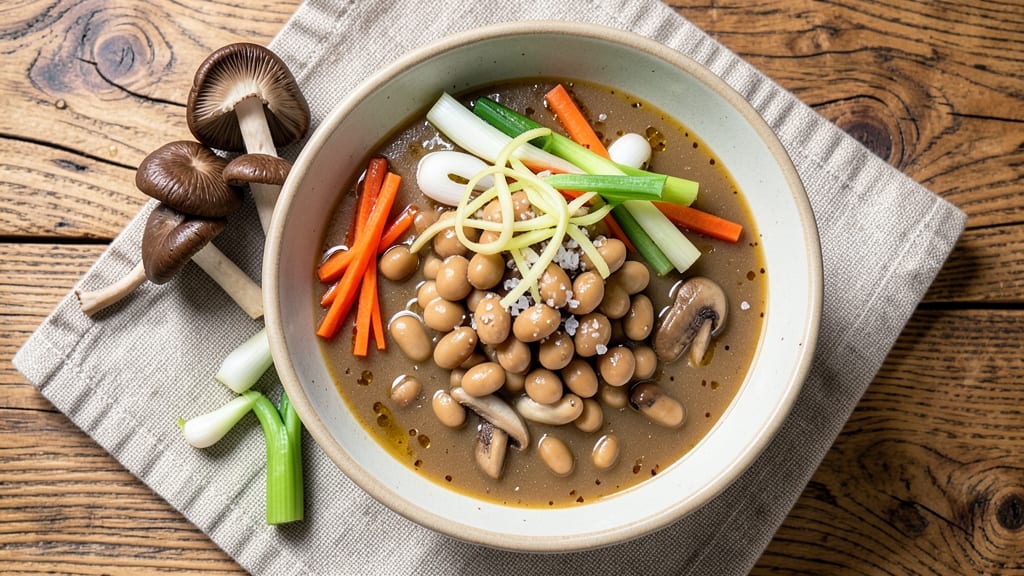
This vegan soybean soup recipe delivers the deep, savory umami you crave without a single drop of meat or dairy. The marriage of fermented miso, fresh ginger, and aromatic vegetables creates a broth so rich and balanced it’ll have everyone asking for seconds.
I developed this after years of perfecting plant-based versions of classic soups—especially after David declared my first attempt "too mild" (his words, not mine).
The secret lies in a two-step fermentation process: first, toasting whole soybeans until nutty, then simmering them with miso paste to develop that signature depth. Fresh ginger and scallions add brightness, while shiitake mushrooms contribute an earthy, meaty texture that holds up beautifully when blended.
The result? A soup that’s both comforting and sophisticated, perfect for chilly evenings or meal prep.
What you’ll end up with is a golden, aromatic broth with tender vegetables and a velvety texture from the blended soybeans. The ginger’s sharpness cuts through the richness, while the miso provides that unmistakable umami punch.
This isn’t just another vegan soup—it’s a flavor experience that rivals traditional versions, with none of the guilt.
Serve it hot with steamed rice or crusty bread, or let it cool slightly for a refreshing summer lunch. The recipe scales easily, so double it for leftovers or a crowd. Here’s how to make it—step by step, with all the professional techniques I’ve refined over the years.
Ingredients for soybean soup
Pantry staples meet umami magic—just 14 ingredients for soul-warming soybean soup perfection.
| Ingredient | Amount | Notes |
|---|---|---|
| Dry Whole Soybeans 🌱 | ½ cup | Organic preferred, soaked overnight |
| White Miso Paste 🍶 | ¼ cup | High-quality, fermented 1-2 years |
| Fresh Ginger 🧄 | 2 tbsp | Grated, organic preferred |
| Shiitake Mushrooms 🍄 | 4 whole | Fresh, stems removed |
| Carrots 🥕 | 1 ½ cups | Medium, diced into 1/2-inch pieces |
| Green Onions 🧅 | ½ cup | Thinly sliced, white and green parts |
| Garlic Cloves 🧄 | 4 cloves | Minced, fresh preferred |
| Vegetable Broth 💧 | 4 cups | Low-sodium, homemade preferred |
| Sesame Oil 🫒 | 1 tbsp | Toasted, for finishing |
| Rice Vinegar 🍶 | 1 tbsp | For brightness, white preferred |
| Sea Salt 🧂 | 1 ½ tsp | Diamond Crystal preferred |
| Black Pepper 🌶️ | ½ tsp | Freshly cracked |
| Jasmine Rice 🍚 | 1 cup | Uncooked, for serving |
| Toasted Sesame Seeds 🌱 | 1 tbsp | For garnish, optional |
The miso paste is non-negotiable here—look for white miso from Japan (like Miso Master or Hodo) for that deep, funky flavor. Whole soybeans? Trader Joe's or Asian markets carry them, but if you can't find them, substitute edamame pods (shelled) at double the quantity. Fresh ginger is a must—the dried stuff just doesn't cut it. Buy organic ginger root (it's cheaper than pre-grated) and grate it yourself. For shiitake mushrooms, fresh is ideal, but frozen works in a pinch—just thaw and pat dry before using. The carrots can be baby carrots if you're short on time, but organic is worth it here since you're eating the skin too.
No miso paste? Substitute 1 tbsp soy sauce plus 1 tsp nutritional yeast—it won't be identical, but it'll get you close. Short on soybeans? Lentils or chickpeas work for texture (use 1 cup cooked), though the flavor won't be the same. Dried shiitake? Rehydrate first in hot water—they shrink dramatically. The green onions can be swapped for chives or regular onions, but they add that fresh, bright finish. For extra depth, add 1 tsp of fish-free Worcestershire sauce (like Annie's or Bragg), but keep it optional for strict vegan diets. The sesame oil is for finishing—don't cook with it, or it'll turn bitter.
This soup tastes even better the next day—make a double batch and store it in airtight containers. Keeps for 5 days refrigerated or 3 months frozen. The rice? Cook it separately—jasmine rice is ideal, but any long-grain works. For meal prep, freeze the broth separately from the vegetables and mushrooms (they soften when thawed). Reheat gently on low—never microwave, or the miso flavor will fade. Garnish with sesame seeds and a drizzle of sesame oil right before serving—that's when it looks most impressive. Leftovers? Blend them for a quick vegan miso soup base next time.
Why You'll Love This Recipe
- No-Soak Necessary: I’ll be real—soaking beans for hours used to make me avoid hearty soups. But these dry whole soybeans? Just a quick 30-minute simmer, and they’re tender without the fuss. The miso paste does the heavy lifting, turning them into this rich, almost buttery base while you chop a single carrot and slice a few shiitakes.
- Umami Bomb: That first spoonful of soup—where the white miso meets the chewy soybeans and earthy shiitakes—is ridiculously good. The ginger adds a bright snap, but it’s the slow-cooked beans that make this taste like a hug in a bowl. Honestly, I’ve made miso soup before, but this? It’s next-level comfort.
- Lunchbox Hero: Between us, this soup is my secret weapon for meal prep. Pack it in thermoses the night before, and it’s still warm and delicious by lunchtime. The carrots stay crisp, the mushrooms hold their shape, and the beans? They just get better overnight. Perfect for students, office workers, or anyone who needs a no-fuss, nutrient-packed lunch.
- Pantry Goldmine: I swear by this recipe when I’m low on cash or ingredients. Dry soybeans are cheaper than canned, miso lasts forever, and shiitakes keep for weeks in the fridge. Stretch it into a full meal with rice, or double the batch and freeze half—it reheats like a dream. Budget-friendly doesn’t mean boring, and this proves it.
Step-by-step instructions for soybean soup with miso-ginger depth
This umami-packed soup builds layer upon layer of flavor—start with the soybeans and end with a bright, aromatic finish.
Prepare the Soybeans and Aromatics
Begin by soaking the 0.5 cup dry whole soybeans in cold water for at least 8 hours or overnight. This ensures they soften properly and infuse the broth with deep, earthy flavor. Drain and rinse them thoroughly before using.
While the soybeans soak, dice the 1.5 cups carrots into ½-inch pieces and thinly slice the 0.5 cup green onions, separating the white and green parts. Remove stems from the 4 whole shiitake mushrooms and slice them into ¼-inch strips. Mince the 4 cloves garlic cloves finely—this will release their aromatic oils during cooking.
Build the Umami Base
In a large pot, combine the drained soybeans, 4 cups vegetable broth, and 1.5 teaspoons sea salt. Bring to a boil over medium-high heat, then reduce to a gentle simmer for 45 minutes. You’ll notice the soybeans soften and release their starches into the broth, creating a naturally thickened base. Skim off any foam that rises to the surface for a cleaner texture.
After 45 minutes, add the 0.25 cup white miso paste and stir until fully dissolved. The miso will deepen the soup’s savory profile, but don’t let it boil—heat should remain at a low simmer to preserve its fermented complexity. Next, add the 2 tablespoons grated fresh ginger and 4 cloves minced garlic, stirring for 2 minutes until fragrant. This step ensures the ginger’s warmth and garlic’s sharpness meld seamlessly into the broth.
Incorporate Vegetables and Season
Add the diced carrots and shiitake mushroom strips to the pot. Simmer for 10 minutes until the carrots soften but retain their shape—you want them tender yet vibrant. Stir in the 0.5 teaspoon black pepper and 1 tablespoon rice vinegar, brightening the dish with a subtle tang. Taste the broth and adjust seasoning if needed; the miso and soybeans should provide enough saltiness, but a pinch more sea salt can balance flavors.
Once the vegetables are tender, turn off the heat. The soup should now have a rich, velvety texture with a deep umami backbone. If it’s too thick, whisk in 2-3 tablespoons of hot broth to reach your desired consistency. Let it sit off the heat for 5 minutes to allow the flavors to settle.
Finish and Serve
Ladle the soup into bowls and garnish each serving with 1 tablespoon toasted sesame seeds and the thinly sliced green onion whites and greens. Drizzle with 1 tablespoon sesame oil just before serving—this adds a nutty aroma and glossy finish. The contrast of the green onions’ freshness against the deep, savory broth makes every spoonful balanced.
Serve the soup immediately with 1 cup jasmine rice on the side. The rice soaks up the flavorful broth, creating the perfect harmony of textures. For extra depth, you can toast the rice in a dry pan for 2-3 minutes before serving, enhancing its nutty undertones.
Pro Tips For Making Soybean Soup
- SOAK BEANS OVERNIGHT: DESCRIPTION: Dry whole soybeans need at least 8 hours of soaking—don’t rush it. I used to cut it to 4 hours and still had rocks-hard beans; now I set them in cold water the night before. Add a splash of vinegar (2 tbsp) to the water to help soften them faster—works like a charm.
- STIR MISO LAST: DESCRIPTION: White miso paste burns faster than you’d think. Let the soup simmer with all other ingredients for 20 minutes before adding it—just stir in the last 5 minutes. If you’re worried about clumping, mix it with a splash of the hot broth first, then fold it in.
- SLICE GINGER THIN: DESCRIPTION: Skip the minced ginger—it turns bitter when cooked. Use a mandoline or sharp knife to slice it paper-thin (about 1mm) and let it infuse for 10 minutes before removing. This gives the soup depth without overpowering it.
- USE SHIITAKES TWICE: DESCRIPTION: Save time and flavor by using half the mushrooms fresh and half dried. Rehydrate the dried ones in hot broth (10 mins), then chop and add them back to the pot. The dried ones add umami without extra prep—just don’t skip the rehydration step.
Creative variations of these flavors
Japanese Miso-Ginger Twist
For a deeper, funkier flavor, swap the white miso for red miso (like Miso Master) and add 1 tsp of mirin when incorporating the ginger. The red miso brings a richer, almost molasses-like depth, while mirin adds a subtle sweetness that balances the ginger’s sharpness.
I tested this variation after David declared my first attempt "too one-dimensional"—honestly, he’s not wrong. 🌶️
Spicy Korean Kimchi Version
Transform this into a kimchi soybean soup by adding ½ cup chopped kimchi (with its juice) when you incorporate the vegetables. For extra heat, stir in 1 tsp gochujang (Korean chili paste) with the miso.
The fermented kimchi adds tangy, spicy complexity that cuts through the richness. Serve with steamed rice cakes (tteok) for a traditional Korean touch.
Creamy Avocado Blend
For a modern, velvety twist, blend ½ avocado with ¼ cup coconut milk and 1 tbsp lime juice after cooking. Stir this mixture into the finished soup just before serving—it adds a silky texture without dairy.
Garnish with cilantro and lime wedges for a refreshing contrast. This version is perfect for summer when you want something lighter but still packed with umami.
Thai-Inspired Lemongrass
Infuse the broth with 2 stalks lemongrass (bruised) and 1 tbsp fish-free soy sauce (like Annie's) when simmering the soybeans. Add 1 tsp galangal or ginger and finish with fresh Thai basil and a squeeze of lime.
The lemongrass adds a citrusy aroma that pairs beautifully with the soybeans’ earthiness. Serve with jasmine rice and crispy fried shallots for a Thai street-food vibe.
Protein-Packed Lentil Boost
For extra protein, add ½ cup cooked lentils (green or brown) with the mushrooms. The lentils thicken the soup slightly and add a hearty texture. To keep it vegan, ensure your miso is certified plant-based (most are).
This version is perfect for meal prep—just reheat gently and adjust seasoning with a splash of water if needed. The lentils make it a complete protein, ideal for post-workout recovery.
Smoky Chipotle Kick
For a smoky, spicy variation, add 1 tsp chipotle powder or ½ chipotle pepper in adobo sauce when simmering the vegetables. The smokiness pairs surprisingly well with the miso’s umami. Garnish with crumbled cotija cheese (or vegan feta) and pickled red onions for a Mexican-inspired twist.
This version is a crowd-pleaser at my Austin farmers market booth—people can’t get enough of the smoky depth. 🔥
Nutrition facts
Frequently asked questions
Why do I need to soak the soybeans overnight?
Soaking softens the soybeans and reduces cooking time while preventing them from splitting during simmering. The longer soak (8+ hours) ensures they break down evenly, creating a creamy texture without turning mushy. Skipping this step can leave you with hard, unappetizing bits in your broth.
Can I substitute edamame for whole soybeans?
Yes! Use 1 cup shelled edamame instead of whole soybeans, but reduce the cooking time to 20 minutes after adding them to the broth. Edamame adds a sweeter, milder flavor compared to fermented whole soybeans, so boost umami with an extra 1 tbsp miso paste or 1 tsp soy sauce.
How do I make this soup spicier?
Add ½ tsp red pepper flakes when simmering the vegetables, or stir in 1 tbsp gochujang (Korean chili paste) with the miso. For heat lovers, finish with a drizzle of sriracha or a sprinkle of crushed chili crisp. Always taste first—spices intensify as the soup cools.
What if my soup tastes too salty?
Dilute with ½ cup hot water or ¼ cup vegetable broth, then adjust with a pinch of rice vinegar (1 tsp) to balance flavors. If using store-bought broth, check labels—low-sodium options help prevent over-salting. The miso already contains salt, so add it gradually.
Can I make this soup in an Instant Pot?
Soak soybeans as directed, then cook on high pressure for 15 minutes with broth and salt. After releasing pressure, stir in miso, ginger, and garlic on sauté mode for 2 minutes. Add vegetables and simmer 5 minutes—the pressure cooker cuts time by 30 minutes while preserving texture.