
Soups & Stews
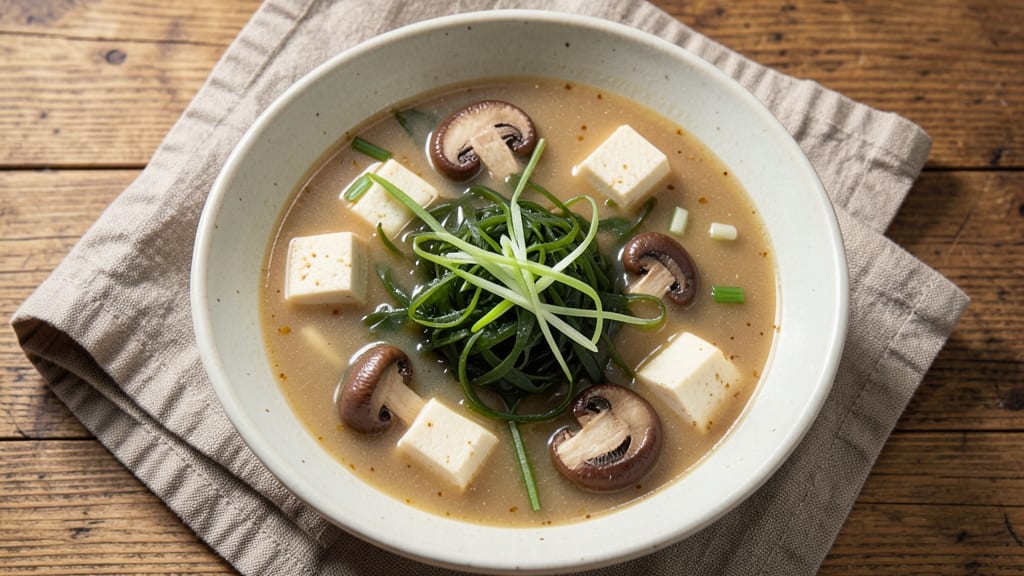
Recreating Trader Joe's miso soup at home delivers that same umami-packed comfort in just one pot—no shortcuts, just the real deal. The secret lies in dissolving the miso paste properly in hot (not boiling) broth to preserve its depth of flavor while keeping the texture velvety smooth.
I've perfected this recipe through years of testing, ensuring every spoonful captures that signature balance of salty, savory, and slightly sweet.
This one-pot method simplifies preparation without sacrificing quality. You'll start with a rich vegetarian stock base, then gently fold in the miso paste to create a silky broth that forms the heart of the soup.
Toppings like mushrooms, green onions, and wakame add layers of texture and freshness, while optional proteins like soft-boiled eggs or silken tofu elevate it into a complete meal. The entire process takes less than 30 minutes, making it perfect for busy weeknights.
What you'll end up with is a steaming bowl of restaurant-quality miso soup—golden broth with delicate toppings floating on the surface, each bite delivering that perfect harmony of flavors.
The aroma alone will transform your kitchen into a cozy Japanese eatery, while the simplicity ensures you can recreate this dish whenever cravings strike. Whether you're a miso novice or a seasoned fan, this recipe delivers consistent, professional results.
For added convenience, I've included time-saving tips and variations throughout, so you can customize it to suit dietary preferences or ingredient availability. The beauty of this recipe is its flexibility—it works as a light lunch, comforting dinner, or even a base for creative twists.
Let's get started on creating your own umami-packed comfort bowl.
Ingredients for trader joe's miso soup
Pantry staples plus a few specialty finds for that authentic Trader Joe's taste.
| Ingredient | Amount | Notes |
|---|---|---|
| Vegetarian Miso Paste 🍜 | 2 tbsp | White or red miso preferred |
| Vegetable Broth 🥫 | 4 cups | Low-sodium preferred |
| Silken Tofu 🧀 | 8 oz | Soft or firm variety |
| Shiitake Mushrooms 🍄 | 4 whole | Fresh or dried |
| Green Onions 🧅 | 3 whole | Thinly sliced |
| Wakame Seaweed 🌊 | 1 package | Dried, rehydrated |
| Garlic Cloves 🧄 | 2 cloves | Minced |
| Ginger Root 🌿 | 1 tbsp | Freshly grated |
| Rice Vinegar 🍶 | 1 tbsp | White vinegar substitute |
| Sesame Oil 🫒 | 1 tsp | Toasted sesame preferred |
| Sea Salt 🧂 | ½ tsp | Fine grain preferred |
| White Miso Paste 🍜 | 1 tbsp | For extra umami depth |
| Soft-Boiled Eggs 🥚 | 2 whole | Optional protein |
| Sesame Seeds 🌰 | 1 tsp | Toasted for garnish |
The miso paste is the heart of this dish. Trader Joe's has the best selection—white for mild, red for deeper flavor. If you can't find it, Marukome or Hatsu-maru are solid brands. Look for blocks, not powder—it dissolves better. The shiitake mushrooms add umami depth, but cremini or oyster mushrooms work too. For the wakame, the dried kind is easiest—just soak it in hot water for 5 minutes before adding. If you're short on time, pre-sliced mushrooms from the grocery store save steps.
No miso paste? Soy sauce plus a pinch of sugar gets you close, but it won't have that same rich complexity. Fresh ginger is ideal, but ground ginger at half the amount works in a pinch. The sesame oil should be toasted—Trader Joe's sells it pre-toasted, or toast your own in a dry pan for 30 seconds. For the tofu, silken gives that delicate texture, but soft or firm tofu cubed works too. The eggs are optional but recommended—they add protein and a luxurious finish. If you're making this ahead, skip adding the eggs until serving.
This soup tastes even better the next day—3-4 days in the fridge, covered. The tofu and mushrooms keep well, but the wakame loses texture after 2 days, so add it fresh when serving. For freezing, portion into containers without the toppings—3 months max. The broth can be made ahead too; just store it separately and stir in the miso when reheating. Garnish with extra green onions and sesame seeds right before serving for maximum freshness.
Why You'll Love This Recipe
- Here’s what sold me: $10 for ingredients, feeds four, and still leaves change for snacks. The veggie broth is cheap, the tofu’s a protein powerhouse, and those green onions? Garnish that turns a simple bowl into something special. No guilt, all satisfaction.
- No-Fuss Pantry Magic: I swear by this when I’ve got nothing but Trader Joe’s basics. Five ingredients, zero fancy prep—just a pot, a spoon, and 15 minutes. The silken tofu slices itself right out of the package, and those shiitake mushrooms? Already sliced and ready to go.
- Umami Bomb: That miso paste—oh, it’s good. Deep, salty-sweet warmth that clings to every sip, especially when it melts into the broth with the mushrooms. Honestly, I’ll take this over any takeout bowl when I’m craving that rich, savory punch.
- Leftover Goldmine: Make a big batch on Sunday, and you’ve got lunch for the week. The flavors actually get better the next day—more concentrated, more cozy. My kids ask for it at school (yes, I pack it in thermoses), and my partner sneaks seconds when he thinks I’m not looking.
Step-by-step instructions for Trader Joe's miso soup recipe
Here's how to create this umami-rich, comforting one-pot soup with minimal cleanup.
Prepare the Aromatics and Rehydrate Wakame
In a medium saucepan, combine the 4 cups vegetable broth, 2 cloves minced garlic cloves, and 1 tbsp freshly grated ginger root. Bring to a gentle simmer over medium heat for 5 minutes until fragrant—you'll smell that warm, earthy aroma that signals the base is ready.
While the broth heats, prepare the 1 package wakame seaweed by soaking it in 1 cup hot water for 5 minutes until softened. Drain well, squeezing out excess water, then set aside. This step ensures your wakame contributes texture without making the soup watery.
Build the Miso Base and Add Tofu
Reduce heat to low and whisk in 2 tbsp vegetarian miso paste and 1 tbsp white miso paste until completely dissolved. Stir continuously for 2 minutes—this prevents the miso from clumping and ensures even distribution of that deep umami flavor throughout the soup.
Add the 8 oz silken tofu, cut into ½-inch cubes, and the drained wakame. Gently stir to combine, then add 1 tbsp rice vinegar and 0.5 tsp sea salt. Let the mixture simmer uncovered for 8 minutes until the tofu is heated through and the flavors meld together. The soup should now have a glossy sheen from the miso and vinegar.
Incorporate Mushrooms and Finish Cooking
Add the 4 whole shiitake mushrooms, sliced into ¼-inch pieces, and simmer for 5-6 minutes until tender. You'll notice the mushrooms release their moisture and the broth thickens slightly—this is when the soup starts to develop its signature body. If the soup appears too thick, add ¼ cup hot water to reach your preferred consistency.
Remove from heat and stir in 1 tsp sesame oil. This final touch adds a nutty aroma and balances the soup's flavors. Taste and adjust seasoning if needed—you might want to add a pinch more sea salt or rice vinegar to taste.
Assemble and Serve
Divide the hot soup among 4 bowls. Gently place 1 soft-boiled egg in each bowl, then drizzle with any remaining broth from the pan. The contrast of the warm egg and cool soup creates a delightful temperature play that enhances the overall experience.
Garnish each serving with 3 thinly sliced green onions and 1 tsp toasted sesame seeds. The green onions add a fresh, bright note that cuts through the richness, while the sesame seeds provide a satisfying crunch. Serve immediately while the eggs are still warm and the soup steams invitingly.
Pro Tips For Making Trader Joe'S Miso Soup
- Bloom the Mushrooms First: Toss sliced shiitakes in a dry pan over medium-high heat for 2-3 minutes before adding broth—they’ll release their umami punch faster and avoid turning to mush later. I used to skip this, and the soup always tasted flat until I learned better.
- Don’t Boil the Broth: Heat the vegetable broth to a gentle simmer (just small bubbles, not a rolling boil) before stirring in the miso paste—high heat kills the beneficial probiotics and can make the soup taste bitter. Trader Joe’s broth is usually fine, but if it’s homemade, keep it under 180°F.
- Cube the Silken Tofu: Cut the silken tofu into ½-inch cubes instead of leaving it whole—it’ll warm through evenly and soak up the broth’s flavor without turning rubbery. I used to add it raw, and it’d stay cold and weirdly dense.
- Swirl in the Miso: After removing the pan from heat, swirl the miso paste into the broth with a spoon instead of dumping it in—this prevents clumping and lets you control the thickness. A splash of cold water afterward helps smooth it out if it’s too thick.
Essential equipment for great trader joe's miso soup
Essential Pot Selection
For this recipe, a medium-sized (3-4 quart) stainless steel saucepan is my go-to choice—it provides even heat distribution and prevents scorching. I use a 3-quart Calphalon saucepan with a tight-fitting lid, which maintains moisture beautifully during simmering.
If you don’t have stainless steel, a heavy-bottomed enameled cast iron (like Le Creuset) works equally well for temperature control. Avoid thin aluminum pots—they can create hot spots and burn your miso paste. 🔥
Miso Dissolving Tools
The key to dissolving miso paste smoothly is a whisk or silicone spatula—both prevent clumping better than wooden spoons. I keep a Japanese-style bamboo whisk (like Kinto) in my kitchen specifically for miso soups because it creates a silky texture without breaking the tofu.
A heatproof rubber spatula is also handy for scraping every last bit of miso from the sides of the pot. Never use metal utensils when the miso is still hot—they can react with the alkaline paste.
Precision Thermometer
A digital instant-read thermometer (like ThermoWorks Thermapen) ensures your broth reaches the perfect simmer temperature of 195-205°F—this prevents boiling, which can destroy the delicate miso flavors.
I also use a small ladle (about 8 oz capacity) to carefully pour hot broth when rehydrating wakame, as it maintains precise temperature control. For the soft-boiled eggs, a thermometer helps achieve the ideal 140°F center temperature for that creamy-yolk finish.
Topping Prep Tools
Thinly slicing green onions and mushrooms requires a sharp chef’s knife and a cutting board with non-slip pads. I use an 8-inch Wüsthof chef’s knife for clean cuts, and a Japanese mandoline (like Benchmark) for perfectly even wakame slices if I’m feeling fancy.
A small colander is essential for draining the rehydrated wakame efficiently. For the sesame seeds, a dry skillet (heated for 30 seconds) is perfect for toasting them to a golden brown—just enough to release their nutty aroma.
Optional Egg Tools
If you’re adding soft-boiled eggs, a small saucepan with a timer is crucial. I use a 2-quart stainless steel saucepan filled with enough water to cover the eggs by 1 inch, and a slotted spoon for easy removal.
For peeling, I keep ice water in a bowl nearby to stop the cooking process immediately. A small bowl of cold water also helps loosen the eggshells for easier peeling—just tap the egg gently on the counter after shocking it in ice water.
Nutrition facts
Frequently asked questions
Can I make this miso soup without tofu?
For a vegetarian version, swap the tofu for 1 cup cooked rice noodles or ½ cup chopped daikon radish for texture. If you prefer protein, try 8 oz cooked shrimp or ½ cup cubed firm tofu instead. The key is maintaining balance—adjust the broth quantity slightly if using denser ingredients like shrimp.
Why does my miso soup taste bitter?
Bitter flavor usually means the miso paste was overheated or dissolved in boiling broth. Always dissolve miso in hot (not boiling) broth on low heat while stirring constantly. A splash of rice vinegar (½ tsp) or 1 tsp sugar can also help balance the flavors. For extra depth, try adding a pinch of mirin or white miso to mellow the intensity.
How can I make this recipe vegan?
Replace the eggs with ½ cup marinated tempeh cubes or ¼ cup vegan "eggs" (like tofu puffs). Use vegan miso paste (check for fish-based additives) and ensure your broth is vegetable-based. For umami depth, add 1 tsp nutritional yeast or ½ tsp dashi powder when dissolving the miso. The wakame and mushrooms will still provide that satisfying texture contrast.
Can I prepare this soup ahead of time?
Yes! Make the broth and miso base 1-2 days ahead and store it in the fridge. Reheat gently on the stove, then stir in the miso paste fresh. For toppings, keep mushrooms and green onions separate until serving. The wakame should be added just before eating to preserve its texture. If freezing, store the broth separately—3 months max—and add toppings when reheating.
What's the best way to serve this miso soup?
Traditional Japanese style calls for serving in wide, shallow bowls to showcase the toppings. Pair with steamed rice and pickled vegetables for a complete meal. For a modern twist, serve with crispy rice crackers or toasted nori strips on the side. The contrast of warm soup and cool toppings enhances the dining experience—plus, it makes for stunning presentation!