
Soups & Stews
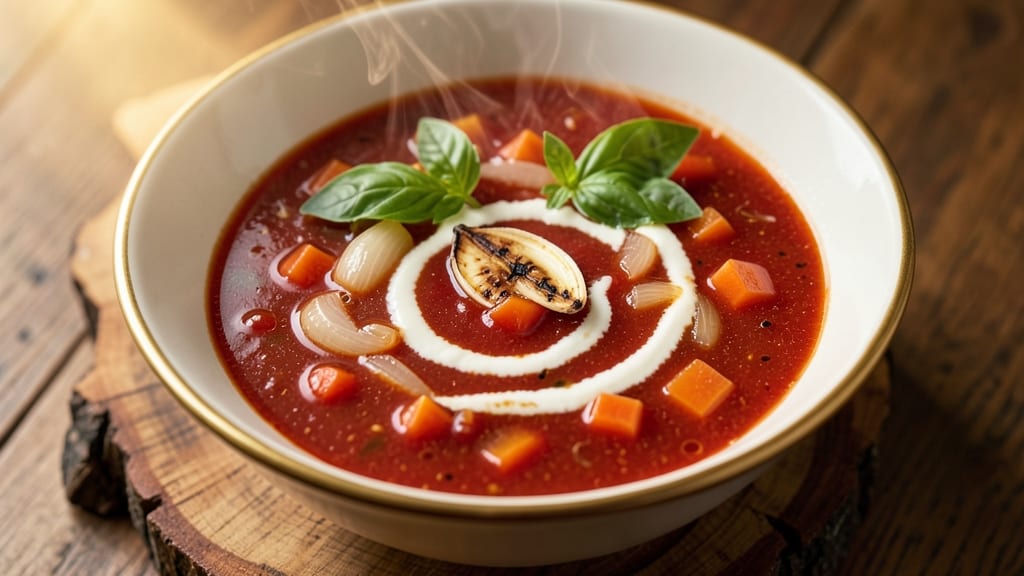
Transforming a simple can of Campbell's tomato vegetable soup into a restaurant-worthy one-pot meal is easier than you think—this recipe builds on pantry staples while adding depth and texture that elevate it beyond the can.
The key lies in balancing simplicity with thoughtful enhancements that create a dish worth serving to guests, not just warming up for lunch. With just a few extra ingredients and a few minutes of prep, you'll turn basic soup into something hearty and sophisticated.
This method preserves the soup's natural tomato richness while adding layers of flavor through aromatics and fresh herbs. A simple sauté of onions and garlic forms the flavor base, while a splash of cream or a sprinkle of cheese adds richness without complicating the process.
The beauty of this approach is its flexibility—you can adjust seasoning to taste or even turn it into a complete meal by adding bread or protein. It's the perfect solution for busy weeknights when you want something comforting but don't have time for elaborate cooking.
What you'll end up with is a one-pot soup that's creamy, aromatic, and packed with vegetables—each bite delivers the familiar tomato flavor you love, now enhanced with caramelized onions, fresh herbs, and a velvety finish. The best part?
It all comes together in under 30 minutes with minimal cleanup. This is the kind of recipe that makes pantry staples feel like a gourmet meal without breaking the bank or requiring advanced skills.
Serve it with crusty bread for dipping, a sprinkle of grated cheese for extra richness, or a side salad to balance the meal. The possibilities are endless, but the foundation remains simple: start with Campbell's, build on it, and turn it into something extraordinary. Let's get cooking!
Ingredients for campbell's tomato vegetable soup
Pantry staples plus a few fresh touches turn basic Campbell's soup into a gourmet one-pot meal.
| Ingredient | Amount | Notes |
|---|---|---|
| Campbell's Tomato Vegetable Soup 🍅 | 1 can | 14.5 oz can, undiluted |
| Yellow Onion 🧅 | 1 whole | Medium size, diced small |
| Garlic Cloves 🧄 | 3 cloves | Fresh, minced fine |
| Butter 🧈 | 2 tbsp | Unsalted, for sautéing |
| Heavy Cream 🥛 | ½ cup | Full-fat for richness |
| Carrots 🥕 | 2 medium | Peeled, diced small |
| Celery Stalks 🌿 | 2 whole | Trimmed, diced small |
| Fresh Parsley 🌿 | ¼ cup | Chopped, for garnish |
| Shredded Parmesan Cheese 🧀 | ¼ cup | Freshly grated preferred |
| Olive Oil 🫒 | 1 tbsp | For finishing drizzle |
| Salt 🧂 | ½ tsp | Kosher or sea salt |
| Black Pepper 🌶️ | ¼ tsp | Freshly ground preferred |
| Carrots 🥕 | 2 pieces | Medium size, diced small |
| Chicken Broth 💧 | ½ cup | Low-sodium preferred |
The Campbell's can is your flavor foundation—don't skip the undiluted version (the thicker kind). For the veggies, Trader Joe's has pre-diced carrots and celery that save time, but fresh is better if you've got it. The Parmesan? Grab a wedge from the deli counter—pre-grated gets clumpy. I always double-check the broth label for low-sodium since we're adding extra salt. The butter matters here—unsalted so you control the seasoning, and it should be cold when you add it for proper caramelization.
No fresh parsley? Dried parsley at half the amount works in a pinch, but it won't look as pretty on top. Short on carrots? Sweet potatoes or butternut squash add sweetness that pairs well. The heavy cream can be swapped for half-and-half or coconut milk if you're watching dairy, though the texture will be lighter. For extra depth, add a pinch of red pepper flakes if you like a little kick. The celery should be crisp—if it feels rubbery, it's past its prime.
This soup reheats beautifully—just add a splash of water or broth if it gets too thick. Keeps for 4-5 days in the fridge, and freezes for 3 months (though the texture changes slightly after thawing). I always make a double batch—one for dinner and one to freeze for lazy days. The Parmesan and parsley can be added fresh when reheating if you're serving it again later.
Why You'll Love This Recipe
- Foolproof Foundation: The canned soup handles all the prep work—no chopping, no measuring. I just sauté onions and garlic in butter until they’re soft, then stir in the soup and simmer. Honestly, it’s the kind of recipe that makes me feel like a chef without any effort.
- Velvet Smoothness: That heavy cream swirled in at the end? It turns the soup from hearty to luxurious—like a hug in a bowl. The garlic lingers just enough to wake up your taste buds, but the cream softens it into something velvety and impossible to resist.
- Weeknight to Dinner Party: I make this for lazy nights when I’m too tired to cook, but it also impresses guests. Serve it with crusty bread and a sprinkle of parmesan, and suddenly it’s fancy. Between us, I’ve pulled this out for book club and no one ever guessed how little work it took.
- Budget-Friendly Leftovers: A single can of soup stretches into four servings, and the leftovers reheat like a dream. I’ll be real: I’ve had this for lunch the next day with a side of crackers, and it’s still just as good. Plus, the ingredients cost next to nothing compared to restaurant meals.
Instructions for one-pot Campbell's tomato vegetable soup
This hearty soup comes together in a single pot using simple pantry staples.
Sauté the Vegetable Base
In a large pot, melt the 2 tablespoons butter over medium heat. Add the 1 whole yellow onion and the 2 pieces carrots, all diced small. Cook for 5 minutes until the vegetables begin to soften and the onion becomes translucent.
Add the 2 whole celery stalks, also diced small, along with the 3 cloves garlic cloves, minced fine. Continue cooking for another 3 minutes until the celery softens and the garlic releases its fragrant aroma. You'll notice the vegetables release their juices and begin to caramelize slightly at the edges—that's when you know they're ready for the next step.
Build the Soup Foundation
Pour in the 1 can Campbell's tomato vegetable soup and the 0.5 cup chicken broth. Stir well to combine, scraping up any browned bits from the bottom of the pot. Bring the mixture to a gentle boil over medium-high heat, then immediately reduce the heat to low. Let it simmer uncovered for 15 minutes to allow the flavors to meld together.
During this time, the soup will thicken slightly as the starches in the vegetables release. Stir occasionally to prevent sticking, and taste the soup to check for seasoning. If needed, adjust with the 0.5 teaspoon salt and 0.25 teaspoon black pepper—this is the perfect time to balance the flavors before adding the cream.
Add Cream and Finish
Reduce the heat to low and gently stir in the 0.5 cup heavy cream. Let the soup simmer for another 5 minutes, stirring occasionally. The cream will create a velvety texture, but don't let it boil vigorously—this could cause it to curdle. You're looking for a smooth, creamy consistency without any lumps.
Taste again and adjust seasoning if needed. The soup should be rich, slightly tangy from the tomato, and well-balanced with the cream's smoothness. If it's too thick, you can thin it with a splash of water or broth, but it should be creamy enough to coat a spoon.
Garnish and Serve
Remove the pot from the heat and let the soup rest for 2 minutes. This brief resting period allows the flavors to settle and the cream to fully incorporate. Ladle the soup into bowls, then garnish each serving with 1 tablespoon of the shredded parmesan cheese and a sprinkle of the 0.25 cup fresh parsley, chopped fine.
For an extra touch of richness, drizzle each bowl with 1 teaspoon of the olive oil. The oil adds a silky finish and enhances the soup's depth of flavor. Serve immediately with crusty bread or over a bed of greens for a complete meal. The combination of creamy tomato, fresh herbs, and sharp parmesan makes this soup irresistibly comforting.
Pro Tips For Making Campbell'S Tomato Vegetable Soup
- SWEAT THE ONION FIRST: Skip dumping raw onion straight into the pot—it’ll just sit there like a soggy afterthought. Melt 1 tablespoon of butter in the pan first, then cook the diced onion over medium heat for 5-6 minutes until it’s soft and just starting to turn golden. That’s when it actually tastes like onion, not just tomato soup with onion bits.
- SMASH THE GARLIC: I used to just mince garlic and toss it in, but crushed cloves (peeled, then smashed with the flat side of your knife) release way more flavor. Add them to the pot with the onions and let them cook for 30 seconds—just until they’re fragrant, not browned. Overcooking turns garlic bitter, and you don’t want that fighting with the soup’s sweetness.
- TEMPER THE CREAM: Cold heavy cream straight into hot soup? That’s how you end up with a skin. Warm the cream first by stirring it into the soup off the heat for 30 seconds, or even better, heat it gently in a separate small saucepan until it’s just steaming (not boiling). Your soup will stay silky, not broken.
- SALT THE SOUP BEFORE CREAM: The cream’s richness needs balancing, and the soup’s seasoning gets diluted when you add it. Taste the soup after mixing in the Campbell’s but before the cream, and add salt then. You’ll need less later, and the flavors will sing instead of feeling flat. (Yes, even if the can says it’s “just add water.”)
Essential equipment for this recipe
Large Pot Essentials
Start with a large, heavy-bottomed pot (I use my All-Clad 5-quart) to ensure even heat distribution and prevent scorching. A pot with a diameter of at least 10 inches gives you enough room to stir and build layers of flavor without overcrowding.
If you're serving a crowd, consider a 6-quart Dutch oven—it maintains heat beautifully and adds that restaurant-style depth. 🔥
Sautéing Tools
For the vegetable base, a wooden spoon (like Oxo Good Grips) is your best friend—it won’t scratch the pot and helps scrape up those flavorful browned bits. A sharp chef’s knife (I swear by Mercer Culinary Genesis) is non-negotiable for dicing onions, carrots, and celery uniformly.
Pre-chopped veggies from Trader Joe’s save time, but fresh cuts release more flavor during sautéing.
Thermometer for Precision
A kitchen thermometer (I recommend Thermoworks Thermapen ONE) ensures you hit the perfect simmer temperature of 190–200°F for creamy texture without curdling the cream. It’s especially useful if you’re new to balancing heat and liquid.
For the cream addition, keep the heat at low-medium—boiling can cause separation. A thermometer takes the guesswork out of it. 🌡️
Garnish & Finishing Tools
Fresh parsley and Parmesan deserve microplane treatment for even distribution. A fine-mesh grater (like Barbagroup) gives you that perfect, snowy Parmesan texture, while a small bowl lets you portion garnishes neatly.
For the olive oil drizzle, a small squeeze bottle (I use a Glasslock) makes it effortless to add that final touch without making a mess.
Optional Upgrades
If you’re feeling fancy, a soup immersion blender (like Ninja Foodi) lets you blend in a few chunks of roasted garlic or butternut squash directly in the pot for a silky finish.
For extra depth, a garlic press (I love OXO Good Grips) ensures finely minced garlic that infuses flavor without overpowering. A ladle with a strainer (like Cuisinart) helps serve soup without the veggie overload.
Budget-Friendly Basics
No fancy tools? No problem. A stainless steel pot (even a Cuisinart MultiCooker) works fine, and a paring knife + cutting board handle the veggie prep. A spoon and whisk suffice for stirring, and a cheese grater (even the plastic kind) gets the job done.
The key is low and slow—patience beats expensive gadgets every time. ✨
Nutrition facts
Frequently asked questions
Can I make this soup without heavy cream?
For a lighter version, substitute the heavy cream with ½ cup half-and-half or ½ cup coconut milk for a dairy-free option. The soup will still be flavorful, though slightly less rich. If you prefer a vegan approach, try ¼ cup cashew cream blended with ¼ cup water—it adds a velvety texture without dairy.
How can I make this soup spicier?
Add ½ teaspoon red pepper flakes when sautéing the onions or stir in 1 teaspoon hot sauce (like Tabasco) at the end. For smoky depth, sprinkle ¼ teaspoon smoked paprika into the pot while simmering. If you love heat, a dash of cayenne pepper or a pinch of chipotle powder works too!
Can I use a different Campbell's soup flavor?
Yes! This method works best with tomato-based soups, but you can experiment with Campbell's Cream of Mushroom or Chicken Noodle for a twist. Just adjust the sautéed veggies to complement the flavor—e.g., mushrooms for the cream of mushroom version or peas for chicken noodle. The heavy cream and Parmesan will still elevate it beautifully.
Why did my soup turn out too thick?
This usually happens if the cream curdled or the soup reduced too much. To fix it, stir in 2-3 tablespoons of warm water or broth while simmering on low heat. If the cream separated, whisk in 1 tablespoon cornstarch mixed with 1 tablespoon cold water to smooth it out. Always simmer gently after adding cream—never boil vigorously!
What’s the best way to reheat leftovers?
Gently reheat on the stovetop over low heat (or in the microwave at 50% power) to avoid curdling. Add a splash of water or broth if needed. For extra richness, stir in a pat of butter or a splash of cream before serving. Leftovers keep for 4-5 days in the fridge or 3 months frozen.