
Soups & Stews
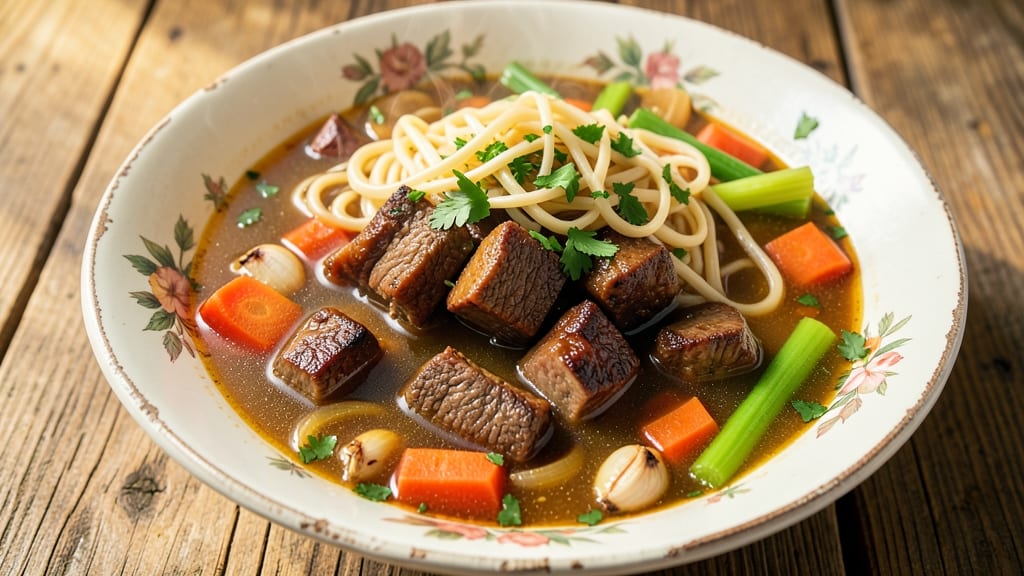
Grandma's old-fashioned beef noodle soup recipe brings warmth and comfort to every spoonful, just like the kind my grandmother used to make on chilly afternoons. The secret lies in slow-simmered beef and rich broth that infuses every noodle with deep flavor, creating a one-pot meal that feels like a hug.
This recipe stays true to tradition while making it simple enough for weeknight dinners—no fancy techniques required, just time and love.
The foundation of this soup is a well-balanced broth, built with tender beef, aromatic vegetables, and a bouquet of herbs that simmer for hours to develop rich, complex flavors. Hand-cut egg noodles cook directly in the pot, absorbing the savory broth while maintaining their perfect texture.
The result is a bowl of soup that's hearty, comforting, and packed with the kind of nostalgia that makes it worth every minute of simmering.
What makes this recipe special is its ability to deliver restaurant-quality results in a single pot, with minimal cleanup and maximum flavor. The beef becomes fork-tender, the noodles al dente, and the broth deeply aromatic—just like Grandma used to make.
Whether you're feeding a family or just craving a taste of home, this soup delivers warmth and satisfaction in every bite.
Serve it with a sprinkle of fresh parsley and a dash of black pepper for a finishing touch that reminds you of home. Perfect for cold days or when you need a comforting meal, this beef noodle soup is a classic that never goes out of style.
Let's get started on making it today.
Ingredients for grandma's old fashioned beef noodle soup
Six ingredients build this nostalgic soup: tender beef, aromatic vegetables, and simple pantry staples.
| Ingredient | Amount | Notes |
|---|---|---|
| Beef Chuck Roast 🥩 | 2 lb | Cut into 1-inch cubes |
| Yellow Onion 🧅 | 1 whole | Chopped, medium size |
| Carrots 🥕 | 4 medium | Peeled, cut into chunks |
| Celery Stalks 🌿 | 4 whole | Chopped, medium size |
| Garlic Cloves 🧄 | 6 cloves | Minced, fresh preferred |
| Fresh Parsley 🌿 | ¼ cup | Chopped, stems removed |
| Bay Leaves 🌿 | 2 whole | Dried, standard size |
| Egg Noodles 🍝 | 12 oz | Hand-cut, medium width |
| Beef Broth 💧 | 8 cups | Low-sodium preferred |
| Tomato Paste 🍅 | 2 tbsp | Smooth, no sugar added |
| Worcestershire Sauce 🍯 | 1 tbsp | High-quality brand |
| Salt 🧂 | 1 ½ tsp | Kosher or sea salt |
| Black Pepper 🌶️ | ½ tsp | Freshly ground preferred |
| Extra-Virgin Olive Oil 🫒 | 1 tbsp | For searing beef |
The beef is everything here—chuck roast from the butcher's counter gives you that melt-in-your-mouth texture. Costco or local grocery stores usually have it pre-cut for convenience, but if you're feeling ambitious, grab a whole roast and cube it yourself. Look for good marbling—those little white flecks mean more flavor. Fresh parsley and bay leaves might seem small, but they're the secret to that deep, aromatic broth Grandma used to make. I always grab organic parsley from the farmers market when it's in season, but store-bought works too.
No beef broth? Chicken broth with an extra bouillon cube works in a pinch, but it won't taste quite the same. Worcestershire sauce is non-negotiable for that classic umami kick—Lea & Perrins is the gold standard. Short on carrots? Sweet potatoes or parsnips add sweetness and hold up well. The tomato paste can be swapped for crushed tomatoes at half the amount, but it'll be slightly chunkier. For the noodles, barley or whole wheat work if you're avoiding gluten, but traditional egg noodles are what Grandma used.
This soup tastes even better the next day—3-4 days in the fridge, no problem. Freeze portions for up to 3 months by storing in airtight containers. I always make extra because it reheats beautifully. When you're ready to serve, give it a quick stir and sprinkle with fresh parsley—that last-minute garnish makes all the difference. The leftovers? Perfect for lunches or a quick dinner when you're short on time.
Why You'll Love This Recipe
- One-Pot Wonder: I swear by this recipe when I’m too tired to dirty extra dishes. Toss everything—chuck roast, onions, carrots, celery—into one pot, and let it simmer. The beef practically melts into the broth, while those veggies soften just enough to disappear into every spoonful.
- Deep Umami Magic: Honestly, the slow-cooked chuck roast is where this soup shines. It gets tender enough to shred with a fork, and the garlic? Oh, it’s there—layered in like a secret weapon. That first sip? Rich, savory, and somehow homey without trying too hard.
- Leftovers That Beg for More: Between us, this soup only gets better the next day. The flavors meld overnight, and reheating it is my lazy Sunday hack. My kids actually ask for it—yes, even when we have takeout options.
- Budget-Friendly Powerhouse: A chuck roast stretches across meals, and the veggies (onion, carrots, celery) are cheap staples. I can feed four for under $15, and the leftovers turn into lunches or a quick stir-fry. Minimal cost, maximum comfort.
Step-by-step instructions for Grandma's old fashioned beef noodle soup
This one-pot method delivers rich, comforting soup with tender beef and hand-cut noodles.
Sear the Beef Chuck Roast for Deep Flavor
Heat a large Dutch oven over medium-high heat until hot. Add the 1 tablespoon extra-virgin olive oil and let it shimmer for 30 seconds. Working in batches if needed, add the 2 lb beef chuck roast cut into 1-inch cubes and sear for 3-4 minutes per side until deeply browned.
Don't overcrowd the pan—this is where all the flavor starts. The beef should develop a rich crust before you remove it. Once all pieces are browned, transfer them to a plate and set aside. You'll notice the bottom of the pot has beautiful browned bits—that's the foundation of your soup's depth of flavor.
Sauté Vegetables Until Soft and Fragrant
In the same Dutch oven, add the 1 whole yellow onion, 4 medium carrots, and 4 whole celery stalks, all chopped into medium pieces. Cook over medium heat for 8-10 minutes, stirring occasionally, until the vegetables soften and the onion becomes translucent.
Add the 6 cloves minced garlic and cook for another 30 seconds until fragrant. Here's where it gets good—stir in the 2 tablespoons tomato paste and 1 tablespoon Worcestershire sauce, cooking for 1 minute to allow the flavors to meld. The tomato paste will deepen the soup's color and add a subtle sweetness that balances the richness of the beef.
Simmer the Beef and Vegetables in Broth
Pour in the 8 cups beef broth and bring to a gentle boil. Add the 2 whole bay leaves, 1.5 teaspoons salt, and 0.5 teaspoon black pepper. Return the beef to the pot, reduce heat to low, cover partially, and let it simmer for 1 hour to 1 hour 15 minutes until the beef is fork-tender.
Here's the thing—you want the beef to fall apart easily when pierced with a fork. If you notice the broth reducing too quickly, add ½ cup hot water to maintain the proper consistency. The bay leaves will infuse subtle earthy notes, and the Worcestershire sauce adds that classic umami depth that makes this soup taste like home.
Cook the Egg Noodles to Al Dente Perfection
While the beef is simmering, prepare the 12 oz egg noodles according to package directions for al dente texture. Drain and set aside. In the last 10 minutes of beef cooking time, add the cooked noodles to the soup pot and stir gently to combine.
I like to add the noodles toward the end so they absorb just enough flavor without turning mushy. The egg noodles should be tender but still have a slight bite. If the soup seems too thick after adding the noodles, stir in ½ to ¾ cup hot broth to reach your desired consistency.
Finish with Fresh Parsley and Serve Warm
Remove the 2 bay leaves from the soup and discard them. Stir in the 0.25 cup chopped fresh parsley just before serving. This final step brightens the soup with freshness and adds a pop of color that makes it look as good as it tastes.
Ladle the soup into bowls and serve immediately. The beef should be tender enough to pull apart with a fork, the vegetables perfectly soft, and the broth rich and flavorful. Each spoonful delivers that comforting combination of tender beef, hearty vegetables, and perfectly cooked noodles—just like Grandma used to make.
Pro Tips For Making Grandma'S Old Fashioned Beef Noodle Soup
- Sear the Chuck Hard: After burning three batches of beef chuck in my stockpot, I learned—crank the heat to medium-high and let those browned bits form for 5-7 minutes per side. The crust locks in flavor, so don’t rush it (yes, even if you’re impatient like me). These bits dissolve into the broth later, making it richer than store-bought.
- Mince the Garlic Fine: My grandmother swore by this, and she was right: chop that garlic into a paste with a knife instead of just mincing it. It disperses better in the broth and adds depth without overpowering the beef’s natural taste. (Pro tip: Smash it with the flat of your knife first to speed it up.)
- Skip the Overcrowded Pot: I used to dump everything in at once—onions, carrots, celery, all of it—and wondered why the soup tasted dull. Instead, brown the beef first, then remove it. Sauté the veggies in the same pot until softened before adding broth. This builds layers of flavor instead of steaming them into oblivion.
- Simmer Low and Long: Sounds weird, but it works: after the initial boil, drop the heat to a gentle simmer where you barely see bubbles. Three to four hours is the sweet spot for beef chuck—any less and it stays tough, any more and the broth turns gluey. (Your future self will thank you for resisting the urge to speed it up.)
Common mistakes when making this recipe
Overcrowding the Pot
One of the biggest rookie mistakes is adding all the beef at once without proper searing. When you overcrowd the pot, the beef won't brown correctly—it'll just steam, leading to bland, gray meat instead of rich, flavorful pieces.
I've learned to work in batches, even if it takes an extra 5 minutes. Use a 12-inch cast iron skillet if your Dutch oven is too small, and sear until you see deep golden-brown crusts forming. 🔥
Skipping the Sear
Some cooks rush straight to simmering without searing the beef first, thinking it's unnecessary. But that 3-4 minute sear on each side creates the Maillard reaction, which builds deep, meaty flavors.
If you skip it, your broth will taste flat and one-dimensional. I always take the extra time—it makes a world of difference in the final result.
Under-Simulating the Beef
Patience is key with beef noodle soup. If you pull the beef out too soon—say after 45 minutes instead of the full 1-1.5 hours—it'll be tough and chewy.
Use a meat thermometer to check: the beef should reach 203°F internal temperature for perfect tenderness. I've ruined more soups by rushing this step than any other.
Adding Noodles Too Early
Dumping noodles into the pot too soon turns them into mushy blobs instead of al dente perfection. The ideal time is the last 10 minutes of cooking, when the beef is nearly done.
If you add them earlier, they'll absorb too much broth and lose their texture. I always cook noodles separately first, then add them at the end for the best results.
Ignoring the Broth Level
Many cooks forget to monitor broth levels during simmering. If it reduces too much, the soup becomes thick and gluey. Keep an eye on it and add ½ cup hot water or broth every 20-30 minutes if needed.
I use a glass measuring cup to check levels—it's the easiest way to avoid over-reduction.
Forgetting to Skim Fat
While not always necessary, skimming excess fat from the surface during simmering prevents a greasy final product. Use a large spoon to remove fat every 15-20 minutes, especially if you're watching your cholesterol. I save the skimmed fat for future cooking—it's perfect for sautéing vegetables or making gravy. 💡
Nutrition facts
Frequently asked questions
Can I make this beef noodle soup in a slow cooker?
Brown the beef first in a skillet, then transfer everything to your slow cooker with 6 cups broth instead of 8. Cook on low for 6-7 hours or high for 3-4 hours. Add noodles during the last 30 minutes of cooking. The slow cooker keeps the beef tender without drying it out.
What's the secret to making the broth extra flavorful?
Use a mix of beef broth and 2 cups water, plus add 1 parsnip or 1 small potato while simmering—they add natural sweetness. For deeper flavor, toast 1 tsp whole coriander seeds in a dry pan for 30 seconds, then crush and add to the pot. The key is patience—let it simmer uncovered for the last 15 minutes to reduce slightly and concentrate flavors.
Can I substitute regular noodles for egg noodles?
Yes, but texture will differ. For a closer match, use fresh egg fettuccine or rice noodles (cook separately). If using dried wheat noodles, add them 5 minutes earlier than the last 10 minutes since they cook faster. The egg noodles in this recipe stay firm and absorb broth beautifully—traditional for old-fashioned soups.
How do I make this soup ahead of time?
Prepare the entire soup up to adding noodles, then cool completely and refrigerate for up to 4 days. When ready to serve, reheat on low heat and add fresh noodles cooked separately. For freezer storage, package in airtight containers for 3 months. Thaw overnight in the fridge before reheating—never microwave directly from frozen. The flavors actually improve overnight!
What can I do with leftover beef from this soup?
Shred the leftover beef and use it in sandwiches with gravy, tacos with lime crema, or fried rice with veggies. For a quick fix, mix with 1 tbsp soy sauce and 1 tsp brown sugar, then pan-fry for 3-4 minutes for beef strips. The tender meat works perfectly in pot pie filling too—just add to a creamy sauce with veggies.