
Soups & Stews
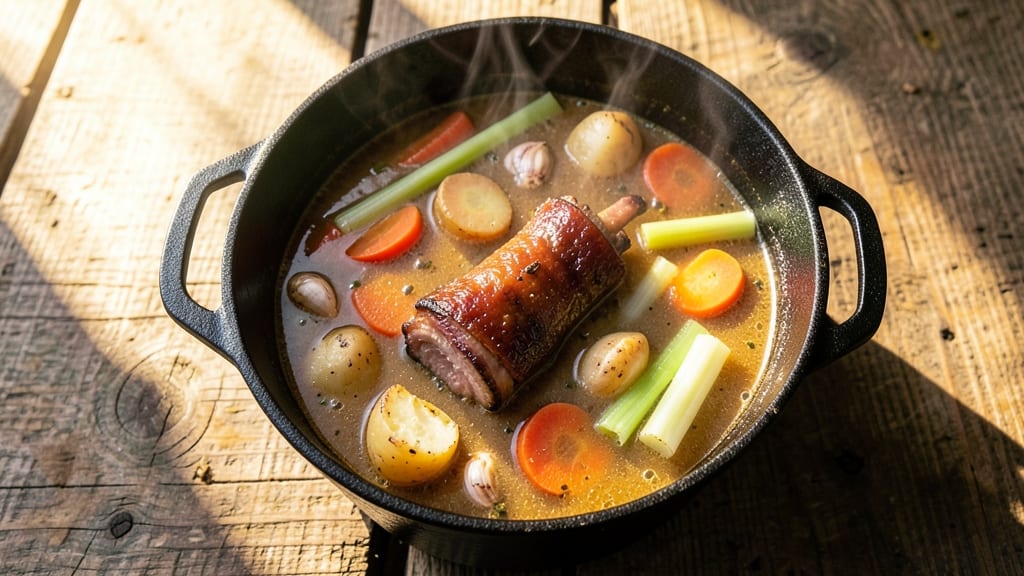
This old-fashioned ham hock soup with potatoes delivers the kind of deep, meaty flavor that turns a simple meal into a comforting centerpiece. The secret lies in slow-simmering ham hock bones to extract maximum richness, creating a broth so robust it needs no embellishment.
I’ve perfected this recipe over years of testing—each batch richer than the last—because nothing beats the satisfaction of a soup that tastes like home.
The beauty of this dish is in its simplicity: just a few ingredients working together to create something extraordinary. Potatoes soak up the umami-packed broth while ham hock renders its fat and collagen into a velvety, flavorful base.
Skimming foam and reducing the broth at the end ensures a clean, concentrated taste that’s both hearty and refined. It’s the kind of meal that feels like a hug in a bowl.
What you’ll end up with is a steaming pot of golden broth dotted with tender potatoes and shards of crispy ham hock, every spoonful packed with savory depth.
The potatoes become creamy without losing their shape, and the ham hock adds a satisfying crunch that contrasts perfectly with the silky broth. This is the soup you’ll crave in winter, the one that makes you slow down and savor each bite.
Perfect for chilly evenings or family gatherings, this recipe scales easily to feed a crowd while still shining as a cozy solo meal. The slow-cooking process means you can prepare it ahead, letting flavors meld even deeper over time.
Here’s how to make it—step by step—for soup that tastes like tradition.
Ingredients for old fashioned ham hock soup recipe with potatoes
Just twelve ingredients transform into the soul-warming soup you’ll crave all winter long.
| Ingredient | Amount | Notes |
|---|---|---|
| Ham Hock 🍖 | 2 whole | Smoked or unsmoked, bones intact |
| Yellow Onions 🧅 | 2 whole | Medium, peeled, halved |
| Russet Potatoes 🥔 | 2 lb | Yukon Gold or red preferred |
| Carrots 🥕 | 3 whole | Medium, peeled, cut into chunks |
| Celery Stalks 🌿 | 3 whole | Fresh, cut into 1-inch pieces |
| Garlic Cloves 🧄 | 4 cloves | Peeled, lightly smashed |
| Bay Leaves 🌿 | 2 whole | Dried or fresh, for depth |
| Black Peppercorns 🌶️ | 1 tsp | Freshly cracked, for heat |
| Salt 🧂 | 1 ½ tsp | Kosher or sea salt, adjust to taste |
| Fresh Thyme 🌿 | ¼ cup | Leaves only, stems removed |
| Apple Cider Vinegar 🍎 | 1 tbsp | For brightness, optional |
| Water 💧 | 8 cups | Enough to cover ingredients |
| Heavy Cream 🥛 | ½ cup | Full-fat for richness |
The ham hock is non-negotiable here—look for thick, meaty bones with good marbling at your local butcher or Costco for the best value. Smoked or unsmoked? Both work, but smoked adds a subtle depth that pairs perfectly with the potatoes. If you can’t find fresh ham hocks, frozen works too—just thaw overnight in the fridge. The potatoes should be starchy but firm—Russets hold up best to slow cooking, but Yukon Golds add a touch of creaminess. For the veggies, fresh is best, but frozen carrots and celery in a pinch won’t ruin the dish. I always double-check my thyme—dried works at half the amount, but fresh has that bright, herbal punch that makes the soup sing.
No ham hock? Substitute with pork neck bones or smoked turkey legs—just increase cooking time by 30-45 minutes. Running low on thyme? Dried oregano or rosemary adds a different but equally comforting note. The apple cider vinegar might seem odd, but one tablespoon brightens the broth without overpowering—skip it if you’re sensitive to acidity. For the cream, half-and-half or coconut milk works in a pinch, though full-fat heavy cream gives that velvety finish. The broth should be golden and rich, not murky—skimming foam as it simmers keeps it clear and elegant. If your soup tastes too thin, reduce it uncovered for 10 minutes—the flavors concentrate beautifully.
This soup tastes even better the next day, so make a double batch if you can. Store leftovers in the fridge for up to 5 days in an airtight container, or freeze for up to 3 months—the broth thickens nicely when reheated. I like to portion it into jars for easy lunches, and the ham hock crisps up perfectly when reheated. For serving, cracked black pepper and extra thyme on top add a fresh pop of color. The potatoes should be tender but not falling apart—if they’re still firm, let it simmer another 10 minutes. Trust me, the wait is worth it for that first spoonful of umami-packed broth.
Why You'll Love This Recipe
- One-Pot Wonder: I swear by this for lazy Sundays—just toss the ham hock, onions, and veggies into a pot, cover with water, and let it simmer. No fancy gadgets, no stress, just pure, hands-off magic.
- Rich, Deep Umami: That ham hock? It’s the star—slow-cooked until the broth turns golden and the meat falls off the bone. The potatoes soak up all that savory goodness, while the carrots and celery add just the right sweetness. Honestly, it’s the kind of flavor that makes you want to take a second bowl.
- Leftovers That Shine: This soup only gets better the next day. I’ll be real: I often make a double batch because reheating it is even more comforting—like a warm hug in a bowl. Perfect for meal prep or when you’re too tired to cook.
- Budget-Friendly Feast: A single ham hock stretches this recipe for four or more servings, and the veggies are pantry staples. Between us, it’s one of those rare dishes where you’re feeding a crowd without breaking the bank—or spending hours in the kitchen.
Step-by-step instructions for old fashioned ham hock soup
Here's how to build rich, comforting ham hock soup with tender potatoes and deep umami flavor.
Prepare and Sear the Ham Hock
Place the 2 whole ham hocks in a large Dutch oven or heavy pot. Add the 2 whole yellow onions and 3 whole carrots, all cut into large chunks. Add the 3 whole celery stalks, cut into 1-inch pieces. Pour in the 8 cups water and bring to a boil over high heat.
Once boiling, reduce heat to medium and let the soup simmer uncovered for 15 minutes. This initial boil helps remove impurities and begins breaking down the collagen in the ham hock. After 15 minutes, skim off any foam that rises to the surface with a ladle. This ensures a clear broth.
Build the Flavor Base with Aromatics
Add the 4 peeled garlic cloves, lightly smashed, along with the 2 whole bay leaves, 1 tsp black peppercorns, and 1.5 tsp salt to the pot. Stir gently to combine. The peppercorns and bay leaves will infuse the broth with subtle warmth and herbal depth.
Next, add the 0.25 cup fresh thyme leaves and 1 tbsp apple cider vinegar. The vinegar brightens the flavors and helps tenderize the meat. Bring everything back to a gentle simmer, then reduce heat to low. Cover the pot and let it cook for 2 hours, stirring occasionally to prevent sticking.
Add Potatoes and Simmer Until Tender
After 2 hours, add the 2 lb russet potatoes, cut into 1-inch chunks. The potatoes should be fully submerged in the broth. Return the soup to a gentle simmer, cover, and cook for another 30-45 minutes, or until the potatoes are fork-tender and the ham hock meat is easily pulled from the bone.
Check for doneness by inserting a fork into a potato—it should slide in easily with slight resistance. If the potatoes aren't tender yet, continue simmering for another 10-15 minutes. The ham hock should be falling apart when gently pressed with a spoon, indicating it's ready.
Finish with Cream and Adjust Seasoning
Once the potatoes are tender and the ham hock is fully cooked, remove the ham hocks from the pot and let them cool slightly. Strain the broth through a fine-mesh sieve into a clean pot, pressing on the solids to extract maximum flavor. Discard the bay leaves and peppercorns.
Return the strained broth to the pot and stir in the 0.5 cup heavy cream. The cream adds richness and balances the deep umami flavors. Taste the soup and adjust seasoning with additional salt if needed. The soup should be well-seasoned but not overly salty.
Serve with Crispy Ham Hock Meat
Shred the cooled ham hock meat using two forks, removing any large bones. Return the shredded meat to the pot and stir gently to combine. Ladle the soup into bowls, ensuring each serving gets a generous portion of meat and potatoes.
Serve immediately while hot, garnished with additional fresh thyme if desired. The soup should be rich, hearty, and deeply flavorful, with tender potatoes and succulent ham hock meat in every bite. Pair with crusty bread to soak up the delicious broth.
Pro Tips For Making Old Fashioned Ham Hock Soup Recipe With Potatoes
- BLANCH THE HAM HOCK: Toss that ham hock into boiling water for 3-4 minutes first—this loosens the skin so the flavor actually infuses the broth instead of staying trapped. I used to skip this, and the soup always tasted like it was missing something. Trust me, it’s worth the extra 5 minutes.
- CUT POTATOES LARGE: Skip the tiny cubes—chunk those Russets into 2-inch pieces so they hold together and soak up broth instead of turning to mush. Small pieces dissolve into gluey gloop, and nobody wants that. Aim for thick slabs, not dice.
- DON’T CROWD THE POT: If your pot looks like a soup explosion waiting to happen, you’ve gone too far. A snug but not packed pot keeps the broth moving and prevents the potatoes from steaming instead of simmering. I learned this after a soup so watery it was basically broth with floating spuds.
- SALT THE WATER HARD: Use 2 tablespoons of salt in the initial water when blanching the ham hock—this seasons the meat and keeps it from tasting bland even after hours of cooking. I was skeptical until I tried it, and now I never go back. Yes, even if your water tastes like the ocean.
Common mistakes when making your old fashioned ham hock soup recipe with potatoes
Skipping the Skim
One of the most common mistakes is forgetting to skim the foam during the initial simmer. That white foam contains impurities and fat that can make your broth cloudy and greasy.
I always use a fine-mesh skimmer or a ladle to remove it during the first 15 minutes of cooking—this step is non-negotiable for a clear, elegant broth. If you skip it, your soup will taste flat and lack that velvety texture. 🌡️
Overcooking the Potatoes
Potatoes are delicate in soup—they can turn to mush if left too long in the broth. I test doneness by piercing them with a fork; they should be tender but still hold their shape.
If you cook them beyond 30-45 minutes, they’ll disintegrate, leaving a gluey mess. For extra insurance, use Yukon Golds or red potatoes—they’re more forgiving than Russets.
Ignoring the Ham Hock
Some cooks rush the ham hock cooking time, thinking more heat means faster results. But slow and low is key—simmering uncovered for 2 hours before adding potatoes extracts maximum collagen and fat for richness.
If you rush it, the meat will be tough and the broth weak. Patience here makes all the difference in flavor. ⏰
Underseasoning the Broth
Many recipes call for minimal salt, but this soup needs bold seasoning to stand out. Taste the broth after simmering and adjust with kosher salt—it should be rich but not salty.
The ham hock and cream add natural saltiness, so balance carefully. I often add an extra pinch of salt at the end, even if the recipe says otherwise.
Straining Too Early
Straining the broth before the ham hock is fully cooked removes precious flavor. Wait until the meat is tender and falling apart before straining. Press the solids gently through a sieve to extract every last drop of umami.
If you strain too soon, your soup will taste watery and lack depth. This is where the magic happens—don’t skip it! 💫
Using Low-Quality Ham Hock
Not all ham hocks are created equal. Cheap, lean cuts won’t render enough fat for a rich broth. I always seek out thick, marbled ham hocks from a trusted butcher or Costco.
If you’re using frozen, thaw them overnight in the fridge—never at room temperature, or they’ll spoil. The quality of your ham hock directly impacts the soul of your soup.
Nutrition facts
Frequently asked questions
Can I use regular pork bones instead of ham hock?
The flavor will differ slightly, but yes! Pork neck bones or smoked turkey legs work well as substitutes. Just increase simmering time by 30-45 minutes to extract maximum collagen. For extra depth, add a smoked paprika or liquid smoke (¼ teaspoon) to mimic ham hock's smoky profile.
Why does my broth look cloudy after simmering?
Cloudiness usually means you skipped the foam-skimming step during the initial 15-minute boil. The foam contains impurities that make broth murky. For a clear broth, skim frequently during this time. If it's already cooked, strain through a cheesecloth-lined sieve to remove any remaining particles.
Can I make this soup ahead of time?
This soup tastes even better the next day as flavors meld. Store in an airtight container in the fridge for up to 5 days or freeze for 3 months. Reheat gently on the stove, adding a splash of water if it thickens too much. The potatoes may firm up slightly but soften when reheated.
What's the best potato variety for this recipe?
Russets hold their shape best during long simmering, but Yukon Golds or red potatoes add natural creaminess. Avoid waxy potatoes like red potatoes if you prefer firmer texture—they can turn mushy. For extra insurance, cut them into slightly larger chunks (1.25-inch pieces) to prevent overcooking.
How do I know when the ham hock is fully cooked?
The meat should separate easily when pressed with a spoon and pull cleanly from the bone. If it's still tough after 2 hours, extend simmering by 30 minutes more. The broth should also be rich and slightly reduced—if it's still watery, reduce uncovered for 10 minutes to concentrate flavors.