
Soups & Stews
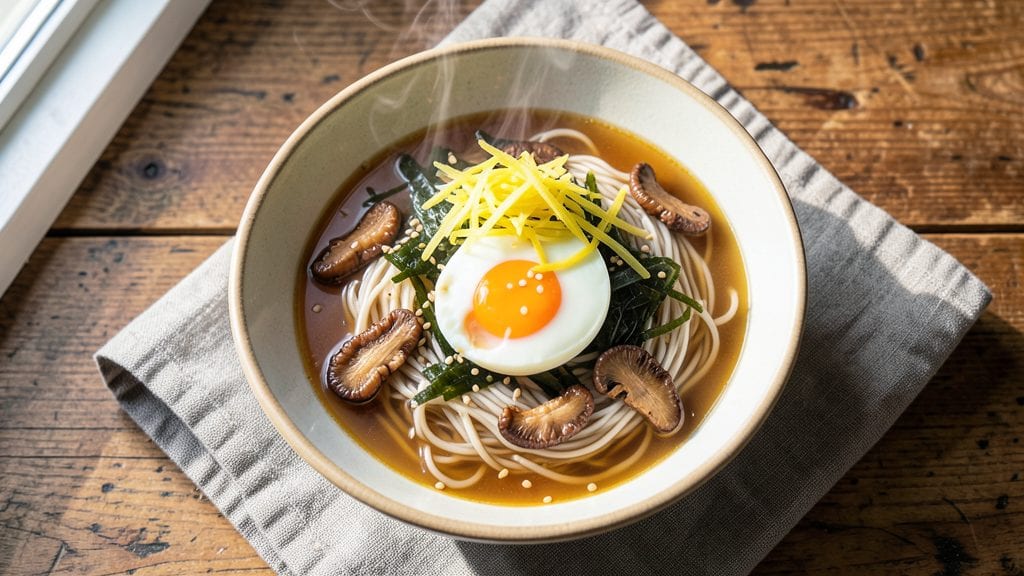
This soba noodle soup recipe delivers the perfect balance of umami, freshness, and delicate texture that makes it a staple in Japanese cuisine. The key lies in the harmony between silky soba noodles, a rich kombu-dashi broth, and the subtle sweetness of miso-ginger paste that ties everything together.
I've refined this recipe over years of testing, ensuring the broth is deeply flavorful without overpowering the natural taste of the noodles.
The foundation of great soba soup begins with the broth, where kombu seaweed and shiitake mushrooms create a naturally vegetarian-friendly dashi that's aromatic and clean. The noodles themselves are cooked just until tender—never mushy—so they maintain that signature slippery texture.
Toppings like soft-boiled eggs with silky ribbons, crisp green onions, and toasted nori add layers of contrast that make every spoonful exciting.
What you'll achieve is a bowl of soup that's versatile enough for any season—serve it piping hot in winter or chilled with a splash of chilled broth in summer. The miso-ginger harmony cuts through the richness of the broth while adding warmth, and the egg ribbons provide a luxurious finish.
This isn't just soup; it's a complete experience that transforms a simple meal into something memorable.
Whether you're preparing it for a cozy weeknight dinner or a special gathering, this soba noodle soup recipe delivers restaurant-quality results with minimal effort. The technique is straightforward, but the flavors are anything but basic. Let's get started on creating your perfect bowl.
Ingredients for soba soup
Silky noodles, umami-rich broth, and delicate toppings—this vegetarian soba soup recipe delivers restaurant-quality harmony.
| Ingredient | Amount | Notes |
|---|---|---|
| Soba Noodles 🍜 | 8 oz | 100% buckwheat or buckwheat blend, dried |
| Dried Shiitake Mushrooms 🍄 | 4 whole | Rehydrated for broth |
| Kombu Seaweed 🌿 | 1 sheet | Thin, 3x4 inches, for dashi |
| White Miso Paste 🍶 | 2 tbsp | Aged 1-2 years for balance |
| Fresh Ginger 🧅 | 1 tbsp | Finely grated, organic preferred |
| Large Eggs 🥚 | 2 whole | Soft-boiled for ribbons |
| Green Onions 🧅 | 4 whole | Thinly sliced, white and green parts |
| Toasted Nori Sheets 🍣 | 4 sheets | Cut into strips for garnish |
| Sesame Seeds 🌰 | 1 tsp | Toasted lightly for aroma |
| Sesame Oil 🫒 | 1 tsp | For finishing, toasted flavor |
| Water 💧 | 8 cups | Filtered preferred for clarity |
| Diamond Crystal Salt 🧂 | 1 tsp | Adjust to taste, kosher preferred |
| Rice Vinegar 🍋 | 1 tbsp | For subtle brightness |
| Dried Shiitake Mushroom Stems 🍄 | 1 cup | Crushed for extra umami |
The kombu and shiitake are non-negotiable for authentic flavor. Kombu should be thin and pliable—avoid dried, brittle sheets. For shiitake, Japanese dried mushrooms from Asian markets have superior depth. Soak the dried shiitake in hot water for 20 minutes before using, reserving the liquid for broth. The miso paste matters too—white miso from Miso Master or Hessian brands delivers that clean, slightly sweet profile without overpowering. Fresh ginger should smell vibrant, not musty—organic ginger from the produce section works perfectly.
No kombu? Dulse flakes at half the amount mimic seaweed's oceanic notes, though it lacks kombu's clean umami. Short on shiitake? Cremini mushrooms work in a pinch, but they won't replicate that earthy depth. The soba noodles can be substituted with udon or ramen, but they'll lose that signature slippery texture. For the eggs, soft-boiled for 6 minutes creates perfect ribbons—slice them against the grain for maximum drama. Toasting the nori sheets in a dry pan for 10 seconds amplifies their aroma, while sesame oil should be added at the very end to preserve its nutty punch.
Broth keeps for 5 days refrigerated or 3 months frozen—portion into ice cube trays for easy reheating. Soba noodles dry out fast once cooked, so store them in cold water until ready to use. The miso-ginger paste can be prepped ahead and stored in the fridge for 1 week or frozen for 3 months. For a quick assembly, keep all toppings prepped in separate containers—soft-boiled eggs, sliced green onions, and toasted nori strips make plating effortless. This soup reheats beautifully, though the egg ribbons may firm up slightly—just slice fresh ones before serving.
Why You'll Love This Recipe
- Five-Minute Soak: The kombu seaweed does all the work—just toss dried shiitakes and noodles in hot water, cover, and let it steep. No chopping, no stirring, no stress. (Yes, even on a Tuesday night when you’ve got better things to do than cook.)
- Umami Bomb: That miso paste and rehydrated shiitakes? Pure flavor magic. The ginger adds a bright kick, but the broth is where it lives—deep, savory, and somehow always better than takeout.
- Office-to-Table Fix: Cold noodles? Toss them in leftover broth for a quick lunch. Hot soup? Pack it in a thermos for a cozy break. It’s the one dish that works for both your 9-to-5 and your 5-to-9.
- Pantry Goldmine: Dried shiitakes and kombu last forever, and a little miso goes a long way. You’re basically turning cheap staples into something that tastes like you slaved over it—without the grocery bill.
Step-by-step instructions for soba noodle soup
This method delivers umami-rich broth, delicate egg ribbons, and perfectly balanced miso-ginger harmony.
Prepare the Dashi Broth
Combine the 8 cups water with the 1 sheet kombu seaweed in a large pot. Bring to a gentle simmer over medium heat, then immediately remove from heat and let steep for 10 minutes. The kombu should float just below the surface—this infuses the water with delicate seaweed flavor without overpowering it.
Add the 4 whole dried shiitake mushrooms and 1 cup dried shiitake mushroom stems to the warm water. Return to medium heat and simmer for 20 minutes until the mushrooms rehydrate and the broth develops a rich, earthy aroma. Strain through a fine-mesh sieve, pressing gently on the solids to extract maximum flavor. Discard the kombu and mushrooms—their job is done.
Build the Miso-Ginger Base
Return the strained broth to the pot and bring to a simmer over medium heat. Reduce heat to low and whisk in the 2 tablespoons white miso paste until fully dissolved. The broth should turn a pale golden color with subtle swirls—the miso is integrating perfectly.
Add the 1 tablespoon finely grated fresh ginger and 1 teaspoon diamond crystal salt. Simmer gently for 5 minutes, stirring occasionally. You'll notice the aroma deepen—this is where the miso's complexity and ginger's warmth meld together. Taste and adjust seasoning if needed, adding a pinch more salt if the broth tastes too mild.
Cook the Soba Noodles
While the broth simmers, prepare the 8 ounces soba noodles according to package instructions. I use boiling water and cook for 4-5 minutes until al dente—the noodles should have a slight bite but still be tender. Drain immediately and rinse briefly under cold water to stop cooking. This prevents the noodles from becoming mushy in the finished soup.
Divide the cooked soba noodles evenly among 4 bowls. Ladle the hot miso-ginger broth over the noodles, filling each bowl about ¾ full. The broth should coat the noodles completely—this is where the flavors truly marry.
Create the Signature Egg Ribbons
Place the 2 whole large eggs into a small saucepan of water and bring to a gentle simmer. Cook for exactly 4 minutes—the eggs should be just set but still runny inside. Immediately transfer to an ice bath for 2 minutes to stop cooking completely. This precise doneness creates those signature slippery ribbons when sliced.
Using a sharp knife, carefully slice each egg in half lengthwise, then gently pull apart to create ribbons. Place 2 egg ribbons in each bowl of soup. The contrast of the warm broth against the cool egg creates a luxurious mouthfeel that's impossible to resist.
Finish and Garnish
Return the soup to a gentle simmer and add the 1 tablespoon rice vinegar. This brightens the rich umami flavors without overpowering them. Let it simmer for just 1 minute to integrate the acidity.
Divide the 4 whole green onions (thinly sliced) and 4 sheets toasted nori (cut into strips) evenly among the bowls. Drizzle each serving with ¼ teaspoon sesame oil and sprinkle with ¼ teaspoon sesame seeds. The sesame adds a nutty finish that complements the earthy mushrooms and delicate egg.
Pro Tips For Making Soba Soup
- SOAK KOMBU FIRST: Toss the kombu into cold water for 10 minutes before boiling—this softens it and lets it release umami into the broth early. I used to just chuck it in with everything else, and the soup always tasted flat until I learned this.
- SLICE GINGER THIN: Use a mandoline or sharp knife for 1mm-thick slices, not matchsticks. Thin ginger infuses better and disappears without overpowering the broth. (Yes, even if you’re impatient like me—it’s worth the extra 30 seconds.)
- DON’T BOIL THE MISO: Remove kombu after 5 minutes of simmering, then whisk miso into the off-heat broth—high heat kills its probiotics and makes it bitter. Stir until dissolved, then return to low heat for noodles. I learned this the hard way after a batch tasted like miso-flavored wallpaper paste.
- COOK NOODLES SEPARATELY: Boil soba in fresh water for 2–3 minutes (check the package—it varies), then drain and rinse under cold water. Tossing them straight into the broth makes the soup gluey and dull. (Your future self will thank you.)
Flavor customization for this recipe
Spicy Miso Kick
Transform your soba soup into a fiery delight by adding 1 teaspoon of gochujang (Korean chili paste) to the miso-ginger base. Start with ½ teaspoon and adjust to taste—this adds a deep, smoky heat that pairs beautifully with the umami.
For extra depth, whisk in ½ teaspoon of chili crisp at the end for a crispy, spicy finish. 🌶️
Creamy Sesame Twist
For a luxurious texture, stir 2 tablespoons of tahini into the broth while simmering. This creates a silky, nutty richness that balances the slippery soba noodles perfectly. Top with toasted sesame seeds and a drizzle of toasted sesame oil for an extra layer of flavor.
I love this variation for cold winter nights when you crave warmth.
Citrus Zing
Brighten the broth with 1 tablespoon of yuzu juice (or sub with 1 teaspoon of lemon juice) and add 1 teaspoon of grated yuzu zest (or lemon zest).
The citrus cuts through the richness of the miso and mushrooms, creating a refreshing contrast. Garnish with thinly sliced daikon radish for extra crunch and freshness. ✨
Smoky Shoyu Depth
Swap the rice vinegar for 1 tablespoon of dark soy sauce and add ½ teaspoon of smoked paprika to the broth. This variation delivers a deep, smoky umami that’s perfect for hearty meals. Top with crispy fried shallots for a crunchy, savory finish that elevates the dish to restaurant-quality.
Herb-Infused Freshness
Add 1 tablespoon of finely chopped shiso leaves (or sub with 1 teaspoon of chopped cilantro) to the broth while simmering. The herbaceous notes complement the earthy mushrooms and miso beautifully.
For extra freshness, garnish with thinly sliced cucumber and a sprinkle of toasted black sesame seeds. This variation is ideal for summer when you crave lighter flavors.
Umami Bomb Boost
For an extra umami punch, stir 1 tablespoon of bonito flakes (if vegetarian, use 1 teaspoon of dried bonito substitute) into the broth just before serving. The flakes dissolve quickly, adding a savory depth that’s hard to resist.
Top with extra toasted nori strips and a drizzle of sesame oil for a finishing touch that feels indulgent. 💫
Nutrition facts
Frequently asked questions
Can I make this soba soup without kombu?
Yes! For a vegetarian alternative, use ½ cup dulse flakes or 1 tablespoon kelp powder to mimic the oceanic depth. If you're using fish-based dashi, ½ cup bonito flakes will work, but the flavor profile shifts slightly. The key is simmering the substitute for 15 minutes to extract maximum umami.
How do I get the perfect slippery egg ribbons?
Cook eggs for exactly 4 minutes in simmering water, then shock in ice water for 2 minutes to stop cooking. Slice lengthwise against the grain while still warm—they'll naturally pull apart into silky ribbons. For extra drama, chill the sliced eggs for 10 minutes before adding to the hot broth.
Can I make this soup ahead of time?
Prepare the broth and miso-ginger base up to 3 days ahead—store it refrigerated. Cook noodles fresh when ready to serve to maintain texture. For the egg ribbons, make them fresh or store peeled hard-boiled eggs (cooked 6 minutes) in the fridge for 2 days. Reheat broth gently and assemble components separately before combining.
What's the best way to adjust for spicier preferences?
Start with ½ teaspoon gochujang mixed into the miso paste—this adds depth without overwhelming heat. For extra kick, stir ½ teaspoon chili crisp into the finished broth. Garnish with red chili threads or a sprinkle of sriracha for customizable heat.
How do I prevent mushy soba noodles?
Cook noodles for 4-5 minutes in boiling water (check package instructions), then rinse immediately in cold water to stop cooking. Never overcrowd the pot—use 4 quarts water per 8 oz noodles. For extra insurance, divide noodles into bowls before adding hot broth to maintain their al dente texture.